
Condo special assessment insurance is what stands between you and a five-figure bill from your HOA. The association just sent you a notice for $8,000, your share of a roof repair the master policy didn’t fully cover, and your agent is telling you to check your declarations page for something called loss assessment coverage. Here’s what that means and what it actually pays.
Key Takeaways:
- Loss assessment coverage on an HO-6 policy pays your share of an HOA-levied special assessment, but most policies default to a $1,000 limit, which rarely covers a real assessment in Arizona.
- Master-policy deductible pass-through is the most common trigger: when the HOA’s deductible runs 1–5% of the building’s insured value, your unit’s proportional share can easily hit five figures.
- Underinsured-association risk, where the HOA’s master policy covers less than the full replacement cost of the building, creates a second assessment exposure most Arizona condo owners have never been told about.
What Is a Special Assessment, and Why Does Your Condo Insurance Need to Cover It?

A special assessment is a bill your HOA sends you for your share of a loss the association couldn’t fully pay. This means that when the association’s master policy falls short, because the deductible was too large, the coverage limit was too low, or a liability judgment exceeded the policy, the repair debt doesn’t disappear. It gets divided among unit owners and shows up in your mailbox.
Two triggers cause most special assessments in Arizona. The first is a master-policy deductible pass-through. HOA master policy deductibles commonly run 1–5% of the building’s insured value, per Arizona Department of Insurance and Financial Institutions guidance on filed HO-6 forms. On a 20-unit building insured for $4,000,000, a 2% deductible means $80,000 comes out of the association’s pocket before the carrier pays a dollar. If the reserve fund can’t absorb that, the HOA divides it among owners. Your share on that building could be $4,000 before the insurer covers anything.
The second trigger is a coverage gap. The HOA’s master policy had a limit that was too low for the actual repair cost. The carrier pays its limit. The remaining bill becomes association debt. The board assesses unit owners to close the gap.
Loss assessment coverage is the feature on an HO-6 condo policy designed to pay that bill. Without it, or with a limit that’s too low, you write a check out of pocket. If you’re building your general understanding of how condo coverage layers together in Arizona, HO-6 condo insurance Arizona covers the broader policy structure that surrounds this specific gap.
Note: every condo owner’s exposure depends on their specific HOA documents, master policy terms, and HO-6 policy language. Consult a licensed Arizona insurance agent for advice specific to your situation.
How the Master-Policy Deductible Becomes Your Problem
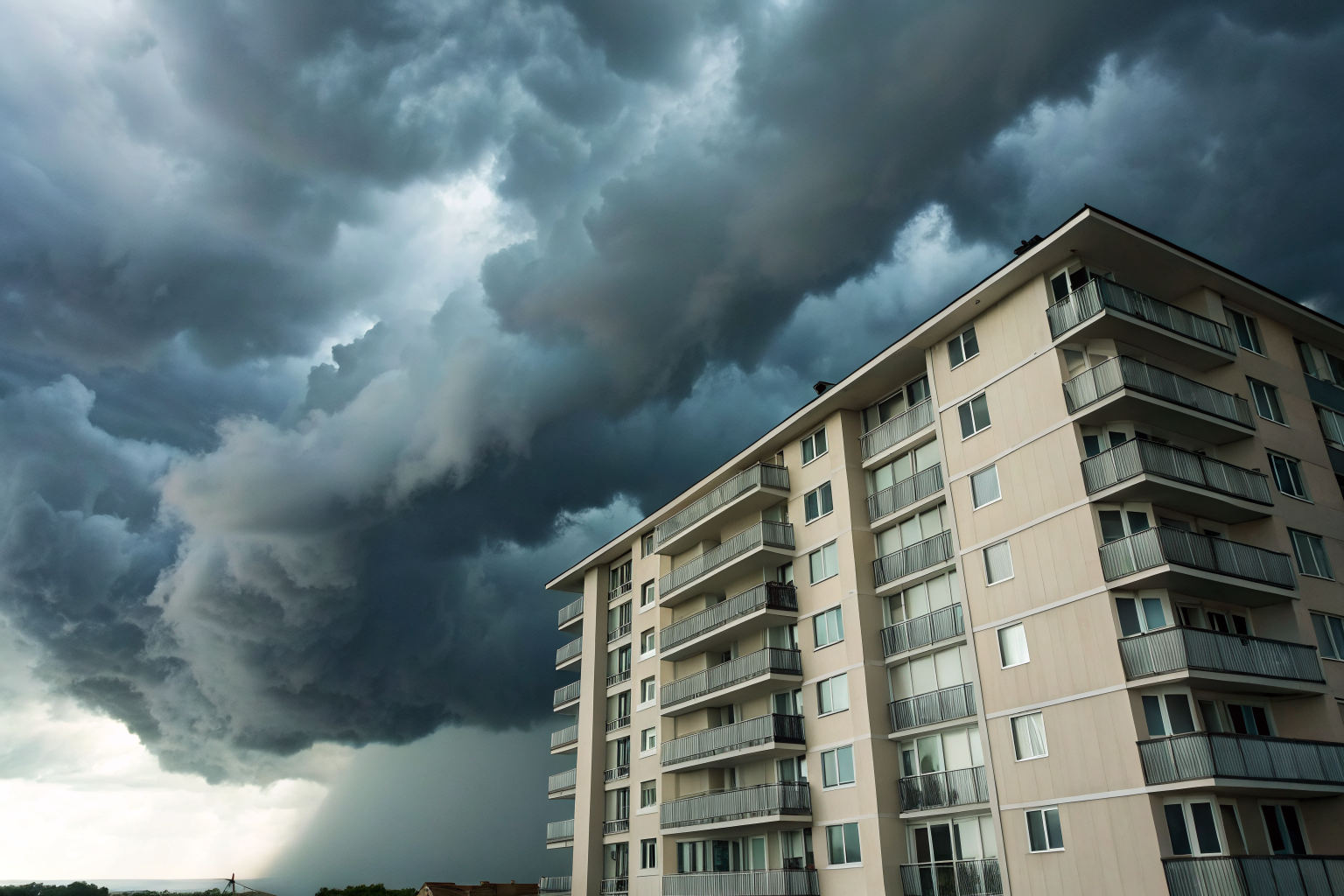
Master-policy deductible pass-through creates unit-owner liability for HOA losses that most condo buyers never anticipate when they close. The mechanism is straightforward when you walk through the claim sequence.
A covered event triggers the HOA master policy. Monsoon wind strips roof material on a common-area structure, a pipe bursts in a shared hallway, or a visitor is injured near the pool and wins a judgment against the association. Any of these activates the master policy.
The master policy’s deductible is not paid by the carrier. The association owes that amount out of its own funds before the insurer contributes a dollar.
If the association’s reserve fund can’t cover the deductible, the board issues a special assessment. The HOA’s CC&Rs specify how that assessment divides across units, sometimes equally, sometimes by ownership percentage or square footage.
That bill arrives at individual unit owners. It is not optional. Arizona HOA law gives associations authority to collect assessments, and failure to pay can result in liens.
Loss assessment coverage on the unit owner’s HO-6 policy pays that bill, up to the limit shown on the declarations page. Per the Arizona Department of Insurance and Financial Institutions, this coverage pays the unit owner’s share of an assessment resulting from a covered loss to association property, but only up to the stated limit.
Arizona’s monsoon season makes this sequence a recurring reality, not a hypothetical. Common-area wind and water claims occur every summer across the Phoenix metro. Owners who haven’t read their CC&Rs often don’t know their proportional share formula until the assessment letter arrives. Your HOA’s governing documents control that math, so requesting a copy before you need it is worthwhile.
For a broader view of how Arizona weather events create coverage gaps across property types, the arizona insurance guide covers the full range of scenarios where policyholders discover their coverage was incomplete.
The Default $1,000 Limit Problem, and How Assessment Cap Limits Work

Most HO-6 policies in Arizona include loss assessment coverage as a standard feature. The problem is the default limit. According to the Insurance Information Institute, standard HO-6 forms often include only $1,000 in default loss assessment coverage, a limit set before modern deductible structures and litigation costs became common.
A $1,000 limit covered a meaningful share of assessments decades ago. It does not cover a meaningful share today. The table below shows three real-world assessment scenarios common in Arizona and the gap a $1,000 limit leaves versus a $50,000 limit.
| Assessment Scenario | Estimated Unit Owner’s Share | Covered at $1,000 Limit | Covered at $50,000 Limit | Out-of-Pocket at $1,000 Limit |
|---|---|---|---|---|
| Monsoon wind claim deductible pass-through on a 20-unit Phoenix building insured at $4M with a 2% deductible | $4,000 | $1,000 | $4,000 | $3,000 |
| Liability judgment against HOA exceeding master liability limit, assessed across 30 units | $8,500 | $1,000 | $8,500 | $7,500 |
| Underinsured building repair where master policy limit exhausted, gap assessed across 25 units | $12,000 | $1,000 | $12,000 | $11,000 |
The $50,000 limit covers the full amount in each scenario. The $1,000 limit leaves the owner writing a check for the difference.
Increasing loss assessment coverage is one of the least expensive endorsements available on an HO-6 policy. Many carriers charge $10–$25 per year for a significant limit increase, though pricing varies by carrier and building profile. The endorsement must be requested, it does not increase automatically. If you’ve never asked your agent to raise this limit, there is a reasonable chance it’s still sitting at $1,000 on your current declarations page.
Ask your licensed Arizona insurance agent to pull your current loss assessment limit before your next renewal. If you’re also dealing with difficulty finding coverage in a tightening market, the discussion of what to do when you cant get homeowners insurance in Arizona covers what happens when carriers pull back from the market.
What Happens When the HOA’s Master Policy Isn’t Enough, Underinsured Association Risk
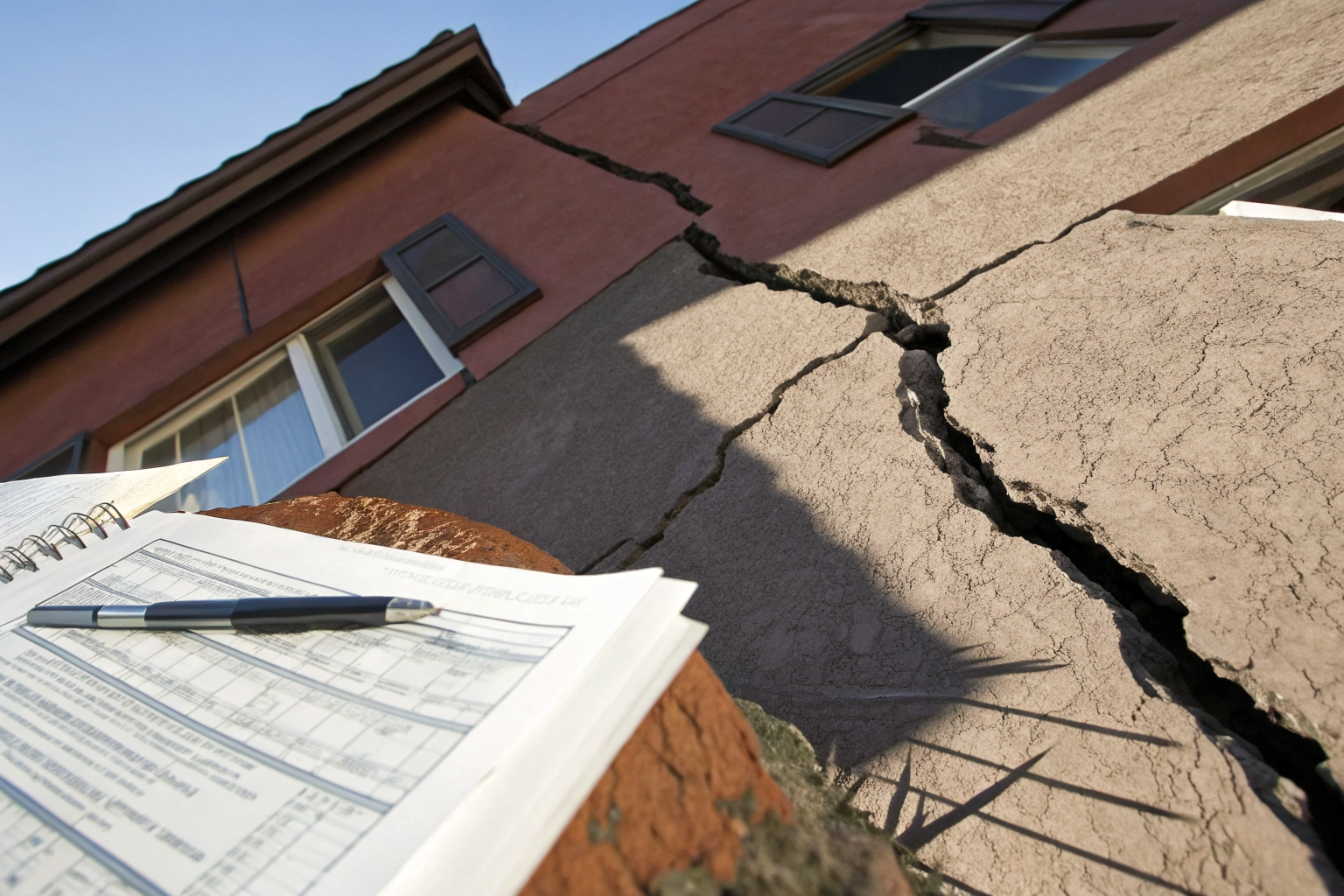
The deductible pass-through is the scenario most agents explain. The underinsured-association problem is the one most condo owners have never heard of, and it can produce a larger assessment.
Underinsured-association risk occurs when the HOA’s master policy had an insured value that was too low when the loss occurred. Replacement costs in Arizona have increased sharply over the past several years. Labor rates are up. Material costs have risen. Municipal permit requirements and code-upgrade mandates add cost to any significant reconstruction project. If the HOA last reviewed its master-policy limit three years ago, the building may now be insured for 70% of its actual replacement cost.
When a major loss occurs under those conditions, the carrier pays its policy limit. The gap between that limit and the actual repair bill becomes association debt. The board assesses unit owners to cover it. Under ARS 33-1253 (Arizona Condominium Act), condominium associations have explicit statutory authority to levy special assessments to fund repair costs not covered by association insurance proceeds. ARS 33-1803 gives planned community associations the same authority.
This exposure is distinct from a deductible pass-through because it can occur simultaneously with a deductible pass-through. A single event could produce two assessments: one for the master-policy deductible, one for the coverage gap above the exhausted limit. An owner with a $1,000 loss assessment limit faces both out of pocket.
Loss assessment coverage on an HO-6 condo policy can respond to the underinsured-building scenario if the assessment results from a covered peril. Flood-related assessments are a different matter. Much like asking whether you need flood insurance in Phoenix, whether a flood-driven HOA assessment triggers loss assessment coverage depends on whether the unit owner separately carries flood coverage, because the underlying peril must be covered under the owner’s own policy for most filed HO-6 forms to respond.
Owners should request the HOA’s current master policy from the board or property manager, note the building insured value, and ask a licensed agent whether that number reflects current replacement cost. The HO-6 policy exists to protect the unit; the master policy exists to protect the building. When the master policy falls short, the gap lands on you.
The underinsured-building problem also appears in auto contexts, Arizona drivers face a parallel exposure when the other driver’s liability limits don’t cover the full damage. Arizona uninsured motorist property damage coverage addresses that gap on the auto side the same way loss assessment coverage addresses it on the condo side.
Does Your Current HO-6 Policy Cover a Special Assessment? How to Check

The HO-6 declarations page shows the loss assessment limit and the coverage trigger language that determines whether your policy responds. Most unit owners have never looked at either. Here is a concrete checklist for evaluating your current coverage.
Pull your declarations page and locate the line item for loss assessment coverage. Note the dollar amount. If you don’t see a loss assessment line, the coverage may not be included or may require a separate endorsement, ask your agent.
Read the coverage trigger language in your policy form, not just the declarations page. Most DIFI-filed HO-6 forms in Arizona require the underlying association loss to result from a peril that the unit owner’s own policy covers. That language matters because it determines which assessments qualify.
Request a copy of the HOA’s master policy from the board or property manager. Note two specific numbers: the master-policy deductible and the total building insured value. Both drive your potential assessment exposure.
Calculate your per-unit deductible exposure. Take the master-policy deductible and divide it by the number of units, adjusted for your ownership percentage if the CC&Rs use a percentage-based formula rather than an equal split. Compare that figure to your current loss assessment limit.
Confirm whether your loss assessment coverage includes liability-judgment assessments. Property damage assessments and liability-judgment assessments are different triggers. Not all endorsements cover both. Ask your agent specifically whether a judgment against the HOA would trigger your coverage.
If you find a gap between your exposure and your limit, contact a licensed Arizona insurance agent. Adding or increasing loss assessment coverage is a simple endorsement and costs far less per year than a single uninsured assessment would.
Based on DIFI-filed HO-6 form language available in Arizona, loss assessment coverage requires that the underlying association loss result from a peril covered under the unit owner’s own policy. Flood-driven assessments are excluded unless the owner separately carries flood coverage. Policy language varies by carrier and form. This checklist is educational, it is not a substitute for professional review of your specific policy and HOA documents.
Frequently Asked Questions
Does condo insurance automatically cover special assessments in Arizona?
Most HO-6 policies in Arizona include loss assessment coverage as a standard feature, but the default limit is often only $1,000, far below what a real special assessment costs. You need to check the declarations page for the exact limit and confirm the coverage trigger language matches the type of assessment your HOA is likely to levy. A licensed Arizona insurance agent can review both your HO-6 policy and the HOA’s master policy to identify any gap before an event forces you to find out.
What is special assessment insurance and is it the same as loss assessment coverage?
Special assessment insurance is not a standalone product. It is the consumer phrase for loss assessment coverage, which is an endorsement or built-in feature of an HO-6 condo policy. Loss assessment coverage pays your share of a bill the HOA levies after a covered loss exceeds the association’s capacity to pay. Per DIFI-filed HO-6 form language in Arizona, the underlying loss must result from a covered peril for the assessment coverage to respond, meaning the type of event that caused the HOA’s loss matters as much as the assessment amount.
How much loss assessment coverage should I carry on my Arizona condo policy?
The right amount depends on three figures: your HOA’s master-policy deductible divided by the number of units, the HOA’s current building insured value versus its actual replacement cost, and the HOA’s liability coverage limit. The $1,000 default is not a defensible figure for most Phoenix-area buildings. A $25,000 to $50,000 limit is a more realistic starting point for a mid-size building, though larger buildings or associations with older master policies may warrant higher limits. Ask a licensed Arizona insurance agent to review the HOA’s master policy alongside your HO-6 before you set a number.