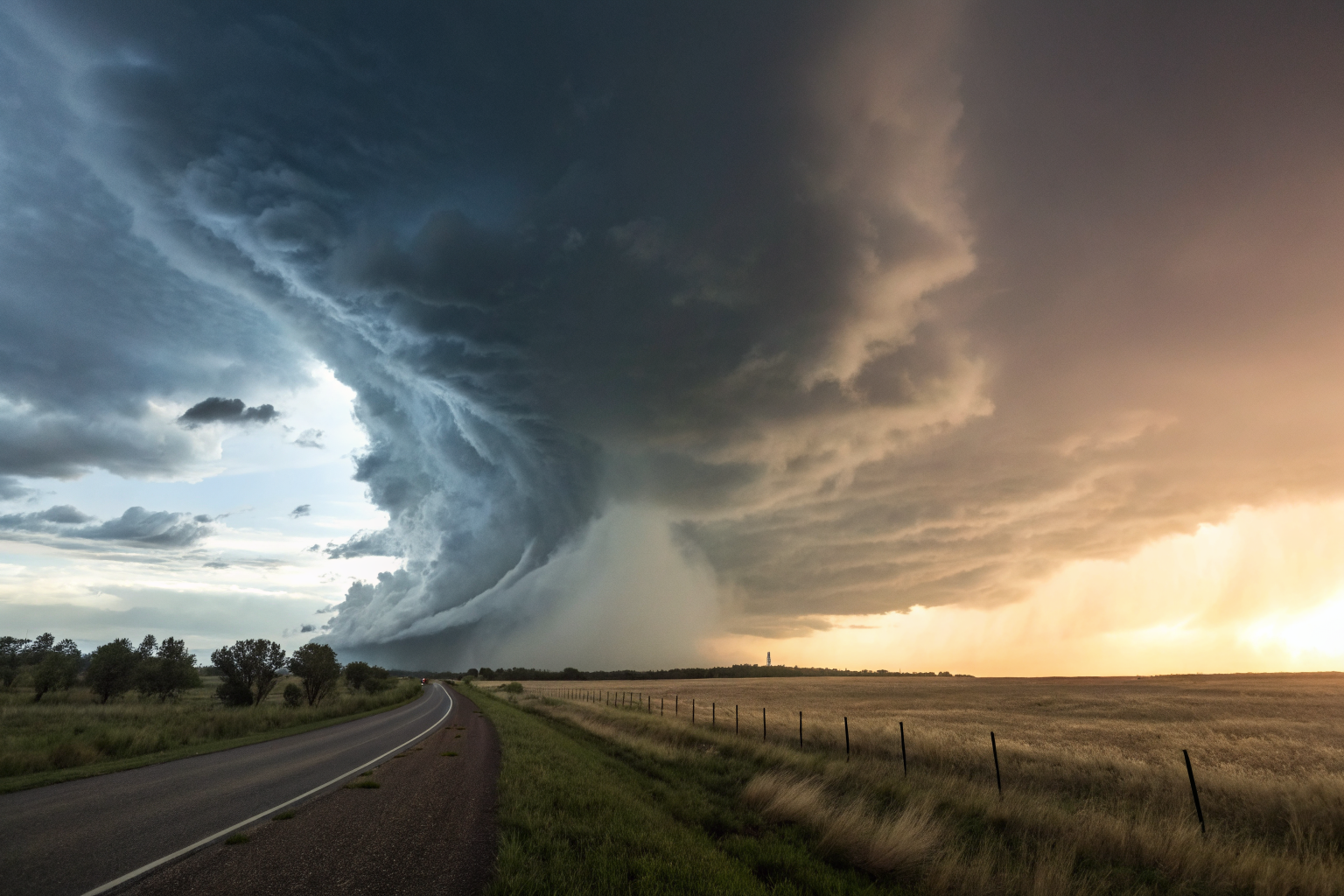
Wind hail percentage deductible math hits Arizona homeowners like a gut punch: your policy shows one deductible, but when a haboob strips your roof, a completely different deductible kicks in, and it can be ten times larger. This is one of the most misunderstood mechanics in any arizona homeowners insurance deductible discussion, and it’s covered in the broader arizona insurance guide for a reason: the gap between what homeowners expect and what they actually owe is enormous.
Key Takeaways:
- A wind/hail percentage deductible is a separate deductible, distinct from your flat all-other-perils deductible, triggered specifically by wind, hail, and in many Arizona policies, dust storms and monsoon events.
- On a $450,000 home with a 2% wind/hail deductible, you owe $9,000 out of pocket before the carrier pays anything on a roof claim, not the $1,000 or $2,500 flat amount most homeowners assume.
- A buyback endorsement can reduce or eliminate the wind/hail percentage deductible for an added premium, but fewer than half of Arizona homeowners with percentage deductibles know this option exists.
What Is a Wind/Hail Percentage Deductible, and Why Does Arizona Have One?

A wind/hail percentage deductible is a named-trigger deductible that applies only when wind, hail, or related perils cause the loss. This means it sits on your policy alongside your flat all-other-perils deductible, not instead of it, and activates on a completely separate set of events. For example, if a monsoon tears off your ridge cap tiles, the wind/hail percentage deductible applies. If a pipe bursts the following week, the flat deductible applies. Same policy, two different deductibles, two completely different math problems.
Arizona carriers filed separate percentage deductible structures with DIFI because the state’s monsoon season, haboob activity, and concentrated hail events created a roof-claim loss pattern that flat deductibles couldn’t price for. When carriers started absorbing clustered roof losses across thousands of Phoenix-metro homes in the same 72-hour window, they needed a mechanism that tied homeowner exposure to the actual insured value of the dwelling rather than a fixed dollar amount. The result is the wind/hail deductible structure that now appears on most AZ HO-3 policies.
Arizona monsoon season runs June through September, the same window responsible for the majority of AZ roof-damage claims that trigger wind/hail deductibles. That four-month period is when the percentage deductible on your policy stops being a footnote and starts being the number that decides whether your claim pays out.
The flat all-other-perils deductible still exists on the same policy. It covers fire, theft, plumbing failures, and any peril not named in the wind/hail trigger language. These are two separate deductibles. You do not get to choose which one applies.
Wind/Hail Deductible vs. Flat Deductible: The Side-by-Side That Changes the Math

The wind/hail percentage deductible produces a higher out-of-pocket cost than a flat all-other-perils deductible on the same claim event. The reason is structural: the percentage is always applied to your Coverage A dwelling limit, the main coverage number on your declarations page, not to the claim amount and not to the market value of your home.
That distinction is the single most misunderstood mechanical fact about these deductibles. A homeowner with a $500,000 Coverage A limit and a 2% wind/hail deductible owes $10,000 before the carrier pays a cent on a monsoon claim, regardless of whether the repair estimate is $12,000 or $80,000.
| Deductible Type | Trigger | How It Is Calculated | Example on $450,000 Home |
|---|---|---|---|
| Flat (all-other-perils) | Fire, theft, plumbing burst, lightning | Fixed dollar amount | $1,000 or $2,500 |
| Wind/hail percentage, 1% | Wind, hail, monsoon, dust storm, microburst | 1% of Coverage A dwelling limit | $4,500 |
| Wind/hail percentage, 2% | Wind, hail, monsoon, dust storm, microburst | 2% of Coverage A dwelling limit | $9,000 |
| Wind/hail percentage, 5% | Wind, hail, monsoon, dust storm, microburst | 5% of Coverage A dwelling limit | $22,500 |
Your weather deductible can be anywhere from 1% to 5% of your home’s main coverage. On a $500,000 home at 5%, that’s $25,000 out of pocket, and your carrier can raise that number at renewal without making sure you notice.
Notice that the flat deductible on the same $450,000 home is $1,000 to $2,500. A homeowner who calls in a monsoon claim expecting the flat deductible to apply will get a very different answer from their carrier. The declarations page lists both figures, but most homeowners glance at the lower number and assume that’s the one that matters during a storm.
If you have already read about the 5 percent deductible homeowners scenario, you know how fast these numbers escalate. The percentage deductible structure is the same mechanism, just applied specifically to storm-related perils instead of all covered losses.
What Perils Actually Trigger the Wind/Hail Deductible in Arizona?

Arizona wind/hail deductible triggers include monsoon wind, hail, haboob and dust storm events, and microburst activity, depending on how the carrier’s DIFI-filed policy form defines the term “windstorm.” Reading the exact trigger language in your own policy matters more than any general rule of thumb.
Here is what most AZ HO-3 filed forms cover under the wind/hail deductible trigger:
- Straight-line wind from monsoon storms. Most AZ-filed policy forms include this. A monsoon front that drives 60-mph winds across the East Valley and peels flashing off your roof is a wind event, full stop.
- Hail. The namesake trigger. Hail is always included in wind/hail deductible language, this one is not ambiguous.
- Haboob and dust storm. This depends on how your carrier defines “windstorm” in the DIFI-filed form. Some forms explicitly include blowing sand or dust as a windstorm peril. Others use narrower language. If you live in Maricopa or Pinal County and a haboob takes out a window or damages your exterior, you need to know which side of that line your policy sits on before you file.
- Microburst. A microburst is a severe downward wind event and is treated as a windstorm event in most AZ forms. Typically yes.
- Tornado. Rare in Arizona but not absent. Classified as a windstorm event in every standard filed form. Triggers the wind/hail deductible.
- Hurricane. Not a realistic AZ exposure, but standard policy language includes it under windstorm.
Perils that do NOT trigger the wind/hail deductible include fire (even if wind-driven), theft, plumbing water damage, and in many forms, lightning without associated wind involvement.
The HOAIC Arizona HO-3 policy form (DIFI-filed March 2025) uses “windstorm or hail” as the separate-deductible trigger, the exact wording controls whether a dust storm claim hits the flat or percentage deductible. “Windstorm or hail” is the most common phrasing in standard AZ filed forms. “Wind” alone is broader and more common in surplus lines forms. The difference can be thousands of dollars on a claim.
If you are still working through whether certain water entry from a storm is covered at all, separate from which deductible applies, the question of flood coverage is a related but distinct issue worth understanding before monsoon season.
What Is a 2% Wind/Hail Deductible, Exactly What You’d Owe on a Real Claim

A 2% wind/hail deductible on a $450,000 dwelling means $9,000 out of pocket before the carrier pays a single dollar on a hail or monsoon roof claim. Here is what that looks like on an actual claim.
An Arizona homeowner carries a $450,000 Coverage A limit with a 2% wind/hail deductible. A monsoon storm strips ridge cap tiles and damages the underlayment across three roof planes. The roofing contractor’s repair estimate comes in at $14,500. The homeowner calls their agent expecting the $1,500 flat deductible they vaguely remember from their renewal packet.
Here is the math the carrier runs:
2% x $450,000 = $9,000 wind/hail deductible. Carrier pays $14,500 minus $9,000 = $5,500.
The homeowner expected to pay $1,500. They owe $9,000.
Now run the same Coverage A limit at three different deductible percentages:
- 1% wind/hail deductible on $450,000: homeowner owes $4,500 before the carrier pays anything.
- 2% wind/hail deductible on $450,000: homeowner owes $9,000.
- 5% wind/hail deductible on $450,000: homeowner owes $22,500.
At 5%, a repair estimate of $20,000 means the carrier pays zero. The homeowner covers the full repair out of pocket. And that claim still gets reported to CLUE, the database carriers check when you apply for coverage or renew, even though no insurance payment was made.
On a $500,000 home with a 5% wind/hail deductible, a $22,000 hail-damage repair falls entirely below the deductible. The carrier pays zero and the claim still hits the homeowner’s CLUE report.
That last scenario is more common than most homeowners expect. The repair amount sitting below the deductible is not a fringe case at 5%. It happens with standard monsoon damage on homes insured at higher Coverage A limits. Filing a claim that produces no payment and leaves a mark on your loss history is the kind of discovery that changes how people think about their deductible structure.
This dynamic also intersects with situations where arizona uninsured motorist property damage questions arise, in both cases, the core frustration is the same: you paid for coverage, you filed a claim, and you got less than you expected or nothing at all.
Can You Buy Down a Wind/Hail Percentage Deductible in Arizona?

A wind/hail buyback endorsement reduces the percentage deductible back to a flat dollar amount or lower percentage for an additional annual premium. This means you can pay to replace a 2% or 5% wind/hail deductible with a flat $1,000 or $2,500 deductible, depending on what the carrier has filed with DIFI and whether your home qualifies.
Not every AZ carrier offers this. Availability depends on the carrier’s DIFI-filed endorsement forms, your home’s roof age, and the construction type. Older roofs, particularly those triggering the 25-50% age surcharge carriers apply to homes with roofs over 20 years old, may not qualify for a buyback at all.
Here is how to find out where you stand and what to do about it:
- Pull your declarations page and find the wind/hail deductible line. It will appear as a separate line item from the flat all-other-perils deductible. If you see a percentage listed next to a wind/hail or windstorm trigger, that is the deductible you would owe on a monsoon or hail claim.
- Ask your agent whether your carrier has a buyback or deductible-reduction endorsement for wind/hail on file with DIFI. The agent should be able to confirm whether this endorsement exists on your carrier’s form set and whether your property qualifies.
- Get the premium cost in writing. Buyback endorsements are priced as annual add-ons. The cost varies by carrier and by how much deductible reduction you are buying.
- Do the math on break-even. If a buyback costs $300 per year and reduces your exposure from $9,000 to $2,000, you are saving $7,000 per qualifying claim. Three monsoon seasons without a claim and you have paid $900 for $7,000 of protection, that math works in most scenarios.
- At every renewal, confirm the deductible structure has not changed. Carriers can raise the percentage at renewal and are required to disclose it, but disclosure often appears as a line-item change in the renewal packet rather than a prominent alert. Most homeowners do not catch it until they file a claim.
Under ARS 20-1652, Arizona carriers must provide 45 days’ notice before a non-renewal and must include material policy changes in renewal notices, but a deductible structure change buried in a renewal packet is legal and common.
Whether your deductible renews every year at the same level, or gets quietly adjusted, is worth verifying at every renewal cycle. The deductible renewal process is not automatic protection against increases; it is an opportunity for the carrier to reset the terms.
For anyone asking whether this level of scrutiny applies only to homeowners insurance or carries over to other coverage decisions, the same pattern of assuming “enough” coverage holds until a claim proves otherwise shows up in auto coverage questions too. Whether you are looking at minimum car insurance adequacy or a wind/hail deductible on your home, the gap between what you assume and what you actually carry is where the real exposure lives.
Frequently Asked Questions
How does a wind and hail deductible work on my Arizona homeowners policy?
A wind/hail deductible is a separate deductible that applies only when wind, hail, or related perils, like a monsoon or haboob, cause the damage. It is calculated as a percentage of your Coverage A dwelling limit, not the amount of your claim. If your home is insured for $400,000 with a 2% wind/hail deductible, you owe $8,000 out of pocket before your carrier pays anything on a qualifying storm claim.
Does my wind and hail deductible apply to monsoon damage in Arizona?
In most Arizona-filed HO-3 policy forms, yes, monsoon wind and hail damage triggers the wind/hail percentage deductible, not the lower flat all-other-perils deductible. Whether a haboob or dust storm also triggers it depends on how your carrier’s filed form defines “windstorm.” Review the separate-deductible trigger language on your declarations page or ask your agent to confirm which perils activate the percentage deductible on your specific form.
Can my insurance company raise my wind hail deductible at renewal without telling me?
Arizona carriers can change your deductible structure at renewal under ARS 20-1652, but they are required to include material policy changes in your renewal notice. The problem is that disclosure typically appears in the renewal packet as a line-item change rather than a prominent warning, most homeowners do not catch it until they file a claim. Compare the wind/hail deductible line on your new declarations page against last year’s every single renewal cycle.