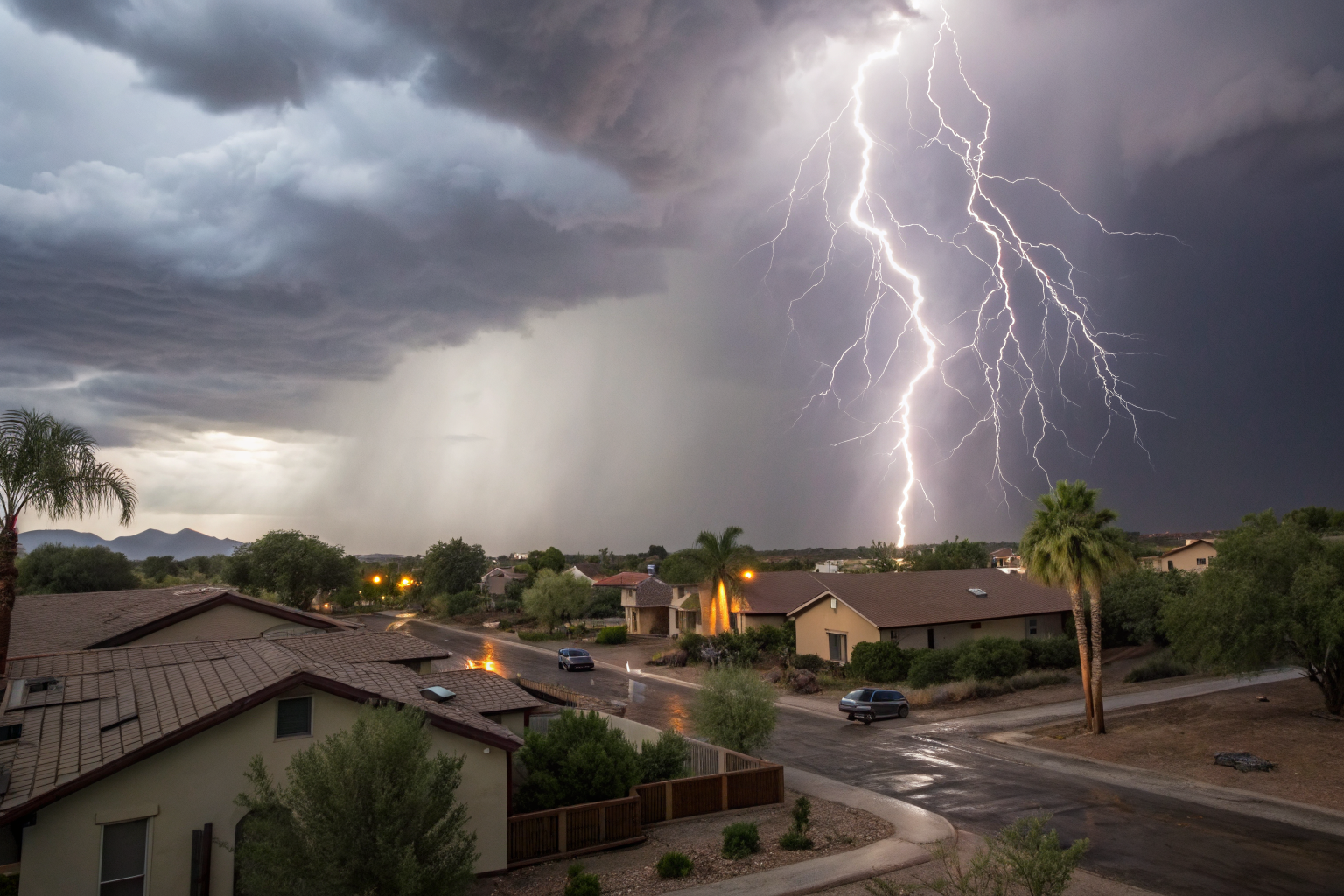
Arizona monsoon insurance exclusions are the reason so many storm claims come back denied, and the standard HO-3 policy excludes more of what happens during those storms than most homeowners ever find out until the claim is already filed. Monsoon season runs June through September, and knowing these gaps before a storm hits is the only way to act on them.
Key Takeaways:
- At least five named exclusions in a standard Arizona HO-3 can be triggered by a single monsoon event, flash flood, earth movement, dust storm, wind-driven rain, and anti-concurrent causation are the most common denial drivers.
- The NFIP flood policy carries a 30-day waiting period, meaning a homeowner who buys it after a storm warning has zero coverage for that event, a gap the standard HO-3 also does not fill.
- The anti-concurrent causation clause allows a carrier to deny the entire claim, including wind damage that would otherwise be covered, if an excluded peril like flooding contributed to the same loss event.
Quick Answer: 6 Arizona Monsoon Insurance Exclusions That Deny Claims
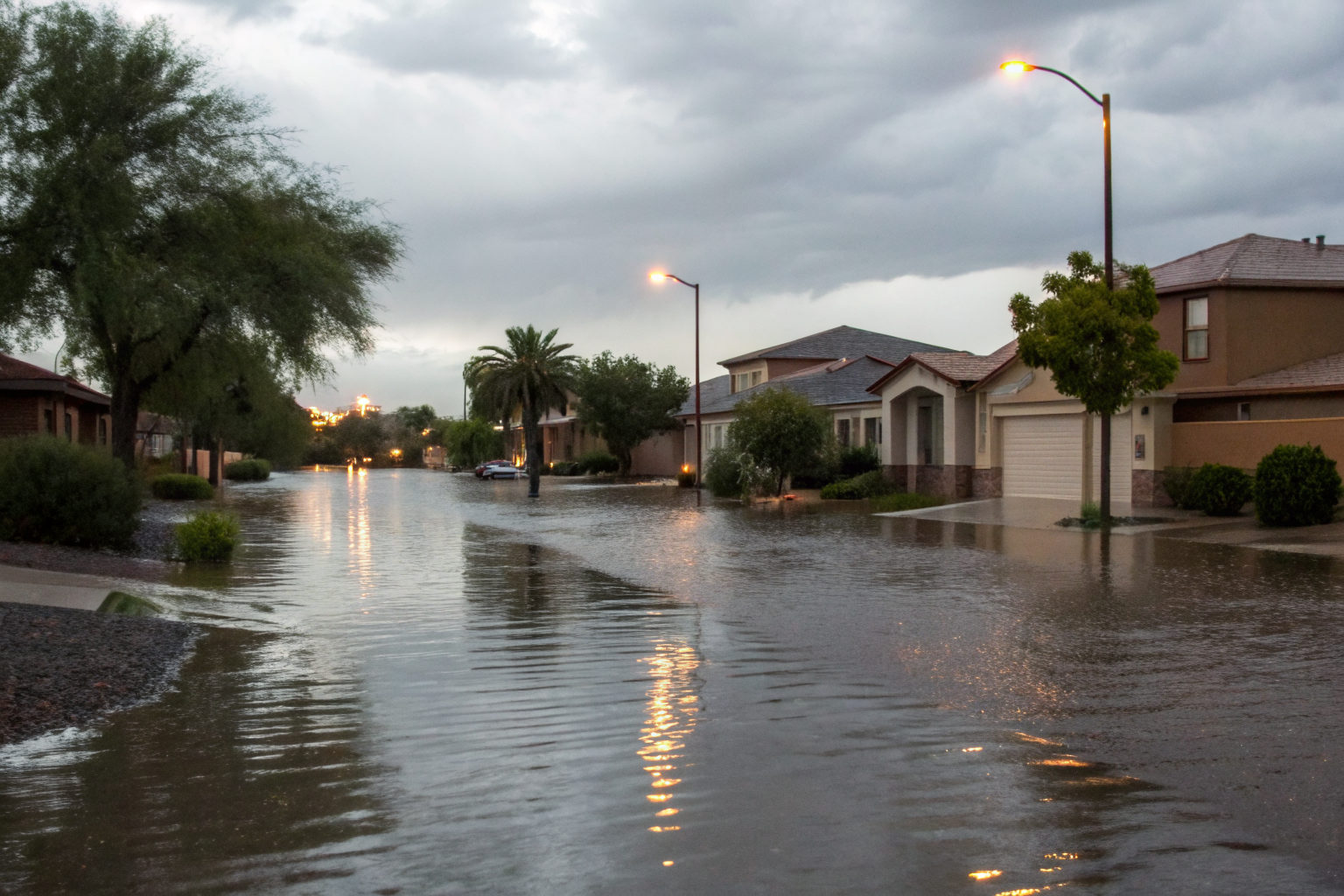
- Flash flood / surface water exclusion, Water entering from ground level is excluded under every standard HO-3 filed in Arizona; it requires a separate NFIP or private flood policy.
- Wind-driven rain exclusion, Rain pushed through an intact window seal or door gap is excluded unless wind physically breached the structure first.
- Earth movement exclusion, Foundation cracking from monsoon-saturated expansive clay soil is classified as earth movement, not storm damage, and is excluded.
- Dust storm (haboob) exclusion, HVAC and interior surface damage from fine particulate infiltration falls under the pollution or dust carve-out in most filed HO-3 forms.
- Anti-concurrent causation clause, When an excluded peril and a covered peril occur in the same event, the carrier can deny the entire claim, not just the excluded portion.
- NFIP 30-day waiting period gap, Neither the HO-3 nor a newly purchased NFIP policy covers a flash flood event if the policy was bought after the storm warning was issued.
Each of these is covered in detail below. For the percentage deductible structure that applies once a claim does survive these exclusions, the companion article on the monsoon deductible in Arizona covers how that math works. The broader Arizona insurance guide covers how these exclusions fit into the full homeowners coverage picture.
The Six Named Exclusions Most Likely to Kill an Arizona Monsoon Claim

Standard HO-3 policies exclude at least six perils routinely triggered during Arizona monsoon season. Per the HOAIC Arizona HO-3 policy form filed with the Arizona Department of Insurance and Financial Institutions (DIFI) in March 2025, earth movement, flood, surface water, and water that backs up through sewers are each listed as standalone named exclusions, not sub-bullets of a single exclusion. Individual policy forms vary, so review your own declarations page or speak with a licensed agent before assuming any of these apply or don’t apply to your specific coverage.
- Flash flood / surface water exclusion. Water that flows in under a door from a flooded street, enters through a wash overflow, or pools against the foundation from surface runoff is classified as flood or surface water. The HO-3 excludes it entirely. The consumer-native framing, “the water came in under the door”, describes exactly the scenario this exclusion is designed to reach, and most homeowners assume it is a water damage claim. It is not.
- Wind-driven rain exclusion. Rain that enters through an intact, undamaged opening is excluded. This is a separate exclusion from flood, and it fires when rain is pushed horizontally through window seals or door gaps during a microburst without any structural breach occurring first.
- Earth movement exclusion. Soil heave, foundation cracking, and settling caused by monsoon saturation of expansive clay soils fall under earth movement. Per the HOAIC filed form, this exclusion applies regardless of the cause of the earth movement, including storm-related soil saturation.
- Dust storm (haboob) exclusion. Fine particulate infiltration damage is often captured by the pollution or dust carve-out written into most filed HO-3 forms. HVAC system damage and interior surface damage from a haboob are the most common scenarios.
- Sewer or drain backup exclusion. Monsoon rainfall overwhelms municipal systems regularly in the Phoenix metro. Water that enters through a backed-up floor drain or toilet is excluded under the standard form unless a specific backup endorsement is in place.
- Anti-concurrent causation clause. This clause functions differently from the others, it is not an exclusion of a single peril but a provision that allows the carrier to deny the entire loss when any excluded peril contributes to the event. It is covered in full in Section 4 below.
Not all of these exclusions appear identically across every carrier’s filed form. Some are standard across virtually every filed Arizona HO-3; others appear in carrier-specific endorsement language. DIFI’s consumer complaint process is available to homeowners who believe an exclusion was applied incorrectly, but the first step is knowing the exclusion exists.
Flash Flood vs. Wind Damage: Where the Coverage Line Actually Falls

The coverage outcome depends on whether water entered the structure from above or from ground level. This single distinction determines whether your HO-3 responds, whether the NFIP responds, and whether both policies might fight over the same loss. FEMA’s NFIP Standard Flood Insurance Policy defines “flood” to include surface water, mudflow, and overflow of inland waters, meaning a wash overflow entering a garage qualifies as an NFIP flood event, not an HO-3 wind event, regardless of what caused the storm.
The “opening created by wind” doctrine is the primary tool homeowners have for keeping rain damage inside HO-3 coverage. If wind physically breaches the structure first, removes roof decking, breaks a window, tears off a soffit panel, and rain then enters through that breach, most filed HO-3 forms cover the resulting interior damage under the wind peril. If rain is pushed through an intact, undamaged window seal or door gap during a microburst, the carrier treats it as wind-driven rain and either excludes it or applies a specific endorsement requirement.
The NFIP 30-day waiting period matters here because homeowners frequently try to purchase flood coverage after a storm warning is issued. Per FEMA’s published NFIP policy terms, that policy provides zero coverage for the triggering event. Attribution: FEMA NFIP policy terms govern flood coverage; HO-3 interpretation draws from DIFI-filed policy language.
| Damage Scenario | HO-3 Response | NFIP Response |
|---|---|---|
| Rain enters through wind-damaged roof opening | Covered (wind peril, opening created by wind) | Not covered (wind damage, not flood) |
| Water flows in under door from flooded street | Excluded (surface water / flood exclusion) | Covered (surface water qualifies as flood under NFIP definition) |
| Rain driven through intact window seal during microburst | Excluded or disputed (wind-driven rain exclusion) | Not covered (not a flood event) |
| Wash overflow enters garage as standing water | Excluded (flood / surface water exclusion) | Covered (overflow of inland waters per NFIP definition) |
| Simultaneous wind breach + ground flooding (same event) | Disputed, ACC clause may void entire claim | Covered only for flood portion, not wind damage |
| Flood policy purchased after storm warning issued | HO-3 does not fill this gap | Not covered, 30-day waiting period applies |
For homeowners in areas near canals, washes, or low-lying streets, flood insurance through the NFIP or a private carrier is a separate purchase that needs to happen before storm season, not during it. Flood insurance coverage for Phoenix-area monsoon events is a topic the companion article on flood insurance and Phoenix monsoon events covers in detail.
Does Wind-Driven Rain Have Its Own Exclusion in Arizona Homeowners Policies?
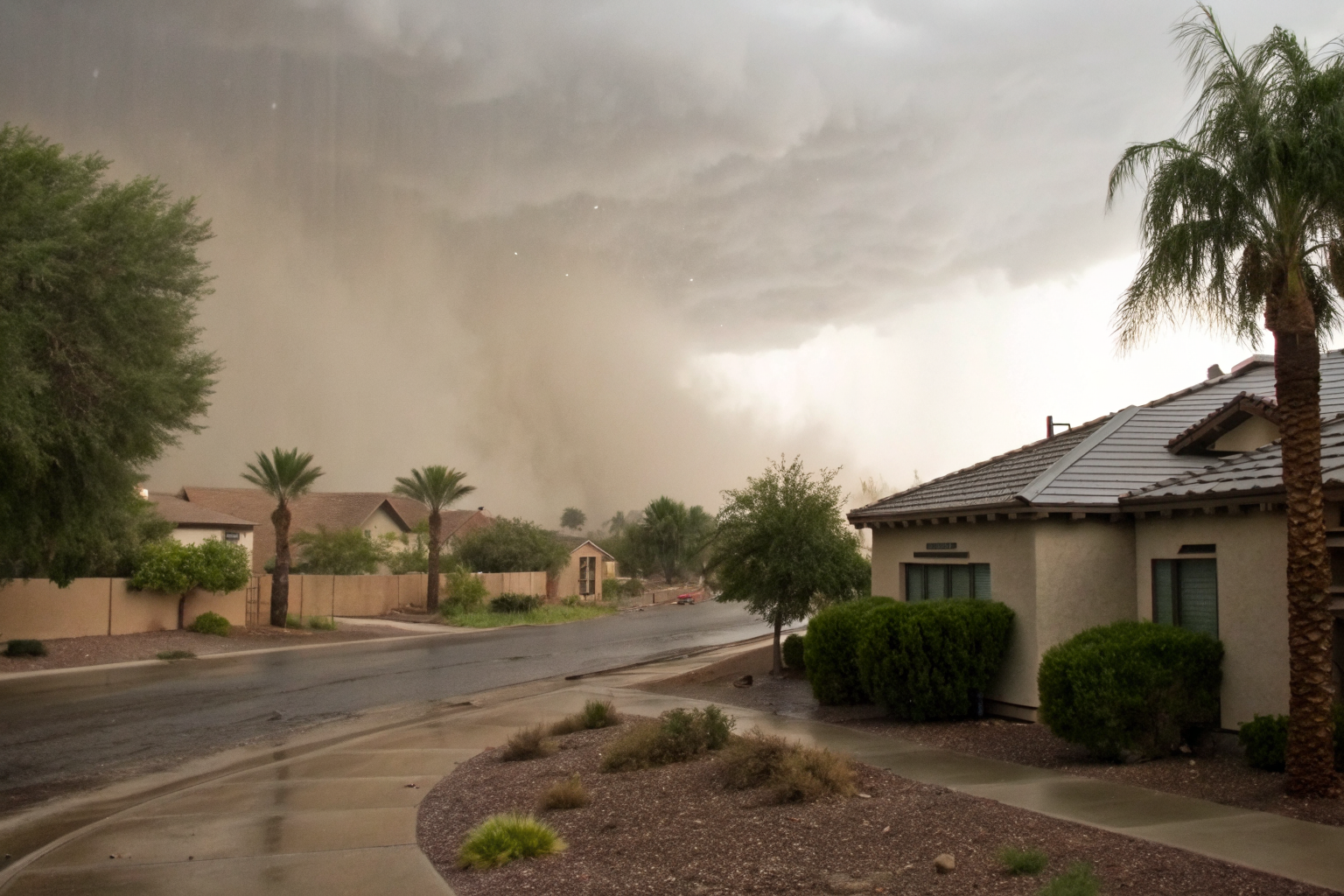
Wind-driven rain exclusion is a provision that applies when rain enters a structure through an intact, undamaged opening or surface, not through a breach that wind caused. This means a haboob followed immediately by a rain event that pushes water through window seals on a structurally intact home is the exact scenario this exclusion is designed to reach. The exclusion operates independently from the flood exclusion in most filed Arizona HO-3 forms, a homeowner can be denied under both in the same storm event for two different types of water intrusion.
Arizona monsoon season runs June 15 through September 30, per the National Weather Service, a 107-day window in which haboobs, microbursts, and flash floods routinely occur as sequential or simultaneous events on the same property. That sequencing matters. A haboob that reduces visibility to zero can precede a microburst by minutes. If the microburst then drives rain through window seals before any structural breach occurs, the wind-driven rain exclusion fires.
The opening-created-by-wind doctrine is the primary rebuttal available to homeowners, but it requires documentation. A carrier disputing this exclusion will ask for evidence that the breach happened before water entry, a cracked window frame, missing roof tile, or damaged soffit photographed in the sequence it occurred. Without that evidence, the exclusion stands.
Carrier interpretation of wind-driven rain exclusion language varies across DIFI-filed forms. Some carriers include specific endorsements that extend coverage for wind-driven rain without requiring proof of structural breach. Review your specific policy language and speak to a licensed agent before assuming coverage applies.
This exclusion also interacts with the anti-concurrent causation clause covered in the next section. When wind-driven rain and surface flooding occur in the same event, the ACC clause can void the entire claim, including any wind damage that would otherwise be covered.
The Anti-Concurrent Causation Trap: How One Excluded Peril Voids the Entire Claim
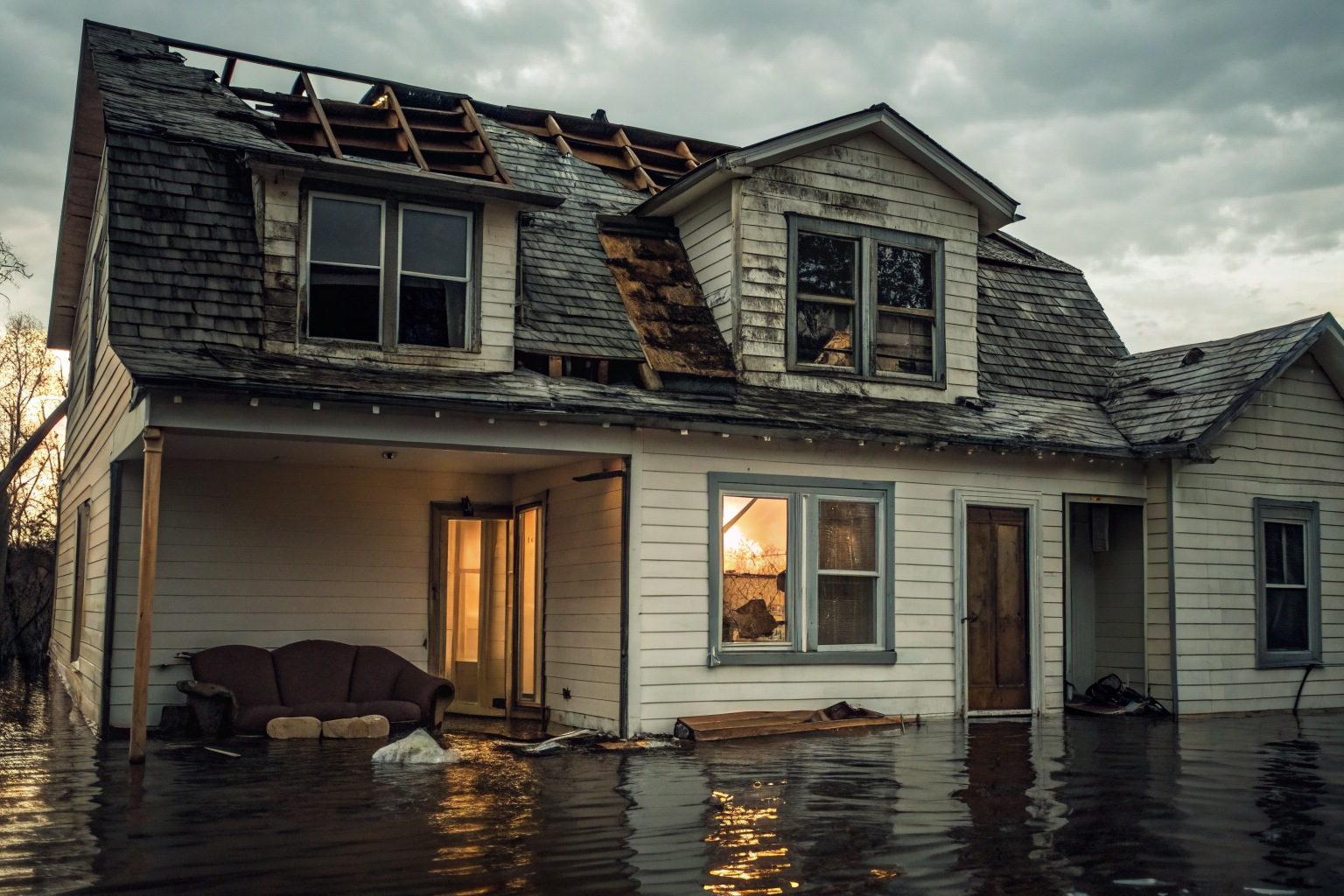
Anti-concurrent causation clauses allow carriers to deny the entire loss when an excluded peril contributes to the same event, even if covered perils also caused damage. In plain English: you do not get the wind damage covered and the flood excluded. Under ACC language, the carrier can deny everything.
This is the most dangerous clause in the HO-3 for monsoon events because monsoon damage almost never involves a single peril. A microburst arrives. The roof takes wind damage. Thirty seconds later, a wash overflows and water enters the ground floor. Both events happen to the same house in the same storm. The wind damage would be covered on its own. The flood is excluded. But the ACC clause allows the carrier to argue the entire loss is excluded because an excluded peril, the flood, contributed to the same loss event.
The Insurance Information Institute identifies anti-concurrent causation provisions as a leading driver of disputed hurricane and storm claims nationally. That same clause language appears in standard HO-3 forms filed in Arizona, per DIFI’s filed-form records. The clause has been litigated in multiple states and outcomes vary, courts in some states have limited its enforceability, while others have upheld it. Arizona homeowners facing an ACC-based denial should consult a licensed public adjuster or coverage attorney. This is not legal advice, it is a flag that professional review of an ACC denial is worth pursuing.
The ACC clause is also why documentation sequence matters so much. If you can establish that wind caused a distinct breach before any flood water entered, you have a factual basis to argue the losses are separable, wind damage from the breach, flood damage from the overflow. Without that sequence documented in real time, the carrier has no obligation to separate them.
This discussion is separate from the percentage deductible structure that applies once a covered claim does survive these exclusions. The companion article on the Arizona monsoon deductible covers how that math works once coverage is confirmed.
Earth Movement and Dust Storm Exclusions: The Two Arizona-Specific Traps Nobody Explains at Closing
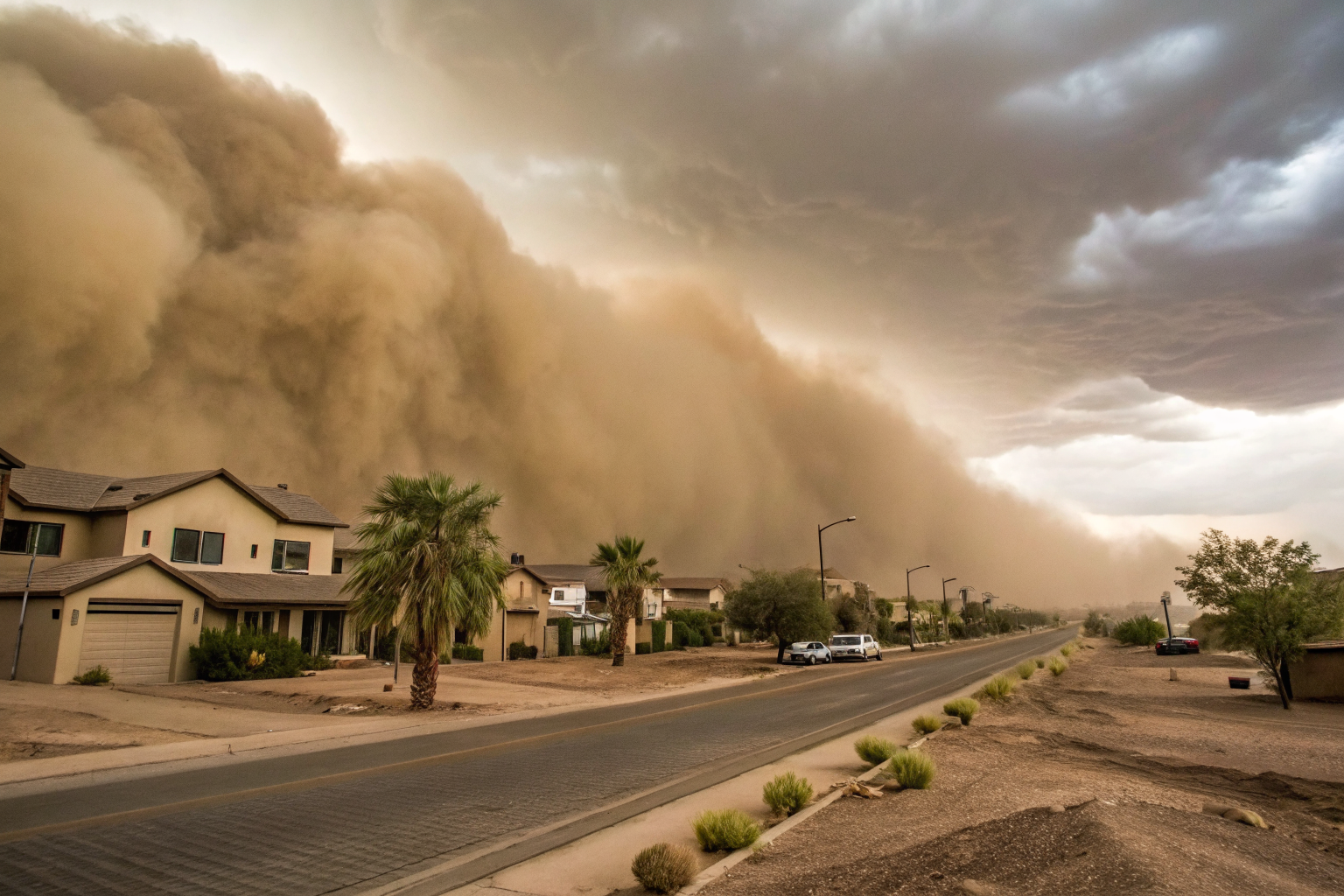
Earth movement and dust storm exclusions apply to damage types that are disproportionately common in Arizona monsoon events compared to the national norm. Most homeowners in other states never encounter these exclusions in a storm claim. In the Phoenix metro and East Valley, they fire regularly.
The earth movement exclusion applies directly to a pattern that repeats every monsoon season. The Phoenix metro and East Valley sit on significant expansive clay soil deposits, documented in the Arizona Geological Survey’s publicly available soil mapping. When those soils absorb monsoon rainfall, they swell. When they dry out, they contract. The resulting soil heave causes foundation cracking, door frame shifts, and structural settling. Homeowners assume this damage is storm-related and therefore covered. The carrier classifies it as earth movement, a standalone named exclusion in most filed HO-3 forms, and denies it. Per the HOAIC filed form, the earth movement exclusion applies regardless of what caused the movement, including storm-related soil saturation.
The Arizona Geological Survey has mapped expansive soil zones across the Phoenix metro, with significant coverage in the East Valley, areas where monsoon-triggered soil heave is a documented recurring event, not an isolated occurrence. That mapping is a public resource homeowners and agents can use to assess foundation exposure before a claim.
The dust storm exclusion is less intuitive. Fine particulate infiltration from a haboob causes real damage: HVAC filter and coil contamination, damaged window seals, fine abrasive wear on interior surfaces. Most homeowners expect this to be covered under the storm peril. Many HO-3 forms capture it under a pollution or dust carve-out, language broad enough to exclude particulate infiltration damage even when the cause is a natural weather event, not an industrial or chemical source.
These exclusions are property-specific and policy-specific. Review your declarations page and speak with a licensed agent before assuming a foundation or HVAC claim will be covered after a monsoon event.
Where Neither Your HO-3 Nor the NFIP Responds, and How to Document Your Way Out of the Gray Zone

Exclusion-aware documentation reduces the carrier’s ability to invoke concurrent causation or misclassify the damage sequence. There are two gap scenarios where neither policy responds, and documentation is the only tool available to homeowners in both.
Gap scenario one: A homeowner without flood coverage gets hit by flash flooding. The HO-3 excludes it. No NFIP policy exists. That loss has no coverage, period. FEMA’s NFIP 30-day waiting period means a policy purchased after a storm warning provides zero coverage for that event, a gap the standard HO-3 does not fill under any exclusion override.
Gap scenario two: A homeowner carries both an HO-3 and an NFIP policy and gets hit by a simultaneous wind-flood event. The HO-3 carrier invokes the ACC clause and argues the flood contribution voids the wind coverage. The NFIP adjuster argues the damage is wind, not flood, and declines the flood portion. The homeowner is left with two policies and no payout.
Documentation is the primary tool for preserving a claim across both scenarios. Take these steps on the day of the storm, before any cleanup begins:
- Photograph breach points before photographing interior damage. Capture the roof opening, cracked window frame, or damaged door threshold first, these establish the entry point that determines wind peril vs. flood peril classification.
- Timestamp every photo using the camera’s metadata or a news broadcast visible on a screen in the shot. Timestamps establish sequence, which is what the ACC defense requires you to prove.
- Write a same-day narrative of the storm sequence. Note when wind arrived, when rain started, when water appeared inside, and where it came from. This written record is harder to dispute than memory reconstructed weeks later.
- Pull National Weather Service records for your zip code. Wind speed, precipitation data, and storm cell timing are publicly available and corroborate your sequence narrative. Access the NWS Arizona forecast office records at weather.gov.
- Keep contractor estimates separated by damage type. A single estimate covering “storm damage” gives the carrier latitude to apply the ACC clause. Separate estimates for roof/wind damage, water intrusion, and foundation issues give you a documented basis to argue the losses are distinct.
- Contact DIFI Consumer Services if a claim is denied. Per DIFI’s published consumer complaint procedures, DIFI accepts complaints and provides a formal review process. This does not guarantee any particular outcome, but it creates a record and triggers a carrier response obligation.
If you have questions about how your specific policy handles monsoon exclusions, speaking with a licensed agent before storm season, not after a denial, is the most practical step available. Agents across Arizona’s Phoenix metro service areas, from Scottsdale to Mesa, can review your current policy language against the DIFI-filed form for your carrier and identify gaps before they become denied claims.
Frequently Asked Questions
Does homeowners insurance cover flash flood damage from an Arizona monsoon?
No. Standard HO-3 homeowners policies exclude flood, surface water, and overflow from bodies of water, all of which describe flash flood conditions common during Arizona monsoon season. Flash flood coverage requires a separate NFIP policy or private flood policy, and the NFIP carries a 30-day waiting period, meaning a homeowner cannot buy it after a storm warning and expect coverage for that specific event.
What is the difference between flash flood damage and wind damage for an insurance claim in Arizona?
The key distinction is how and where water entered the structure. If wind physically breached the roof or walls and rain followed through that opening, most HO-3 forms cover the resulting damage under the wind peril. If water entered from ground level, flowing in under doors, through a wash overflow, or as standing surface water, that is a flood event excluded under the HO-3. The anti-concurrent causation clause complicates this further: if both perils occurred at the same time, a carrier may deny the entire claim, including the wind portion.
Can an insurance company deny my entire monsoon claim even if some of the damage was from wind?
Yes, if your HO-3 contains anti-concurrent causation language and an excluded peril such as flood contributed to the same loss event. Under ACC provisions, the carrier does not have to separate covered and excluded damage, the presence of any excluded peril can void the entire claim. If you receive an ACC-based denial, you may want to consult a licensed public adjuster or coverage attorney, and you can file a complaint with DIFI Consumer Services for a formal review per DIFI’s published complaint procedures.
Policy forms, exclusion language, and carrier practices vary. Review your specific declarations page and consult a licensed insurance agent for advice specific to your situation. This article references the HOAIC Arizona HO-3 policy form filed with DIFI in March 2025 and FEMA NFIP Standard Flood Insurance Policy terms as authoritative sources; your carrier’s filed form may differ.