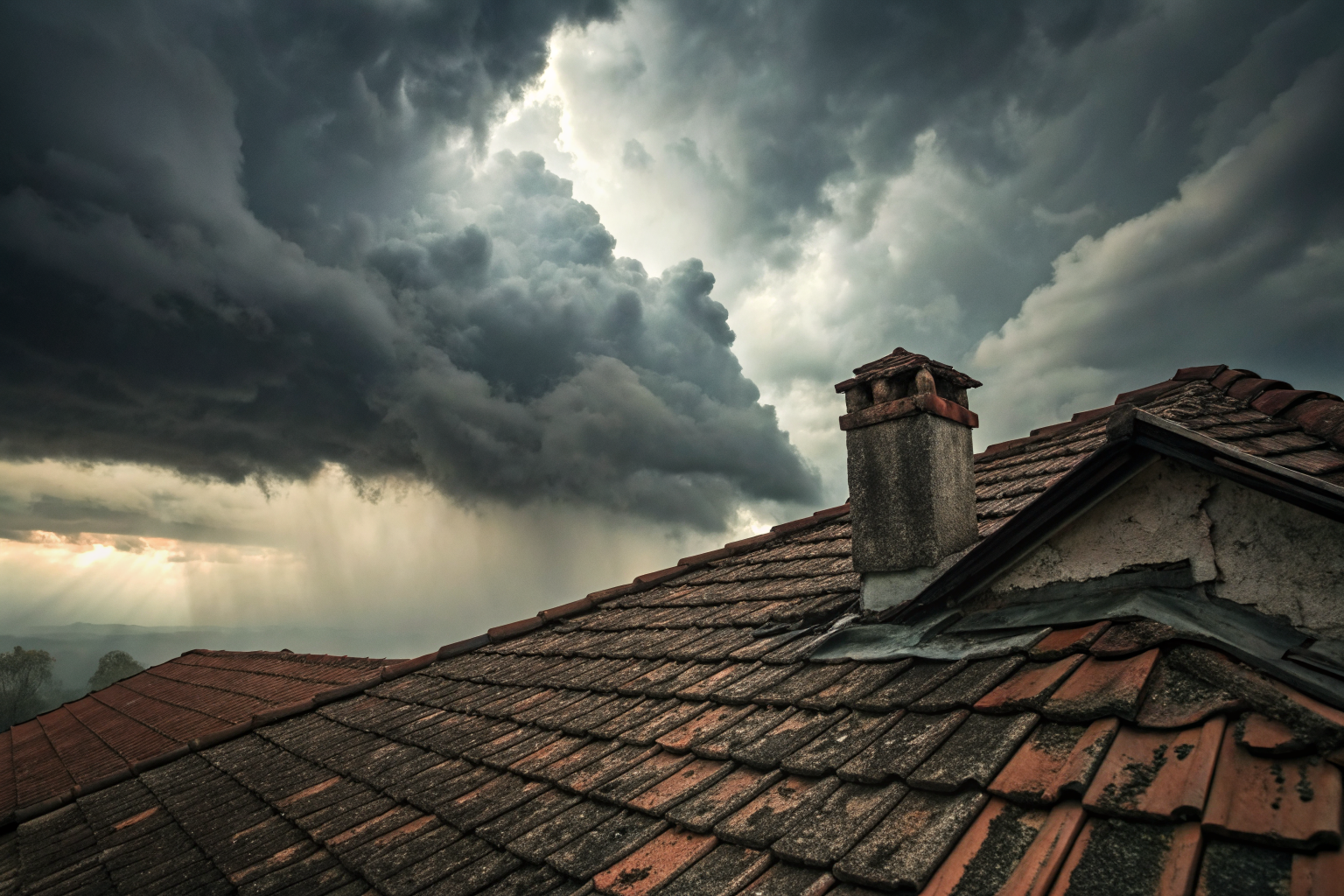
Can insurance deny a roof claim in Arizona because of age? As of 2025, the answer under standard HO-3 policy language is yes. Your carrier didn’t deny your roof claim because of the storm. They denied it because of what was already wrong with the roof before the storm hit. Understanding the mechanics is the difference between accepting a low settlement and knowing when to push back.
Key Takeaways:
- Arizona HO-3 policies exclude wear-and-tear damage by contract, and carriers can cite pre-existing deterioration to deny or partially pay roof claims regardless of whether a storm triggered the discovery.
- Carriers who settle on ACV instead of RCV can withhold the depreciation holdback until repairs are complete, meaning a homeowner on a 20-year-old roof may receive far less than the replacement cost before work even starts.
- Arizona has no statute that requires carriers to match undamaged roof sections to replaced ones, making the matching argument a negotiation rather than a legal right, and the appraisal clause is often the only formal escalation path short of litigation.
Can Insurance Actually Deny a Roof Claim Because of Age?

The wear-and-tear exclusion is contract language, not adjuster discretion. The HOAIC Arizona HO-3 policy form, filed with DIFI in March 2025, lists wear-and-tear, deterioration, and latent defect as named exclusions in the policy’s exclusion section. This means the homeowners insurance HO-3 policy you signed at closing already contained the language a carrier needs to deny or reduce a roof claim on age grounds.
Here is how the roof claim denial mechanic works in practice. The carrier does not have to prove the storm caused zero damage. The adjuster only needs to establish that pre-existing deterioration was a contributing cause or the primary cause of the loss. That is a much lower bar than most homeowners expect.
The result is either a full denial or a partial one. A full denial means no payment. A partial denial typically takes the form of an ACV settlement: the carrier pays the depreciated value of the roof based on its age and condition at the time of loss, then withholds the remainder. If you received a letter citing “pre-existing condition” or “pre-existing deterioration,” that letter is invoking this exclusion by name.
The Arizona Department of Insurance and Financial Institutions (DIFI) regulates the claims process and requires carriers to handle claims in good faith under ARS 20-461, but DIFI does not prohibit age-based exclusions when those exclusions are contractually stated. A carrier relying on wear-and-tear language in a properly filed form is operating within the rules.
This is not legal advice. If you believe a denial was applied incorrectly to your specific facts, consult a licensed public adjuster or an Arizona insurance attorney for guidance specific to your situation.
For broader context on how roof age affects coverage decisions from the start, the full picture on roof age and homeowners insurance in Arizona covers underwriting criteria, inspection triggers, and renewal consequences in detail.
The Four Specific Reasons Arizona Carriers Deny or Partially Pay Roof Claims

Roof claim denial results from four distinct carrier defenses applied at the time of adjustment. Each one has its own trigger, and more than one can apply to the same claim.
Wear-and-tear exclusion applied at inspection. The adjuster documents pre-existing granule loss, cracked shingles, or tile underlayment failure and determines the roof was already deteriorating before the storm arrived. Under the HO-3 wear-and-tear exclusion, damage attributable to that existing condition is not a covered peril. A homeowner with a 22-year-old tile roof in Chandler who files a monsoon claim may find that the adjuster’s report spends more space on the underlayment’s condition than on the storm event itself.
ACV settlement on older roofs. Rather than paying full replacement cost, the carrier pays actual cash value, meaning the roof’s depreciated worth at the time of loss. On a roof past its mid-life, the ACV check can be thousands of dollars short of what a contractor will charge to replace it. This is not a denial, but the out-of-pocket gap can make it feel like one. Replacing an aging roof eliminates the 25-50% age surcharge carriers apply to homes with roofs over 20 years old, and the same age math that drives that surcharge is the math the adjuster uses when calculating ACV depreciation on a claim.
Material misrepresentation at application or renewal. If a homeowner did not disclose the roof’s age accurately when the policy was written or renewed, the carrier may have grounds to void coverage or rescind. This comes up most often with homes purchased from sellers who understated the roof’s age on their disclosure forms. When the adjuster’s inspection shows underlayment wear inconsistent with the stated installation date, the homeowners insurance HO-3 policy’s misrepresentation clause becomes relevant.
Age threshold crossed at underwriting, converting the roof to ACV-only. Some carriers apply a scheduling endorsement that limits older roofs to ACV coverage rather than replacement cost value. The homeowner may have signed the dec page without noticing the endorsement. A roof over 20 years old covered at ACV-only is not a surprise at claim time if the endorsement was in the policy, even if no one explained it clearly at signing.
For tile roofs specifically, the tile surface is rarely the problem. Tile underlayment failure at year 20 to 25 is the actual damage vector, and adjusters are trained to look for it. A visual inspection of intact tiles does not mean the carrier will find nothing wrong.
If your situation involves a non-renewal tied to roof age, the mechanics of roof age and non-renewal in Arizona cover the underwriting side of the same problem.
ACV vs. RCV: What the Depreciation Decision Costs You

ACV settlement withholds the depreciation holdback until repairs are complete. That sequencing matters because it means the homeowner must front the gap between the ACV check and the contractor’s bill before the full settlement arrives.
ACV (actual cash value) is the depreciated worth of your roof at the time of the loss, calculated by the carrier based on the roof’s age, expected useful life, and condition. RCV (replacement cost value) is what it costs to replace the roof with materials of like kind and quality at current prices. The difference between those two numbers is the depreciation holdback.
Most RCV policies release the holdback only after the homeowner completes repairs and submits proof of completion to the carrier. Until that proof arrives, the carrier’s obligation is limited to the ACV payment. For many Arizona homeowners, that means financing the gap out of pocket while waiting for reimbursement.
The table below shows how the depreciation math works on a $20,000 roof replacement at three different roof ages. These figures use illustrative depreciation rates for a standard asphalt or tile roof with a 25-year useful life; your policy’s actual depreciation schedule may differ.
| Roof Age | Estimated ACV Payout | Depreciation Withheld | Out-of-Pocket Gap Before Reimbursement |
|---|---|---|---|
| 10 years (60% remaining life) | ~$12,000 | ~$8,000 | ~$8,000 upfront |
| 20 years (20% remaining life) | ~$4,000 | ~$16,000 | ~$16,000 upfront |
| 25 years (near end of useful life) | ~$1,000–$2,000 | ~$18,000–$19,000 | Near full cost upfront |
Arizona carriers can write ACV-only policies or convert older roofs to ACV coverage at renewal. Per DIFI regulations, carriers are required to notify policyholders of material changes at renewal, but that notice often appears in fine print on the dec page rather than as a separate disclosure.
A homeowner who receives a partial-payment letter on an ACV policy is not being treated improperly under contract law. They are receiving what the policy says. The problem is that most homeowners do not know their policy was converted to ACV until the claim arrives.
Your weather deductible adds to this. Per approved data from The Gebhard Agency, your weather deductible can be anywhere from 1% to 5% of your home’s main coverage. On a $500,000 home at 5%, that is $25,000 out of pocket before the ACV depreciation calculation even starts. Check your dec page now, not after a storm.
For homeowners weighing whether a new roof changes the math, coverage options for new roofs and homeowners insurance discounts in Arizona address how a replacement can shift both the premium and the settlement calculation.
Does Arizona Law Require Carriers to Match Replaced Roof Sections?

Arizona has no stand-alone matching statute. This is a direct and consequential fact. States like Texas and Florida have enacted statutes or regulatory guidance that address a carrier’s obligation to replace adjacent undamaged materials when a matching replacement cannot be found. Arizona has not. No ARS provision currently requires a carrier to replace an entire roof because a portion cannot be matched.
The matching argument in Arizona lives or dies in the policy language itself. Some policies include explicit matching provisions. Standard HO-3 forms filed in Arizona do not contain them as a default. An adjuster can approve payment for 12 damaged tiles on the east slope and decline to replace the surrounding field on the grounds that no matching obligation exists under the policy.
The homeowner’s formal recourse in a dispute over the dollar amount of the settlement is the appraisal clause. The appraisal clause is a policy mechanism that lets both parties hire independent appraisers to determine the disputed loss amount without going to court. Per DIFI Consumer Services, a homeowner who disagrees with the amount of a settlement offer under a standard AZ HO-3 form can invoke this process; both parties hire an appraiser, and if those appraisers cannot agree, they select an umpire whose decision on the amount is binding.
Note the boundary: appraisal resolves disputes over the amount of loss, not over whether coverage exists. If the carrier has denied the claim on coverage grounds (citing the wear-and-tear exclusion, for example), appraisal does not apply. That dispute requires a different path, including a complaint to DIFI Consumer Services or legal counsel.
Invoking appraisal costs money. Both parties pay their own appraiser, and both split the umpire’s fee. The outcome is binding on the amount, not on coverage. Go in with clear expectations.
Homeowners in the Scottsdale market who have received partial-payment letters on tile roof claims have additional options worth discussing with a local agent familiar with how carriers are adjusting in that area.
Solar Panels, Tile Underlayment, and the Disclosure Gap That Turns a Denial Into a Void

Material misrepresentation at application gives the carrier grounds to void coverage on a roof claim, not just deny it. A denial means no payment on this claim. A void means the carrier may treat the policy as if it never existed for the purpose of that loss, which is a materially worse outcome.
Three disclosure failures convert a routine roof claim dispute into a potential coverage void. Run this audit before your next renewal.
Verify that your solar installation is listed on the policy. A typical Arizona home solar install costs $40,000 to $60,000, according to The Gebhard Agency’s market data, and most insurance policies have not been updated to reflect it. Solar systems add structural load and rooftop penetrations. If the carrier discovers undisclosed solar during a roof claim inspection, the adjuster has material misrepresentation grounds available. Your carrier needs to know about the system; call your agent and confirm it appears on the dec page.
Confirm the roof age recorded on your dec page matches the actual installation date. This discrepancy is common with resale homes where the buyer relied on a seller’s disclosure that understated the roof’s age. Tile roof underlayment ages on its own schedule regardless of what the tiles look like from the street. If the adjuster’s inspection finds underlayment wear inconsistent with the stated installation date, the carrier has a misrepresentation argument. Pull the permit history from your county assessor’s office and compare it to what your policy shows.
Check that a solar panel rider or scheduled endorsement is current. Panels without an explicit rider or scheduled endorsement may not be covered under the dwelling section of a standard HO-3 policy. Filing a claim for panel damage as part of a roof claim, when no solar panel rider exists, risks denial of that portion of the claim and may prompt a broader review of the disclosure history.
You may want to run this checklist with your agent at your next annual review rather than discovering the gap after a storm. This is not legal advice; consult a licensed Arizona insurance agent or attorney for guidance specific to your situation.
For homeowners with HOA coverage questions layered on top of roof ownership questions, the intersection of HOA master policy and HO-6 gap coverage in Arizona is a separate but related issue worth reviewing.
Frequently Asked Questions
Can my insurance company deny my entire roof claim just because my roof is old?
Yes. Under standard Arizona HO-3 policy language, wear-and-tear and deterioration are named exclusions. If an adjuster determines that pre-existing deterioration was the primary cause of damage, the carrier can deny the claim in full or reduce the payout to ACV. The storm does not have to be absent; the carrier only needs to establish that the roof’s pre-storm condition was a contributing cause. If you disagree with that determination, the appraisal clause in your policy is the first formal escalation step for an amount dispute, though coverage disputes require a different approach entirely.
What does it mean when my carrier settles my roof claim at ACV instead of replacement cost?
ACV stands for actual cash value, meaning the depreciated worth of your roof at the time of the loss, not what a contractor will charge to replace it today. On a 20-year-old roof, the ACV check can be thousands of dollars short of the actual repair estimate, leaving you responsible for the gap out of pocket. If your policy includes RCV (replacement cost value), the carrier pays ACV first and releases the depreciation holdback only after you complete repairs and submit proof, so you may need to cover the difference before the full settlement arrives.
What can I do if my Arizona roof claim was denied or underpaid?
Start by requesting the denial in writing and identifying whether the dispute is about coverage (the carrier says the damage is excluded) or the amount of loss (you disagree on the dollar figure). Amount disputes can often be escalated through the appraisal clause in your HO-3 policy, which lets both parties hire independent appraisers to settle the number. Coverage disputes are harder to resolve without professional help. You can file a complaint with DIFI Consumer Services at the Arizona Department of Insurance and Financial Institutions, but DIFI cannot compel a carrier to pay a claim it has a contractual basis to deny. Consult a licensed public adjuster or Arizona insurance attorney for advice specific to your situation.