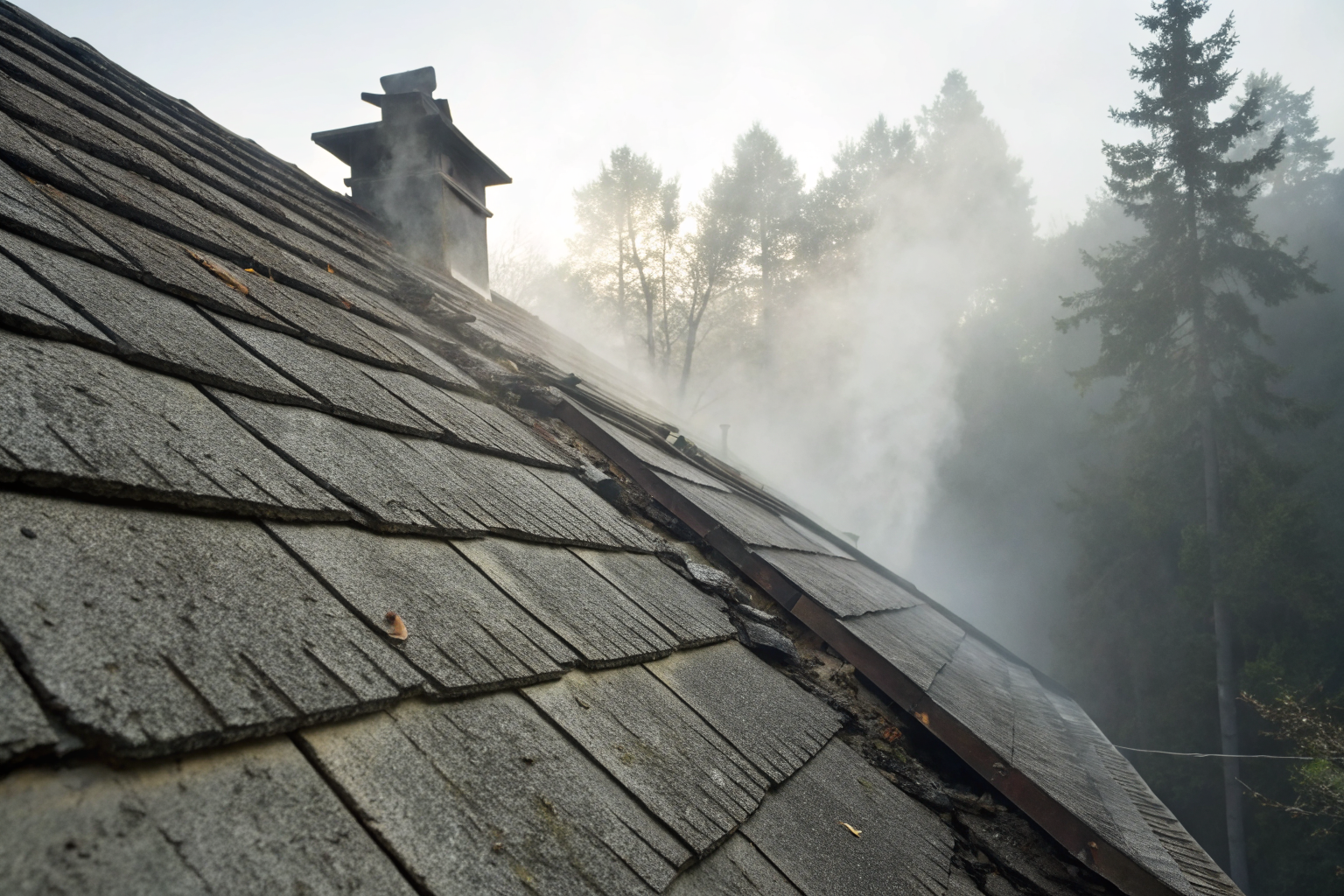
Roof age homeowners insurance Arizona carriers score works differently than most homeowners expect, because the tiles you see from the street are not what your insurer is pricing. As of 2025, Arizona carriers are applying age-tier scoring to the underlayment system beneath those tiles, and the clock on that material runs out long before the tiles do.
Key Takeaways:
- Arizona carriers apply a 25-50% age surcharge to homes with roofs over 20 years old, replacing an aging roof eliminates this penalty entirely.
- Tile roofs in Arizona can last 50+ years, but the felt or synthetic underlayment beneath them degrades in 20-25 years under desert UV and heat, and most carriers score your roof on underlayment age, not tile condition.
- Once a roof crosses the carrier’s age threshold (commonly 20 years), most AZ homeowners policies switch from replacement cost value (RCV) to actual cash value (ACV) on roof claims, meaning depreciation comes out of your settlement, not the carrier’s check.
How Does Roof Age Actually Affect Homeowners Insurance in Arizona?

The roof age penalty is a documented underwriting factor that pulls two separate levers on your policy at the same time. This means it is not a vague suggestion buried in fine print, it is a pricing mechanism that raises what you pay and lowers what you collect if you ever file a claim.
Under a standard HO-3 policy, your dwelling coverage is rated against a set of underwriting variables. Roof age is one of the most weighted variables in the Arizona admitted market. When your roof crosses a carrier’s age threshold, most commonly 20 years, though some carriers set this at 15 or 25 depending on material and form, two things happen simultaneously. First, the carrier applies a direct surcharge to your dwelling coverage rate. According to The Gebhard Agency, replacing an aging roof eliminates the 25-50% age surcharge carriers apply to homes with roofs over 20 years old. On a $500,000 home, that surcharge is a material dollar amount, not a rounding error. Second, the carrier reclassifies how your roof claim gets paid. Instead of replacement cost value (RCV), which covers the cost to put a new roof on your home, you receive actual cash value (ACV), which is the depreciated value of your old roof. If your 22-year-old roof sustains monsoon damage and the replacement cost is $18,000, an ACV settlement might pay $6,000 after depreciation. You cover the rest.
Carrier age-tier scoring is the system carriers use to assign premium rates and settlement terms based on roof age brackets. Most AZ admitted carriers use a three-bracket structure: 0-10 years (preferred rate, RCV settlement), 11-19 years (standard rate, RCV may apply with conditions), and 20+ years (surcharge applied, ACV settlement on roof). Some carriers insert a fourth bracket at 15 years as an inspection trigger. Each bracket carries different premium rates and different claims rules, and the transition between brackets is automatic, your carrier does not need to send you a notice when you cross from one tier to the next.
The thing most guides miss here is that these two levers work independently. A homeowner can be paying the full 25-50% surcharge and still not know their roof has already been switched to ACV settlement, because that change is buried in endorsement language rather than the declarations page summary. Specific tier cutoffs vary by carrier and policy form. Review your declarations page carefully and speak with a licensed Arizona insurance agent to confirm which tier your roof currently sits in and whether an ACV endorsement has been added. This is also the gateway into the broader arizona insurance guide framework, roof age touches non-renewal decisions, claim outcomes, and solar disclosure all at once.
The Tile Roof Myth: Why Your 35-Year-Old Tiles Are Not the Problem

The most expensive misunderstanding in Arizona homeowners insurance is this: homeowners look at their roof, see intact clay or concrete tiles, and conclude the roof is fine. The tiles may well be fine. The underlayment beneath them is a separate question with a separate clock.
Tile roof underlayment is the waterproofing membrane installed between the tile surface and the roof deck. Its job is to prevent water intrusion when a tile cracks, shifts, or goes missing. In moderate climates, felt underlayment can last 30 years or more. In Arizona’s Sonoran Desert, the combination of sustained UV radiation and attic temperatures that regularly exceed 150°F during summer accelerates degradation significantly. University of Arizona Cooperative Extension research on desert building materials supports the faster degradation pattern specific to Sonoran Desert climate conditions. Felt underlayment in this environment reaches the end of its functional life in approximately 20-25 years, often showing brittleness, cracking, and loss of waterproofing capacity well before any visible surface sign appears.
The structural split matters because carriers score the system, not just the surface. Satellite assessment tools and in-person inspections that carriers now use are looking for signs of system-level failure: granule loss, tile displacement patterns, visible deck exposure, and the age documentation that flags when the underlayment would have been installed. A roof that looks intact from the street, or from a drone pass, can already be in a degraded underwriting tier based entirely on underlayment age.
| Component | Tile Surface (Clay/Concrete) | Underlayment (Felt/Synthetic) |
|---|---|---|
| Expected lifespan | 50+ years | 20-25 years in AZ desert conditions |
| Primary failure mode | Cracking, fading, breakage (visible) | Brittleness, delamination, water intrusion (not visible from surface) |
| What carriers score | Secondary, used as condition indicator | Primary, age and condition drive tier placement |
| What a claim exposes | Tile replacement cost (lower) | Full underlayment replacement cost (higher) |
| AZ climate acceleration | Moderate UV impact on surface color | High UV and heat impact on membrane integrity |
| Inspection visibility | Visible from street or drone | Requires physical inspection or age documentation |
The practical consequence is that a homeowner with a 24-year-old tile roof may be looking at intact tiles and operating under the assumption that their coverage is standard. Their carrier may already have applied an ACV endorsement based on the underlayment age, which will not become apparent until a claim is filed and the settlement is a fraction of the replacement cost. This is the mechanism behind many of the denied or underpaid roof claims covered in the cluster on insurance denying roof claims in Arizona, the denial is not arbitrary; it follows directly from the ACV endorsement the homeowner did not know existed.
If your roof was installed more than 15 years ago, treat the underlayment age as the operative variable. The tiles are not the question your carrier is asking.
What Age Roof Will Insurance Actually Cover, and What Happens When You Cross the Line?

Carrier age-tier scoring determines whether Arizona homeowners receive RCV or ACV on roof claims at the time of loss. This is the concrete answer to one of the most searched questions in AZ homeowners insurance, and it deserves a direct answer rather than a hedge.
Most admitted carriers in Arizona use a three or four-tier bracket system. Per the HOAIC Arizona HO-3 policy form filed with the Arizona Department of Insurance and Financial Institutions (DIFI) in March 2025, roof age is an explicit underwriting factor that can trigger ACV settlement on roof claims. The 20-year mark is the most common threshold in the AZ admitted market, though individual carrier guidelines vary.
| Roof Age Bracket | Carrier Treatment | Settlement Type | Typical Premium Impact |
|---|---|---|---|
| 0-10 years | Preferred underwriting, standard terms | RCV (full replacement cost) | Base rate, no surcharge |
| 11-19 years | Standard underwriting, may require condition documentation | RCV with possible conditions | Moderate rate increase possible |
| 20+ years (threshold) | Surcharge applied; inspection may be required | ACV (depreciated value) | 25-50% surcharge on dwelling rate |
| 20+ years (some carriers) | Cosmetic exclusion added or non-renewal issued | ACV or coverage declined | Policy may not renew |
| Post-inspection failure | Non-renewal notice issued | N/A, coverage terminated | Loss of coverage entirely |
When a roof crosses the threshold, the carrier has three typical responses: switch the roof to ACV settlement and continue the policy, add a cosmetic exclusion that removes hail-dent damage from covered perils, or issue a non-renewal notice. The non-renewal path is covered in depth in the cluster on roof age non-renewal in Arizona. The ACV path is the one most homeowners encounter without realizing it, because it does not change the declarations page summary in an obvious way.
The disclosure angle matters here as much as the coverage angle. Under ARS 20-1109, material misrepresentation in an insurance application or policy gives the carrier grounds to rescind the policy or deny the claim. If a homeowner misrepresents the roof age at application, or fails to update the carrier after a threshold birthday passes, that creates a material misrepresentation exposure. The carrier does not have to pay a claim if they can demonstrate the roof age information provided was inaccurate and that accurate information would have changed their underwriting decision.
This is not a theoretical risk. Carriers increasingly cross-reference permit records, county assessor data, and satellite imagery to verify roof age independently. A homeowner who bought a house with a roof installed in 1999 and applied for insurance in 2022 without noting the roof age accurately may face a denial that has nothing to do with the storm damage itself.
Confirm your current age tier by reviewing your declarations page for any ACV roof endorsement language. If you are within three years of your carrier’s threshold, speak with a licensed Arizona insurance agent before the bracket shift happens automatically. Decisions made before crossing the tier line, including whether a new roof discount in Arizona makes financial sense, are much easier than decisions made after a claim is denied.
How the Roof Age Penalty Changes Your Premium, The Carrier Scoring Mechanics

Carrier age-tier scoring applies a 25-50% surcharge to the roof portion of AZ homeowners premiums once the age threshold is crossed. That number feels abstract until you apply it to an actual policy. On a home with $400,000 in dwelling coverage, a 30% surcharge on the roof component of the rate can add several hundred dollars per year, compounding over the years a homeowner delays replacement.
There are five distinct mechanics through which roof age affects the premium and coverage calculation on an AZ HO-3 policy:
Direct age surcharge on the dwelling coverage rate. When the roof crosses the carrier’s age threshold, the carrier applies the 25-50% penalty directly to the dwelling coverage rate. This is the most visible impact, it shows up as a premium increase at renewal. Replacing an aging roof eliminates this surcharge, per The Gebhard Agency’s confirmed stat hook.
ACV endorsement on the roof. The carrier adds language that limits any roof claim settlement to actual cash value rather than replacement cost. This endorsement can be buried in the endorsement section of the policy rather than the declarations page summary, meaning many homeowners do not know it exists until they file a claim and receive a depreciated payout.
Cosmetic exclusion rider. Some carriers on older roofs add a rider that excludes damage that affects appearance but not function, specifically hail denting on tile or metal surfaces. On a roof past 20 years, visible hail damage may be categorically excluded from covered perils, leaving the homeowner with an unclaimable repair bill regardless of storm severity.
Inspection trigger and non-renewal risk. A roof past 15-20 years can trigger a required physical inspection before renewal is confirmed. If the inspection reveals underlayment failure, deck damage, or sustained deterioration, the carrier can decline renewal based on the inspection findings. This is a discrete path from the age-tier surcharge, it operates on condition, not just age, but age is what triggers the inspection in the first place.
Solar panel disclosure interaction. A typical AZ home solar install runs $40,000 to $60,000, and most insurance policies have not been updated to reflect it, according to The Gebhard Agency. When a homeowner with an aging roof adds a solar system, some carriers require the roof to be addressed before approving the solar panel rider. Solar panels add weight, penetrations, and structural load to the roof system, an aging underlayment beneath a $50,000 solar array creates a compound underwriting risk that carriers flag specifically. The cluster on solar panel disclosure for homeowners insurance in Arizona covers what needs to be disclosed and when.
These five mechanics do not operate in isolation. A homeowner can be paying the age surcharge, carrying an ACV endorsement they did not notice, and sitting on an undisclosed solar system simultaneously. Each layer compounds the claim exposure and the non-renewal risk.
The Roof Inspection Timing Problem, and How to Get Ahead of the Carrier’s Clock

Roof inspection timing determines whether an AZ homeowner can document condition before the carrier triggers its own assessment. The homeowner who commissions an inspection first holds the paper trail. The one who waits for the carrier’s satellite pass or renewal inspection is responding to someone else’s findings.
Here is a sequential action plan for Arizona homeowners with roofs approaching or past 15 years:
Pull your policy declarations page and find any ACV roof endorsement or cosmetic exclusion language. This tells you exactly where you already stand before you do anything else. Look for phrases like “actual cash value settlement, roof” or “cosmetic damage exclusion” in the endorsements section. If you find either, the carrier has already reclassified your roof without necessarily telling you in plain terms at renewal.
Identify when your roof was last replaced, not just when tiles were repaired, and compare that date to your carrier’s age-tier threshold. Tile repairs do not reset the underlayment clock. If you bought the home and the disclosure listed a “new roof” in 2002, your underlayment is now past the 20-year mark regardless of any maintenance done since. Per ARS 20-1109, ignorance of the roof age does not protect you from a material misrepresentation finding if the carrier determines you provided inaccurate information.
Commission an independent licensed roofing contractor inspection before the carrier conducts its own satellite or in-person assessment. Independent contractor reports on underlayment condition give you a documented baseline. If the carrier’s inspector later claims worse conditions than your contractor found, you have a paper trail to support a rebuttal. This documentation is particularly valuable in the context of the cluster on what to do when an insurer denies a roof claim in Arizona.
If the underlayment is at or past 20 years in an Arizona desert climate, get a replacement estimate and run the surcharge math. Independent contractor reports and AZ building industry data consistently show that underlayment degradation accelerates between years 15 and 25 due to sustained summer temperatures above 150°F in attic spaces, a climate factor that national carrier models often underweight. The 25-50% surcharge applied annually, plus the ACV penalty on any future claim, frequently makes replacement cost-neutral or cost-positive over a 3-5 year horizon. The cluster on new roof homeowners insurance discounts in Arizona covers the specific savings math and how to apply for a coverage reclassification once replacement is complete.
Disclose any roof work to your carrier in writing and request a written confirmation that the age-tier reclassification has been recorded. A verbal acknowledgment from a call center agent does not update the underwriting file. Send a brief written notice with the contractor’s completion documentation, the permit number, and a request for written confirmation that the policy has been moved to the preferred or standard tier. This written record is also what you need if the carrier later tries to apply an ACV endorsement based on pre-replacement age data.
If you have a solar system on an aging roof, complete this action plan before the carrier’s next renewal cycle. The cluster on solar panel storm damage claims in Arizona and the broader solar panel insurance claim denial patterns in Arizona both trace back to the same root cause: the roof condition was not documented before the loss occurred. Speak with a licensed Arizona insurance agent before making coverage or replacement decisions based on this framework, the specific tier cutoffs and endorsement language on your policy are what govern your situation, not general patterns.
Frequently Asked Questions
Does roof age affect homeowners insurance rates in Arizona?
Yes, Arizona carriers apply a 25-50% surcharge to homes with roofs over their age threshold, most commonly 20 years, and may also switch the roof settlement from replacement cost to actual cash value at the same time. The surcharge applies to the dwelling coverage rate on your HO-3 policy, so on a $500,000 home the dollar impact is material, not a footnote. Replacing the aging roof eliminates the surcharge and can restore RCV settlement terms.
How old of a roof will insurance companies cover in Arizona?
Most admitted carriers in Arizona will write a new policy on roofs up to 20 years old under standard terms; some use a 15-year cutoff and others allow up to 25 years depending on material and condition. Past the threshold, the carrier typically requires an inspection, adds an ACV endorsement that limits claim payouts to depreciated value, or declines to renew the policy. The specific cutoff depends on your carrier and policy form, review your declarations page or speak with a licensed AZ agent to confirm which tier your roof currently occupies.
Does tile roof age matter for insurance if the tiles look fine?
Tile condition is largely beside the point when it comes to how Arizona carriers score your roof, they score the underlayment system beneath the tiles, which has a functional lifespan of approximately 20-25 years under Arizona’s UV and heat conditions regardless of how the tiles look. Clay and concrete tiles can last 50 years or more, but the underlayment degrades on its own schedule and is what prevents water intrusion when a tile cracks or shifts. A roof that looks intact from the street can already be in a degraded underwriting tier because the underlayment age is what the carrier is tracking.
Consult a licensed Arizona insurance agent for advice specific to your policy and roof situation. This article reflects general underwriting patterns in the AZ admitted market and does not constitute coverage advice.