Arizona pool laws carry real legal weight. Arizona has more residential pools per capita than almost any other state, and a drowning rate among children under five that makes a pool the most dangerous feature on your property, legally and financially. As of 2025, the gap between what the law requires and what most homeowners carry for liability coverage is wide enough to cost you everything.
Key Takeaways:
- ARS 36-1681 requires a barrier of at least 5 feet on all four sides of any residential pool, a violation can contribute directly to strict-liability exposure under Arizona’s attractive-nuisance doctrine.
- Arizona follows strict liability for pool drownings in many circumstances: if a child enters your property without permission and drowns, you can still be held liable regardless of fault, your personal liability limit is the only buffer.
- A standard HO-3 personal liability limit of $100,000 covers approximately one moderate injury settlement; a serious drowning or permanent-injury claim routinely exceeds $500,000, which is why an umbrella policy matters for pool owners.
What Arizona Law Actually Requires for Pool Barriers, ARS 36-1681 Explained
ARS 36-1681 is Arizona’s statewide residential pool barrier law. This means every private swimming pool in Arizona, regardless of when it was built or whether you installed it yourself, must meet the barrier requirements the statute sets out. Grandfathering is not a defense. The Arizona Department of Health Services administers the state-level standard, while local building departments in Maricopa County cities handle on-the-ground enforcement.
The statute sets a minimum barrier height of 5 feet on all four sides of the pool. That word “all” matters. The barrier must completely enclose the water, not just the perimeter of your yard. Gates must be self-closing and self-latching, and the latch must be positioned so a child cannot reach it from the outside.
New construction must meet current code before a certificate of occupancy issues. Existing pools are not exempt. Arizona law treats pool barriers as an ongoing obligation, not a one-time inspection at the time of purchase. If you bought a home with a pool and no one has checked the barrier since the last administration, the barrier may not meet current standards.
Maricopa County municipalities layer requirements on top of the state baseline. Phoenix, Scottsdale, Tempe, and Gilbert have each adopted local ordinances that impose stricter gate hardware specifications, door alarm requirements, or sensor standards. The ARS 36-1681 baseline is the floor, not the ceiling. Your local building department controls the actual standard that applies to your specific parcel.
Consult a licensed contractor or your local building department for site-specific compliance questions before assuming your existing barrier satisfies current code. This article covers the statutory framework; it is not a substitute for a professional inspection of your actual pool barrier.
Arizona Pool Fence Requirements: What the Gate, Height, and Opening Rules Actually Say
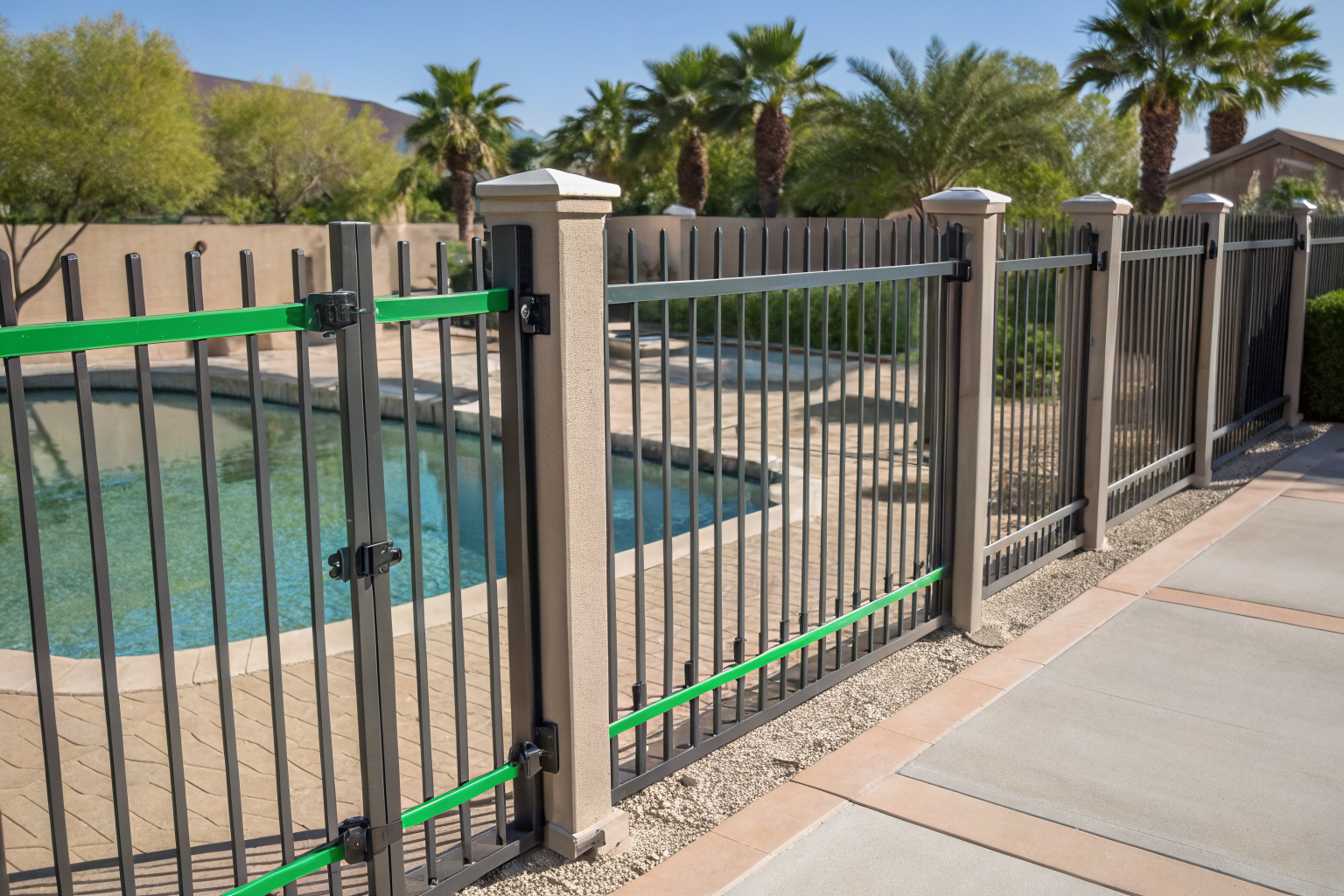
The fence rules under ARS 36-1681 are more specific than most homeowners expect. Each element below reflects requirements under ARS 36-1681 or local code, and each one has a functional reason behind it.
- Minimum height of 5 feet. The barrier must reach at least 5 feet measured on the exterior-facing side. Some Maricopa County cities set the minimum at 60 inches or require that measurement be taken from grade, which can matter on sloped lots.
- No climbable horizontal rails. Fence designs with horizontal rails, cross-members, or decorative elements that create footholds give children a ladder. ARS 36-1681 compliance guidance from the Arizona Department of Health Services identifies climbable surfaces as a disqualifying design feature.
- Maximum 4-inch gap between vertical pickets. The Arizona Department of Health Services references a 4-inch maximum gap specification in pool barrier compliance guidance. Gaps larger than 4 inches allow a small child’s body to pass through, which defeats the barrier’s purpose entirely.
- Self-closing, self-latching gate hardware. Any gate in the pool barrier must close and latch on its own without manual intervention. The latch must be positioned at least 54 inches from the ground, or on the pool side of the gate where a child reaching over or under cannot access it. Gates must also swing away from the pool, so gravity and spring tension pull them closed rather than open.
- The house wall rule. The wall of your home cannot count as one side of the barrier unless a door alarm or approved door sensor is installed on every door and window that provides direct access to the pool area. The specific sensor and alarm specifications vary by municipality, check with your local building department before relying on the house-wall exception.
- Above-ground pools are not exempt. ARS 36-1681 applies regardless of pool type. Removing the ladder or steps when the pool is unattended does not substitute for a compliant barrier. Above-ground pools require the same four-sided enclosure as in-ground pools.
- Door and window alarms as an alternative compliance path. Some Arizona jurisdictions permit door and window alarms meeting specific decibel and activation-time requirements as an alternative or supplement to a full four-sided barrier. These alarms must activate within 7 seconds of a door or window opening and produce a sound audible throughout the house. Confirm with your local building department whether this path is available in your municipality and what specifications apply.
Every one of these requirements is checkable before an incident occurs. The time to find out your barrier is non-compliant is not during a claim investigation.
The Attractive-Nuisance Doctrine: How Arizona Strict Liability Reaches Pool Owners
Attractive nuisance is a legal doctrine that holds property owners liable for injuries to children who trespass, because the dangerous condition on the property was something a child could not reasonably be expected to understand was dangerous. This means a fence and a “no trespassing” sign reduce your exposure but do not eliminate it.
Arizona courts apply the Restatement Second of Torts Section 339 standard to attractive-nuisance claims. Under that standard, a pool owner can be held liable if the pool posed an unreasonable risk to children, if the owner knew or should have known children were likely to trespass, if the children were too young to appreciate the danger, and if the burden of eliminating the danger was small compared to the risk. Pools are the textbook example in the Restatement. Arizona courts have treated residential swimming pools as a classic attractive nuisance, and the presence of a barrier in compliance with ARS 36-1681 is a factor in determining comparative fault, not a guarantee of immunity.
It’s worth separating this from the strict liability standard under ARS 11-1025, which your arizona dog bite law insurance article covers separately. That statute creates strict liability for dog bites specifically. The pool analysis runs through attractive-nuisance doctrine, not ARS 11-1025, but the practical result is similar: Arizona’s courts do not require proof of negligence in the traditional sense when a child is harmed by a foreseeable, dangerous condition on your property.
What does this mean for a homeowner? A child climbs your fence at 2 a.m., falls into the pool, and drowns. You were asleep. You did nothing wrong in the moment. Arizona law can still hold you liable. The barrier compliance question becomes: did you take the precautions the law required? If the answer is no, the plaintiff’s attorney has a stronger case. If the answer is yes, comparative fault analysis still proceeds, and your insurance is what stands between you and a judgment.
Readers facing an actual claim or lawsuit should speak with a licensed Arizona attorney. This section is an explanation of the legal framework, not legal advice specific to any situation.
How Does a Pool Affect Your Homeowners Insurance Liability Coverage in Arizona?
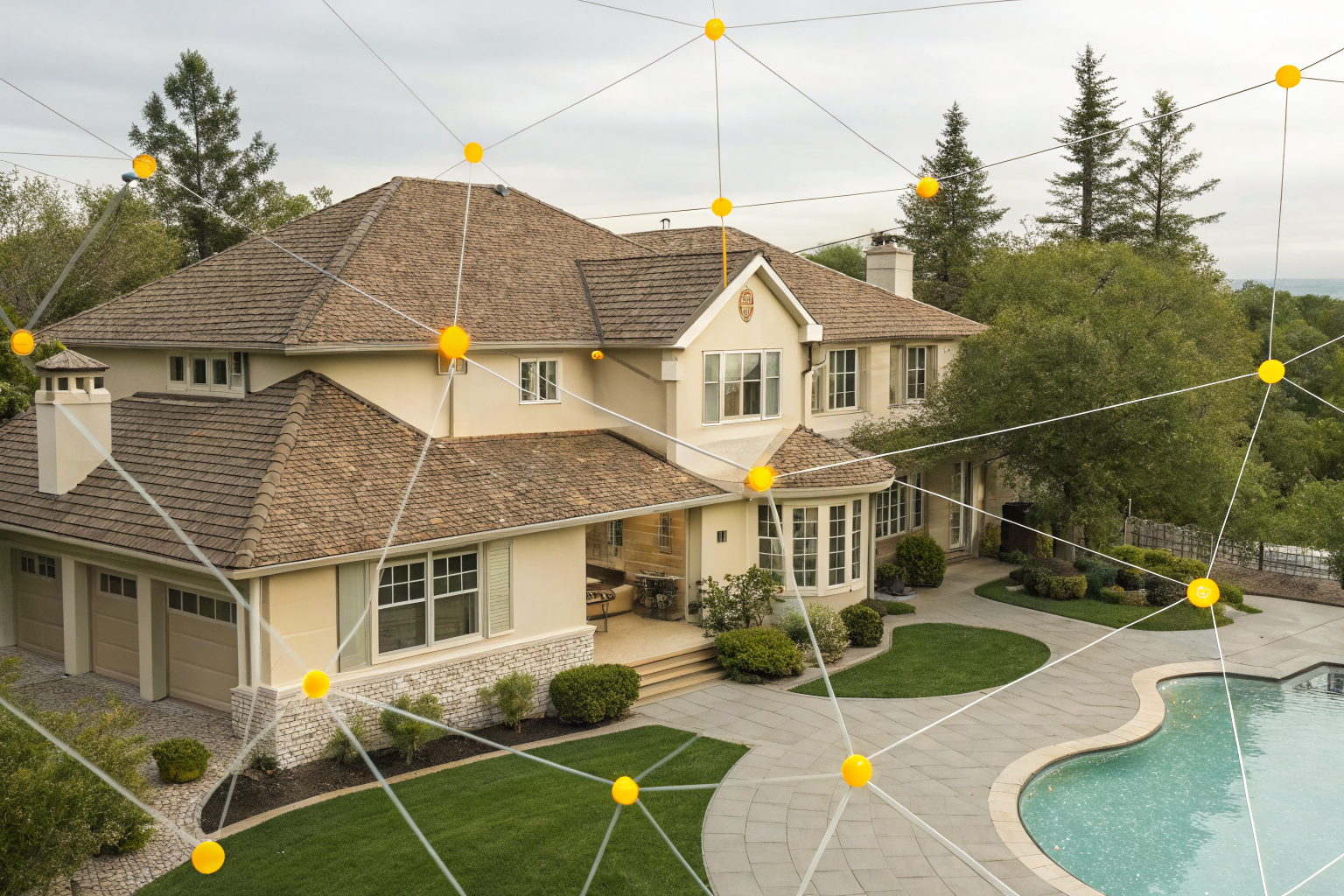
A pool sits inside the homeowners policy under two coverages: Coverage E and Coverage F. Coverage E, personal liability, pays third-party bodily injury claims and your legal defense costs when someone is injured at your pool and you are found liable. Coverage F, medical payments to others, pays small no-fault medical bills for guests injured on your property regardless of fault, up to the Coverage F limit.
Most standard HO-3 policies ship with $100,000 in Coverage E. Some carriers set a default of $300,000 for homes with pools. A serious pool drowning or permanent-injury claim in Arizona routinely exceeds $500,000 in settlement value. A standard $100,000 Coverage E limit covers legal defense costs in a litigated case, leaving the homeowner personally exposed for any judgment above that figure.
Carriers may require proof of barrier compliance before issuing or renewing a policy on a home with a pool. A non-compliant barrier is grounds for a non-renewal notice or an exclusion endorsement that strips pool liability from the policy entirely. If you are struggling to get coverage because of pool-related issues, that is part of a broader problem covered in the cant get homeowners insurance arizona context, where carrier appetite and underwriting criteria are tightening across multiple risk categories.
Coverage F at $1,000 to $5,000 is not a substitute for Coverage E. It handles a guest’s minor medical bill. It does not touch a wrongful-death claim.
| Coverage Feature | Standard HO-3 Default | What It Actually Covers vs. a Serious Pool Claim |
|---|---|---|
| Coverage E (personal liability) | $100,000 | Covers a minor injury settlement; legal defense in a litigated drowning case can exhaust this limit before trial |
| Coverage E (mid-tier) | $300,000 | Covers moderate injury settlements; may fall short of a wrongful-death or permanent-injury judgment |
| Coverage E (higher limit) | $500,000 | Approaches the realistic settlement range for a serious drowning claim; still below a high-severity wrongful-death verdict |
| Coverage F (medical payments) | $1,000–$5,000 | Pays guest’s minor medical bills; zero impact on a liability claim or wrongful-death suit |
| Pool barrier compliance | Required by carrier | Non-compliant barrier can void coverage or result in non-renewal; compliance is a coverage condition, not a suggestion |
| Umbrella attachment | $1M+ above Coverage E | Closes the gap between Coverage E limit and realistic claim exposure for pool owners |
Consult a licensed Arizona insurance agent to review your current liability structure, your Coverage E limit, and whether your carrier has a pool-specific compliance condition in your policy language.
Should Pool Owners in Arizona Carry an Umbrella Policy? The Liability Math
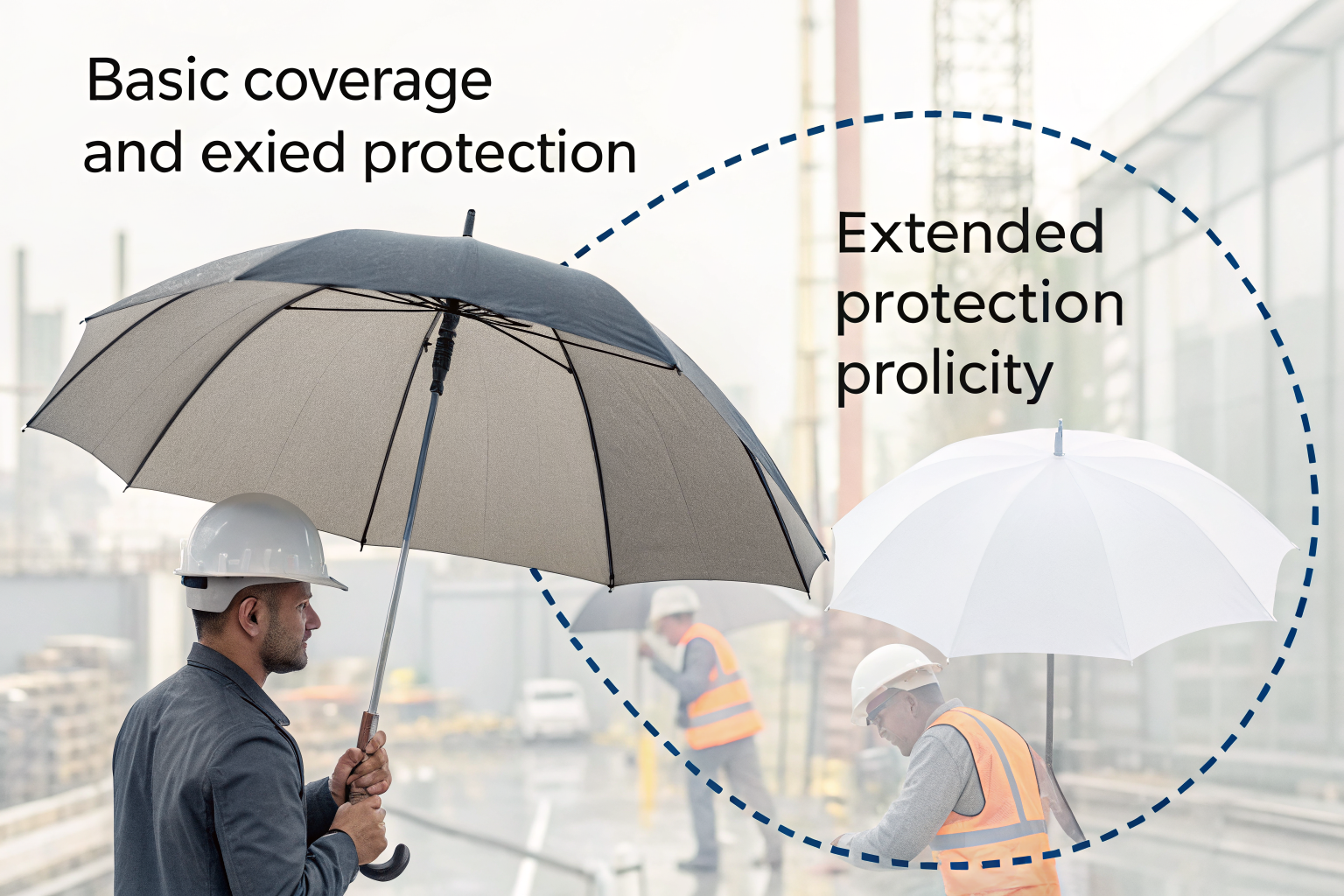
A personal umbrella policy extends your liability protection above the Coverage E limit on your HO-3, covering pool-related claims up to $1 million or more after the underlying limit is exhausted. For a pool owner in Arizona, the question is not whether an umbrella makes sense. The question is why you would not carry one.
Here is how to work through the decision:
- Find your current Coverage E limit on your declarations page. This is the number that matters. Most homeowners have never looked at it. Pull the dec page now and check. If it says $100,000, you are exposed.
- Compare that limit to the realistic cost of a pool drowning or permanent-injury claim in Arizona. A wrongful-death settlement involving a child drowning can reach or exceed $1 million. Your Coverage E limit is the number a plaintiff’s attorney is already looking at.
- Determine whether your carrier requires a minimum underlying limit before an umbrella attaches. Most personal umbrella carriers require at least $300,000 in Coverage E on the underlying homeowners policy before the umbrella will activate. If your current limit is $100,000, you need to raise it first.
- Price a $1 million umbrella. In Arizona, a $1 million personal umbrella policy typically costs between $150 and $300 per year, depending on the carrier and your underlying risk profile. That is less than $1 per day to raise your total pool liability protection from $100,000 to $1.1 million.
- Confirm the umbrella covers pool incidents without exclusions. Some carriers exclude pools with diving boards, slides, or non-compliant barriers. Get the exclusion language in writing before assuming you are covered. If you have a slide or a diving board, ask specifically.
An umbrella does not replace the underlying homeowners policy. Both must be in force, and the underlying Coverage E limit must meet the umbrella carrier’s minimum before coverage kicks in. The umbrella pays after Coverage E is exhausted, not instead of it.
This is also worth connecting to your broader liability picture. If you are carrying low limits on other lines, such as arizona uninsured motorist property damage, the same logic applies: the default limits most policies ship with were set decades ago and have not kept pace with settlement values. Get specific pricing and exclusion review from a licensed Arizona agent before assuming your current stack is adequate.
Frequently Asked Questions
Do I have to tell my insurance company I have a pool in Arizona?
Yes. A swimming pool is a material fact that affects your carrier’s risk assessment and your Coverage E liability exposure. Failing to disclose a pool when you apply for or renew a homeowners policy can be treated as material misrepresentation, which gives the carrier grounds to deny a pool-related claim or rescind the policy entirely. Disclose it upfront, confirm your Coverage E limit is adequate for pool exposure, and verify that your carrier has no pool-specific exclusions in your policy.
What happens if my pool barrier doesn’t meet Arizona code and someone drowns?
A barrier that fails to meet ARS 36-1681 standards strengthens the plaintiff’s case under Arizona’s attractive-nuisance doctrine and can increase your comparative-fault exposure in a wrongful-death claim. It may also give your homeowners carrier grounds to contest coverage if the non-compliant barrier contributed to the incident. Speak with a licensed Arizona attorney if you are facing a claim, and contact your local building department to bring the barrier into compliance without delay.
Does my HOA’s master policy cover pool injuries at a community pool in Arizona?
An HOA master policy covers the association’s liability for common-area amenities, not incidents at your private residential pool. If your home has its own pool, that liability falls on your personal homeowners policy under Coverage E. Your HO-3 or HO-6 personal liability coverage is what pays if someone is injured at your pool, regardless of what the HOA carries for shared facilities. These are separate policies covering separate properties.
This article covers Arizona’s pool barrier law and homeowners insurance liability framework for general educational purposes. For advice specific to your policy, your pool’s compliance status, or any active claim or lawsuit, consult a licensed Arizona insurance agent and, where legal questions are involved, a licensed Arizona attorney. Arizona pool barrier requirements vary by municipality, contact your local building department for the standard that applies to your property.
Need a plain-language review of your current Coverage E limit and whether a pool umbrella makes sense for your situation? The Gebhard Agency works with homeowners across the Phoenix metro and statewide Arizona. Reach us at (480) 800-4595 or through the chat widget on this page.