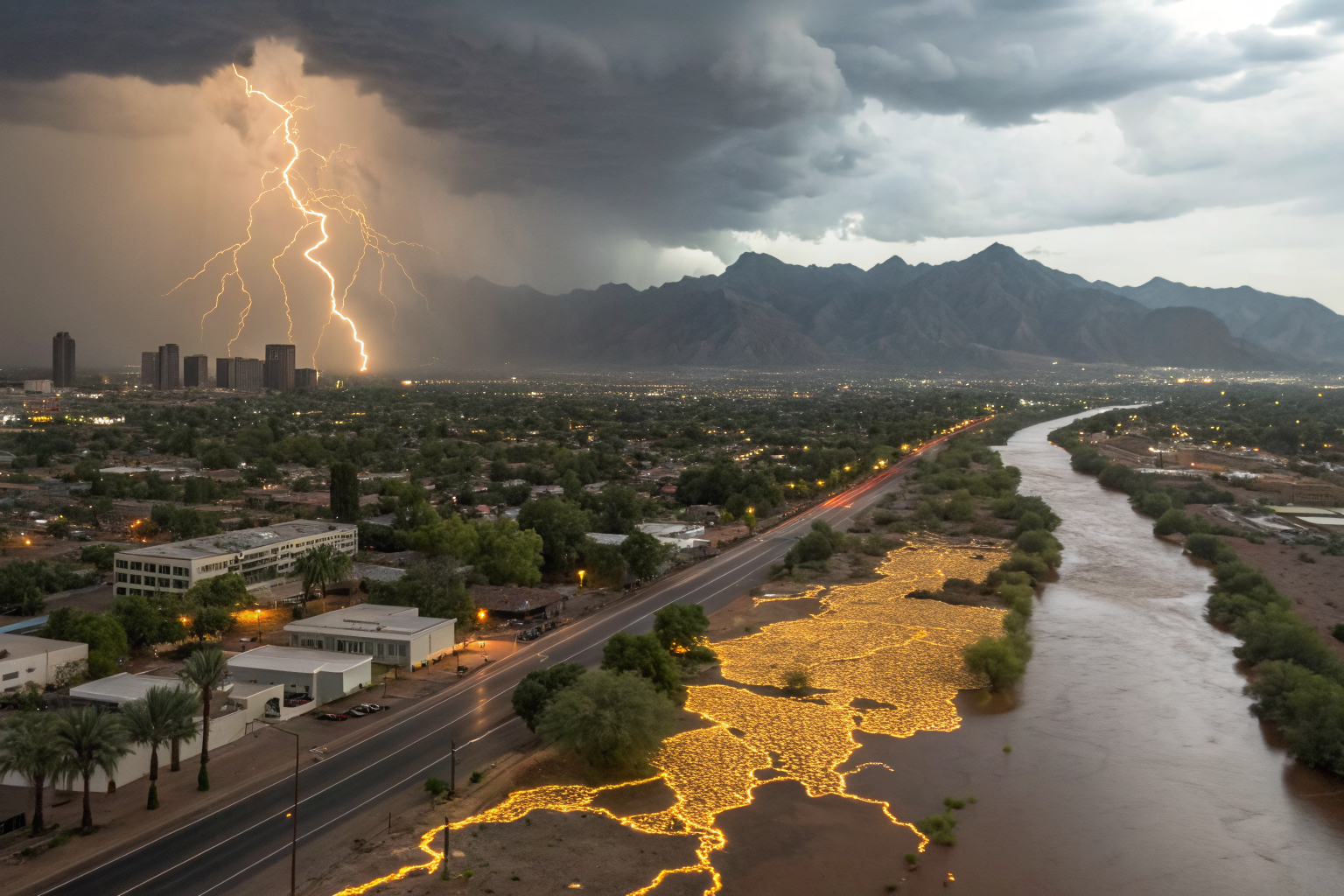
Do I need flood insurance in Phoenix? More addresses than you’d expect show up in FEMA’s high-risk Zone AE designation, and even Zone X properties near desert washes carry real exposure. As of 2025, your standard Arizona homeowners policy covers zero flood damage, and the monsoon season that runs June through September does not care about your zone designation.
Key Takeaways:
- FEMA designates two primary flood zone categories that determine whether flood insurance is required: Zone AE (high-risk, lender-mandated) and Zone X (moderate-to-low-risk, voluntary), and Phoenix has properties in both.
- Your standard Arizona homeowners policy does not cover flood damage under any circumstances; a separate NFIP policy or private flood policy is the only way to close that gap.
- Maricopa County’s network of arroyos, desert washes, and engineered flood control channels shifts zone designations frequently, a Zone X address today may have been Zone AE five years ago, and your lender may require proof of re-mapping before dropping a flood insurance requirement.
What Phoenix Flood Zones Actually Mean, Zone X vs. Zone AE
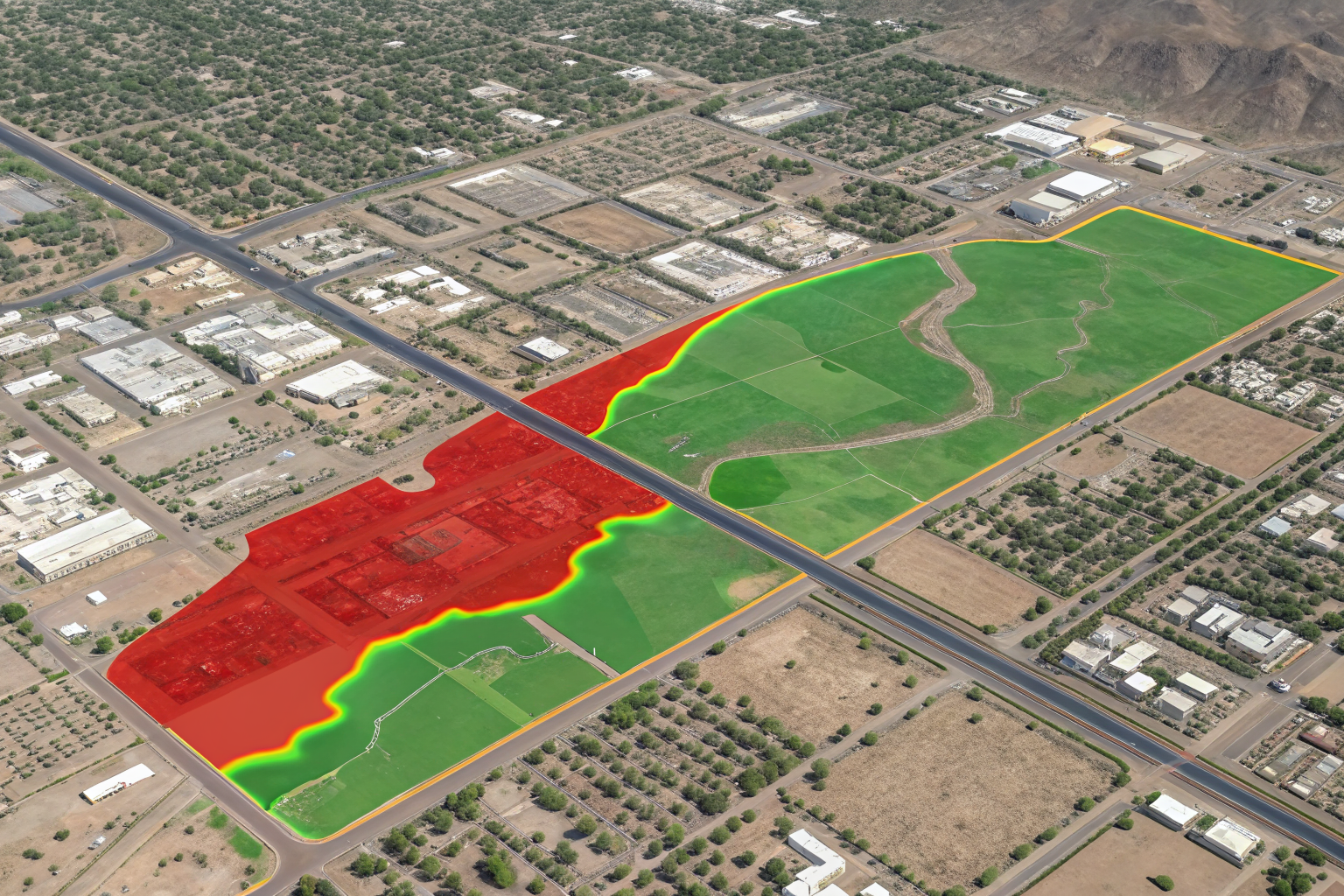
Zone AE is FEMA’s high-risk flood designation, defined as an area with a 1% annual chance of flooding, also called the 100-year flood. This means FEMA has established a base flood elevation for the area, lenders with federally backed mortgages must require flood insurance, and a flood event is not a freak occurrence but a statistically predictable one. For example, a Zone AE property near one of Maricopa County’s active washes faces meaningful exposure every monsoon season, not once a century.
Zone X is FEMA’s moderate-to-low risk designation. Zone X properties sit outside the 500-year floodplain or receive protection from a levee system. This means no lender mandate applies, and many Phoenix homeowners in Zone X skip flood coverage entirely. That decision has a cost.
FEMA maintains Flood Insurance Rate Maps (FIRMs) for Maricopa County, and every parcel in the Phoenix metro carries a specific zone designation on those maps. FEMA’s National Flood Insurance Program data shows that roughly 25% of NFIP flood insurance claims come from properties outside high-risk flood zones. Zone X is not the same as no risk. Desert terrain, alluvial fans, and the speed of monsoon runoff push water into areas the maps classify as low-risk with enough regularity to produce paid claims.
For the full picture on what your homeowners policy does, and does not, cover when water enters your home, the Arizona insurance guide covering flash flood insurance in Arizona explains the perils exclusion in detail. That context matters here because the homeowners policy exclusion is absolute: it does not matter whether the water came from a wash, a storm drain backup, or a monsoon deluge. Flood damage requires a separate policy.
Consult a licensed insurance agent familiar with AZ flood zone mechanics for advice specific to your property. Zone designations are parcel-level, and two homes on the same street can carry different designations depending on elevation and proximity to a mapped channel.
How to Read the Maricopa County Flood Zone Map for Your Address

Maricopa County Flood Control District maintains over 900 miles of engineered flood control channels, the largest such system in the United States per the District’s own infrastructure data. That system has triggered dozens of FEMA Letters of Map Revision (LOMRs) and Letters of Map Amendment (LOMAs) over the years, shifting zone designations for individual parcels. Reading the current map for your address is a four-step process.
Go to FEMA’s Flood Map Service Center at msc.fema.gov and enter your property address. The tool returns the FIRM panel number covering your parcel and displays your current flood zone designation on the map.
Identify the FIRM panel number shown in the results. Write it down, you will need it if you ever file a LOMA or dispute a lender’s flood insurance requirement.
Read the zone designation on the FIRM panel. The map uses color coding: Zone AE areas appear in shaded tones, Zone X in lighter or unshaded areas. Your parcel boundary should fall clearly within one designation.
Cross-check your address with the Maricopa County Flood Control District’s interactive mapping tool, available through the District’s website. The District’s tool reflects local channel and wash overlays that FEMA’s base maps sometimes lag on updating, particularly after recent LOMR amendments.
One thing most Phoenix homeowners miss: a prior Zone AE designation does not disappear from lender records automatically. If FEMA amended your property’s zone through a LOMA, your lender may still require proof of that amendment before dropping the flood insurance requirement from your loan. The physical amendment must be formally recorded in the FEMA system and provided to your lender in writing. Check your loan documents and your lender’s current requirements, do not assume that a zone change automatically ends the coverage obligation.
When Is Flood Insurance Required in Arizona, and When Is It Your Call?
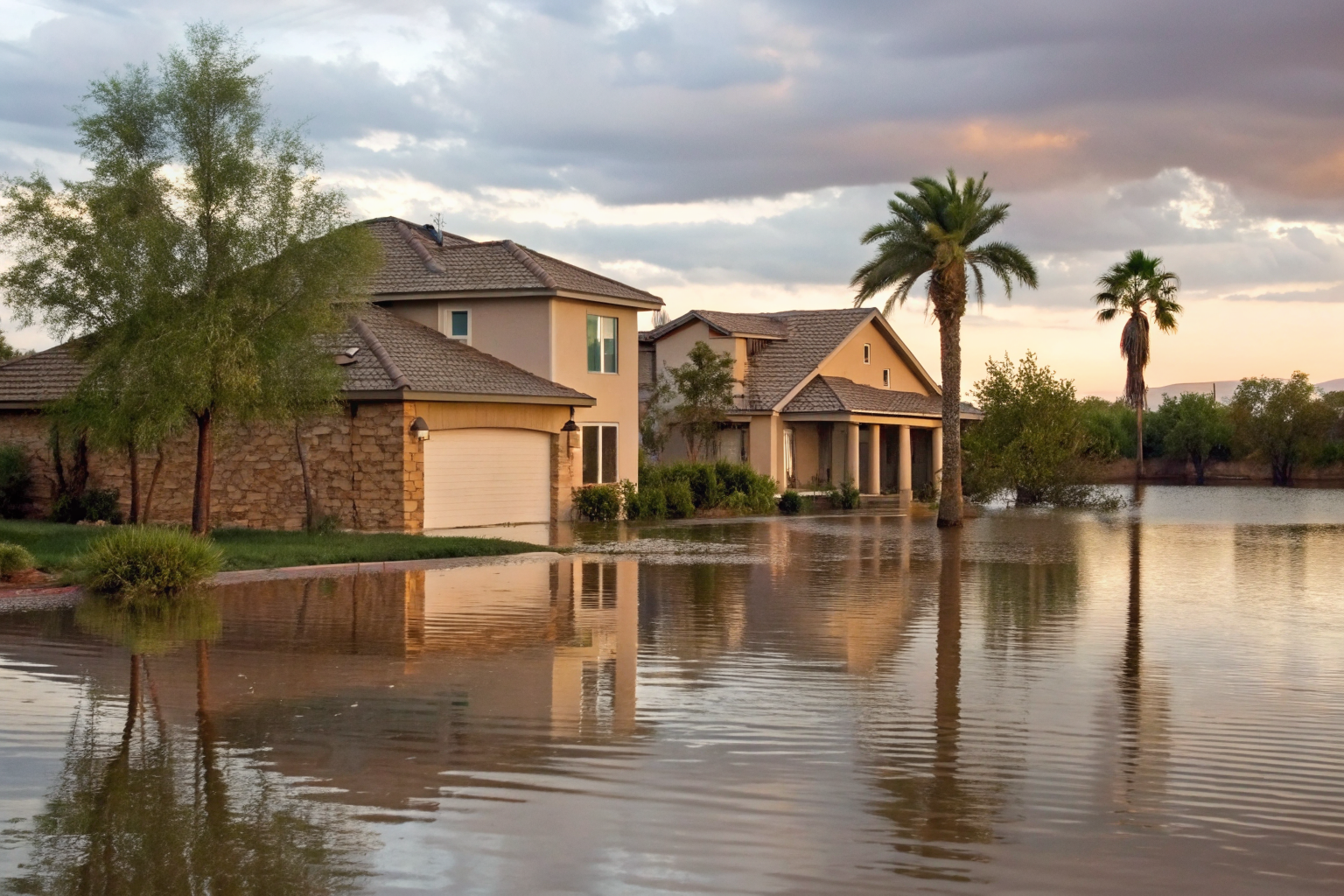
The trigger for mandatory flood insurance is not the state of Arizona. Arizona has no state-level law requiring homeowners to carry flood coverage. The mandate comes from the federal lending system. Under the National Flood Insurance Reform Act of 1994, lenders with federally backed mortgages must require flood insurance for properties in FEMA-designated Special Flood Hazard Areas, which includes Zone AE and related high-risk designations. Zone X properties face no federal lender mandate.
Private lenders without federally backed loans can still require flood insurance at their discretion, even for Zone X properties. Review your loan documents before assuming a Zone X designation means flood insurance is off the table.
| Scenario | Flood Insurance Requirement | Zone Designation | Policy Option |
|---|---|---|---|
| Zone AE + federally backed mortgage | Required by lender under federal law | High-risk (1% annual flood chance) | NFIP standard policy or private flood policy |
| Zone AE + no mortgage or private lender | Not legally required, but exposure is real | High-risk (1% annual flood chance) | NFIP standard policy strongly worth considering |
| Zone X + any mortgage | Not required by federal mandate | Moderate-to-low risk | NFIP Preferred Risk Policy available at lower premiums |
| Zone X + voluntary decision | No requirement of any kind | Moderate-to-low risk | NFIP Preferred Risk Policy or private flood policy |
The National Flood Insurance Reform Act of 1994 established this lender mandate, and it has not changed in ways that affect Phoenix homeowners since. What has changed is the frequency of zone re-designations in Maricopa County as the Flood Control District completes channel improvements. A property that moved from Zone AE to Zone X after a LOMR still sits near the same wash it always did.
For guidance on other coverage gaps that show up at claim time, the broader arizona insurance guide covers how exclusions stack across policy types, useful context if you are evaluating multiple coverage decisions at once.
What Does an NFIP Flood Policy Actually Cover, and Where Does It Fall Short?
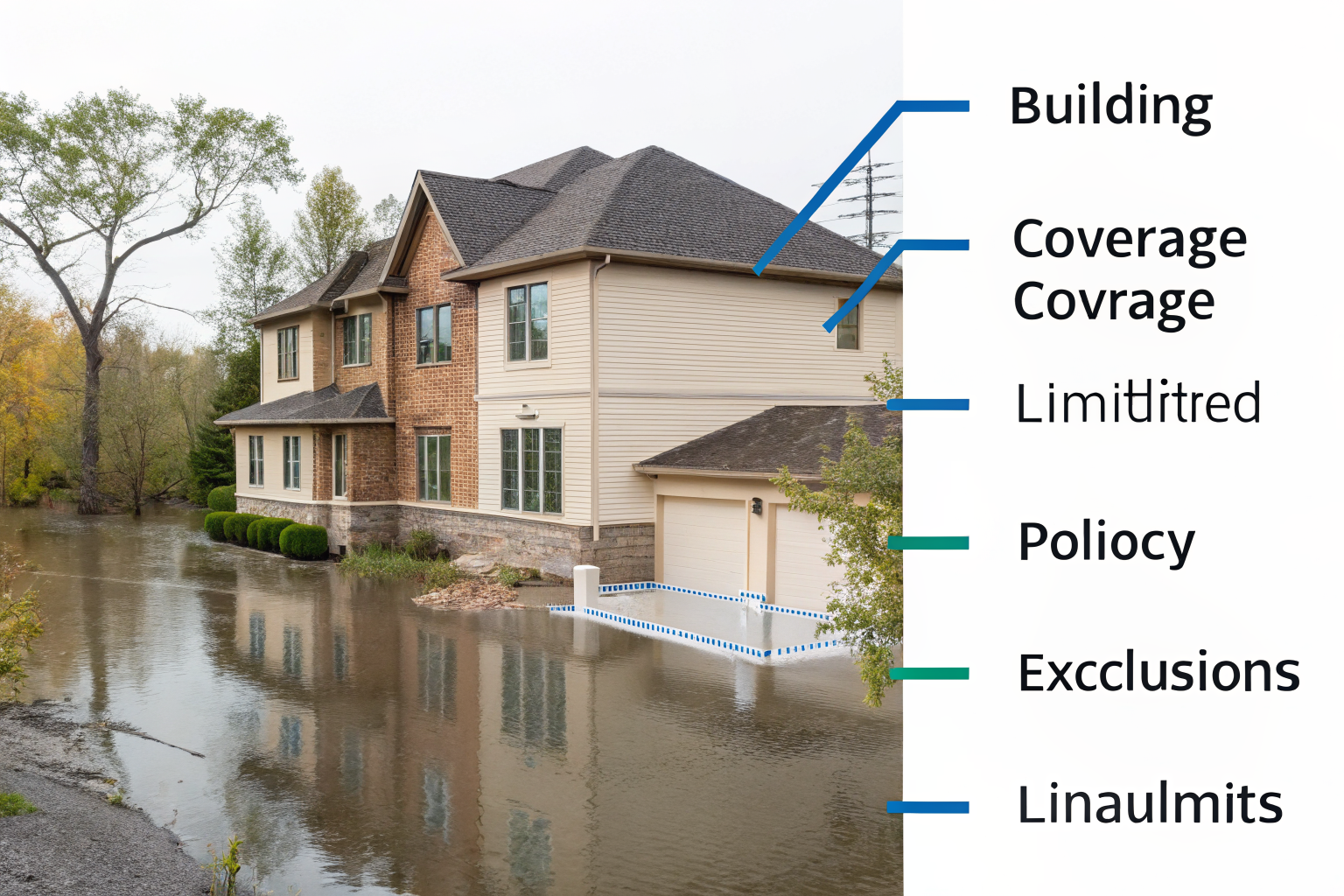
NFIP residential building coverage carries a statutory maximum of $250,000. Contents coverage caps at $100,000 and you purchase it as a separate policy from the building coverage, per FEMA’s current NFIP program terms. The standard NFIP waiting period is 30 days from the date of purchase before coverage takes effect.
That 30-day window matters for Phoenix homeowners watching the calendar. AZ monsoon season runs from June 15 through September 30, per the National Weather Service designation. A policy purchased in late June may not be effective before the July onset of peak monsoon activity. This is not a loophole, it is a program rule, and FEMA enforces it. Exceptions exist for new loan closings and a handful of other specific triggers, but voluntary purchases mid-season do not qualify.
| Feature | NFIP Flood Policy | Relevance to AZ Monsoon Season |
|---|---|---|
| Building coverage limit | $250,000 maximum (residential) | Sufficient for many Phoenix homes; may fall short on higher-value properties |
| Contents coverage limit | $100,000 maximum, purchased separately | Separate policy purchase required; often overlooked by homeowners |
| Additional living expenses (ALE) | Not covered | If monsoon flooding displaces you, hotel and rental costs are out of pocket |
| Detached structures | Not covered | Casitas, guest houses, detached garages excluded entirely |
| Vehicles | Not covered | Auto policy handles vehicle flood damage, not NFIP |
| Standard waiting period | 30 days | Buying in late June may not cover July monsoon events |
| Private flood alternative | Higher limits, ALE included | Private flood can exceed NFIP caps and add displacement coverage |
The coverage gap most Phoenix homeowners do not anticipate is additional living expenses. NFIP does not pay for the hotel or temporary rental if a flood event displaces your family. During monsoon season, a significant flood event can make a home uninhabitable for weeks. That cost is entirely your problem under an NFIP policy.
Private flood insurance fills several of these gaps. Private policies can exceed the $250,000 building cap, add ALE coverage, cover detached structures like a casita or guest house, and sometimes carry shorter waiting periods than the NFIP standard. For Phoenix homeowners with higher-value properties, separate detached structures, or homes near high-activity washes, private flood deserves a side-by-side comparison against the NFIP option. A licensed AZ insurance agent can pull quotes from both markets.
This section focuses on the NFIP policy structure rather than re-covering flash flood definitions, which the sibling article on flash flood insurance in Arizona addresses in depth.
Should You Buy Flood Insurance Even If You’re in Zone X?
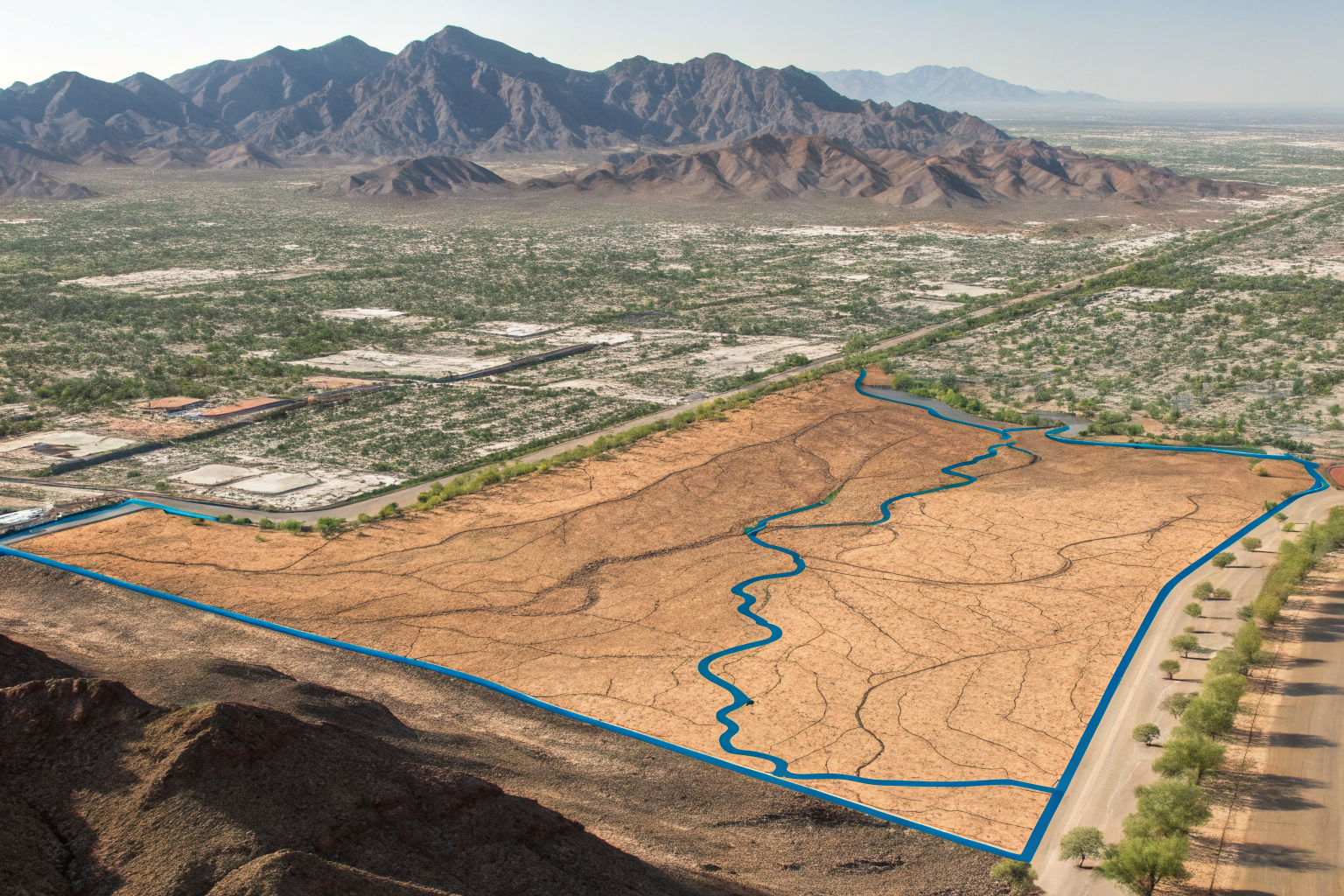
Zone X designation does not eliminate flood risk for Phoenix properties near desert washes and alluvial fans. The designation means lower probability, not zero probability. FEMA’s own NFIP claims data shows roughly 25% of all claims come from outside high-risk zones, and desert terrain accelerates surface runoff in ways that flat-topography flood models undercount.
FEMA’s NFIP Preferred Risk Policy is available to properties in Zone X and moderate-risk zones at lower premium tiers than standard Zone AE rates, per FEMA NFIP rate schedules. Specific premiums vary by property elevation and coverage amount. A Zone X homeowner in Phoenix can often get building and contents flood coverage for under $500 annually, consult a licensed AZ insurance agent for current rate ranges specific to your address.
Here are the scenarios where a Zone X homeowner in the Phoenix metro should take a hard look at flood coverage:
- Your property sits within one block of a designated wash, arroyo, or engineered flood control channel. Channel capacity has limits, and monsoon events can exceed design thresholds in concentrated storm cells.
- Your home is on or near an alluvial fan, which are common in the Phoenix mountain park areas including the North Mountain, South Mountain, and McDowell foothills. Alluvial fans funnel water in predictable patterns that do not always align with FEMA’s zone boundaries.
- Your lot sits downslope from a large impervious surface such as a parking lot, commercial development, or major road. Hard surfaces accelerate runoff volume and speed, sending water toward lower-elevation properties faster than the ground can absorb it.
- A previous owner received a flood insurance payout on the property. This history appears on some property disclosure records in Arizona. A prior claim means the property has already demonstrated flood exposure regardless of its current zone designation.
- Your lender required flood insurance at purchase but dropped the requirement after a LOMA. The physical geography of your lot has not changed. The wash, the slope, and the monsoon are still there.
For Zone X homeowners who are already evaluating gaps in other parts of their coverage, the question of whether minimum car insurance is enough follows similar logic: the floor set by law or zone designation is not the same as adequate protection. Flood coverage decisions and auto coverage decisions share the same underlying problem, the requirement tells you the legal minimum, not what an actual loss costs.
If your situation involves a coverage gap that a non-renewal has created, the article on what to do when you cant get homeowners insurance in arizona covers the surplus lines path that some Phoenix homeowners end up on, where flood coverage coordination becomes even more important to get right.
Frequently Asked Questions
How do I find out what flood zone my Phoenix home is in?
Go to FEMA’s Flood Map Service Center at msc.fema.gov and enter your property address. The tool returns the FIRM panel covering your parcel and shows your current flood zone designation. Cross-check the result with the Maricopa County Flood Control District’s interactive mapping tool, which reflects local channel and wash overlays that sometimes differ from FEMA’s base maps, and if your property has had a prior Letter of Map Amendment or Letter of Map Revision, those official changes appear in the FEMA system as well.
Is flood insurance required in Arizona by state law?
Arizona has no state law requiring homeowners to carry flood insurance. The requirement comes from federal lending rules: under the National Flood Insurance Reform Act of 1994, lenders with federally backed mortgages must require flood insurance for properties in FEMA-designated Special Flood Hazard Areas (Zone AE). If your property is in Zone X or you carry no mortgage, no law compels you to buy flood coverage, but your standard homeowners policy still excludes all flood damage regardless of your zone designation.
What is flood insurance in Phoenix and how much does it cost?
Flood insurance in Phoenix is a separate policy, either through FEMA’s National Flood Insurance Program or a private carrier, that covers direct physical loss from flooding that your homeowners policy excludes. NFIP premiums vary by flood zone, elevation, and coverage amount; Zone AE properties pay higher premiums than Zone X properties, which may qualify for NFIP’s lower-cost Preferred Risk Policy. For a current rate specific to your address and flood zone, consult a licensed Arizona insurance agent, annual premiums can run under $500 for low-risk Zone X properties and into several thousand dollars for high-risk Zone AE structures.
This article is for educational purposes only. Consult a licensed insurance agent for advice specific to your property, flood zone designation, and coverage needs.