
Does a new roof lower insurance premiums in Arizona? Yes, and the impact goes beyond a modest rate trim. A new roof can eliminate a 25-50% age surcharge, flip your claim settlement from depreciated value to full replacement cost, and restore renewal eligibility if your carrier flagged roof condition as the reason you were being dropped. The catch: timing and documentation determine whether you get those benefits or not.
Key Takeaways:
- A new roof resets your roof-age schedule to zero, which removes the 25-50% age surcharge most AZ carriers apply to homes with roofs over 20 years old.
- Replacing your roof can upgrade your HO-3 settlement basis from ACV (depreciated payout) to RCV (new-for-old replacement), a difference that can reach tens of thousands of dollars on a single claim.
- Carriers require a signed completion certificate, permit documentation, and updated roof inspection photos before they will re-rate your policy, submitting those proactively after installation avoids waiting until renewal.
Does a New Roof Actually Lower Your Insurance Premium in Arizona?
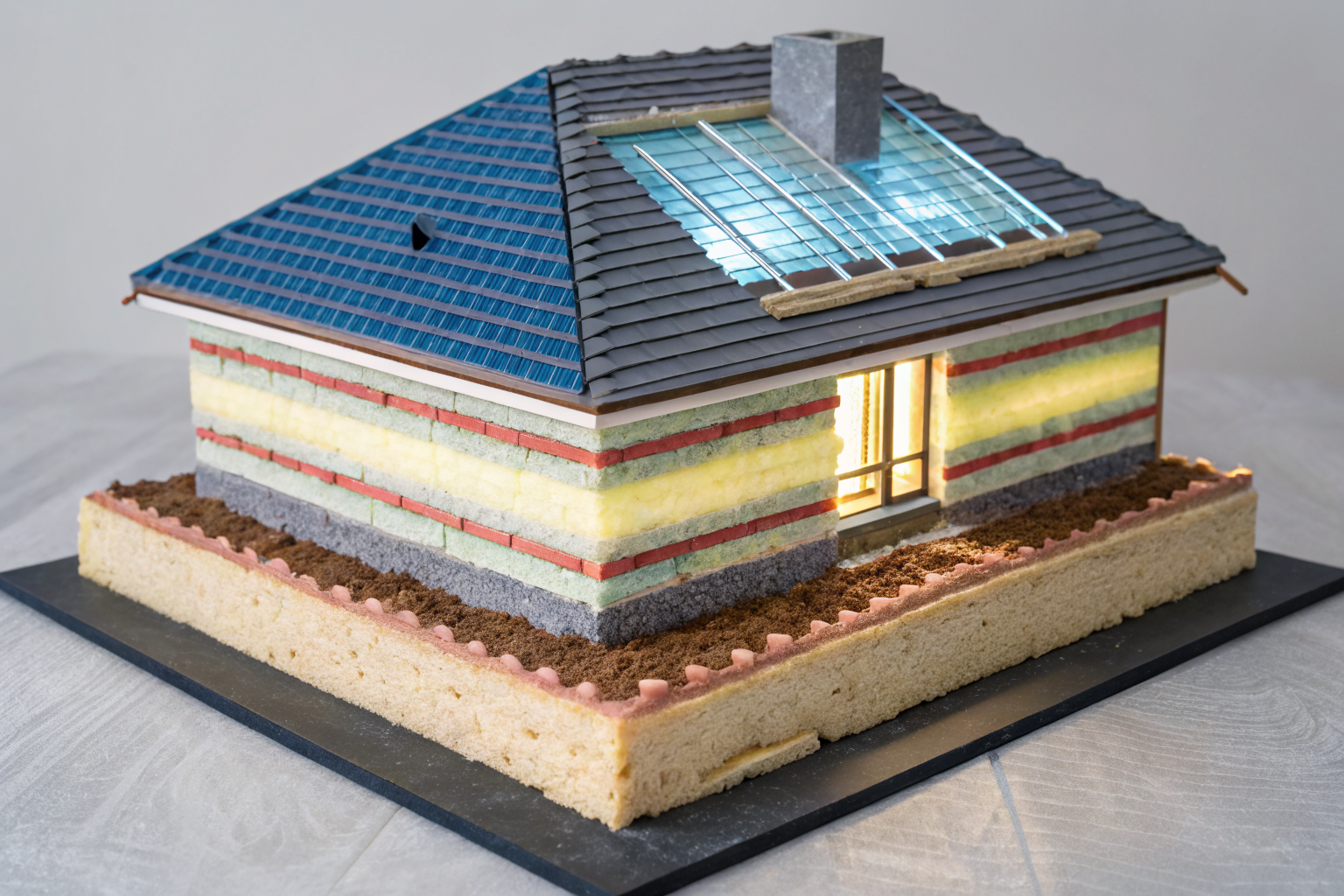
Roof age is an actuarial variable in carrier pricing, not just a cosmetic condition. This means carriers don’t look at your roof the way a home inspector does. They look at it the way an underwriter does: what is the statistical probability this roof generates a claim in the next policy term, and if it does, how much will we have to pay? Those two questions drive both the rate you pay and the settlement you collect.
A roof-age schedule is the carrier’s internal pricing table that assigns a surcharge or settlement cap based on how many years old your roof is at the time of application or renewal. This means a 22-year-old tile roof doesn’t just look old to a carrier, it costs more to insure and pays out less when damaged.
A new roof resets the roof-age schedule carriers use to price and settle AZ homeowners policies. That reset is the primary premium driver. Whether the reduction is $200 or $800 annually depends on how old the existing roof was, what material it uses, and whether the carrier was already applying an active surcharge or an ACV settlement cap.
Per industry underwriting practice reported across multiple AZ-market filings, carriers apply a 25-50% age surcharge to homes with roofs over 20 years old. Removing that surcharge is the single largest rate lever a homeowner can pull without switching carriers.
Two distinct financial benefits come with a new roof: the premium side and the settlement side. Both matter. The next section separates them with specific numbers.
This is a YMYL topic. Consult a licensed AZ insurance agent (licensed under AZ DIFI) to evaluate the specific impact on your policy before making decisions based on general ranges.
The Two Ways a New Roof Changes What You Pay, and What You Collect
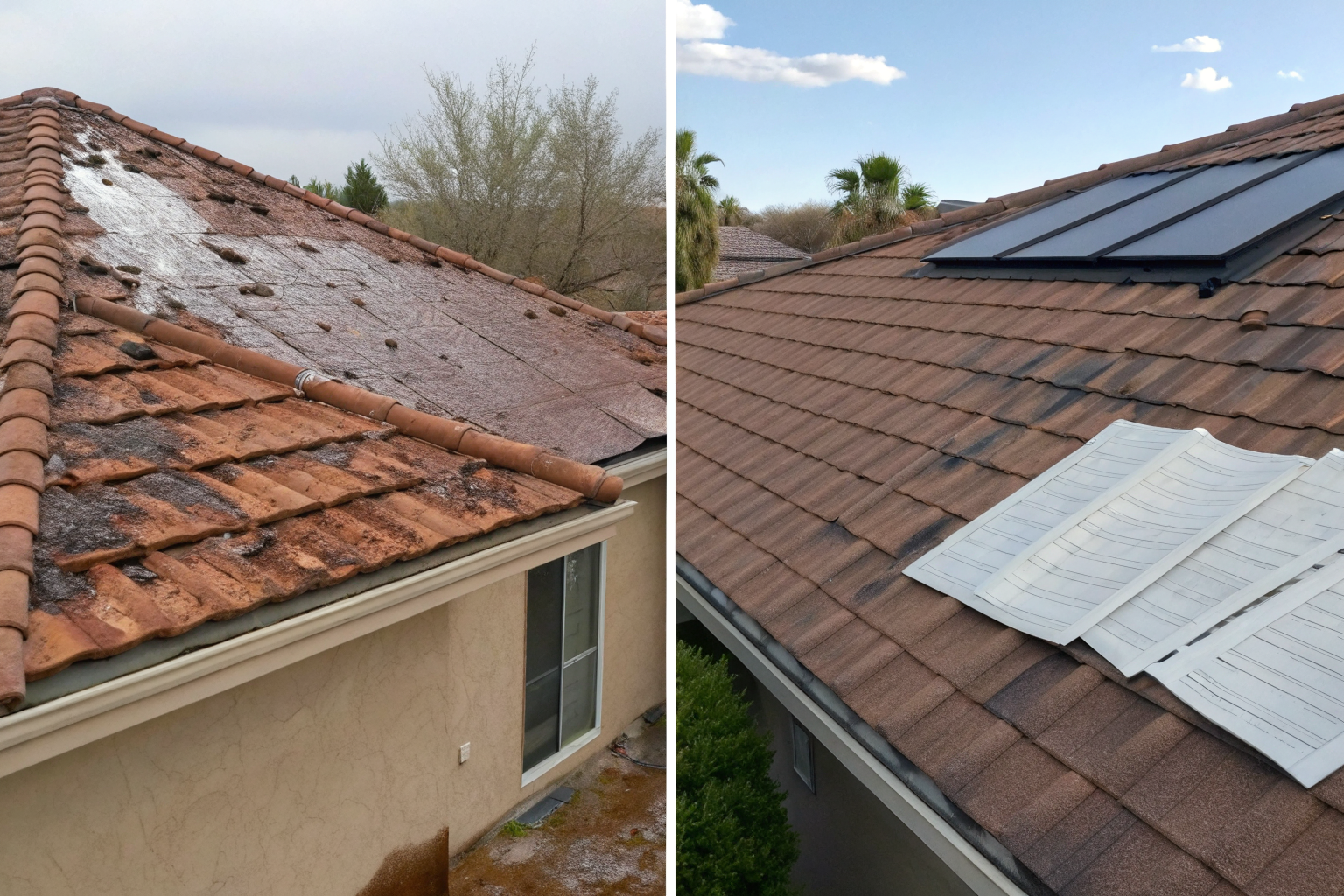
Roof replacement changes both the premium cost and the claim settlement basis under an Arizona HO-3 policy. Most homeowners focus on the rate reduction and miss the settlement-basis upgrade, which is often the larger financial impact.
The premium side. When the roof-age surcharge disappears, the home may re-qualify for standard-market pricing. That can also mean re-qualifying for carriers who previously wouldn’t write the policy at all. If you’ve been searching for coverage and running into walls, a new roof is one of the fastest ways to change your eligibility profile with carriers across the AZ market.
The settlement side. ACV and RCV are not interchangeable terms. ACV (actual cash value) means the carrier deducts depreciation from the claim payout based on the roof’s age and expected useful life. RCV (replacement cost value) means the carrier pays the cost to replace the roof new, without deducting for depreciation. The difference on a single claim can be substantial.
Filed AZ HO-3 forms, including the HOAIC form DIFI-filed in March 2025, establish ACV caps as standard practice for roofs over a carrier-defined age threshold. Once you replace the roof and document it correctly, many carriers will restore RCV settlement eligibility.
| Factor | ACV Settlement (Old Roof) | RCV Settlement (New Roof) |
|---|---|---|
| Roof age at claim | 22 years old | 0-5 years old |
| Depreciation applied | 60% deducted | None deducted |
| Gross claim amount | $30,000 | $30,000 |
| Carrier pays | ~$12,000 | $30,000 |
| Out-of-pocket gap | ~$18,000 | $0 |
| Settlement basis | ACV cap per HO-3 filing | Full RCV per updated policy |
On a 22-year-old tile roof with 60% depreciation applied, an ACV settlement on a $30,000 roof claim pays approximately $12,000. An RCV settlement pays the full $30,000. That is an $18,000 difference on one claim, before deductible. If you’re also carrying a percentage deductible on a $500,000 home at 2%, your deductible is $10,000 regardless, but collecting $30,000 instead of $12,000 is the difference between a manageable out-of-pocket and a financial event.
(This settlement-basis issue is separate from the weather deductible structure question, those are two different mechanics operating at the same time on the same claim.)
How Much Does a New Roof Lower Your Insurance, The Arizona Math

The roof age surcharge elimination reduces annual premium by an amount tied to the home’s main coverage limit and prior roof age. There is no single answer that holds across all carriers, all materials, and all coverage limits. What there is: a clear mechanism you can run yourself.
Per the approved stat hook from industry underwriting practice: replacing an aging roof eliminates the 25-50% age surcharge carriers apply to homes with roofs over 20 years old.
Here’s what that means in dollar terms. Assume a carrier applies a 2% base roof-rate factor to the home’s main coverage limit. On a $400,000 home, the base roof-rate contribution to the annual premium is $8,000 at 2%, that’s $8,000 in roof-related premium. A 30% age surcharge on that factor adds $2,400 per year. On a $600,000 home, the same math adds $3,600 per year. Those are real numbers. When the surcharge disappears after a new roof, those dollars come back.
The exact reduction depends on the carrier’s filed rating plan, which AZ DIFI requires all carriers to file and make available. Base roof-rate factors vary by carrier and by material. Tile has a different age curve than asphalt shingle because tile lasts longer, but tile roof underlayment age matters independently. A tile roof installed in 1998 with original underlayment may still trigger the age surcharge even if the tile looks fine, because carriers evaluate underlayment lifecycle, not tile appearance. Tile roof insurance in Arizona operates on this underlayment logic, and it’s worth understanding before assuming a cosmetically clean tile roof qualifies for new-roof pricing.
For a full breakdown of how carriers evaluate tile roofs versus the underlayment underneath them, the tile roof insurance Arizona guide goes deeper on that specific underwriting mechanic. The short version: if you’re replacing tile but keeping original underlayment from the late 1990s, you may not get the full age-reset benefit.
Will a New Roof Restore Your Renewal Eligibility With an Arizona Carrier?

Roof replacement restores renewal eligibility for AZ homeowners who received a non-renewal notice tied to roof age or condition, but it does not guarantee it. That distinction matters.
If your carrier issued a non-renewal notice and the stated reason was roof condition or age, completing the replacement before the non-renewal effective date and submitting documentation directly addresses the stated ground for non-renewal. Under ARS 20-1652, Arizona carriers must provide written grounds for non-renewal. If the documented ground is roof condition, a documented replacement directly responds to that stated reason. Reinstatement, though, remains at the carrier’s discretion. ARS 20-1652 does not require a carrier to reverse a non-renewal after the condition is cured.
What completing the roof replacement does do: it removes the carrier’s documented justification. It also re-opens your eligibility profile for the standard market, including other carriers across the 200+ carrier network that an independent-minded agency can shop on your behalf. If your current carrier won’t reinstate, that’s a different problem, and a solvable one.
What a new roof does not fix: non-renewals tied to claim history, other property conditions, or carrier appetite changes that have nothing to do with the roof. If your carrier’s stated ground was claim frequency or a different structural issue, a new roof won’t change those underwriting factors.
If the carrier refuses to reinstate after documented roof replacement where the stated reason was roof condition, contact AZ DIFI Consumer Services. DIFI handles consumer complaints and can review whether the carrier followed ARS 20-1652 procedure. Homeowners stuck at this stage should also review the Arizona insurance guide for a full map of the surplus lines market and non-renewal resolution paths.
This scenario is different from a standard rate-reduction situation. Here, the roof is the cure for a coverage crisis, not just a rate optimization. The documentation requirements in the next section apply to both scenarios, but in the non-renewal context, the stakes for getting documentation right are higher.
What Documentation to Submit, and When, to Get the Full Benefit

Proactive documentation submission triggers re-rating before the next renewal cycle on an Arizona HO-3 policy. Don’t wait for renewal. Every month you delay is a month you’re paying the old rate and carrying the old settlement basis.
Here are the steps:
Obtain the signed contractor completion certificate. This document must include the material type (shingle, tile, modified bitumen, etc.), installation date, and permit number. Without a permit number, most AZ carriers will not accept the certificate as proof of a permitted installation.
Pull the city or county building permit. Most Arizona municipalities require permits for full re-roofs. Maricopa County requires permits for anything beyond minor repair thresholds. If your contractor skipped the permit, that’s a problem you need to address before submitting to the carrier, an unpermitted roof can create complications on a future claim.
Request a post-installation roof inspection report if the carrier requires one. Some AZ carriers require a third-party inspection within 30-60 days of completion. Some don’t. Ask your agent or call the carrier’s underwriting department before the installation crew leaves the job site. Getting this requirement wrong costs you time.
Contact your agent or the carrier directly and submit documentation now, not at renewal. Carriers can re-rate mid-term when a material property change is documented. If you wait until renewal, you leave months of potential premium reduction and restored RCV eligibility on the table.
Get written confirmation that the roof age has been updated in the carrier’s system and that the settlement basis has changed from ACV to RCV. Verbal assurances do not change the policy. Written confirmation from the carrier’s underwriting department is the only proof that matters if a claim dispute comes up later.
Submitting this documentation is also an annual-review disclosure obligation. Per the disclosure principle that runs through the broader AZ coverage education framework: what your insurance company doesn’t know can cost you the claim. If you replaced the roof and didn’t notify the carrier, that’s a material change that needs to be on record. The same discipline applies to other material changes, solar installations, property modifications, occupancy changes. If you’re unsure whether a change triggers a disclosure obligation, speak to a licensed AZ DIFI agent before the next renewal.
For homeowners also navigating questions about uninsured motorist coverage or flood zone exposure alongside their roof situation, those are separate coverage decisions, arizona uninsured motorist property damage questions and flood insurance in Phoenix each have their own evaluation frameworks and shouldn’t be bundled into the roof conversation with your agent.
Frequently Asked Questions
Does a new roof lower insurance immediately or do I have to wait for renewal?
You do not have to wait for renewal. Submit your completion certificate, permit documentation, and any required inspection report to your carrier or agent as soon as the job is done. Carriers can re-rate mid-term when a material property change is documented. Waiting until renewal means leaving months of potential premium savings and restored settlement eligibility on the table.
How much does a new roof lower home insurance on average?
The reduction depends on three things: how old the previous roof was, the home’s main coverage limit, and the carrier’s filed rating plan. Per industry underwriting practice, carriers apply a 25-50% age surcharge to roofs over 20 years old. Removing that surcharge on a high-coverage home can translate to hundreds of dollars annually. There is no universal average because every carrier files its own rating plan with AZ DIFI, and base roof-rate factors vary by material and carrier.
Will a new roof switch my claim payout from ACV to full replacement cost?
It can, but the change is not automatic. Many Arizona HO-3 policies include ACV caps that activate once a roof exceeds a certain age. Replacing the roof and documenting the new installation with your carrier can restore RCV settlement eligibility. Get written confirmation from your carrier’s underwriting department that the settlement basis has changed. Do not assume the policy updated on its own, it didn’t.