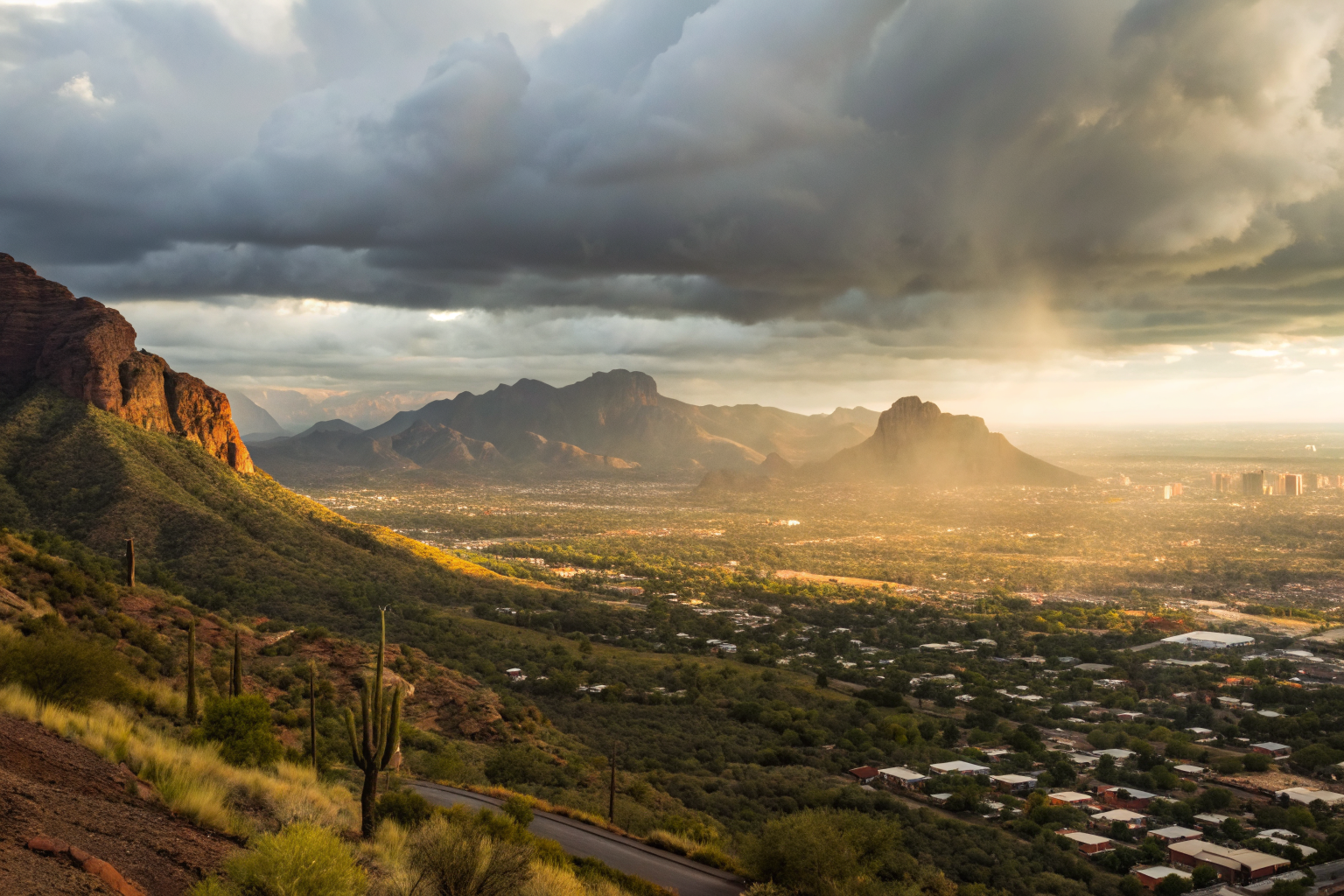
Arizona insurance agency locations matter more than most people expect. Your ZIP code isn’t just an address, in Arizona, it determines your roof-age underwriting tier, your monsoon exposure, your wildfire proximity score, and which carriers will quote you. Where your agent works matters as much as who they are.
Key Takeaways:
- The Gebhard Agency serves Phoenix metro and all of Arizona statewide, with dedicated suburb pages for Mesa, Gilbert, Chandler, Tempe, Scottsdale, and Glendale, each carrying a distinct risk profile that changes what carriers will quote and at what price.
- Risk profiles vary across the metro: Scottsdale’s wildland-urban interface triggers different carrier appetite than Chandler’s flat suburban grid or Tempe’s high-density rental concentration.
- Coverage is available remotely statewide, Arizona DIFI licensure under producer license #6724577 covers all AZ ZIP codes, not just the East Valley office footprint.
Where Does The Gebhard Agency Serve? The Full Arizona Coverage Map
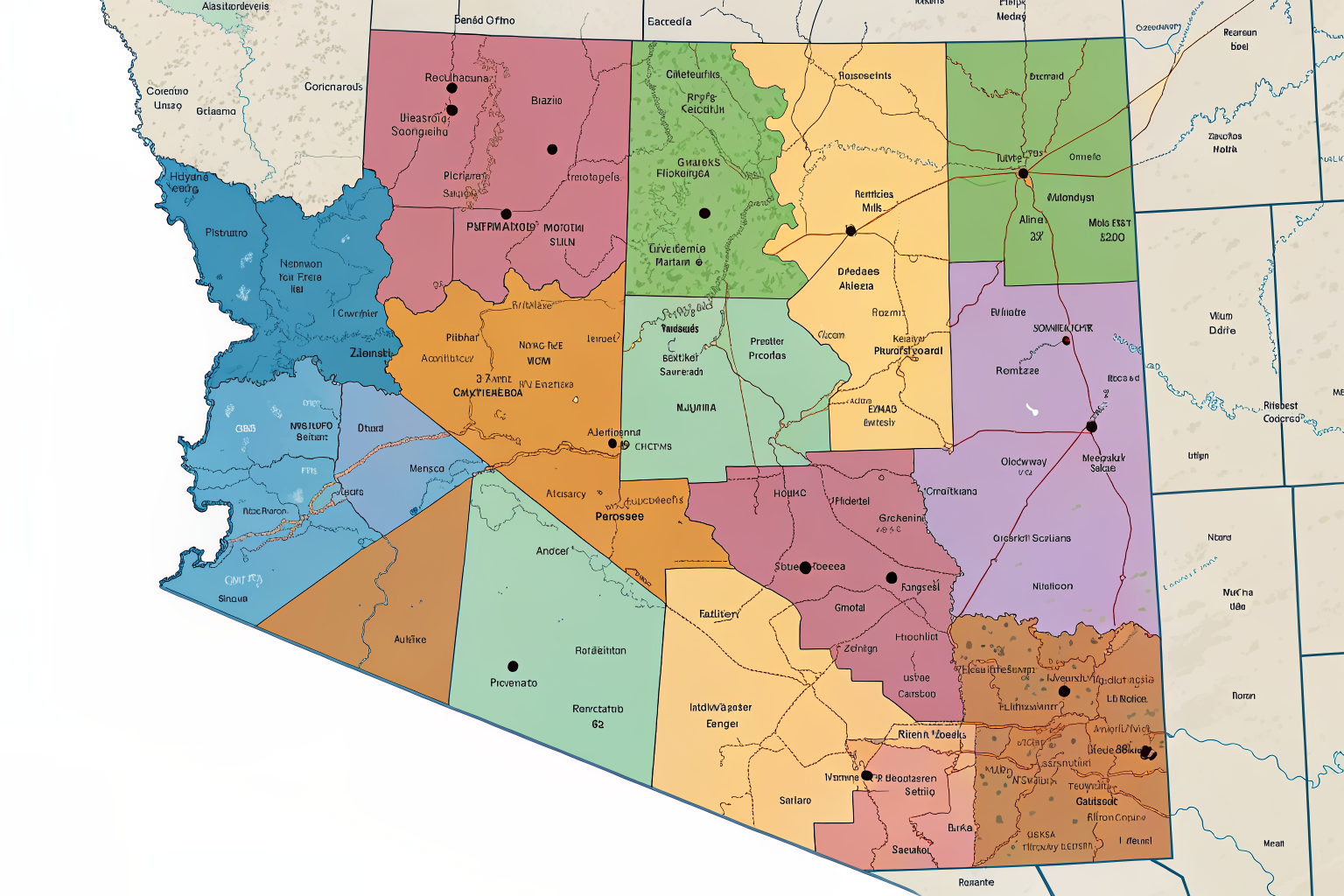
The Gebhard Agency’s service footprint is a resident license covering all of Arizona. This means Paul Gebhard, operating under Arizona DIFI producer license #6724577 (active since 1997, current term February 1, 2026 through January 31, 2030), can quote, bind, and service property and casualty coverage for any Arizona resident regardless of city or ZIP code.
The physical anchor is the Mesa office at 4850 E Baseline Rd, Suite 103, Mesa, AZ 85206. Walk-ins are available by appointment. When someone searches “insurance agent near me” from the East Valley, that office address is what surfaces. But the physical office is not the limit of what the agency can do.
Arizona DIFI issues a single resident producer license covering all lines statewide. There is no city-by-city sub-licensing requirement under ARS Title 20. A client in Tucson, Flagstaff, or Yuma receives the same access to coverage options as a client walking into the Mesa office, the conversation just happens by phone, email, or chat instead of in person.
Six primary service hubs anchor the Phoenix metro coverage: Mesa, Gilbert, Chandler, Tempe, Scottsdale, and Glendale. Each has a dedicated suburb page because each carries a genuinely different risk profile. Secondary communities across the metro and statewide are also served remotely.
One professional note worth stating directly: coverage availability and carrier options vary by address, property type, and claim history. The arizona insurance services offered at this agency span homeowners, auto, motorcycle, and small commercial lines, and the full breakdown of what those cover lives in a separate resource. This page is a navigation guide to where the agency works and why location shapes the coverage conversation. For guidance specific to your situation, contact the agency or consult the arizona insurance guide for a plain-language explanation of how Arizona coverage works before you call.
The Six Primary Service Hubs: Phoenix Metro Suburb Pages
Each Phoenix metro suburb carries a distinct insurance risk profile that affects carrier appetite, deductible structure, and available coverage options. The table below captures the key variables. These are not invented statistics, they reflect underwriting patterns carriers file with Arizona DIFI and the risk characteristics associated with each community’s housing stock, geography, and activity mix.
| Suburb | Primary Risk Profile | Top Coverage Concern | Notable Underwriting Factor |
|---|---|---|---|
| Mesa | High tile-roof-age concentration, large retiree population, growing solar adoption | Roof age surcharges and undisclosed solar systems | Many Mesa homes were built in the 1980s–1990s, pushing tile underlayment into the 25–35 year range where carriers apply a 25–50% age penalty or decline to write |
| Gilbert | Newer construction, high HOA density, rapid growth | Valuation gaps on fast-appreciating homes, loss assessment exposure | Construction from the 2000s–2010s means newer roofs, but rapid home-value appreciation creates replacement cost gaps when coverage limits aren’t updated at renewal |
| Chandler | Tech-corridor commercial mix, newer high-value residential builds | Replacement cost exposure on high-value homes, commercial auto for fleet-heavy employers | High median home values combined with newer builds push Coverage A limits into territory where even small valuation miscalculations leave a six-figure gap |
| Tempe | University rental density, older housing stock, high pedestrian and cyclist activity near ASU | UM/UIM exposure, renter vs. owner coverage confusion, older roofs | Auto insurance in Arizona requires carriers to offer uninsured motorist protection under ARS 20-259.01, Tempe’s traffic patterns near ASU make that coverage more relevant than in lower-density suburbs |
| Scottsdale | Wildland-urban interface in north Scottsdale, high-value custom homes, luxury auto, active STR market in Old Town | Carrier appetite restrictions near brush zones, short-term rental voids, high replacement cost | Scottsdale’s McDowell Sonoran Preserve covers 30,500 acres, creating genuine wildland-urban interface exposure for north Scottsdale homeowners that does not exist for Chandler or Gilbert addresses at the same coverage level |
| Glendale | Older west-side housing stock, higher historical claim frequency, NFL and MLB venue proximity | Claim frequency impact on renewal pricing, STR activity near State Farm Stadium and American Family Fields | Older housing stock means more deferred maintenance claims; venue proximity drives short-term rental activity that can void a standard homeowners policy without proper endorsement |
The contrast between Scottsdale and Chandler is the clearest illustration of why suburb-specific pages exist. A $700,000 custom home in north Scottsdale near the preserve and a $700,000 home in a Chandler master-planned community at the same coverage level will draw quotes from different carrier pools, at different prices, with different deductible structures. Scottsdale carriers adjust appetite based on brush proximity. Chandler carriers focus more on valuation accuracy and roof age. The coverage conversation is different because the risk is different.
Gilbert’s profile deserves a specific note: newer construction reduces the roof-age concern, but rapid appreciation in the East Valley has created valuation gaps on homes bought five or six years ago. A home insured at $450,000 in 2019 may cost $650,000 or more to rebuild today. Per the agency’s arizona insurance services overview, coverage reviews that catch those gaps before a claim are the practical reason to revisit your policy annually.
For clients who have received a non-renewal notice in any of these suburbs, the risk profile of your ZIP code is often part of what triggered it, and understanding that context is the first step. If you received non renewal notice in Arizona, the path forward depends on whether the issue is carrier appetite for your ZIP code, your roof age, or your claims history. Each suburb page addresses that distinction for its specific market.
How Arizona ZIP Codes Change What You Get Quoted
Carriers file rate territories and underwriting rules with Arizona DIFI by ZIP code or territory group. Per Arizona DIFI rate-filing rules, the same policy form can carry materially different pricing in Mesa 85206 versus Scottsdale 85255, not because the policy wording differs, but because the territory rating factors filed by the carrier differ. Arizona DIFI oversight requires those filings to be actuarially justified, which means carriers are pricing real, location-specific risk.
Three variables drive most of the ZIP-level divergence:
First, weather exposure. Arizona’s monsoon corridor runs roughly southeast to northwest across the metro. ZIP codes with consistent storm-cell activity see higher frequency of wind and hail claims than west-side desert communities. North Scottsdale adds brush-fire proximity on top of that. Carriers map those patterns into their territory definitions.
Second, roof age concentration. Older East Valley neighborhoods built in the 1980s and 1990s carry a higher proportion of roofs at or past the 20-year threshold where carriers apply age surcharges. Newer Gilbert and Chandler builds don’t face that concentration problem at the neighborhood level, which shifts carrier appetite for those ZIP codes. The 25–50% age penalty carriers apply to homes with roofs over 20 years old is a real underwriting factor, not a theoretical one.
Third, historical claim frequency. Carriers use ZIP-level loss data in their rate filings. A ZIP code with above-average water damage claim frequency will attract higher premiums across the board, regardless of any individual home’s condition. This is why a Tempe rental condo owner needs a different carrier conversation than a Scottsdale custom-home owner, the claim patterns associated with those two locations tell carriers different stories about expected loss.
A common assumption is that two identical homes should get identical quotes. They won’t if they’re in different ZIP codes, because location-level data is a rated variable, not a background check.
This is also why the six suburb pages exist as separate navigation tools, not just geographic categories. A reader searching for an insurance agency in Chandler, AZ has a different set of carrier conversations ahead of them than a reader in Scottsdale or Tempe. The suburb pages reflect that.
For guidance specific to your address, property type, and situation: coverage availability and premium under Arizona DIFI-filed rate rules require a direct conversation. The ZIP-code mechanism described here is the general framework, not a quote.
Secondary Suburbs and Communities We Also Serve
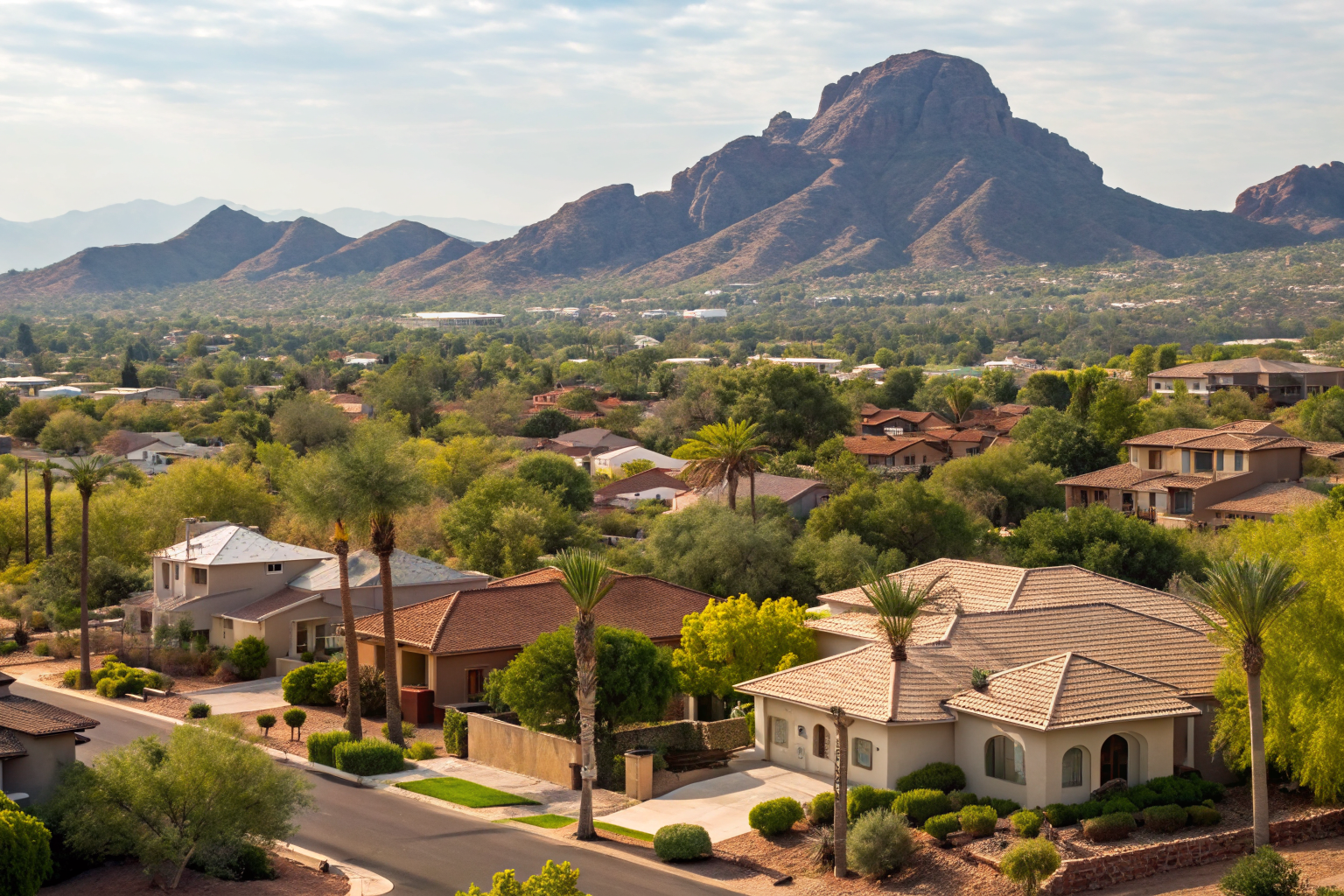
The Gebhard Agency extends coverage beyond the six primary hubs to secondary Phoenix metro suburbs and statewide Arizona communities. The Mesa office is the physical anchor, but Arizona DIFI resident producer license #6724577 covers every Arizona ZIP code. Secondary market clients are served by phone, email, and the chat widget, no in-person visit required.
Secondary Phoenix Metro Communities
- Queen Creek: Rapid rural-to-suburban transition has created significant variability in roof age and construction standards within the same ZIP code. Newer tract homes sit alongside older agricultural-area properties with different underwriting profiles. HOA density is growing fast as master-planned communities expand south.
- Peoria: Older west-side housing stock in established neighborhoods combines with newer Lake Pleasant-area builds in the same city. Those two segments face different carrier conversations, older stock for roof age and claim frequency, newer builds for valuation accuracy.
- Surprise: High retiree population concentration and above-average HOA density mean loss-assessment coverage and snowbird vacancy clauses are frequent discussion points. Many Surprise homeowners spend months out of state, triggering vacancy provisions most standard policies carry.
- Avondale and Goodyear: West Valley growth corridors with newer construction and an active commercial trucking and logistics sector. Commercial auto and workers compensation questions come up frequently for small contractors operating in this area.
- Maricopa: Distance from the core metro means fewer carrier options in some product lines. Rapid population growth is creating the same valuation-gap risk seen in Gilbert five years ago.
- Apache Junction: Older housing stock, proximity to the Superstition Mountains, and a high proportion of manufactured and semi-rural homes create underwriting considerations that differ from the core East Valley grid.
- Fountain Hills: Smaller community with high home values and proximity to McDowell Mountain Regional Park. Shares some of the carrier-appetite characteristics of north Scottsdale without the same volume of carrier competition.
Statewide Arizona Coverage
- Tucson metro: Arizona’s second-largest metro carries its own distinct underwriting patterns. Coverage is handled remotely with the same access to 200+ carriers available to Phoenix metro clients.
- Flagstaff: Flagstaff sits at 6,900+ feet elevation. Snow-load requirements, freeze-related pipe claims, and proximity to the Coconino National Forest create an underwriting profile with no overlap with Phoenix metro, requiring carrier conversations specific to northern AZ. Standard Phoenix metro carriers often don’t write Flagstaff properties on competitive terms.
- Prescott and Prescott Valley: Elevation, wildfire proximity, and a large retiree population create a coverage conversation that blends elements of Flagstaff’s underwriting environment with Phoenix metro HOA patterns.
- Yuma and Sierra Vista: Lower elevation, different weather exposure, and in Sierra Vista’s case, proximity to Fort Huachuca, create market-specific factors worth addressing directly.
Dedicated suburb pages for secondary markets are in development. For coverage needs in any of these communities now, use the chat widget or call (480) 800-4595. One note on scope: The Gebhard Agency does not currently serve Oregon clients through this site. A non-resident Oregon license exists, but Oregon is outside the Phase 1 build and is not part of the agency’s current service area.
Can an Arizona Agent Handle Your Policy If You’re Not Near the Office?

Yes. Arizona DIFI resident licensure allows The Gebhard Agency to bind and service policies for clients anywhere in Arizona without a physical meeting. Producer license #6724577 authorizes Paul Gebhard to place property, casualty, and life coverage for any Arizona-resident client under a single statewide resident license. There is no geographic restriction within the state.
The physical office at 4850 E Baseline Rd, Suite 103, Mesa handles walk-in appointments for clients who prefer in-person meetings. The majority of policy work, quoting, binding, coverage reviews, renewals, happens remotely. Here is how that process works:
- Reach out via the chat widget or call (480) 800-4595, regardless of your city or ZIP code. No office visit is needed to start the conversation.
- Describe your situation: property type, current coverage, and what prompted you to call, a renewal increase, a non-renewal notice, a new purchase, or a coverage question.
- Receive a plain-language coverage analysis before any quote is run. The goal is to understand what your current policy does and where the gaps are, not to run numbers first.
- If a carrier change or new policy helps, the agency shops your situation against 200+ carriers in the network. Not every carrier writes every Arizona ZIP code on competitive terms, having access to a wide network matters here.
- Policy documents are delivered digitally: no office visit required for binding, renewals, or policy changes.
A common misconception is that an “insurance agent near me” search means you need an agent with a physical office in your city. Arizona DIFI issues a single resident producer license covering all lines statewide, proximity to an office is a convenience, not a coverage requirement.
One professional note: coverage decisions specific to your address, property type, and claim history require a direct conversation. This page is a navigation guide to the agency’s service area. It is not a substitute for professional advice on your specific situation. For situation-specific guidance, contact the agency directly or consult an Arizona-licensed insurance professional.
Frequently Asked Questions
Does The Gebhard Agency have offices in Scottsdale or Gilbert, or just Mesa?
The only physical office is at 4850 E Baseline Rd, Suite 103, Mesa, AZ 85206. Arizona DIFI resident producer license #6724577 covers all Arizona ZIP codes, so clients in Scottsdale, Gilbert, Chandler, or anywhere else in the state can be served by phone, email, and chat without an office visit. Walk-in appointments at the Mesa location are available for clients who prefer meeting in person.
Does my suburb or ZIP code affect what insurance I can get in Arizona?
Yes, and the effect is significant. Arizona carriers file rate territories and underwriting rules with Arizona DIFI by ZIP code, meaning your address directly affects which carriers will quote you, what deductible structure they will offer, and what the premium will be. A home in north Scottsdale near the McDowell Sonoran Preserve carries different carrier appetite than an identically sized home in Chandler, based on location-level risk data. Working with an agent who has access to 200+ carriers matters because not every carrier writes every Arizona ZIP code on competitive terms.
Can The Gebhard Agency write insurance for a home in Tucson or Flagstaff, not just Phoenix?
Yes. The Gebhard Agency serves clients statewide under a single Arizona DIFI resident license. Tucson and Flagstaff are both handled remotely. Flagstaff carries a distinct underwriting profile due to its elevation above 6,900 feet, snow-load exposure, and proximity to Coconino National Forest, those factors require carrier conversations that differ from Phoenix metro properties. Contact the agency at (480) 800-4595 or via the chat widget to discuss coverage for properties outside the Phoenix metro area.