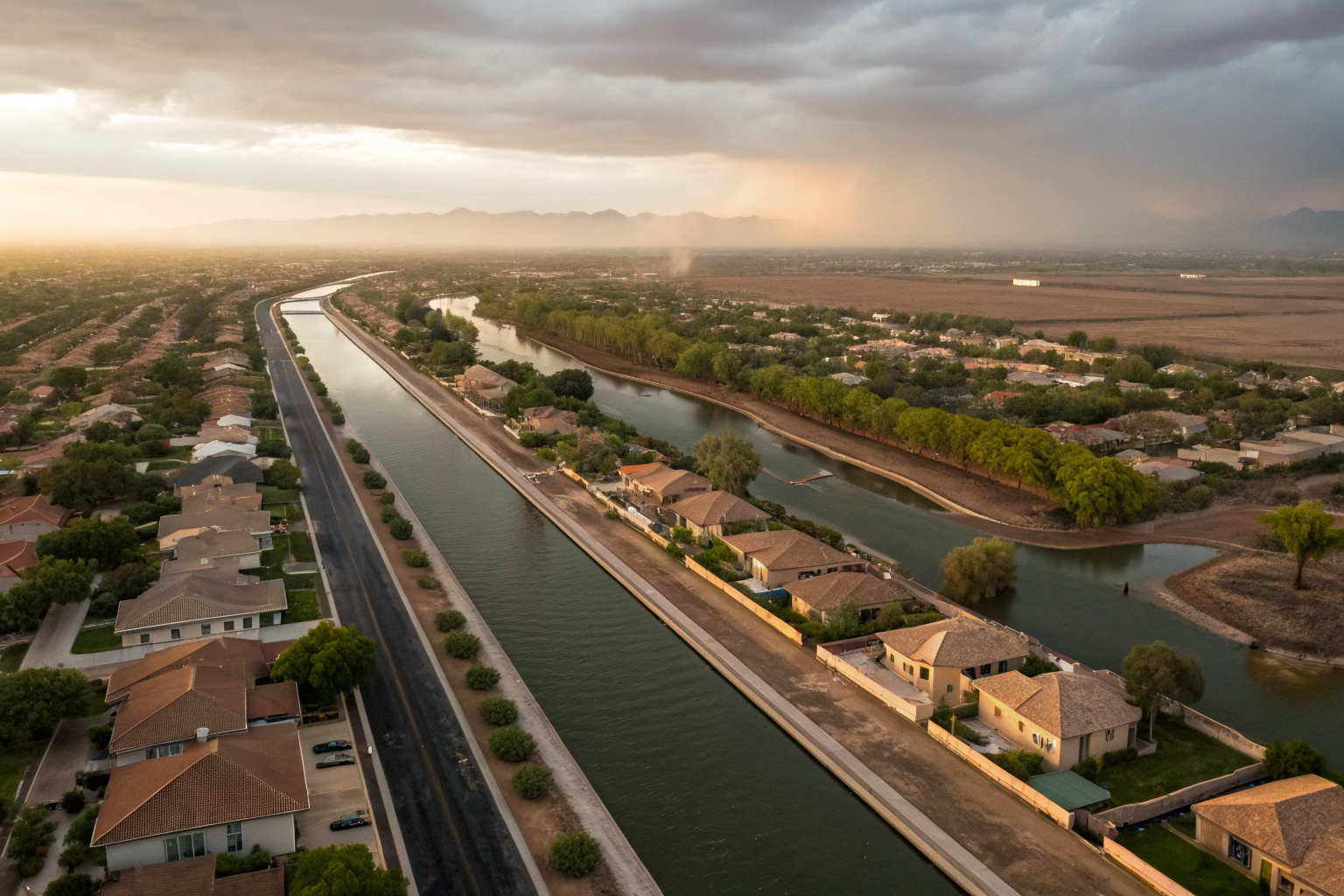
Gilbert AZ canal flood zone homeowners insurance is not the same product as a standard Arizona homeowners policy, and the difference surfaces at the worst possible moment. As of 2025, FEMA flood maps show that parcels along Gilbert’s Eastern Canal and Consolidated Canal corridors carry zone designations that can trigger mandatory flood insurance requirements your lender may already know about, even if you don’t.
Key Takeaways:
- Canal-adjacent lots in Gilbert along the Eastern Canal and Consolidated Canal corridors can carry FEMA Zone AE or Zone X designations, the difference determines whether flood insurance is mandatory under your mortgage lender’s terms.
- Gilbert’s high-density townhome corridors built after 2010 typically carry HOA master policies that cover the structure from the studs out, leaving interior fixtures, flooring, and personal property uninsured unless you carry a separate HO-6 policy.
- Monsoon-driven canal overflow is treated as flood by most carriers, not stormwater drainage, meaning your standard HO-3 policy excludes it regardless of how the water entered your home.
For East Valley homeowners researching what neighbors pay and what coverage costs, the home insurance cost breakdown for Mesa and surrounding areas gives useful baseline context. And if you want the full picture of how Arizona policies work before getting into Gilbert-specific risks, the Arizona insurance guide covers the foundational mechanics.
Gilbert’s Canal Network Creates a Risk Profile Most Standard Policies Ignore
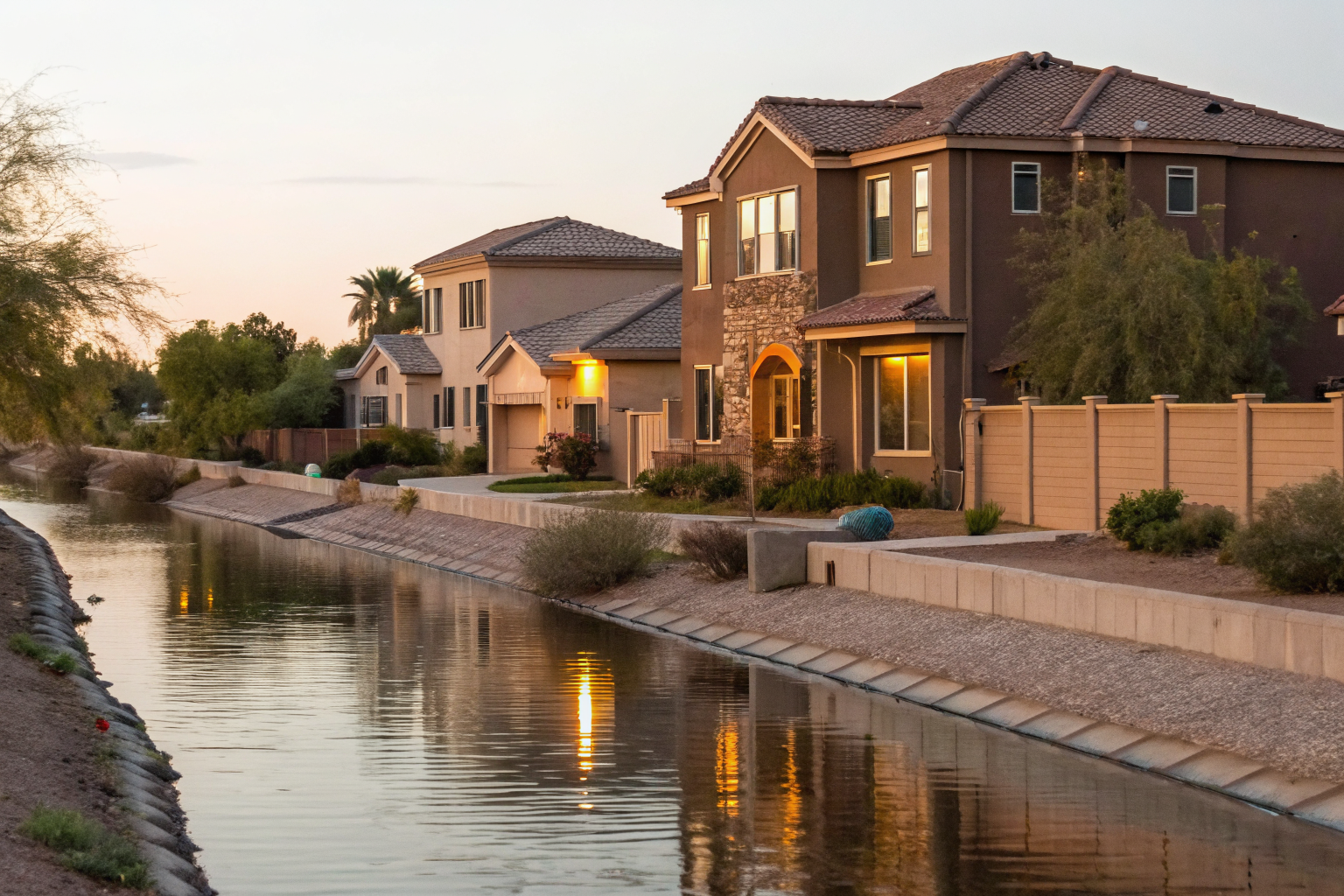
A flood zone designation is the FEMA classification assigned to a parcel based on its statistical probability of flooding. This means that two Gilbert homes on the same street can carry different designations, and different insurance obligations, based solely on which side of a canal easement they sit on.
Gilbert’s Eastern Canal and Consolidated Canal run through residential neighborhoods in a way that most standard Arizona homeowners coverage discussions never address. The risk is not theoretical. Standard HO-3 policies exclude flood as a named peril regardless of the water source, per the Insurance Information Institute. Canal overflow during an AZ monsoon season event is flood. Groundwater intrusion near a canal easement is flood. Water that enters your Maricopa County home because the Eastern Canal overtops its bank during a storm is flood, and your HO-3 will not pay for it.
This article focuses on Gilbert AZ specifically, not statewide Arizona patterns. The canal infrastructure here creates a risk layer that generic homeowners coverage guidance does not capture. Consult a licensed Arizona insurance agent for advice specific to your parcel’s designation and mortgage terms before drawing conclusions about your own policy.
How Does FEMA Flood Zone Designation Work for Gilbert Canal-Adjacent Properties?

FEMA flood zone designation determines whether flood insurance is mandatory for Gilbert canal-zone mortgages, and the difference between Zone AE and Zone X carries real financial consequences.
According to FEMA, properties in Zone AE carry a 1% annual flood chance, which is the 100-year flood standard. Homeowners with federally backed mortgages on Zone AE parcels are required by law to carry flood insurance. Zone X properties face no mandatory requirement, but sitting near managed water infrastructure like the Eastern Canal or Consolidated Canal means the risk does not disappear simply because the designation says it does.
Two Gilbert lots on the same street can carry different zone designations depending on their exact distance from a canal easement. FEMA updates Flood Insurance Rate Maps periodically, and a remapping can change a property’s status without direct notification to the homeowner. FEMA guidance recommends verifying your parcel’s designation at every renewal. Homeowners can look up their specific address at the FEMA Flood Map Service Center at msc.fema.gov.
| Feature | Zone AE | Zone X (Unshaded) | Zone X (Shaded) |
|---|---|---|---|
| Flood risk level | High (1% annual chance) | Low to minimal | Moderate (0.2% annual chance) |
| Mandatory flood insurance trigger | Yes, if federally backed mortgage | No | No, but advisable near canals |
| Typical premium range indicator | Higher, reflects elevated risk | Lower | Moderate |
| Mortgage lender requirement | Required by federal law | Not required | Not required, lender discretion |
| Canal-adjacent Gilbert relevance | Most parcels directly adjacent to Eastern or Consolidated Canal | Lots set back from easement | Lots in moderate-risk buffer zones |
The thing that catches people off guard: many Gilbert homeowners assume their lender would have flagged a Zone AE designation at closing. Lenders sometimes miss it, especially on lots where the zone boundary runs through the middle of a block. Check msc.fema.gov yourself.
NFIP vs. Private Flood Insurance for Gilbert Canal-Zone Addresses: What’s the Actual Difference?
Private flood insurance often provides higher coverage limits and shorter waiting periods than NFIP policies for Gilbert canal-zone homeowners, and the gap matters when your home’s replacement cost exceeds federal program caps.
Per FEMA, the National Flood Insurance Program caps building coverage at $250,000 for residential properties and contents coverage at $100,000. For newer Gilbert construction where replacement costs can run well above $250,000, that ceiling falls short. Private flood policies, licensed by the Arizona Department of Insurance and Financial Institutions (DIFI) for carriers writing in AZ, can provide coverage above those thresholds.
Not all private flood carriers write canal-adjacent Zone AE addresses. Underwriting appetite depends on the specific parcel, the canal proximity, and current carrier guidelines. Homeowners can verify carrier licensing through DIFI’s public lookup tool before purchasing.
| Feature | NFIP | Private Flood Insurance |
|---|---|---|
| Building coverage maximum | $250,000 (per FEMA) | Varies, can exceed $250,000 |
| Contents coverage maximum | $100,000 (per FEMA) | Varies, often higher |
| Standard waiting period | 30 days | Often 10–14 days (confirm with carrier) |
| Availability on Zone AE canal parcels | Available through NFIP-participating lenders | Depends on carrier underwriting appetite |
| Underwriting flexibility for newer construction | Standardized federal rate tables | More flexible, can price to parcel specifics |
| Carrier licensing verification | Federal program | AZ DIFI public carrier lookup |
Consult a licensed AZ insurance agent for advice specific to your parcel’s designation and mortgage terms before choosing between NFIP and a private policy. The right answer depends on your zone, your home’s replacement cost, and whether your lender accepts private flood policies in place of NFIP.
The HOA Master Policy Gap That Hits Gilbert Townhome Owners Hardest
Gilbert HOA master policies cover the structure from the studs outward, leaving interior improvements and personal property uninsured without a separate HO-6, and most townhome owners in newer-construction communities discover this only after filing a claim.
Under ARS 33-1201 (Arizona Condominium Act) and ARS 33-1801 (Arizona Planned Communities Act), the scope of an HOA’s master insurance policy must be documented in the CC&Rs. Homeowners have the right to request and read those documents. The bare-walls or studs-out structure is the default in Gilbert’s high-density townhome corridors built predominantly after 2010, meaning the HOA covers the exterior shell and common areas, nothing inside your unit.
The five coverage gaps Gilbert townhome owners in HOA communities most often discover:
- Interior finishes and upgrades. Flooring, cabinetry, countertops, and any improvements you made after purchase are not covered under a bare-walls master policy. If a water event destroys your kitchen renovation, the HOA’s policy does not respond.
- Personal property. Furniture, electronics, clothing, and appliances belong to you, not the HOA. A master policy covers the building, not your belongings inside it.
- Loss of use. If your unit becomes uninhabitable after a covered event, living expenses during repairs are not covered unless you carry your own HO-6 policy with loss-of-use coverage included.
- Personal liability. If a guest is injured inside your unit, personal liability coverage is your responsibility. The HOA’s master policy covers common areas, not incidents inside individual units.
- Loss assessment coverage. If the HOA levies a special assessment after a shared-area claim, say, the pool deck requires major repair after a monsoon event, each unit owner is responsible for their share. Loss assessment coverage on an HO-6 policy can cover that obligation.
Under ARS 33-1201 and ARS 33-1801, Arizona HOA governing documents are required to specify the master policy scope, but the Insurance Information Institute notes that fewer than half of homeowners in HOA communities report having read those provisions before their first claim. An HO-6 is the gap-filler here, not an optional add-on.
What Newer-Construction Gilbert Homeowners Get Wrong About Their Coverage
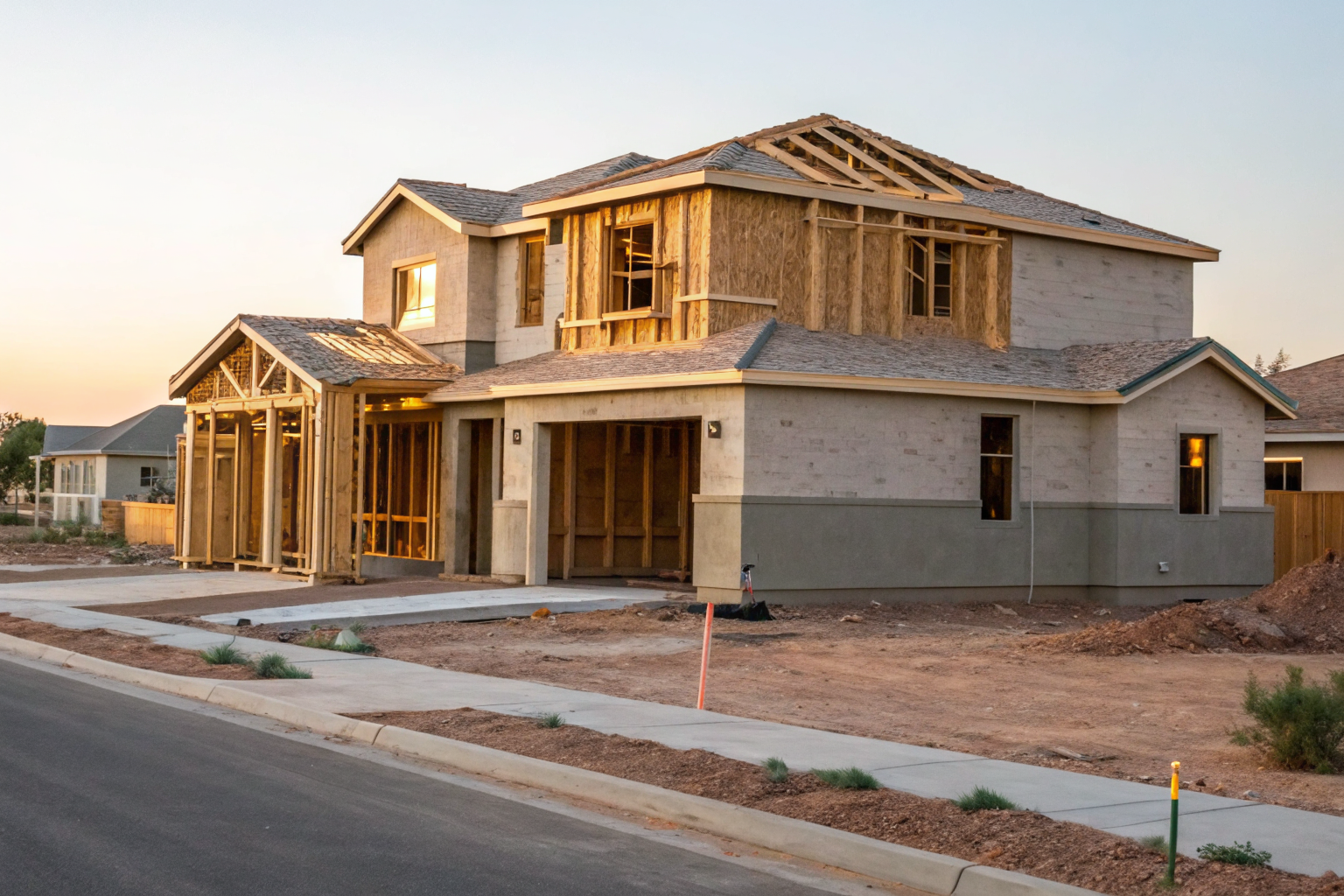
Newer Gilbert construction creates replacement cost underinsurance and undisclosed personal property gaps that standard HO-3 pricing does not automatically correct, and the drift happens quietly between renewals.
Gilbert’s newer-construction demographic skews toward tech professionals and dual-income households. That means high-value personal property: multiple laptops, home studio equipment, high-end appliances, standing desks, external monitors. Standard HO-3 policies cap business personal property, including home office equipment used for income-producing work, at a sub-limit of roughly $2,500, per Insurance Information Institute guidance on standard HO-3 form sub-limits. If your home office setup runs $8,000 or $12,000, you are carrying a gap that the base policy does not fill without a scheduled endorsement.
Replacement cost on newer Gilbert builds can drift within three to five years of purchase as construction costs rise across the Phoenix metropolitan area. A home valued at $450,000 at purchase may require $520,000 or more to rebuild at current East Valley labor and material rates. The policy does not automatically adjust to reflect that gap, your coverage limit stays where you set it until you or your agent updates it.
Solar systems are a separate disclosure issue. A typical AZ home solar install runs $40,000 to $60,000 (agency-verified figure), and most standard HO-3 policies have not been updated to reflect the added value. The warranty on the panels is not insurance. A claim on an undisclosed solar system may result in a partial payout or a denial. AZ DIFI expects material changes in property value to be disclosed to your carrier.
The monsoon distinction matters for Gilbert canal-adjacent addresses. Water entering through window seals or door frames during a monsoon event is wind-driven rain, typically covered under the dwelling peril section of an HO-3. Water entering because the Eastern Canal overtops its banks is flood, excluded from the HO-3 regardless of how it physically entered the home. Confirming which scenario applies to your specific parcel is a conversation worth having with a licensed AZ agent before monsoon season, not during it.
If you received a non-renewal notice and are now reassessing your Gilbert coverage, that changes the conversation, understanding what to do when an Arizona insurer declines to renew is a distinct process from shopping a new policy. Homeowners comparing options across the East Valley may also want to look at what agents serving the Chandler corridor offer, since underwriting appetite for canal-adjacent parcels can vary by carrier and by ZIP code. If you have other vehicles or property in Arizona, reviewing all your coverage in one place is worth the time, the agency’s Arizona coverage locations page shows the full scope of what’s available statewide, and if you ride a motorcycle in addition to owning a home, AZ motorcycle insurance carries its own year-round exposure considerations worth reviewing alongside your homeowners policy.
An annual review conversation with a licensed AZ agent is the right mechanism for catching these drift points before a claim surfaces them.
Frequently Asked Questions
Does my standard Gilbert homeowners insurance cover damage if the canal overflows during a monsoon?
No. Canal overflow is classified as flood by standard carriers, and flood is an excluded peril on every HO-3 homeowners policy regardless of cause, per the Insurance Information Institute. If your Gilbert property sits near the Eastern Canal or Consolidated Canal, you need a separate flood policy, either through the National Flood Insurance Program or a private flood insurer licensed through DIFI, to cover that risk. Consult a licensed Arizona insurance agent to verify your parcel’s FEMA flood zone designation before purchasing.
How do I find out if my Gilbert home is in a FEMA flood zone near a canal?
FEMA’s Flood Map Service Center at msc.fema.gov allows any homeowner to look up their specific address and see the current Flood Insurance Rate Map designation for their parcel. Canal-adjacent lots in Gilbert can carry Zone AE or Zone X designations depending on exact proximity to the canal easement. FEMA updates these maps periodically, a remapping can change your designation and your lender’s requirements without direct notification to you, so verify at every renewal.
What does a Gilbert HOA master policy cover, and what do I need my own policy for?
Most HOA master policies in Gilbert’s newer-construction townhome communities are bare-walls or studs-out policies, covering the exterior structure and common areas but leaving interior finishes, flooring, cabinetry, personal property, and personal liability uninsured. Under ARS 33-1201 and ARS 33-1801, the exact scope of your HOA’s master policy must be spelled out in the CC&Rs, request the current declarations page from your HOA board and read it. An HO-6 policy fills the gap for interior coverage, personal property, loss of use, and loss assessment coverage when the HOA levies a special assessment after a shared-area claim.