Home insurance cost Mesa Arizona buyers face varies by $400–$900 per year on nearly identical houses, and the gap comes down to four local variables most buyers never ask about before they sign. As of 2025, roof age, construction era, HOA structure, and carrier tier are the four numbers that determine where your premium lands. This guide breaks each one down.
Key Takeaways:
- Mesa home insurance premiums vary by $400–$900 per year depending on ZIP code, roof age, and construction era, the same $400,000 stucco ranch in an older Mesa neighborhood can cost more than an equivalent home in a newer master-planned community like Eastmark.
- Roofs over 20 years old trigger a 25–50% age surcharge from most admitted carriers in Arizona, and flat or low-slope roofs common in mid-century Mesa neighborhoods attract an additional underwriting penalty or outright declination.
- East Valley carriers split into two pricing tiers, admitted market carriers regulated by DIFI and surplus lines carriers, and landing in the surplus lines tier adds $300–$700 per year to your annual premium.
How Much Is Home Insurance in Mesa, AZ? A Benchmark for East Valley Buyers

A Mesa AZ residential premium is the annual amount an admitted or surplus lines carrier charges to cover your home’s structure, your personal property, and your personal liability. This means that when you see a quoted premium, you are paying for three distinct coverage layers, not just the physical building. For a standard $300,000–$400,000 dwelling coverage policy on a typical Mesa home, those premiums range from approximately $900 to $2,400 per year, according to filed rate patterns with the Arizona Department of Insurance and Financial Institutions (DIFI) and Insurance Information Institute data on Southwest regional pricing.
That range is wide on purpose. Mesa sits inside Maricopa County’s rating territory, which carries its own loss history distinct from central Phoenix or the far West Valley. The county’s rating territory reflects years of monsoon wind, hail, and non-weather water damage claims, and DIFI-approved rate filings by admitted carriers price that history in. Per the Insurance Information Institute, Arizona homeowners pay among the higher average premiums in the Southwest because of this exposure pattern.
The East Valley suburb cluster, Mesa, Gilbert, and Chandler, shares a rating territory boundary, but Mesa’s older housing stock skews some ZIP code averages higher than comparable Gilbert or Chandler addresses. A buyer shopping for coverage across all three cities may get meaningfully different quotes for homes with the same market value. If you want a full picture of how coverage works across this region, the Arizona insurance guide covers the foundational mechanics before you get into Mesa-specific pricing.
Four local variables drive Mesa’s premium variance: roof age, construction era, HOA master policy requirements, and which carrier tier, admitted or surplus lines, ends up writing the policy. The rest of this article unpacks each one. These benchmarks are informational reference points, not quotes. Speak with a licensed Arizona insurance agent for a premium tied to your specific property and situation.
Mesa ZIP Code Premium Variance: Why Your Neighborhood Age Changes the Number
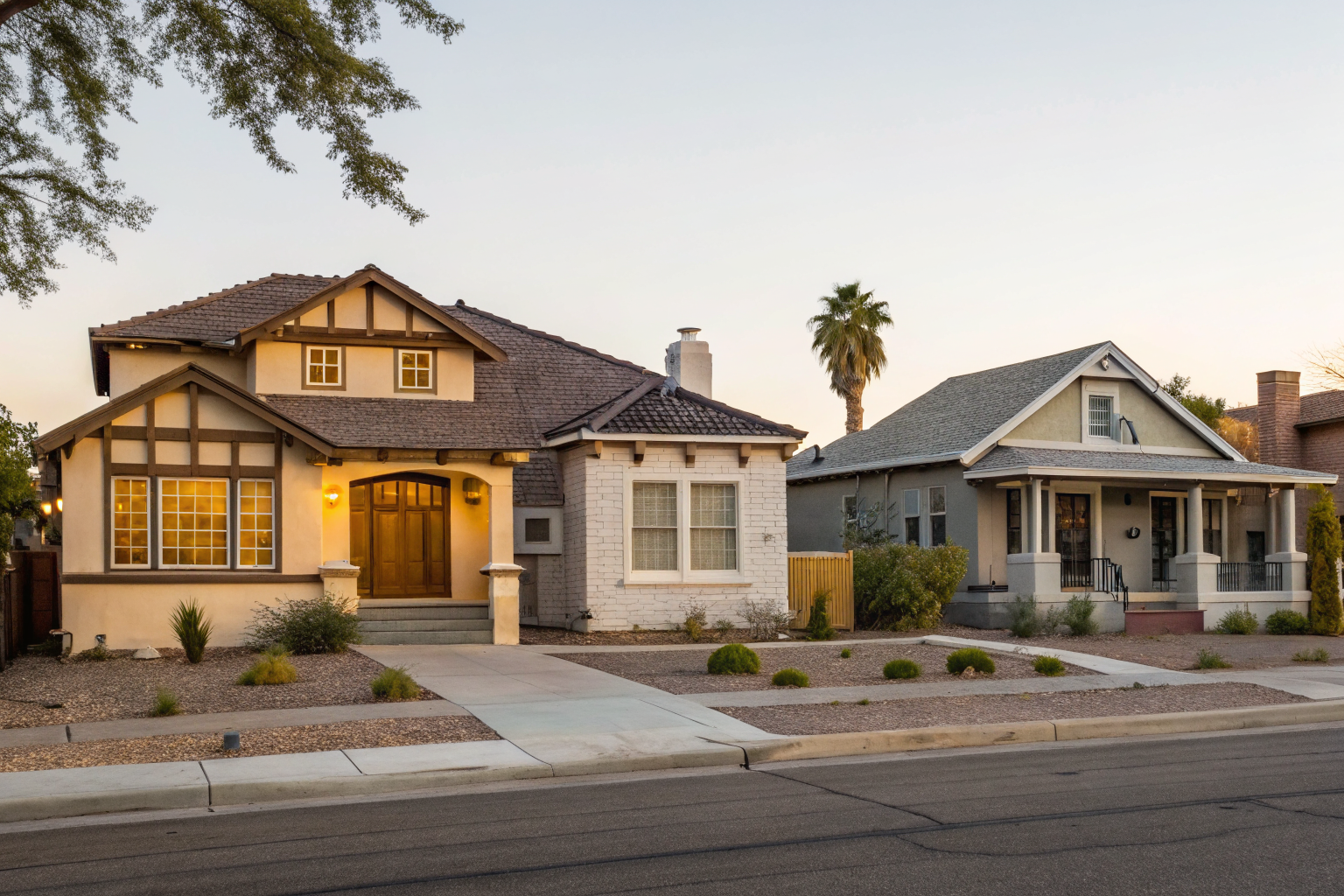
Mesa’s housing stock splits into three broad construction eras, and each era carries a different risk profile for carriers underwriting policies in Maricopa County. Understanding which era your home falls into tells you a lot about where your quote will land before you contact a single carrier.
Pre-1980 construction (central Mesa) covers ZIP codes 85201, 85202, 85203, and 85204, the older ranch neighborhoods near downtown Mesa. These homes frequently have flat or low-slope roofs, original plumbing systems, and electrical panels that predate current building codes. Admitted carriers apply their highest underwriting scrutiny here. Many will decline outright rather than write a policy, pushing these homes into surplus lines.
1980–2005 construction (mid-ring suburbs) covers a mix of tile and composition roofs across ZIP codes like 85205, 85206, and 85207. Roof age is the primary risk variable in this band. A home built in 1988 with an original tile roof is now carrying a roof in the 35–37 year range, well past the threshold where admitted carriers apply age surcharges. Homes in this era with documented roof replacements in the last 10–15 years rate more favorably.
2005-present (master-planned communities) covers newer East Mesa ZIP codes like 85212 and 85209, where communities like Eastmark, Cadence, and Bella Vista Farms were built to post-IBC (International Building Code) adoption standards. Newer roofs, updated building codes, and lower loss history translate into lower admitted carrier premiums. ZIP codes in this band can run $200–$500 less annually than central Mesa addresses for comparable dwelling coverage, according to filed rate patterns in Maricopa County.
The table below gives a structured comparison. These ranges reflect illustrative benchmarks based on DIFI-filed rate patterns for $300,000–$400,000 dwelling coverage, not guaranteed quotes. Individual property factors change the number.
| Construction Era | Typical ZIP Codes | Roof Type | Est. Annual Premium Range | Carrier Appetite Notes |
|---|---|---|---|---|
| Pre-1980 | 85201, 85202, 85203, 85204 | Flat or low-slope | $1,600–$2,400 | High declination risk; surplus lines common |
| 1980–2005 | 85205, 85206, 85207 | Mix of tile and composition | $1,100–$1,800 | Roof age is primary variable; admitted if roof replaced |
| 2005–present | 85209, 85212 | Tile (newer) | $900–$1,400 | Strongest admitted carrier appetite; lowest average premiums |
Mesa’s older ZIP codes (85201–85204) carry a high concentration of pre-1980 construction. Flat-roof and low-slope roof penalties from admitted carriers add 15–25% to the base premium, and some carriers move older flat-roof homes to surplus lines rather than apply the surcharge at all.
Why Roof Age and Flat Roofs Cost Mesa Homeowners More at Renewal
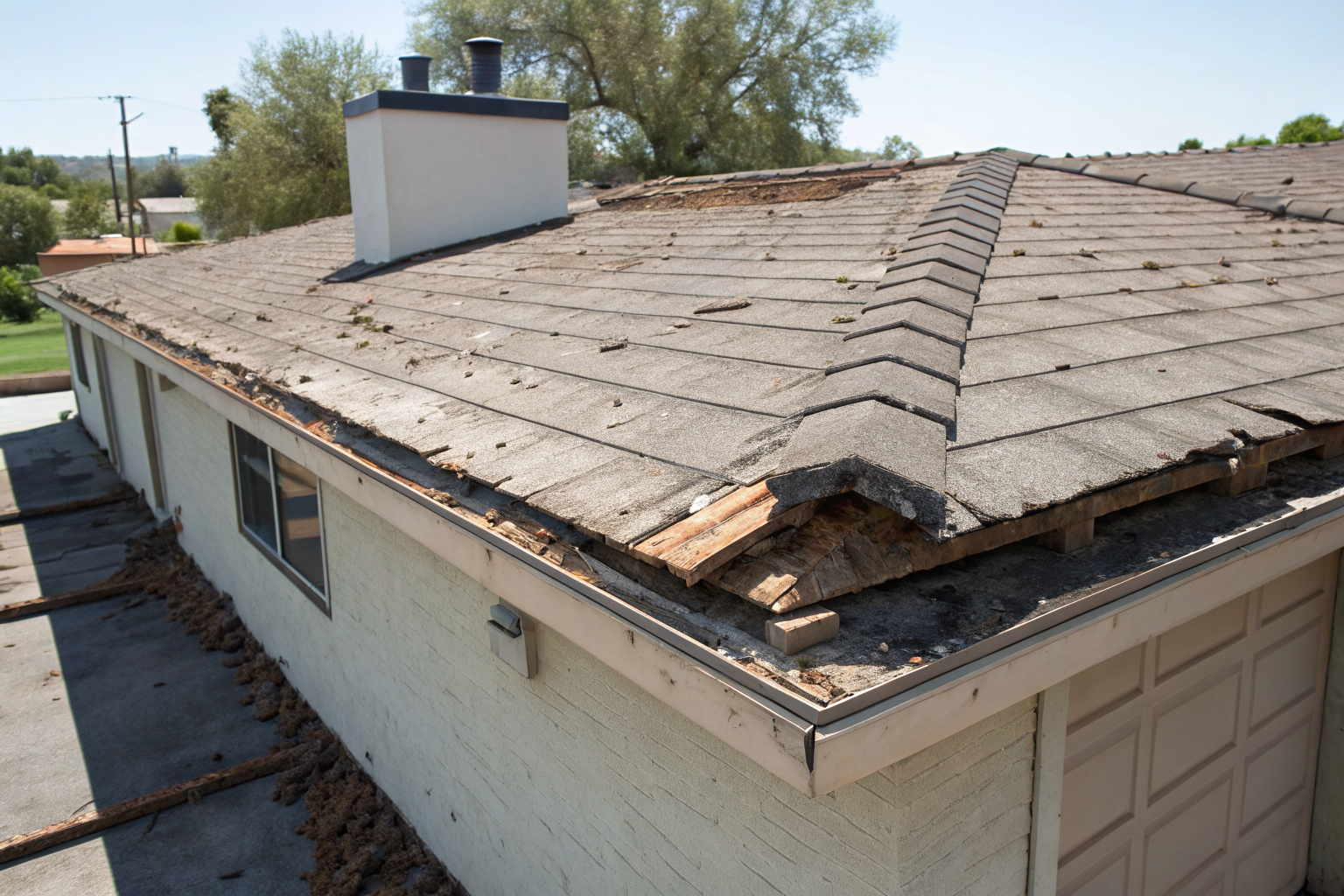
Roof age is the single biggest pricing variable in Mesa’s older ZIP codes. The mechanics work in layers, age surcharge first, roof type penalty second, and carrier declination third. Each layer adds cost or removes options.
Roof age over 20 years triggers a 25–50% underwriting surcharge on Mesa homeowners policies under standard admitted carrier guidelines filed with DIFI. This is not a penalty for filing a claim. It is a filed underwriting factor applied at quote and at every renewal, based on the expected remaining useful life of the roof and the monsoon wind and hail loss history carriers have accumulated in Maricopa County. Here is how the five surcharge and declination triggers stack:
The age surcharge (roofs over 20 years old). Admitted carriers apply a 25–50% surcharge to the base premium when a roof exceeds 20 years of age, per standard filed guidelines. Replacing an aging roof eliminates the 25–50% age surcharge carriers apply to homes with roofs over 20 years old, per The Gebhard Agency’s approved stat hooks based on standard admitted carrier filed guidelines in Arizona. Getting a roof inspection report before shopping coverage gives you documentation to support a re-rate.
The flat-roof and low-slope penalty. This is a separate surcharge layer on top of the age penalty, common in pre-1980 central Mesa. Flat roofs drain more slowly, are more vulnerable to standing water after monsoon events, and have a shorter functional lifespan than pitched tile. Admitted carriers price this in separately.
AZ monsoon season loss data as the underwriting driver. Carriers write Mesa’s roof exposure against years of hail, high wind, and driving rain loss data. Arizona ranks third nationally in non-weather water damage costs per the Insurance Information Institute, and monsoon events contribute to that loss pattern. Carriers that have paid significant Mesa claims in past monsoon seasons tighten their eligibility criteria accordingly.
The admitted carrier declination trigger. Most admitted carriers will not write or renew a home with a roof over 20–25 years old. When they decline, the policy moves to surplus lines rather than staying in the admitted market.
What surplus lines pricing means in practice. Surplus lines carriers are not rate-regulated by DIFI the same way admitted carriers are. Per DIFI’s regulatory framework, surplus lines carriers operate outside the admitted market’s rate-approval process, meaning premiums can be higher, policy terms are less standardized, and the consumer complaint process available under AZ insurance statutes does not apply in the same way.
Mesa buyers with pre-1980 homes should ask for a roof inspection report before shopping coverage. That document can support a re-rate or carrier negotiation if the inspector finds the roof is in better condition than its age suggests.
How Does Mesa’s HOA Density Change What Dwelling Coverage You Need?

Mesa HOA master policies govern common-area liability and shared structures, but they leave individual homeowners responsible for the interior dwelling, improvements, and loss assessment gaps. This distinction matters because Mesa has one of the highest HOA densities in Maricopa County, particularly in post-2000 master-planned communities, and buyers regularly assume the HOA’s master policy covers more than it does.
Two types of associations govern Mesa properties, and they work differently. Under ARS 33-1801 (the Arizona Planned Communities Act), planned community HOA master policies cover common areas and exterior landscaping, not the individual dwelling structure. Your walls, roof, and interior are your responsibility. Under ARS 33-1201 (the Arizona Condominium Act), a condo association’s master policy may or may not cover interior fixtures depending on whether the master policy uses an “all-in” form (covers interior fixtures and improvements) or a “bare walls” form (stops at the drywall). Buyers in Mesa condo communities need to ask which form is in place before setting their own dwelling coverage limit.
Both property types leave loss assessment exposure open. If the HOA has a large claim that exceeds its master policy limit, individual owners get billed their share. A standard HO-3 policy without a loss assessment endorsement will not respond to that bill. In communities like Eastmark, Las Sendas, and Trilogy at Power Ranch, where master policies cover substantial common-area infrastructure, a single large claim can generate individual loss assessments in the thousands of dollars.
Buyers in these communities should ask two specific questions before setting their dwelling coverage: What does the HOA master policy actually cover, and does the master policy carry adequate limits? The answers determine how much of your own dwelling coverage and loss assessment coverage you need. This is a coverage-structure conversation that goes beyond reading the HOA’s CC&Rs, it warrants a review with a licensed AZ insurance agent who can read both the master policy and your proposed HO-3 side by side.
For buyers considering properties in neighboring East Valley cities, the same HOA coverage gap pattern appears in Chandler and Queen Creek communities, both cities have seen significant master-planned growth in the same post-2000 construction window as Mesa.
Admitted vs. Surplus Lines Carriers in the East Valley: What the Pricing Tier Means for Your Premium
East Valley surplus lines carriers charge unregulated rates, which results in premiums $300–$700 higher annually than comparable admitted market coverage on the same Mesa property. Most homeowners do not know which tier their carrier sits in. The difference matters for both price and for what happens when you file a claim.
Admitted carriers file their rates with DIFI and are subject to rate approval under AZ insurance statutes. This means DIFI reviews their rate filings, their policy forms are standardized, and consumers have access to the DIFI consumer complaint process if a claim is disputed. Surplus lines carriers operate outside the admitted market and do not go through DIFI’s rate approval process, meaning they can charge more or less and their policy terms vary more widely.
AZ monsoon season loss data has pushed admitted carrier eligibility tighter in Mesa specifically. Arizona ranks third nationally in non-weather water damage costs per the Insurance Information Institute, and Maricopa County loss history from monsoon wind and hail events has caused admitted carriers to file tighter eligibility guidelines with DIFI in recent renewal cycles. A Mesa homeowner with a pre-1980 flat-roof home, a roof over 20 years old, or a prior claim in the last three to five years is more likely to land in surplus lines as a result.
The table below shows the key differences between the two tiers:
| Feature | Admitted Carriers | Surplus Lines Carriers |
|---|---|---|
| Rate regulation | DIFI reviews and approves rate filings | Not subject to DIFI rate approval |
| Policy form standardization | Filed and approved standard forms | Non-standard; terms vary by carrier |
| Consumer complaint process | DIFI complaint process available | DIFI complaint process limited |
| Typical annual premium range (Mesa, $300K–$400K dwelling) | $900–$1,600 | $1,300–$2,400 |
| Eligibility for older homes | Stricter; many decline pre-1980 or roofs 20+ years | More flexible; will write higher-risk properties |
| Premium predictability at renewal | Rate changes filed with DIFI | Rates can shift with less regulatory constraint |
Surplus lines is not automatically bad coverage. It is a different regulatory track that exists specifically to cover properties the admitted market declines. The risk is that policy terms are less standardized and premiums are not subject to the same regulatory review. That makes reading the actual policy language more important, not less.
A carrier-agnostic agent with access to 200+ carriers can show you admitted and surplus lines options side by side, which a single-carrier agent cannot. This matters most for Mesa buyers with older homes, recent claims, or roof age concerns, the situations where admitted carrier options narrow fastest. Buyers evaluating coverage across the broader East Valley, including Scottsdale and Tempe, will find that admitted carrier appetite varies by ZIP code within each city, not just between cities.
Frequently Asked Questions
What is the average homeowners insurance premium in Mesa, AZ?
Mesa home insurance premiums range from approximately $900 to $2,400 per year for $300,000–$400,000 in dwelling coverage, depending on roof age, construction era, ZIP code, and whether the policy is written in the admitted or surplus lines market. Homes in older central Mesa ZIP codes (85201–85204) with pre-1980 construction or roofs over 20 years old tend to land at the higher end of that range. These figures reflect benchmark patterns based on DIFI-filed rates in Maricopa County, your actual premium depends on your specific property, so speak with a licensed Arizona insurance agent for a quote tied to your situation.
Why is my Mesa home insurance quote higher than my neighbor’s?
The most common causes are roof age, construction era, and prior claims history, even on homes that look the same from the street. A home with a roof over 20 years old triggers a 25–50% surcharge from admitted carriers, and a flat or low-slope roof adds a separate penalty on top of that. If one home has been moved to the surplus lines market because admitted carriers declined it, the premium can run $300–$700 higher annually than a comparable home still in the admitted market.
Does my Mesa HOA cover my house, or do I need my own homeowners policy?
In most Mesa planned communities, the HOA master policy covers common areas and shared structures, not the walls, roof, or interior of your individual home. Under ARS 33-1801, planned community HOA master policies are not required to cover individual dwelling structures, and most do not. You need your own homeowners policy for the structure of your home, your personal property, and your personal liability, and you may also want loss assessment coverage in case the HOA has a large claim that gets billed back to individual owners.