Homeowners insurance non renewal Arizona carriers send out affects thousands of clean-history policyholders every year, and most of them never saw it coming. As of 2025, the pattern is accelerating across the Phoenix metro. You paid premiums for 20 years, never filed a claim, and just got a non-renewal notice, and the reason has nothing to do with anything you did.
Key Takeaways:
- ARS 20-1652 requires Arizona carriers to give homeowners at least 45 days written notice before non-renewing a policy, but the law does not require them to justify the decision beyond a general category.
- Roof age, replacement-cost valuation gaps, and carrier-appetite exits from specific ZIP codes are the three most common non-renewal triggers in Arizona, claim history ranks below all three.
- Arizona has no FAIR Plan; homeowners who cannot secure an admitted-market policy must turn to DIFI Consumer Services or the surplus lines market, where premiums typically run 20-40% higher than standard market rates.
This article is the entry point for the non-renewal and HOA coverage gap category. For the full picture of how Arizona insurance works across all coverage types, the arizona insurance guide covers the broader framework. Here, the focus is narrow and specific: why non-renewals happen, what the law actually requires, what your options are, and what disclosure habits cut your exposure going forward.
Why Are Arizona Insurance Companies Not Renewing Clean-History Homeowners?

A carrier appetite shift is a periodic re-evaluation by an insurance company of which risk profiles, ZIP codes, roof ages, and construction types it is willing to insure at admitted-market rates. This means that when a carrier’s book of business no longer fits its reinsurance constraints or internal loss models, the carrier non-renews entire segments of policyholders, not individual bad actors, not households with poor claim histories, but categories of risk the carrier has decided it no longer wants to carry.
That is the mechanic most guides miss. The decision is actuarial, not personal.
The no-claim-history myth runs deep. Homeowners who have paid premiums for a decade or two without a single claim assume that track record provides protection at renewal. It does not. A clean claims record signals nothing to an underwriter who has decided that your roof age or your ZIP code falls outside the carrier’s current appetite. The homeowners insurance HO-3 policy you hold is a one-year contract. When that term ends, the carrier decides whether to offer a new one. Prior claim history is one variable in that calculation. Roof age, construction type, replacement-cost accuracy, and geographic concentration in the carrier’s existing book are others, and in the current Arizona market, those structural variables are outweighing behavioral ones.
ARS 20-1652 is the governing statute for non-renewal of personal lines homeowners policies in Arizona. Per Arizona Revised Statutes Title 20, Chapter 6, Article 1, the law sets procedural minimums: the carrier must provide written notice at least 45 days before the policy expiration date, and the notice must state a general reason category for the non-renewal. What ARS 20-1652 does not do is give homeowners substantive protection against non-renewal for underwriting reasons. The statute sets the floor for how a carrier must behave during the process, it does not restrict the carrier’s right to exit a risk category.
Carrier appetite shift drives non-renewal decisions independent of policyholder claim history. That sentence contains the full explanation. The 45-day notice requirement under ARS 20-1652 gives you a window to act, not a window to argue.
Consult a licensed Arizona insurance agent for advice specific to your situation before making any coverage or disclosure decisions based on general information.
The Real Reasons Your AZ Homeowners Policy Is Not Being Renewed
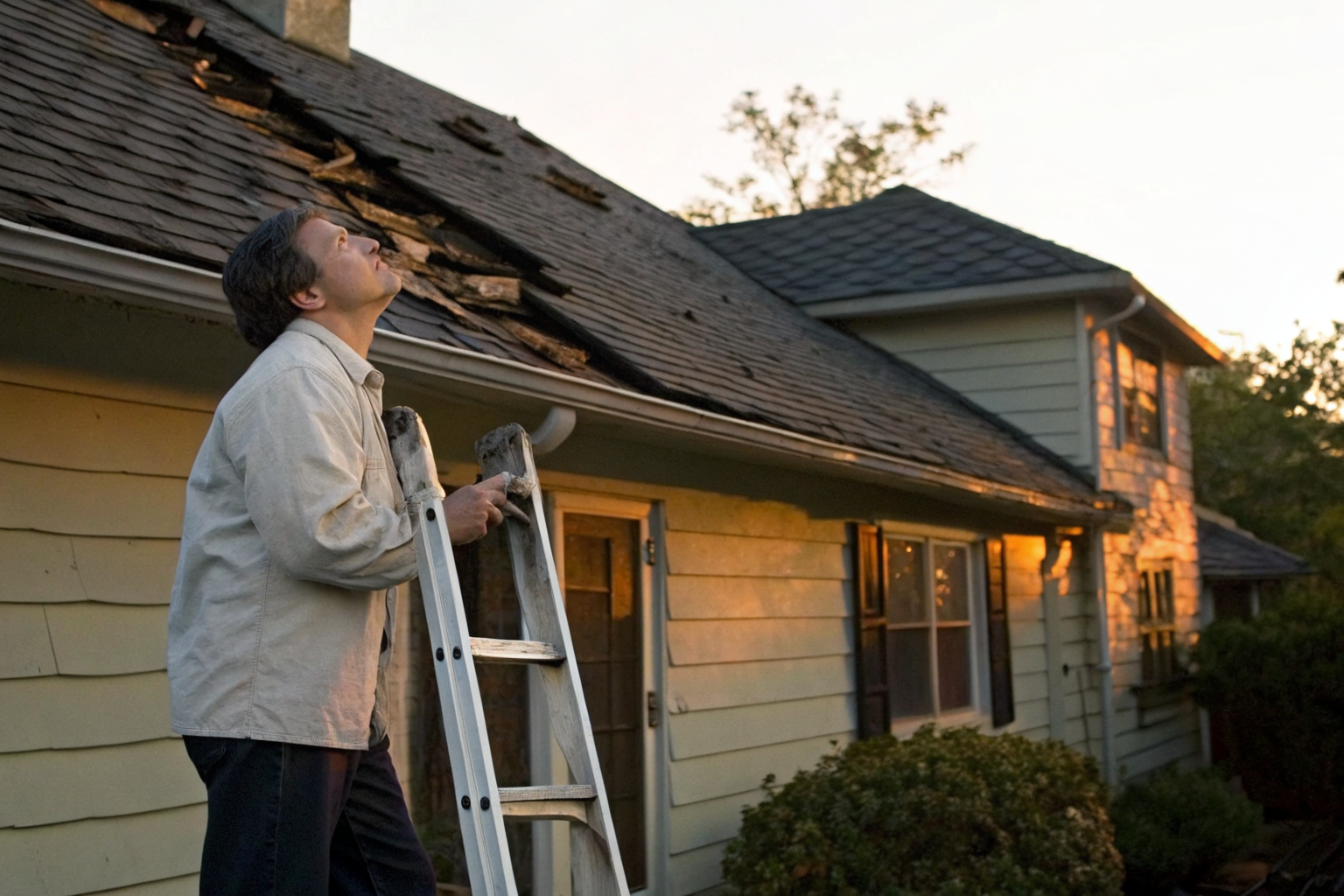
Roof age, valuation gaps, and ZIP code exits replace claim history as the primary non-renewal triggers in Arizona. That shift has been visible in the admitted market for the past several years, and it shapes every conversation about what you can and cannot control.
The table below shows the five triggers that appear most often in Arizona non-renewal notices, what the carrier is worried about in each case, and whether the homeowner had a realistic path to prevention.
| Non-Renewal Trigger | What the Carrier Is Actually Worried About | Could the Homeowner Have Prevented It? |
|---|---|---|
| Roof age past carrier threshold (typically 20+ years for tile underlayment, lower for flat/foam) | Increased probability of weather-related structural loss; underlayment failure not visible from exterior inspection | Partially, proactive replacement before the threshold eliminates this trigger; carriers apply a 25-50% age surcharge before declining entirely |
| Replacement-cost valuation gap (dwelling limit materially below current rebuild cost) | Paying out more than the collected premium supports if a total loss occurs | Yes, an annual dwelling-limit review with your agent catches this before the carrier’s own audit flags it |
| Carrier geographic exit (carrier stops writing in specific ZIP codes or metro areas) | Portfolio concentration risk; the carrier has too much exposure in one area relative to its reinsurance program | No, this is a carrier-level business decision unrelated to any individual homeowner’s profile or behavior |
| Property condition flags from inspection reports or satellite imagery (deferred maintenance, deteriorating structures) | Near-term loss probability elevated by visible physical deterioration | Yes, documented maintenance history and proactive repairs reduce the likelihood of a condition flag at renewal |
| Policy-level misrepresentation discovered at renewal audit (undisclosed STR use, unreported solar installation, business activity) | The policy was priced and underwritten on incorrect information; the carrier’s exposure is higher than it agreed to carry | Yes, this is the most preventable trigger; annual disclosure updates remove the carrier’s justification |
A few things worth noting about this table. Triggers one through three are entirely outside the homeowner’s recent behavior. You did not cause a carrier geographic exit. You did not age your own roof. You may not have known your dwelling limit was drifting below rebuild cost because nobody told you the rebuild-cost formula changed. These are structural conditions, not failures of conduct.
Triggers four and five are different. Property condition and misrepresentation are areas where homeowner action matters, and where the annual disclosure habits covered in Section 6 of this article become the practical defense.
The thing most guides miss about the roof-age trigger: some carriers do not surcharge aging roofs at all past the threshold. They simply decline to renew. The 25-50% age surcharge applies when the carrier is still willing to write the risk at a higher price. When appetite has hardened, no price adjustment is on the table, the policy ends. That distinction matters when you are assessing whether a roof replacement before renewal is worth pursuing.
Do not frame any of this around wildfire risk scores. The Arizona market’s current non-renewal pattern is driven by roof age, valuation methodology, and carrier-level reinsurance constraints, not by a wildfire-risk scoring system applied to individual properties.
What Is a Non-Renewal Notice for Homeowners Insurance, and What Does ARS 20-1652 Actually Require?

A non-renewal notice is a carrier’s written notice that it will not offer a new policy term when the current term expires. This means your coverage continues through the end of the current policy period regardless of when the notice arrives, the notice does not terminate coverage mid-term, and it is not the same as a cancellation.
That distinction matters practically. A mid-term cancellation under ARS 20-1652 has separate and stricter grounds than a non-renewal. Cancellation during an active policy term requires reasons such as non-payment, material misrepresentation, or specific violation of policy conditions. Non-renewal at term expiration requires only that the carrier provide adequate notice and a general reason category. The procedural bar for non-renewal is lower, which is why carriers use it rather than mid-term cancellation when exiting a risk segment.
Per Arizona Revised Statutes Title 20, Chapter 6, Article 1, the carrier must deliver written non-renewal notice at least 45 days before the policy expiration date for policies that have been in force more than 60 days. The notice must state the reason for non-renewal in a general category, roof age, property condition, geographic underwriting decision, and similar descriptions satisfy the statutory requirement. The carrier is not required to provide granular underwriting detail, actuarial modeling, or specific property scores.
ARS 20-1652 governs the minimum procedural requirements carriers must meet before non-renewing an Arizona homeowners policy. What it does not do is give the Arizona Department of Insurance and Financial Institutions (DIFI) the authority to override an underwriting decision made within those procedural bounds.
Forty-five days sounds like adequate runway. In practice, it is not. If your non-renewal trigger is roof age, a licensed roofing contractor’s condition report takes time to schedule. If the trigger is a replacement-cost valuation gap, getting accurate rebuild estimates in the current Phoenix metro construction market takes additional time. If the admitted market cannot quote your risk after the non-renewal, a surplus lines homeowners arizona submission requires additional documentation and broker engagement. The 45-day window starts running the day the notice is delivered, not the day you read it.
If you are a condo owner, note that a non-renewal of your HO-6 policy creates a separate and distinct exposure gap against the HOA master policy, a situation covered in the cluster on the hoa master policy ho-6 gap arizona. That remediation path differs from a standalone homeowners non-renewal and needs separate attention.
This is a plain-language summary of ARS 20-1652’s structure. For the exact statutory language applicable to a specific policy, consult the Arizona Department of Insurance and Financial Institutions at difi.az.gov or a licensed Arizona insurance agent.
What to Do If Your Arizona Homeowners Insurance Is Not Being Renewed: A Step-by-Step Path

Homeowners who receive a non-renewal notice must act within the 45-day window to avoid a lapse that disqualifies them from admitted-market re-entry. A coverage lapse, even a short one, signals to new carriers that you were uninsurable, which creates a second-order problem on top of the original non-renewal.
Here is the sequence that gives you the best options.
Read the notice for the stated reason category. The reason category, roof age, valuation, geographic exit, property condition, or misrepresentation, determines the next move. Each trigger has a different response path, and conflating them wastes time in a window where time is the constraint.
Contact your current agent or broker within 72 hours of receiving the notice. Forty-five days sounds like enough time. It is not, especially if a roof inspection, repair, or remediation is required before a new carrier will quote. The clock on contractor availability, carrier underwriting queues, and document assembly starts immediately.
If roof age is the trigger, get a licensed Arizona roofing contractor’s written condition report without delay. Some carriers will re-quote or extend coverage if a documented replacement timeline or a signed contract for replacement is in place. A verbal estimate does not satisfy this requirement.
Authorize your agent to shop your risk against the full admitted market. If you are with a single-carrier agent, this is the moment to ask whether they can access multiple carriers. A family agency with access to 200+ carriers in its network can run parallel quotes across admitted-market options while you are still assembling documentation, a single-carrier agent cannot.
If the admitted market cannot quote, ask about surplus lines carriers. Surplus lines are non-admitted but legal in Arizona, regulated through DIFI’s surplus lines office, and written by licensed surplus lines brokers. Premiums in that market typically run 20-40% above standard admitted-market rates, per industry pattern reporting, but the policy is real coverage, not a gap. The cluster on surplus lines homeowners arizona covers the mechanics of how those submissions work and what to expect from the process.
If you believe the non-renewal violates ARS 20-1652, for example, insufficient notice time or a stated reason that does not match the statute’s permitted categories, file a complaint with DIFI Consumer Services at difi.az.gov or call the department’s consumer hotline. DIFI cannot force a carrier to re-insure you on underwriting grounds, but the department can investigate notice-timing violations and procedural failures. The cluster on homeowners insurance non renewal rebuttal arizona covers what a rebuttal process looks like and when it is worth pursuing. The cluster on received non renewal notice what to do arizona provides a parallel checklist for homeowners who want a more detailed action sequence.
For condo owners receiving an HO-6 non-renewal, treat this as a separate process from a standalone homeowners non-renewal. The HOA master policy may or may not cover the gap your HO-6 was filling, and the answer is almost never obvious from reading the master policy summary alone. An agent who understands the hoa d&o insurance arizona dimension of this problem can identify whether your HOA board faces its own exposure when a unit owner loses HO-6 coverage.
Arizona has no FAIR Plan. There is no state-sponsored insurer of last resort for homeowners who cannot place coverage in the admitted or surplus lines markets. If you exhaust both options, DIFI Consumer Services is the appropriate escalation point for guidance on remaining options.
Can You Fight a Non-Renewal, and What Does DIFI Consumer Services Actually Do?
You almost certainly cannot force a carrier to renew your policy. Arizona law gives carriers broad discretion to non-renew for underwriting reasons, provided the stated reason is not based on a protected class and the carrier follows ARS 20-1652’s procedural requirements. DIFI Consumer Services investigates procedural violations but cannot compel a carrier to reinstate or renew a homeowners policy on underwriting grounds. That boundary is the most important thing to understand before deciding whether to escalate.
What DIFI Consumer Services can do: investigate whether the carrier followed ARS 20-1652’s notice timing, reason-statement, and delivery requirements; determine whether the stated reason category is lawful under Arizona statute; and review whether the carrier acted in bad faith during the non-renewal process. Per DIFI’s published consumer complaint process at difi.az.gov, the department logged over 1,200 homeowners insurance complaints in a recent annual report, with billing and cancellation/non-renewal categories ranking among the top complaint types. That volume tells you the department has experience with these situations, it does not mean they can override carrier underwriting authority.
What DIFI cannot do: reverse an underwriting decision, reinstate a policy on geographic-exit grounds, negotiate a premium on your behalf, or order a carrier to re-enter a market segment it has chosen to exit.
The practical path for most homeowners is replacement, not escalation. The escalation path matters when the notice was procedurally defective, delivered with fewer than 45 days before expiration, missing a required reason category, or delivered to the wrong address, or when the stated reason appears to be pretextual or discriminatory.
Material misrepresentation is a legitimate non-renewal ground under ARS 20-1652. If the carrier’s stated reason is misrepresentation, you have a right to understand what specific information is at issue. That characterization has downstream consequences: it can affect your ability to place coverage with other carriers, and in some cases it can form the basis for a claim denial on the prior policy term. Before accepting a misrepresentation characterization, consult both a licensed Arizona insurance agent and potentially an attorney. The carrier’s stated reason and the facts may not align, and the distinction is worth establishing before it becomes part of your insurance history.
DIFI’s consumer complaint portal is at difi.az.gov. The consumer services division can be reached by phone through the department’s main line. Filing a complaint does not guarantee a finding in your favor, but it creates a formal record and triggers the carrier’s obligation to respond with documentation.
The Disclosure Habits That Reduce Your Non-Renewal Risk Year Over Year

Annual policy disclosure reduces the material misrepresentation exposure that gives carriers a clean non-renewal justification at renewal. The no-claim-history myth reinforces bad disclosure habits, homeowners who believe their clean record protects them tend to treat the policy as a static document rather than a living record of the home’s current risk profile. Carrier appetite shift means the underwriter is re-evaluating your property at every renewal anyway. Getting there first, with accurate information, removes the most controllable trigger from the table.
Here are the five disclosures Arizona homeowners most often fail to make, each of which shows up as either a non-renewal justification or a claim-denial ground:
Solar installation. A typical Arizona home solar install runs $40,000 to $60,000, and most insurance policies have not been updated to reflect it, per agency experience with Arizona homeowner portfolios. A system of that value increases the home’s replacement cost and introduces new liability. Most carriers require a policy endorsement and a dwelling-limit review when solar is added. Failing to disclose it means your coverage limit is wrong and your carrier has grounds to treat the installation as a material change.
Short-term rental activity, even occasional. ARS 9-500.39 allows STR use statewide, but most standard homeowners insurance HO-3 policies contain entrustment exclusions that void coverage the moment a paying guest occupies the property without a specific endorsement. One Airbnb weekend without disclosure is enough to give the carrier a clean denial on any claim that occurs during that period, and enough to justify non-renewal if the activity shows up in a renewal audit.
Roof repairs or partial re-roofing. If a section of the roof was replaced without a permit or by an unlicensed contractor, the underwriter may treat the entire roof as non-conforming at the next inspection. The carrier cannot verify the quality of unpermitted work, which means the structural risk profile of the entire roof becomes uncertain, not just the repaired section.
Business activity in the home. A sole proprietorship, a home day-care, or commercial equipment stored in the garage can trigger a business-use exclusion under a standard HO-3. The policy was priced for residential occupancy; a business use that was not disclosed at underwriting changes the risk the carrier agreed to carry.
Trampoline, pool depth modification, or new dog breed flagged by underwriting guidelines. These are liability profile changes that shift the carrier’s risk model between renewals. Each one is a material change that your carrier expects to know about. Each one undisclosed gives the carrier a textbook misrepresentation argument at the next renewal audit.
The through-line across all five: the carrier doesn’t need a filed claim to decide you’re a risk they no longer want, they need an undisclosed material change. As Paul Gebhard puts it: “What your insurance company doesn’t know can cost you the claim.” That framing applies to non-renewal just as much as it applies to a denial. The carrier’s discovery of an undisclosed change at renewal is not a second chance, it is the end of the conversation.
Frequently Asked Questions
What is a non-renewal notice for homeowners insurance?
A non-renewal notice is a carrier’s written notice that it will not offer a new policy term when your current policy expires, it is not a cancellation of coverage mid-term. Under ARS 20-1652, Arizona carriers must deliver this notice at least 45 days before expiration and must state a general reason category. Your coverage remains in force through the current term’s end date regardless of when the notice arrives.
Can an insurance company in Arizona refuse to renew my policy even if I never filed a claim?
Yes. Arizona law gives carriers broad discretion to non-renew a homeowners policy for underwriting reasons, and your claim history is only one variable in that calculation. Roof age past a carrier threshold, a dwelling limit the carrier considers below current rebuild cost, or a company-level decision to exit a geographic market can all trigger non-renewal with no claim filed. ARS 20-1652 sets procedural minimums but does not require a carrier to justify an underwriting-based exit.
Does Arizona have a FAIR Plan for homeowners who can’t get coverage?
No. Arizona does not have a FAIR Plan or any state-sponsored insurer of last resort for homeowners. If the admitted market cannot cover your property, the next option is the surplus lines market, non-admitted carriers that are legally authorized to write in Arizona through licensed surplus lines brokers, regulated through DIFI’s surplus lines office. Premiums in that market typically run higher than standard admitted-market rates, and the gap between the two has widened in recent years as admitted carriers have tightened appetite in certain Arizona ZIP codes.
This article is a plain-language overview of Arizona homeowners insurance non-renewal mechanics and applicable statutes. It is not legal advice. For guidance specific to your policy, your property, or a non-renewal notice you have received, consult a licensed Arizona insurance agent or the Arizona Department of Insurance and Financial Institutions at difi.az.gov.