Arizona insurance services cover more ground than most people expect, and most homeowners and small-business owners find out what their policy doesn’t cover at the worst possible time: mid-claim, post-monsoon, or the day a non-renewal letter arrives. As of 2026, six distinct service lines address the coverage gaps that show up most in Arizona.
Key Takeaways:
- The Gebhard Agency covers six distinct service lines across personal and commercial insurance, all sourced from a network of 200+ carriers, no single-carrier lock-in.
- Arizona-specific rules govern every service line: ARS 20-259.01 sets uninsured motorist requirements for auto, ARS 23-907 sets civil penalties up to $10,000 for workers’ comp lapses, and Arizona DIFI enforces licensing and non-renewal notice standards statewide.
- An annual policy review, not just a renewal signature, is the single action that catches the most common coverage gaps before a claim exposes them.
What Insurance Services Does The Gebhard Agency Actually Offer?

The Gebhard Agency provides six personal and commercial insurance service lines across the Phoenix metropolitan area and all of Arizona. Paul Gebhard has held an Arizona DIFI producer license since 1997, all four lines of authority (Property, Casualty, Life, Accident and Health) active since 11/13/1997, with the current license (#6724577) active through January 31, 2030. Every service line below is available statewide under that license.
The table below maps each service to its primary audience and the AZ-specific risk it addresses. For readers who want to understand the full picture before narrowing down, the broader arizona insurance guide covers the regulatory and market context across all six lines.
| Service Line | Primary Audience | AZ-Specific Risk Addressed | Arizona DIFI Oversight |
|---|---|---|---|
| Homeowners (HO-3) | Owner-occupier homeowners, Phoenix metro and statewide | Percentage weather deductibles (1–5%), roof age surcharges, solar disclosure gaps | Property and Casualty lines; non-renewal rules under ARS 20-1652 |
| Auto and Motorcycle | AZ drivers and year-round riders | Minimum limits under ARS 28-4009 inadequacy; UM/UIM gap; undisclosed driver exclusion | Casualty line; ARS 20-259.01 UM/UIM offer requirement |
| Short-Term Rental / STR and Snowbird | Airbnb hosts, snowbirds, vacant-home owners | Entrustment exclusions void standard HO-3 on paid-guest stays; vacancy clauses after 30–60 days | Property line; ARS 9-500.39 STR preemption (does not create coverage) |
| HOA and Condo (HO-6) | Condo unit owners | Master policy covers shell only; HO-6 gap for interior and loss assessment | Property line; ARS 33-1201 Arizona Condominium Act |
| Small Commercial (WC, Cyber, Commercial Auto, GL/BOP) | AZ small-business owners, trades, contractors | 1099 misclassification penalties, ARS 18-552 breach notification, MVR discipline, BOP cyber exclusion | Casualty line; ARS 23-907; Arizona Industrial Commission |
| Annual Policy Review | All clients, any service line | Replacement cost gaps, undisclosed changes, deductible structure creep | Applies across all four lines of authority |
This page introduces each service line. Speak with a licensed agent before making any coverage decision specific to your situation, the details of your property, business structure, and household change which options apply.
The sections below go one level deeper on each line. The goal here is to give you enough to know which service line applies to your situation before a conversation with the agency.
Arizona Homeowners, Condo, and STR Coverage: The Personal Lines Most Families Need
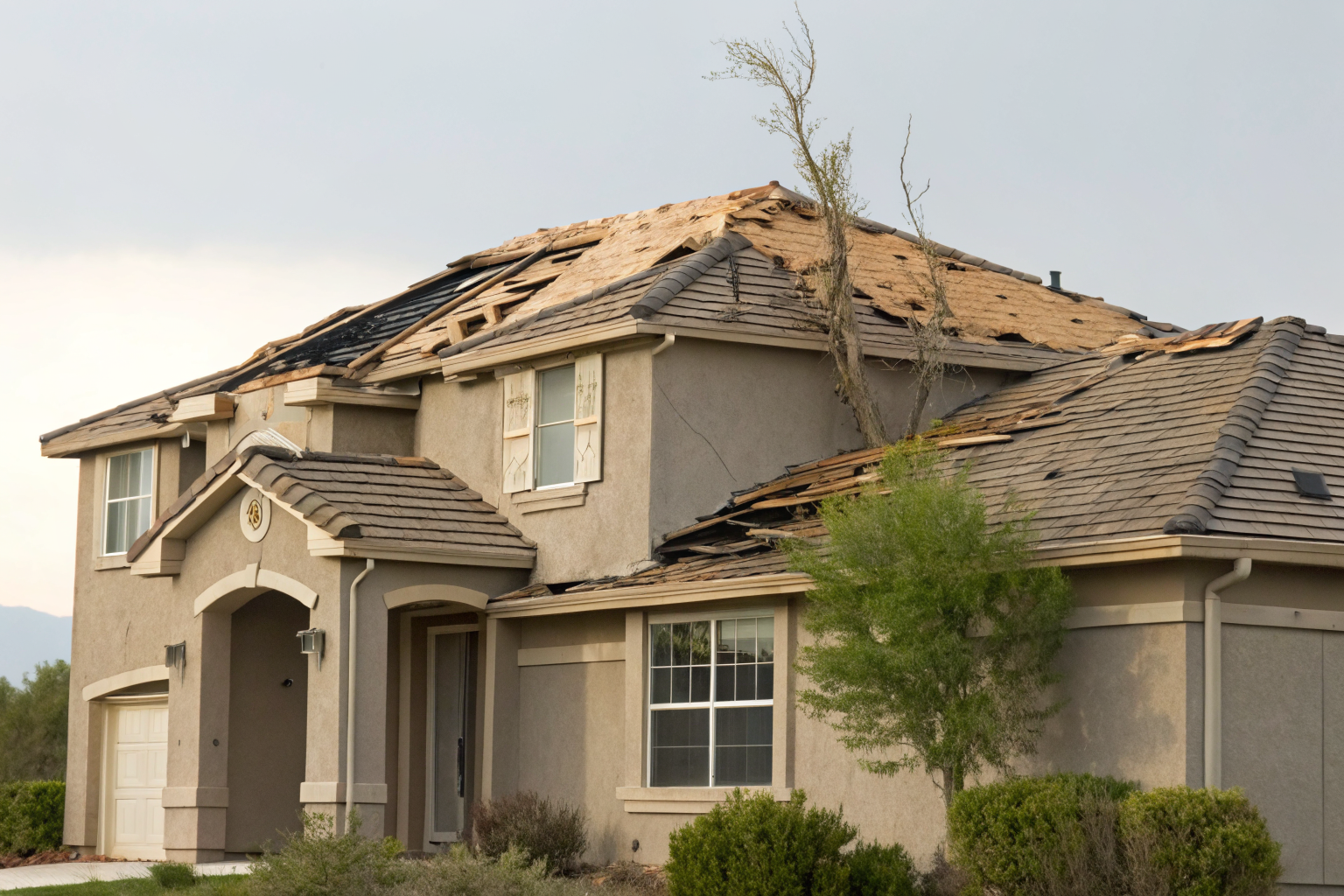
Arizona homeowners insurance carries risks that differ from national policy templates in ways that catch people off guard. Percentage-based weather deductibles, roof-age underwriting surcharges, and non-renewal triggers tied to property condition are all standard AZ market practice, not exceptions. What follows are the four personal lines the agency writes most often, each with its AZ-specific wrinkle.
Homeowners (HO-3). The main coverage on a standard HO-3 policy is the structure of your home, and in Arizona, your deductible for weather-related damage is often a percentage of that number, not a flat dollar amount. Your weather deductible can be anywhere from 1% to 5% of your home’s main coverage. On a $500,000 home at 5%, that’s $25,000 out of pocket, and your carrier can raise that number at renewal without making sure you notice. Roof age compounds the problem: carriers apply a 25–50% underwriting surcharge to homes with roofs over 20 years old, and tile roofs are not exempt, it’s the underlayment beneath the tile that has a lifecycle, typically 20–30 years according to University of Arizona Cooperative Extension research. Solar systems running $40,000 to $60,000 for a typical AZ home install represent a separate disclosure obligation most homeowners skip, leaving tens of thousands of dollars in equipment effectively uninsured.
Condo (HO-6). The HOA master policy covers the building shell, HO-6 covers the interior buildout you own and any loss assessment your HOA passes down after a shared-area claim. Most AZ condo owners don’t know the gap until a special assessment arrives and they discover their master policy has nothing to say about their unit’s interior walls, flooring, or fixtures. ARS 33-1201, the Arizona Condominium Act, governs how master policies must be maintained, but it does not fill the gap between the shell and your unit’s contents. Loss assessment coverage, an add-on most agents don’t surface unless asked, is the fix.
Short-Term Rental and Airbnb. AirCover, the protection Airbnb markets to hosts, is not a landlord policy and does not replace a properly structured insurance policy. ARS 9-500.39 preempts local municipalities from banning short-term rentals outright, but that preemption creates no insurance coverage whatsoever. The more pressing issue is the entrustment exclusion buried in most standard homeowners policies: the moment a paying guest is on the property, the carrier may treat the policy as void for that event. A dedicated STR endorsement or standalone landlord policy written for short-term occupancy is the structural fix, not a platform’s host protection program.
Snowbird and Vacant Home. Standard homeowners policies include vacancy clauses that can void coverage after 30 to 60 consecutive days of vacancy, depending on the carrier and the filed form. For AZ homeowners who spend five or six months out of state, this is a direct exposure. A snowbird endorsement or separate vacant-home policy addresses the gap before a pipe failure, storm event, or vandalism claim arrives during an absence.
One cross-cutting risk applies to all four lines year-round: AZ ranks third nationally in non-weather water damage costs, according to the Insurance Information Institute. That statistic matters because most homeowners assume water damage is a weather event, but gradual leaks, appliance failures, and slow pipe deterioration all qualify, and the standard HO-3 form’s coverage for gradual damage is narrower than most people expect.
Dedicated pages for each of these lines go deeper on the mechanics. The overview above is enough to know which one applies to your situation.
Auto and Motorcycle Coverage in Arizona: What the Minimum Limits Don’t Tell You

Arizona minimum auto limits leave most drivers underinsured because the 25/50/15 thresholds set by ARS 28-4009 do not reflect actual repair and medical costs in the Phoenix metropolitan area. Specifically, ARS 28-4009 sets Arizona’s minimum liability at $25,000 per person, $50,000 per accident, and $15,000 property damage, figures that have not kept pace with actual vehicle repair and medical costs in 2026. A single moderate-injury accident in Phoenix metro can exceed those numbers before the ambulance arrives.
The gap becomes a real problem when the at-fault driver has only minimum limits or no policy at all. ARS 20-259.01 requires every Arizona carrier to offer uninsured and underinsured motorist protection, but the offer is just that, an offer. Most AZ drivers decline it without understanding what that decision means when the at-fault driver has bare minimum coverage. Per the Arizona Department of Insurance and Financial Institutions, drivers are permitted to waive UM/UIM in writing, and most do, without fully working through the math.
Motorcycle coverage adds a second layer. ARS 28-964 requires helmets only for riders under 18, meaning adult riders in Phoenix metro carry the full year-round exposure without a helmet requirement and often without adequate medical coverage layered onto their motorcycle policy. Year-round riding in Arizona is the norm, not the exception, and that changes the actuarial exposure compared to a state where bikes sit in a garage from October through April.
The undisclosed-driver exclusion is the thing most auto guides skip. If a household member regularly drives a vehicle and isn’t listed on the policy, the carrier may deny the claim. This applies to teen drivers added to the household who were never reported to the carrier, and to any adult household member who drives the vehicle but was omitted from the application. The exclusion doesn’t require intent, the omission alone is enough to trigger a denial.
The agency writes auto and motorcycle as a combined service line, which means both exposures get reviewed together and the UM/UIM decision gets made with the full picture in front of you, not as a checkbox on a quote screen.
What Does Small-Business Insurance Cover in Arizona?

Arizona small-business insurance covers four distinct exposure categories: workers’ compensation, commercial auto, cyber liability, and general liability. Each is governed by a separate statute or regulatory body, and the most expensive mistakes happen when business owners assume one policy covers an exposure it specifically excludes.
| Coverage Type | What It Covers | AZ-Specific Rule | Common Mistake |
|---|---|---|---|
| Workers’ Compensation | Medical costs and lost wages for injured employees | ARS 23-902 defines employer scope; ARS 23-907 sets civil penalties up to $10,000 for repeat coverage lapses; Arizona Industrial Commission enforces | Assuming 1099 contracts eliminate the WC obligation, they don’t if the worker passes the right-to-control test |
| Commercial Auto | Company vehicles, hired/non-owned vehicles, and listed drivers | MVR (motor vehicle record) discipline required; carriers can exclude drivers with poor records | Assuming a personal auto policy covers a vehicle used for business deliveries or client visits, most personal auto policies exclude business use |
| Cyber Liability | Data breach response costs, notification expenses, third-party claims | ARS 18-552 requires breach notification within 45 days; state civil penalties capped at $500,000 | Assuming the cyber exclusion inside a standard BOP provides coverage, most BOP policies exclude cyber events unless a separate endorsement or standalone policy is added |
| General Liability / BOP | Premises injury, products liability, completed operations | No single AZ statute governs GL, but Arizona Industrial Commission oversight applies to business operations broadly | Assuming a homeowners or renters policy extends to a home-based business, standard residential policies exclude business activities on the premises |
The 1099 misclassification issue is the most common small-business gap we see. Under ARS 23-1601, if a worker passes the right-to-control test, meaning you set their hours, direct their work, and they don’t work for others, Arizona may classify them as an employee regardless of what the contract says. That classification change carries workers’ compensation obligations. As a concrete illustration of the stakes: up to $10,000 civil penalty under ARS 23-907 for repeat workers’ comp coverage lapses, and if your “1099” worker only works for you, AZ says they’re an employee, regardless of the paperwork.
Cyber liability deserves a separate note. The ARS 18-552 breach notification requirement applies to any business that stores personal information on Arizona residents, not just tech companies. A trades contractor with customer payment records, a restaurant with a loyalty program, or a small office with employee files all qualify. The 45-day notification clock starts at discovery, not at the end of an investigation.
Dedicated coverage for each commercial line goes deeper than this overview can, particularly on the MVR discipline requirements for commercial auto and the BOP exclusion mechanics for cyber.
Why Carrier-Agnostic Sourcing Changes What You Get Quoted

Carrier-agnostic sourcing is the practice of matching a policy to the customer’s actual risk profile by shopping the situation across multiple carriers, rather than writing every customer through one carrier’s filed products. This means the underwriting appetite of the carrier matters as much as the coverage terms, and a customer whose property or business profile fits one carrier’s guidelines may receive a significantly different quote than another carrier would offer for the same risk.
The practical case is straightforward. If one carrier rates a tile roof over 20 years old at a 40% surcharge and another carrier’s underwriting guidelines treat the same roof as a standard risk, a single-carrier agent has one number to offer. With 200+ carriers in our network, the agency can shop the situation against the carriers whose appetite matches the property or business. The Gebhard Agency has access to 200+ carriers, underwriting appetite differences across those carriers can mean thousands of dollars in annual premium variance for the same AZ property, without any change in coverage terms.
This matters for service hub navigation as well. When a homeowner’s profile spans multiple service lines, a primary residence with solar, an attached ADU rented on Airbnb, a spouse who rides a motorcycle, the carrier that writes the best homeowners policy may not be the right choice for the auto or STR line. Carrier-agnostic sourcing means those decisions are made independently, not bundled for administrative convenience at the expense of coverage fit.
Arizona DIFI’s Consumer Services division, accessible at az.gov/difi, is the state-level recourse for complaints against carriers and agents. That’s the downstream protection. The more effective upstream protection is making sure the right carrier is writing the policy before a claim event forces the question.
With 200+ carriers available, the process described above is also how the annual review works, which is where the gap analysis actually happens.
The Annual Policy Review: The One Step That Catches Coverage Gaps Before a Claim Does

An annual policy review identifies coverage gaps before a claim event forces the discovery. Most people sign the renewal and move on. The review process below is what happens when you don’t.
Confirm the main coverage limit reflects current rebuild costs. Replacement cost gaps are the most common finding, the home was insured at its purchase price or an estimate from five years ago, and construction costs in Phoenix metro have moved materially since then. Your coverage limit needs to reflect what it would cost to rebuild today, not what you paid.
Verify all material changes since the last review are disclosed to the carrier. Solar installs running $40,000 to $60,000, teen drivers added to the household, short-term rental activity started on a property, or a home-based business launched, each of these is a material change that the carrier hasn’t been told about. Per Arizona DIFI producer licensing standards, disclosure obligations run to the policyholder, and what your insurance company doesn’t know can cost you the claim.
Check the deductible structure. Confirm whether you have a flat dollar deductible or a percentage deductible, and whether the percentage was raised at last renewal without clear notice. A $500,000 home with a 5% weather deductible carries a $25,000 out-of-pocket exposure, a figure most AZ homeowners don’t know until they file a monsoon claim.
Review add-ons declined at the last renewal. Hidden water damage endorsement, loss assessment coverage for condo owners, and ordinance or law coverage are the three most common declined add-ons that create real gaps. The reason most people declined them was price, but the cost of the add-on is worth revisiting against the cost of the gap.
Commercial clients: run MVR checks and confirm current certificates of insurance. If a driver’s record changed since the last review, the carrier-agnostic sourcing process described above may produce a better placement. Certificates of insurance for active contracts need to reflect the current policy terms, expired or mismatched COIs are a common commercial audit trigger.
If you haven’t reviewed your policy since the last renewal signature, the chat widget at the bottom of this page is the fastest way to start.
Frequently Asked Questions
Does the Gebhard Agency only serve Phoenix, or all of Arizona?
The Gebhard Agency serves the Phoenix metropolitan area and all of Arizona under Paul Gebhard’s Arizona DIFI resident producer license (#6724577, active through January 2030). All six service lines, homeowners, auto, motorcycle, condo, STR, and small commercial, are available statewide. Clients outside the Phoenix metro area work with the agency by phone and through the chat widget at the bottom of each page.
What types of insurance does an Arizona independent agent typically offer?
A licensed Arizona insurance agent with multiple lines of authority can write property, casualty, auto, motorcycle, commercial, and life coverage under the same license. Arizona DIFI issues producer licenses by line of authority, Paul Gebhard has held all four lines (Property, Casualty, Life, and Accident and Health) since 1997. The practical difference between an agent with access to 200+ carriers versus a single-carrier agent is underwriting flexibility: the multi-carrier agent can match the policy to the property’s risk profile rather than forcing every customer into one carrier’s product.
This article introduces each service line at an overview level. For advice specific to your policy, property, or business situation, consult a licensed insurance agent.