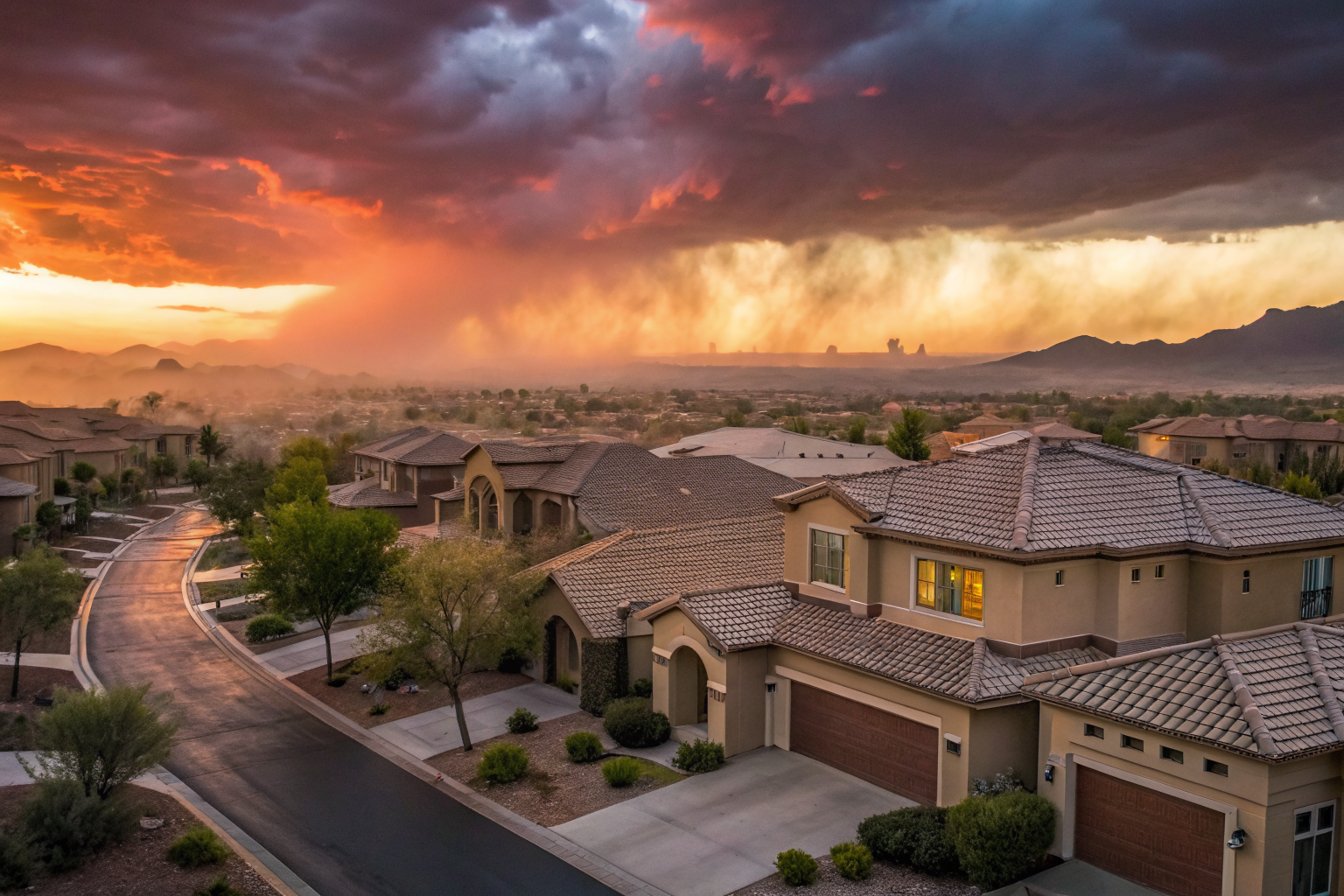
Homeowners insurance Arizona carriers sell comes with gaps most policyholders never see, until a monsoon tears off a section of roof or a slow leak destroys a floor. As of 2025, the standard filed HO-3 form in Arizona leaves six categories of loss either excluded or severely underinsured by default. This article maps what your policy does, what it misses, and what to check before the next claim.
Key Takeaways:
- Arizona’s standard HO-3 policy has a weather deductible that can run 1–5% of your main coverage, on a $500,000 home at 5%, that’s $25,000 out of pocket before the carrier pays a dime.
- AZ ranks third nationally in non-weather water damage costs (Insurance Information Institute), yet the hidden water damage endorsement that covers gradual leaks is not included by default in most filed HO-3 forms.
- Replacing an aging roof eliminates the 25–50% age surcharge carriers apply to homes with roofs over 20 years old, and carriers can non-renew your policy on roof age alone, even with zero claim history.
What the Arizona HO-3 Policy Actually Covers, and What It Doesn’t

The HO-3 homeowners policy is the standard residential insurance form filed with the Arizona Department of Insurance and Financial Institutions (DIFI) and used by most carriers writing owner-occupied homes in the state. Think of it as a contract with six coverage buckets, each labeled with a letter, each doing a specific job. In practice, most homeowners have never read past the declarations page, which means they find out what the buckets do when one of them turns out to be empty.
The HOAIC Arizona HO-3 policy form filed with DIFI in March 2025 establishes the baseline structure that most AZ carriers mirror: open-peril coverage for the dwelling itself, named-peril coverage for personal property. That distinction matters more than almost anything else in the policy.
Open peril vs. named peril is where most homeowners go wrong. Open-peril means the dwelling is covered for any cause of loss the policy doesn’t specifically exclude. Named-peril means personal property is only covered for the specific causes of loss the policy lists. If your laptop is destroyed by a cause that isn’t on the list, the claim is denied, even if a similar event to the structure itself would be covered.
Here is what each coverage letter does in a real AZ claim:
Coverage A is the main coverage, the amount the carrier will pay to rebuild the structure of your home from the ground up. This is the number that drives almost every other calculation on the policy, including your percentage deductible.
Coverage B covers other structures on the property: detached garages, block walls, ramadas, storage sheds. The default limit is typically 10% of Coverage A. On a $500,000 Coverage A policy, that’s $50,000 for everything that isn’t the main house.
Coverage C covers personal property, furniture, clothing, electronics, appliances. It operates on named-peril terms, so the list of covered causes matters. ACV (depreciated value) vs. RCV (new-for-old) terms also apply here; many policies default to ACV for personal property unless you’ve added an endorsement.
Coverage D is loss of use, what the carrier pays for temporary housing while your home is being repaired or rebuilt. On a major claim in Phoenix metro, where hotel costs run high, this coverage depletes faster than most homeowners expect.
Coverage E is personal liability, coverage if someone is injured on your property and pursues a claim against you. This coverage is not about your home’s structure; it protects your personal financial exposure.
Coverage F covers medical payments to others, a smaller, no-fault coverage that pays for minor injuries to guests without requiring a liability finding.
Two exclusions apply across the entire HO-3 form by default in Arizona: flood and earthquake. Flood coverage requires a separate policy, typically through the FEMA National Flood Insurance Program. Earthquake coverage requires a separate endorsement or policy. Neither is optional language, both are affirmative exclusions in the DIFI-filed form.
This overview is general. The exact terms of your coverage depend on the specific form and endorsements your carrier has filed. Consult a licensed Arizona insurance agent for advice specific to your property and policy before assuming any coverage applies.
Replacement Cost vs. Market Value: The Coverage Gap That Surprises Phoenix Metro Homeowners
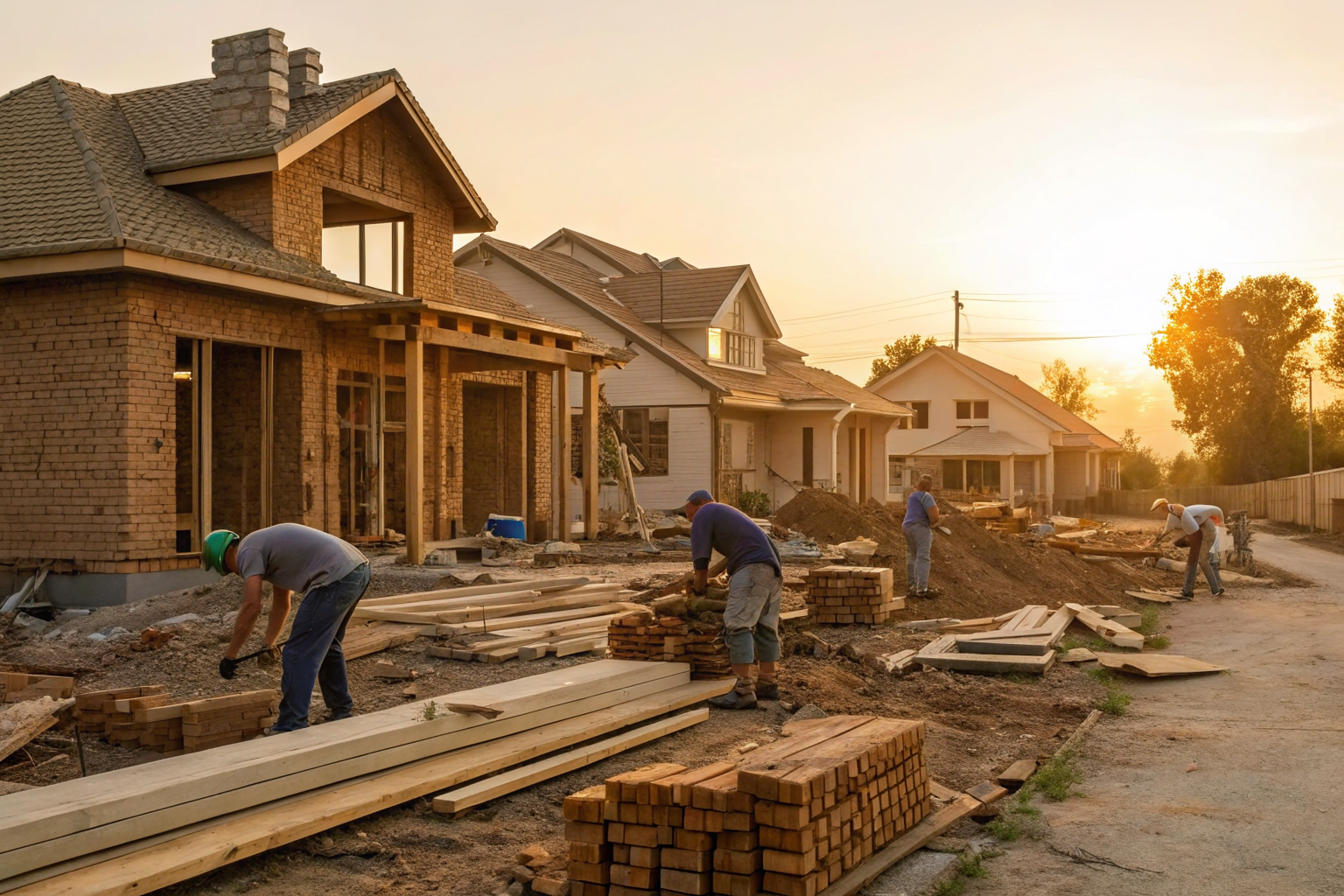
Replacement cost coverage pays what it costs to rebuild your home at today’s labor and material prices, not what Zillow says your home is worth, and not what you paid for it. This distinction creates the most common and most expensive coverage gap in Arizona homeowners insurance.
Market value and rebuild cost diverge sharply in Phoenix metro because land value is baked into your Zillow estimate. You cannot insure the land, carriers won’t pay to replace dirt. What you’re insuring is the structure itself: the foundation, framing, roof, mechanicals, finishes. Post-2020 construction cost inflation has pushed rebuild costs per square foot well above where they sat when most existing policies were written. A home with a $450,000 market value might cost $600,000 or more to rebuild from the slab, once you account for current labor rates, materials costs, and code compliance requirements.
Actual cash value (ACV) is the alternative: depreciated value, not new-for-old. A 15-year-old roof replaced under an ACV policy pays out what a 15-year-old roof is worth today, which is a fraction of what a new roof costs to install.
| Dimension | Replacement Cost Value (RCV) | Actual Cash Value (ACV) |
|---|---|---|
| What it pays | Cost to rebuild or replace at current prices | Cost minus depreciation for age and condition |
| When carriers apply it | Standard on most AZ HO-3 dwelling coverage | Often default on personal property; sometimes applied to roofs 15+ years old |
| Effect on premium | Higher premium than ACV | Lower premium, but larger out-of-pocket at claim time |
| Risk to homeowner | Shortfall if Coverage A limit is set below actual rebuild cost | Significant gap on older components, roofs, HVAC, appliances |
The “how much homeowners insurance do I need” question has one correct answer for Arizona homeowners: enough Coverage A to cover the full replacement cost of the structure, not the market value. Carriers use third-party estimating tools to calculate this, but those estimates can lag actual construction costs. If your Coverage A limit was set at purchase and has never been updated, you may already be underinsured.
Carrying a Coverage A limit below actual rebuild cost creates a coinsurance-style shortfall at claim time. The carrier pays up to the policy limit; you cover the rest. On a total loss, that gap can reach six figures on a standard Phoenix metro home. Renewal notices from carriers and independent building-cost indices consistently show rebuild costs outpacing home market values in AZ, checking your Coverage A against a current rebuild estimate is worth doing before your next renewal.
For the full picture on coverage decisions across auto, motorcycle, and commercial lines, the broader Arizona insurance guide covers how replacement cost logic applies across policy types.
The Six Coverage Gaps Most Arizona HO-3 Policies Leave Open

Arizona HO-3 policies exclude by default six categories of loss that AZ homeowners are statistically most likely to face. Each gap below includes what it is, where it bites, and what fixes it.
Gradual and hidden water damage. Standard HO-3 policies exclude water damage that occurs over time, a slow supply line leak behind a wall, a failing wax ring under a toilet, a pinhole in a copper pipe. The exclusion applies even when the damage is genuinely hidden. AZ ranks third nationally in non-weather water damage costs according to the Insurance Information Institute, which makes this the gap most likely to cost an Arizona homeowner. A hidden water damage endorsement, available from most carriers, adds back coverage for this specific category and is not included in the base HO-3 form.
Percentage weather deductible exposure. Most Arizona homeowners assume their deductible is a flat dollar amount, $1,000, maybe $2,500. On weather-related claims including wind and monsoon events, the deductible is often a percentage of Coverage A: 1–5% of the main coverage limit. On a $500,000 home, that’s $5,000 to $25,000 before the carrier pays anything. The fix is reviewing your declarations page and asking your agent whether a deductible buydown endorsement makes financial sense for your specific limits.
Flood exclusion. The standard Arizona HO-3 form excludes flood damage, including surface water intrusion, storm drain backup, and water that enters during a monsoon event by flowing across the ground rather than blowing through an opening. The FEMA National Flood Insurance Program is the primary remedy for properties in designated flood zones. Properties outside mapped flood zones can still purchase NFIP coverage, and private flood policies also exist in Arizona’s surplus lines market.
Solar system not on the policy. A typical Arizona home solar installation runs $40,000–$60,000, and most insurance policies haven’t been updated to reflect it. Panels attached to the roof may fall under Coverage A or require a separate endorsement depending on carrier form language; ground-mounted systems may not be covered at all without an explicit rider. If your carrier doesn’t know the system exists, a claim on it will likely be denied. Updating your policy after installation is a disclosure obligation, not optional paperwork.
Short-term rental entrustment exclusion. AirCover is not a landlord policy, it is Airbnb’s own damage program, which carries its own limitations and is not a substitute for property insurance. Standard HO-3 policies often include an entrustment exclusion that denies claims for damage caused by guests or tenants. ARS 9-500.39 governs short-term rental regulation at the municipal level in Arizona but does not change the insurance policy exclusion. A short-term rental endorsement or a dedicated STR policy is required before the first guest checks in.
Ordinance or law gap. When you rebuild after a covered loss, Arizona building codes may require upgrades to the structure that weren’t present before, updated electrical panels, fire-rated assemblies, energy code compliance. Standard HO-3 coverage pays to rebuild what was there, not to bring the structure into current code compliance. Ordinance or law coverage, available as an endorsement, pays the delta between what the carrier will cover and what the city actually requires you to build.
For the STR, snowbird, and solar coverage questions in more detail, the specialty insurance arizona cluster covers each of these in its own right. The annual policy review arizona article walks through how to audit all six gaps in about 30 minutes before each renewal cycle.
What Is the Percentage Deductible on an Arizona Homeowners Policy?

A percentage deductible is a deductible that calculates as a fixed percentage of your Coverage A limit, not a flat dollar amount. This means the deductible on a weather claim is not a number you negotiated when you bought the policy, it is a number that grows automatically as your Coverage A limit increases, and it can be raised by carriers at renewal.
Walk through the math with a real Arizona scenario. On a home with $500,000 in Coverage A:
- At 1%: the deductible is $5,000
- At 2%: the deductible is $10,000
- At 5%: the deductible is $25,000
Your weather deductible can be anywhere from 1% to 5% of your home’s main coverage. On a $500,000 home at 5%, that’s $25,000 out of pocket before the carrier pays a dime, and your carrier can raise that number at renewal without making sure you notice.
In Arizona, the percentage deductible applies to wind and hail claims and often to any storm-related damage during monsoon season, the events most likely to generate a claim in Phoenix metro between June and September. This is separate from the all-other-perils (AOP) deductible on the same policy, which is the flat dollar amount that applies to non-weather losses like fire or theft.
Carriers can raise the percentage deductible at renewal under Arizona’s filed-rate rules. Per ARS 20-1652, carriers must provide advance notice of material policy changes, and DIFI requires that renewal notices disclose changes to deductible terms. The disclosure obligation exists, but it is buried in renewal documents, not a separate conversation. Many Arizona homeowners discover their deductible increased at renewal only when they file a claim.
If your declarations page shows a wind/hail or weather deductible expressed as a percentage, that is the number to pay attention to. The “monsoon deductible” framing is consumer shorthand for this structure, and it’s addressed in more depth in the dedicated monsoon deductible article in this cluster.
Exact deductible terms vary by carrier form. Review your declarations page, or ask a licensed Arizona agent to confirm which deductible applies to which category of loss before monsoon season begins.
Tile Roofs, Underlayment Age, and Why Your Carrier Is Watching Your Roof

Tile roof underlayment degrades independently of the tile surface, creating a hidden claim-denial and non-renewal risk that most Arizona homeowners don’t see coming. This is the single most misunderstood underwriting fact about Arizona homes.
Tile itself lasts 30–50 years in Arizona’s climate. The underlayment beneath it, the waterproof membrane that does the actual work of keeping water out, has a functional lifespan of 15–25 years. Carriers underwrite the underlayment age, not the tile. A roof that looks pristine from the street, with no cracked or missing tiles, may have an underlayment that is past its serviceable life, and that is what the carrier’s roof inspection looks for.
A 25-year-old tile roof with intact tiles is not an insurance company’s version of a good roof. To an underwriter, it is a roof with likely-failed underlayment, elevated water intrusion risk, and a 25–50% age surcharge on the replacement portion of any claim. Replacing the underlayment eliminates that surcharge. Carriers apply the 25–50% age penalty to homes with roofs over 20 years old, which in Phoenix metro represents a large share of the existing housing stock.
The connection to non-renewal is direct. Roof age is one of the top triggers for homeowners insurance non-renewal in Arizona, alongside replacement-cost gaps and claim history. A carrier can request a roof inspection at renewal, apply the age surcharge without a claim being filed, or decline to renew the policy entirely, all without the homeowner doing anything wrong. Per ARS 20-1652, carriers must provide the required notice period before a non-renewal takes effect, but the decision itself requires only that the carrier identify an underwriting concern.
The disclosure angle compounds this: if you’ve had underlayment work done, partial re-underlayment, repairs after a prior storm, or a full underlayment replacement without retiling, and your carrier doesn’t know about it, your replacement cost calculation may be based on the wrong roof age. That can affect both your premium and your claim outcome.
For Phoenix metro homeowners whose roofs are approaching 20 years, the action steps are: get an independent roof inspection from a licensed AZ inspector to determine underlayment condition, confirm what year is on file with your carrier, and update your policy before the carrier’s next inspection triggers a non-renewal. Consult a licensed AZ inspector and your insurance agent before assuming your tile roof is underwriting-clean.
The full mechanics of roof age and non-renewal, including the underwriting calendar and how to respond to a non-renewal notice, are covered in the dedicated cluster articles on roof age homeowners insurance arizona and homeowners insurance non-renewal arizona.
How to Read an Arizona Homeowners Insurance Declarations Page

The declarations page summarizes every coverage limit, deductible, and endorsement on your HO-3 policy in one place, and most Arizona homeowners have never read it. It is not the full policy, that document runs 30–50 pages. The declarations page is the one-page (sometimes two-page) summary your carrier sends with every renewal, and it is the first document to pull when you have a question or need to file a claim.
Here is what each line item on a typical Arizona declarations page means in plain language:
| Declarations Page Line | Plain-Language Meaning | What to Check |
|---|---|---|
| Coverage A, Dwelling | The maximum the carrier will pay to rebuild the structure of your home | Compare against a current rebuild estimate, not your market value |
| Coverage B, Other Structures | Coverage for detached garages, block walls, ramadas, sheds (typically 10% of Coverage A) | Confirm it covers all separate structures on your property |
| Coverage C, Personal Property | Coverage for furniture, clothing, electronics, appliances | Check whether it’s RCV (new-for-old) or ACV (depreciated) |
| Coverage D, Loss of Use | What the carrier pays for temporary housing during a covered repair | Check whether the limit is adequate for Phoenix metro hotel costs |
| Coverage E, Personal Liability | Protection if someone is injured on your property and pursues a claim | Most agents recommend at least $300,000; umbrella policies extend this further |
| Coverage F, Medical Payments | No-fault coverage for minor injuries to guests | Typically a smaller fixed amount; confirm it’s present |
| Deductible, All Other Perils | Flat dollar deductible for non-weather losses (fire, theft, etc.) | This is usually the number people think of when they say “my deductible” |
| Deductible, Wind/Hail/Weather | Percentage of Coverage A, applies to storm-related claims | This is the number that can reach $25,000 on a mid-range home |
| Endorsements | Add-on coverages you’ve purchased beyond the base form | If a coverage isn’t listed here, you don’t have it |
The endorsements section is where most AZ homeowners discover what they thought they had but don’t. If the hidden water damage endorsement is not listed, you don’t have it. If an ordinance or law endorsement is not listed, code-upgrade costs after a rebuild come out of your pocket.
Coverage A limits set at purchase often lag actual rebuild costs by 20–40% within 5–7 years without an indexed or guaranteed-replacement-cost endorsement, a pattern that shows up consistently in carrier renewal notices and independent agent reviews. A Coverage A limit that was accurate in 2018 may be $100,000 or more below current rebuild cost on the same home.
If your declarations page doesn’t match what you think you bought, if the deductible is higher than expected, if an endorsement you asked for isn’t listed, if Coverage A hasn’t moved in years, contact your agent before the next renewal cycle, not after the next claim. For a step-by-step method to audit every line on your policy, the annual policy review arizona article covers the full process in about 30 minutes.
The same logic applies across auto and commercial lines. The auto insurance arizona and business insurance arizona clusters each have their own declarations-page specifics, but the read-the-dec-page discipline is the same.
Frequently Asked Questions
What is the best homeowners insurance in Arizona?
No single carrier is the right fit for every Arizona homeowner. The right policy depends on your roof age, your Coverage A limit relative to current rebuild costs, whether you have solar, and whether your property is ever used as a short-term rental. A carrier that writes new-build homes in Gilbert at competitive rates may not write a 25-year-old tile-roof property in Tempe at all. Working with an agent who has access to multiple carriers means your situation gets matched to a policy rather than forced into whatever one company will write.
Does homeowners insurance in Arizona cover monsoon damage?
Standard AZ HO-3 policies cover wind and sudden water intrusion from a monsoon storm, but the deductible for weather events is often a percentage of your Coverage A limit rather than a flat dollar amount. On a mid-range Phoenix metro home, that deductible can reach $10,000–$25,000 before the carrier pays anything. Gradual water damage that develops over time, even if a monsoon event started it, is excluded unless you’ve added a hidden water damage endorsement. Pull your declarations page and confirm both the deductible structure and whether that endorsement appears by name.
How do I find an independent homeowners insurance agent in Arizona?
An agent with access to multiple carriers can compare your situation across the market rather than quoting from one company’s rate table, which matters in Phoenix metro, where roof age, solar installations, and coverage limits create underwriting differences that vary significantly by carrier. Verify that any agent you work with holds an active Arizona producer license through DIFI, which you can confirm at the DIFI public license lookup tool. The agent’s job is to explain what your policy does before you file a claim.
Does homeowners insurance in Arizona cover my solar panels?
Only if you’ve told your carrier about them and they appear on your policy. A typical Arizona home solar install runs $40,000–$60,000, and if the carrier has no record of the system, a claim on it will likely be denied. Depending on how the panels are attached, coverage may require a Coverage A limit increase, a separate endorsement, or both. Contact your agent to update your policy any time you add a system, and confirm the update is reflected on your next declarations page.