Specialty insurance Arizona homeowners need isn’t a separate product category, it’s the set of endorsements, riders, and alternative policy forms your standard HO-3 never anticipated. As of 2026, the standard HO-3 was written for a homeowner who lives there full-time, doesn’t rent it out, has no solar panels, no pool, and never leaves for six months. If that doesn’t describe your situation, you have gaps you probably haven’t found yet.
Key Takeaways:
- A standard HO-3 policy typically voids coverage after 30-60 consecutive vacant days, Arizona snowbirds who leave October through April and don’t notify their carrier risk a denied claim on the empty property.
- A typical Arizona home solar install runs $40,000 to $60,000, and most carriers require a specific rider or policy update to cover that equipment at replacement cost rather than treating it as an unscheduled structure.
- An umbrella policy in Arizona starts at $1 million in additional liability and stacks on top of both your homeowners and auto base limits, but it won’t activate until you’ve exhausted the underlying limit, so carriers require minimum base-policy thresholds before they’ll write the umbrella.
What the Standard HO-3 Policy Doesn’t Cover, and Where Specialty Coverage Fills the Gap
The HO-3 homeowners policy is the baseline filed form that most Arizona carriers use for owner-occupied residential properties. Think of it as a template designed for the most predictable version of homeownership: one household, one family, full-time occupancy, no commercial activity. This means the HO-3 excludes short-term rental activity, extended vacancy, and unscheduled high-value equipment as a matter of design, not oversight.
“Specialty coverage” in the Arizona context is not a separate product you shop for on its own. It refers to endorsements added to an existing HO-3, riders that schedule specific equipment, or full policy conversions to alternative forms like a DP-3 landlord policy or a standalone vacant home policy. Each addresses a situation the standard HO-3 was not written to handle.
The six situations this article covers, short-term rentals, snowbird seasonal vacancy, solar panels, pool liability, dog bite liability, and personal umbrella, each require a different departure from the standard form. Some are simple add-ons. Others require a full policy conversion. A few require coordination between your homeowners policy and a separate liability product.
One point that most guides miss: the vacancy clause is the most commonly triggered gap in Arizona, and most homeowners don’t know it exists until a claim gets denied. Per industry-standard ISO policy form language, the standard HO-3 vacancy clause triggers between 30 and 60 consecutive days. After that threshold, many perils, including vandalism, glass breakage, and sometimes water damage, are no longer covered without a specific vacancy endorsement or policy conversion.
For readers working through their overall coverage picture, the Arizona insurance guide for homeowners covers the full range of policy types and decision points. And for anything specific to your property, consult a licensed Arizona agent before assuming a gap is or isn’t present in your current policy. The Arizona Department of Insurance and Financial Institutions (DIFI) is the state regulatory authority and can provide carrier-specific guidance when needed.
STR and Snowbird Coverage: What Happens to Your Policy When Someone Else Is in Your Home, or No One Is?
Short-term rental activity voids standard HO-3 personal-lines coverage without a host endorsement or DP-3 conversion. That’s the core mechanic, and it catches a significant number of Arizona hosts off guard.
The STR Problem
AirCover, Airbnb’s own host protection program, is not an insurance policy. It does not replace personal liability coverage, it does not cover your dwelling the way a homeowners policy does, and it has exclusions that don’t get disclosed until a claim is in dispute. The standard HO-3 includes an entrustment exclusion that can void a claim when a paying guest causes damage, the reasoning being that you voluntarily handed your property to someone in exchange for money, which moves the loss outside the personal-use scope of the policy.
Arizona homeowners who rent on Airbnb or VRBO have two paths. The first is a host endorsement added to the existing HO-3, which acknowledges the rental activity and extends coverage for STR-related losses. The second is a full conversion to a DP-3 landlord policy, which is written from the start for non-owner-occupied or rental-use properties. The right choice depends on how frequently the property is rented, occasional weekend rentals may qualify for an endorsement, while properties rented more than 90 days per year typically warrant a DP-3.
Per ARS 9-500.39, Arizona municipalities cannot prohibit short-term rentals outright. That preemption means STR exposure exists in every Phoenix-metro ZIP code, and a majority of hosts running on platforms like Airbnb or VRBO are operating under a standard HO-3 that does not acknowledge the rental activity. The exposure is not concentrated in resort markets, it’s distributed across Maricopa, Pima, and Pinal counties in properties that look, from a carrier’s perspective, like ordinary owner-occupied homes.
The Snowbird Vacancy Problem
Leaving a Phoenix-area home empty from October through April is a different problem from STR hosting, but both involve your carrier not knowing what’s happening at the property.
A snowbird situation, where the owner intends to return, is distinct from true vacancy, where the property is unoccupied with no near-term return date. Carriers treat these differently at underwriting, but both can trigger the vacancy clause if the threshold is crossed without notification.
The fix is either a vacancy endorsement added before leaving or a conversion to a seasonal-use policy structure. DIFI Consumer Services can help if a carrier denies a vacancy claim. Consult a licensed AZ agent before the vacancy window opens, not after a claim is filed.
| Coverage Feature | Standard HO-3 | HO-3 + Host Endorsement | DP-3 Landlord Policy |
|---|---|---|---|
| Owner-occupant losses | Covered | Covered | Not the right form |
| Paying-guest damage | Excluded via entrustment clause | Covered up to endorsement limits | Covered |
| Personal liability (guests) | Excluded during rental periods | Extended for STR activity | Covered as landlord liability |
| Vacancy clause applies | Yes, 30-60 day threshold | Depends on endorsement terms | Structured for non-occupancy |
| Best suited for | Full-time owner-occupants | Occasional STR hosts | Frequent renters, snowbirds |
| AirCover replaces this? | No | No | No |
For a broader look at how business activity intersects with personal property coverage, the business insurance arizona discussion covers the commercial-lines side of this equation.
Solar Panels, Pools, and Dog Liability: The Three Add-On Coverages Arizona Homeowners Most Often Skip
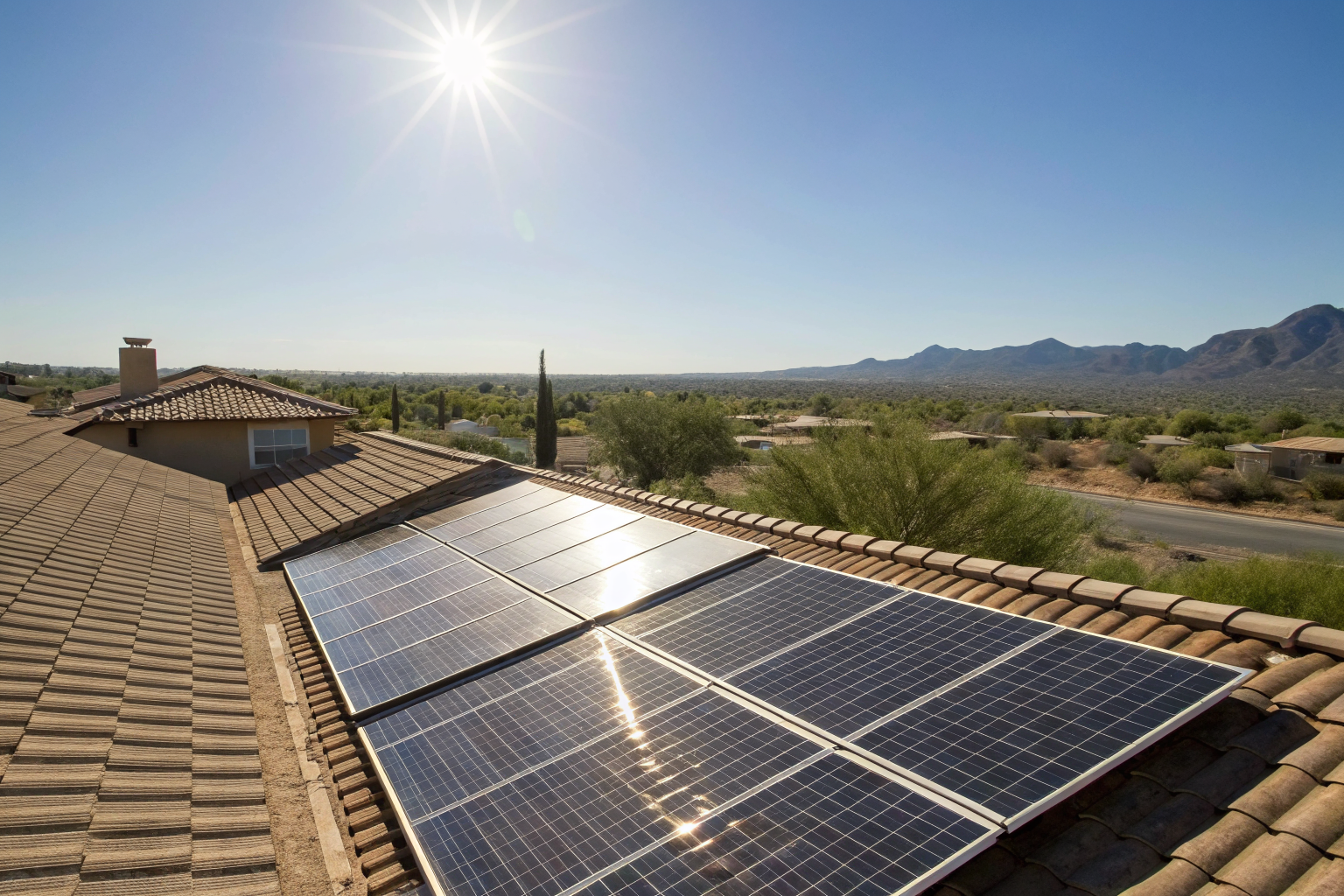
The solar panel rider extends replacement-cost coverage to rooftop photovoltaic systems not covered under standard dwelling provisions. That single sentence contains the reason thousands of Arizona homeowners are carrying a six-figure asset their policy doesn’t know about.
Three specific add-ons account for most of the specialty gaps The Gebhard Agency sees on Arizona homeowner policies:
Solar panel rider. A typical Arizona home solar install runs $40,000 to $60,000, per The Gebhard Agency’s market data, and most insurance policies haven’t been updated to reflect it. Standard Coverage A (the dwelling coverage on your HO-3) may or may not include rooftop panels depending on how the policy defines “permanently installed equipment.” Some carriers treat panels as part of the dwelling; others treat them as unscheduled personal property with a sub-limit that won’t cover replacement cost. A solar panel rider or scheduled equipment endorsement explicitly covers the system at full replacement cost and can include inverter failure, which standard dwelling coverage never addresses. Failure to disclose a new solar installation to your carrier is a material omission that can result in claim denial, the same pattern that shows up repeatedly in solar panel insurance claim denied arizona cases.
Pool liability. An in-ground pool is an “attractive nuisance” under Arizona premises liability law, meaning a homeowner can be held liable for injuries even to uninvited guests, including children who enter the property without permission. Standard HO-3 personal liability typically runs $100,000 to $300,000. A serious pool injury or drowning can exceed that limit before litigation costs are added. An umbrella policy is the common supplement for pool owners, but some carriers also require a pool exclusion rider removed or a fence certification on file before they’ll extend liability coverage for pool-related losses. Check your declaration page.
Dog bite liability. Arizona follows strict liability for dog bites under ARS 11-1025, meaning the owner is liable regardless of whether the dog had shown prior aggression. The one-bite rule that exists in some states does not apply in Arizona, first bite, full liability. Some carriers exclude specific breeds from personal liability coverage entirely; others require a separate animal liability rider. A homeowner whose breed is excluded and who doesn’t have a rider may believe they have liability coverage right up until the moment a claim is denied. Check the exclusions section of your declaration page and speak with a licensed agent if you own a breed your carrier has flagged.
Loss assessment coverage. Arizona condo owners and HOA members face a fourth gap that frequently goes unnoticed: the loss assessment endorsement. Under ARS 33-1201 (Arizona Condominium Act) and ARS 33-1801 (Arizona Planned Communities Act), an HOA can assess individual members for a share of a covered loss that exceeds the master policy’s limits. Standard HO-3 and HO-6 policies may include $1,000 in loss assessment coverage by default, an amount that is rarely enough when a pool deck collapse or common-area fire produces a six-figure assessment. An endorsement raising that limit to $25,000 or $50,000 is inexpensive relative to the exposure.
For any of these, the annual policy review arizona is the right time to confirm whether these riders are in place, whether limits are current, and whether any changes to the property (new solar, new dog, new pool) have been disclosed to the carrier.
How Does Umbrella Insurance Work in Arizona, and When Does It Actually Pay Out?
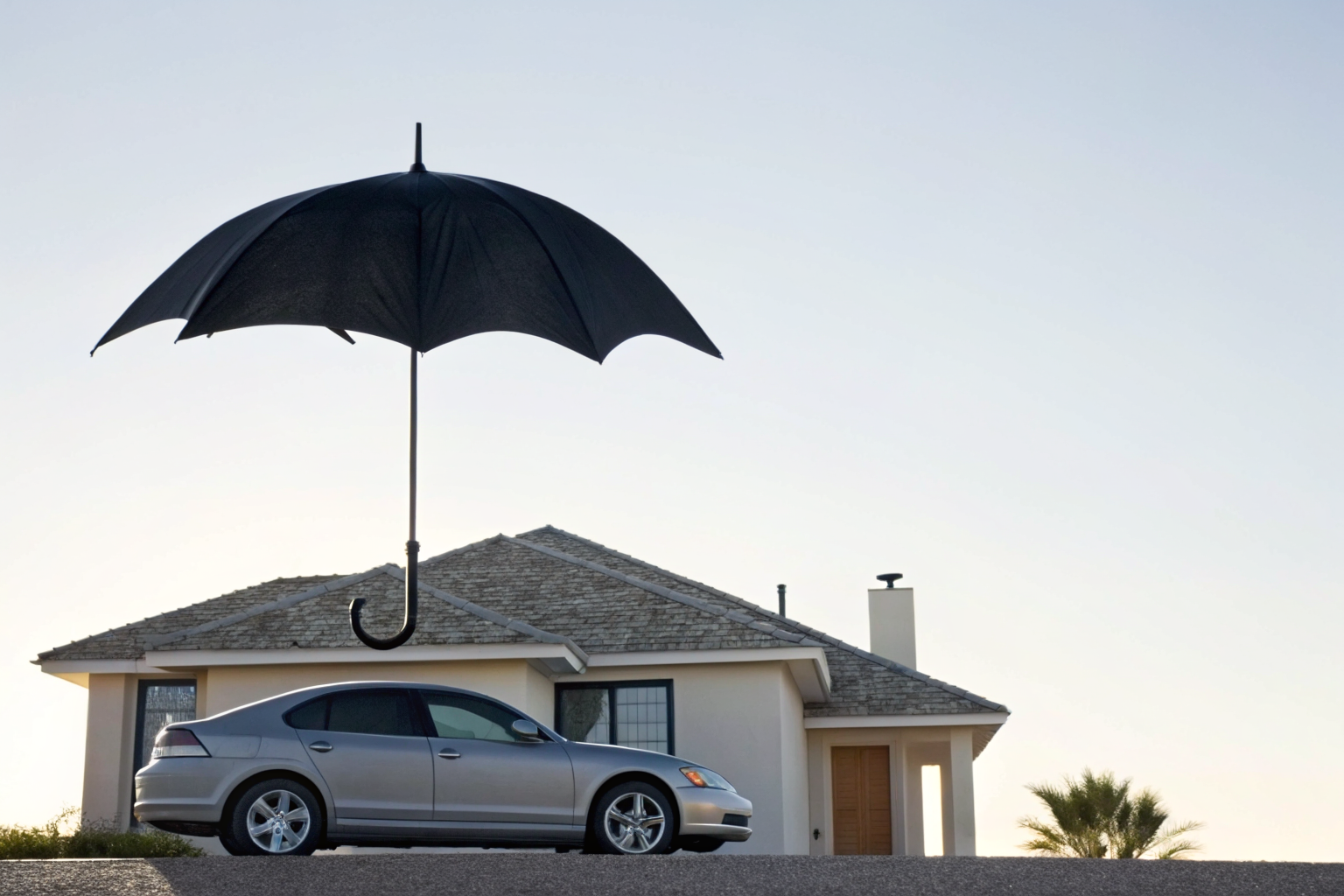
An umbrella liability policy stacks on top of homeowners and personal auto base limits once the underlying coverage is exhausted. The name is accurate: it doesn’t replace the policies underneath it, it extends over them.
Most explanations of umbrella insurance skip the part that matters most: the umbrella will not activate if your base policy limits are below the carrier’s required minimum threshold. A homeowner carrying $100,000 in HO-3 liability cannot simply add an umbrella. The carrier will first require the base limit to be raised to their minimum, typically $300,000, before they’ll write the umbrella on top of it.
Here’s the sequence in order:
A covered event triggers a claim. A guest is injured at your home, a car accident results in a lawsuit, or a dog bite produces a judgment. The event must be a covered peril under one of your underlying policies.
The underlying policy pays up to its limit. Your HO-3 pays out its full personal liability limit, or your personal auto policy pays up to its bodily injury limit. Most Arizona carriers require a minimum of $300,000 in underlying homeowners liability and $250,000/$500,000 in underlying auto liability before they will write a personal umbrella.
If the judgment or settlement exceeds that base limit, the umbrella activates. The umbrella covers the excess, up to its own limit. Personal umbrella policies in Arizona typically run from $1 million to $5 million in coverage, and a $1 million policy generally runs $150 to $300 per year for homeowners with clean loss histories, based on underwriting patterns reported across the market.
Confirm your underlying limits before applying for an umbrella. If your base policies are below the required minimums, the umbrella carrier will require you to raise them first. That step adds cost to the base policies. Factor both into the total premium when comparing options.
Understand what the umbrella does not cover. A personal umbrella does not cover business liability. If you run a home-based business, host paid events, or have commercial activity at your property, the umbrella excludes those exposures. Business liability belongs on a commercial umbrella or excess policy written on top of a Business Owner’s Policy, not a personal lines umbrella. Homeowners with complex asset exposure or commercial activity at their property should consult a licensed agent before assuming the umbrella fills every gap.
For pool owners and dog owners in particular, the umbrella is often the most cost-effective way to address the liability gap described in the previous section. The base HO-3 liability limit covers most routine claims; the umbrella addresses the tail risk.
Vacant Home Insurance in Arizona: What Coverage You Lose the Moment Your Property Sits Empty
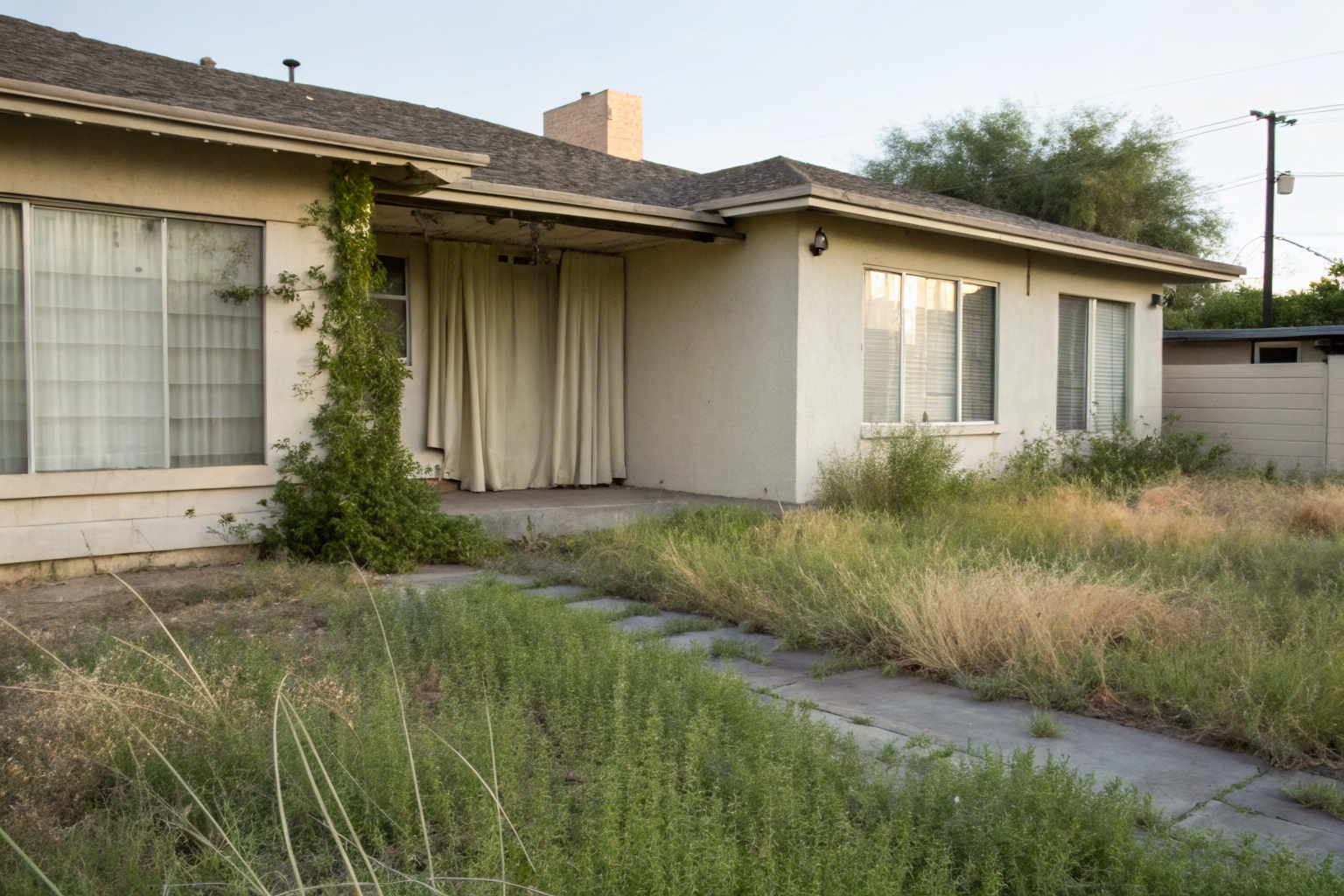
The vacant home endorsement restores named-peril coverage that the standard HO-3 suspends after the vacancy threshold is reached. Without it, a property that’s been empty for 45 days may have no coverage for vandalism, glass breakage, or certain water events, all real exposures in the Phoenix metro market.
Vandalism is among the first perils excluded under standard vacancy language. In Phoenix-area markets where properties can sit empty during estate transitions, divorce proceedings, or extended rehab, the exposure window can stretch for months. The thing most guides miss: builders-risk or renovation-specific policies are the right form for homes under active rehab, not standard vacant home policies. A vacant home policy covers an empty but stable property; a builders-risk policy covers one where work is actively underway.
The NFIP 30-day waiting period, established by FEMA policy, means a homeowner cannot purchase flood coverage and have it effective immediately. A snowbird returning to a Phoenix-area property in April to discover a monsoon-season water event cannot retroactively fix the coverage gap. Properties without existing flood coverage, whether vacant or snowbird-occupied, are exposed if the owner tries to buy reactively when a monsoon season is imminent. The 30-day rule applies regardless of the NFIP waiting-period exceptions for loan closings.
| Feature | Standard HO-3 (Occupied) | HO-3 + Vacancy Endorsement | Standalone Vacant Home Policy |
|---|---|---|---|
| Fire and lightning | Covered | Covered | Covered |
| Vandalism and malicious mischief | Covered | Covered (restored) | Covered |
| Water damage (sudden/accidental) | Covered | Covered with conditions | Named perils only |
| Glass breakage | Covered | Covered (restored) | Often excluded |
| Personal liability | Included | Typically included | Often excluded or limited |
| When it applies | Full-time occupancy | Temporary vacancy, owner intends to return | Extended vacancy, estate, sale pending |
| Relative cost vs. standard HO-3 | Baseline | +10-25% estimated | +30-60% estimated, varies by carrier |
| Right for active rehab? | No | No | No, use builders-risk form |
If a carrier denies a vacancy-related claim, DIFI Consumer Services is the AZ regulatory resource for dispute guidance. For homeowners with solar on a vacant property, the disclosure obligation doesn’t pause because the home is empty, a solar panel claim on a vacant property brings together two separate endorsement gaps at once. That intersection is covered in detail in the solar panel insurance claim denied arizona resource.
For snowbirds specifically, the coverage decision needs to happen before departure, not after arrival. Consult a licensed AZ agent to determine whether a vacancy endorsement or a full policy conversion is the right structure for your situation. The homeowners insurance arizona guide covers the full range of HO forms and when each applies.
Frequently Asked Questions
Does my regular homeowners insurance cover my Airbnb in Arizona?
A standard HO-3 policy excludes coverage for losses that occur during paid rental activity, including short-term rentals listed on platforms like Airbnb or VRBO. AirCover is not an insurance policy and does not replace your personal liability or dwelling coverage. Arizona homeowners hosting paying guests should ask their carrier about a host endorsement or a DP-3 landlord policy conversion, consult a licensed Arizona agent to determine the right form based on how often the property is rented.
What happens to my homeowners insurance if I leave my Arizona home empty for six months?
Most standard HO-3 policies include a vacancy clause that suspends or restricts coverage for certain perils, including vandalism and sometimes water damage, after 30 to 60 consecutive days of vacancy, per ISO policy form language. Arizona snowbirds leaving a Phoenix-metro property empty from fall through spring are well inside the vacancy window. The fix is either a vacancy endorsement added to the existing policy or a conversion to a seasonal-use or vacant-home policy form, your carrier must be notified before the vacancy threshold is reached, not after a claim is filed.
How much does umbrella insurance cost in Arizona?
A current filed-rate figure isn’t available here, but the general pattern holds across the Arizona market: a $1 million personal umbrella policy typically runs $150 to $300 per year for most homeowners with clean loss histories, based on underwriting patterns reported across the market. The cost depends on the number of underlying policies (home, auto, motorcycle, rental property) and whether the carrier requires those underlying limits to be raised before writing the umbrella. A licensed AZ agent can quote specific umbrella options once your base limits are confirmed.
The information in this article is for educational purposes only. Consult a licensed Arizona insurance agent for advice specific to your property, policy, and situation. Policy terms vary by carrier and filed form.