Sudden vs gradual water damage is the distinction your carrier uses to decide whether your claim gets paid or denied, and most Arizona homeowners don’t know that standard exists until the check doesn’t come. Your carrier doesn’t deny water damage claims because the water wasn’t real. They deny them because the water wasn’t sudden enough.
Key Takeaways:
- Arizona HO-3 policies cover water damage only when it meets the sudden-and-accidental trigger, a slow drip behind a wall over 6 months fails that test automatically, regardless of how much damage it caused.
- The gradual-damage exclusion is written into the standard HO-3 form and applies even when the homeowner had no visible sign of the problem, ignorance of the leak does not make the damage sudden.
- A hidden water damage endorsement closes the gradual-exclusion gap for concealed leaks, but most Arizona homeowners have never been offered one, it is an add-on that must be requested separately.
What ‘Sudden and Accidental’ Actually Means in an Arizona HO-3 Policy
The sudden-and-accidental standard is the gating condition that determines whether water damage triggers coverage under your Arizona HO-3 policy. This means that no matter how severe the water damage is, the carrier’s first question is not how much it cost, it is how it started.
The HO-3 policy form covers your dwelling on an open-peril basis. Open-peril coverage means water damage is covered unless an exclusion applies. That sounds broad, and it is, until you hit the gradual-damage exclusion, which is written wide enough to catch most of the claims that get denied. The HOAIC Arizona HO-3 policy form, filed with Arizona DIFI in March 2025, uses the phrase “sudden and accidental discharge or overflow” as the operative trigger language for covered water events. That phrase does real work.
“Sudden” in plain language means the event was abrupt, unforeseen, and not the result of deterioration over time. A pipe that bursts while you’re home qualifies. A supply line that weeps behind drywall for four months does not, even if you never saw a drop of water on the surface. The event has to be discrete. It has to have a moment of origin that a reasonable person would identify as an incident, not a condition.
Contents coverage under the HO-3 works differently, personal property is covered on a named-peril basis, meaning the specific peril has to be listed. But for the dwelling itself, the open-peril structure means the burden is on the carrier to invoke an exclusion. The gradual-damage exclusion is that invocation. It is not a loophole. It is a core structural feature of every standard Arizona HO-3 form.
Understanding this definition is the foundation for everything else in your Arizona insurance guide. If you want the full picture of what your policy covers before any water event happens, that belongs to a broader review of what homeowners insurance covers in Arizona, this article focuses on the water-specific split.
Sudden vs. Gradual: The Difference That Splits Paid Claims from Denied Ones

Sudden water damage events trigger coverage. Gradual water damage events trigger the exclusion. The carrier’s adjuster makes that call based on physical evidence at the scene, and that determination controls the outcome of your claim.
Here is how common Arizona water loss scenarios split under a standard HO-3:
| Event Type | Sudden or Gradual | Covered Under Standard HO-3 |
|---|---|---|
| Pipe bursts while you’re home | Sudden | Yes |
| Supply line fails and soaks subfloor over 3 weeks | Gradual | No |
| Toilet overflows from a one-time clog | Sudden | Yes |
| Slow drip from a corroded fitting behind drywall for months | Gradual | No |
| Water heater ruptures without warning | Sudden | Yes |
| Water heater leaks from a corroded base over time | Gradual | No |
| Monsoon water enters through cracked roof flashing in one storm | Sudden | Yes |
| Roof flashing deteriorates over two seasons and lets water in incrementally | Gradual | No |
The table above shows the pattern clearly: the physical mechanism of failure matters more than the dollar amount of damage. A $40,000 loss from a slow corroded fitting gets denied. A $4,000 loss from an acute pipe burst gets paid. The water is real in both cases. The classification is what changes everything.
Adjusters in Arizona are trained to ask one specific field question: would a reasonable person have discovered and corrected this condition before the damage occurred? An affirmative answer almost always triggers the gradual exclusion. That standard does not require you to have actually seen the problem, it requires that a reasonable person in your position could have seen it, given the home’s age, the plumbing type, and the visible condition of the surrounding area.
This is why the sudden-vs-gradual distinction produces so many denied claims that homeowners describe as arbitrary. The homeowner experienced a surprise. The carrier sees a condition. Both can be true at the same time, and the policy language sides with the carrier’s interpretation when the damage developed over time.
If you’ve already received a denial, the mechanics of what happens next and how carriers document these decisions are covered in the article on water damage claim denials in Arizona.
Why the Gradual-Damage Exclusion Catches Homeowners Off Guard in Arizona
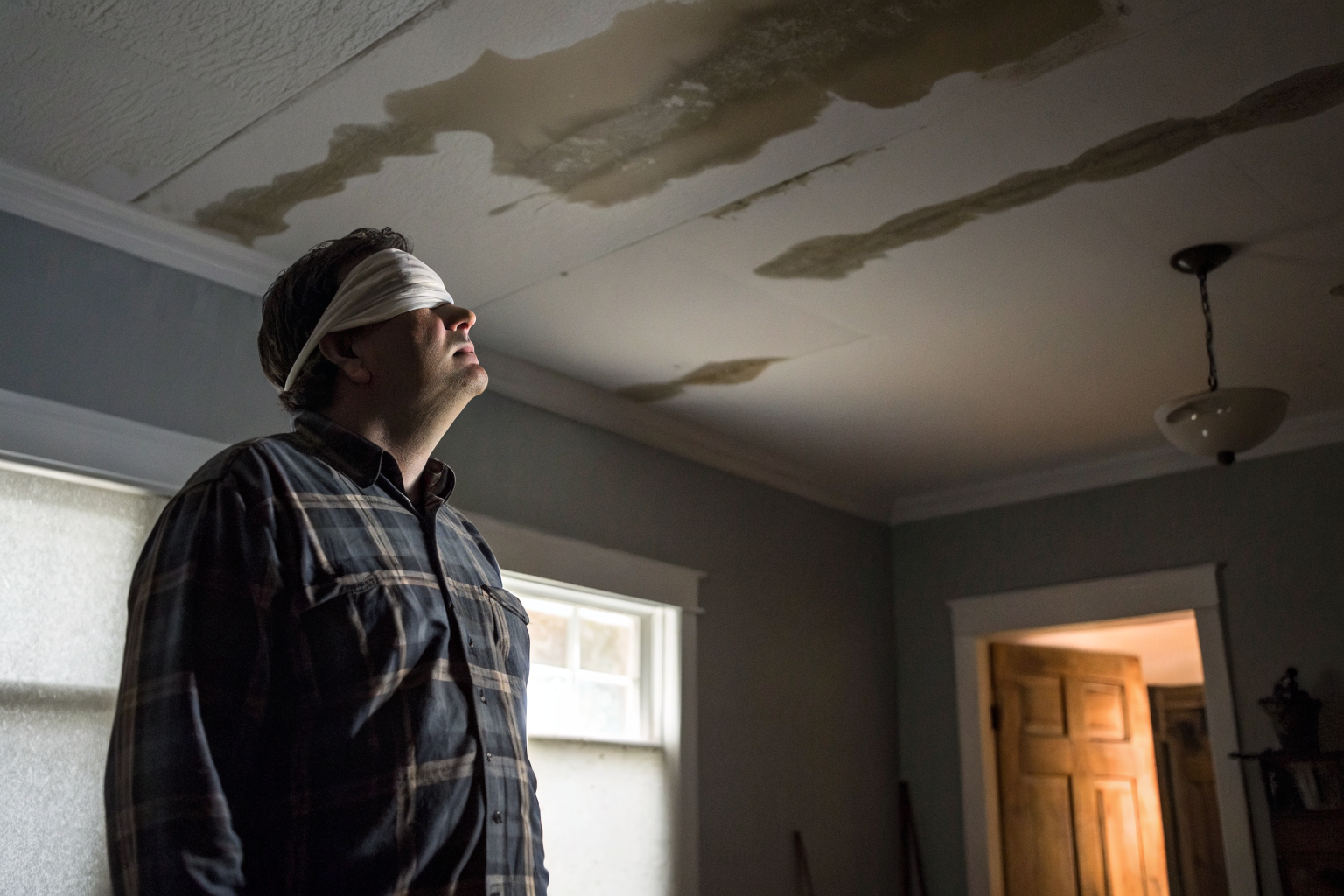
The gradual-damage exclusion denies claims even when the homeowner had no visible sign of the problem. The exclusion does not require proof of negligence. It does not require that the homeowner ignored visible water, skipped maintenance, or made any identifiable mistake. It requires only that the damage developed over time rather than from a sudden event.
Most Arizona homeowners assume that because they didn’t know about the leak, it qualifies as accidental. That assumption is wrong. The policy language contains no awareness carve-out. “I didn’t know” is not a defense against the gradual exclusion, it is, at best, irrelevant to how the claim gets classified.
Arizona’s construction pattern makes this worse. The majority of Phoenix-metro homes are built slab-on-grade, meaning the plumbing runs under the foundation. Leaks in those lines are concealed by design. Homeowners go 12 to 24 months without any surface sign, no staining, no soft spots in flooring, no visible moisture, before the slab itself starts to show damage or a utility bill spike triggers an investigation. That scenario is exactly where the gradual exclusion fires. The damage is hidden, the timeline is long, and the adjuster’s field question about reasonable discovery almost always gets answered in the carrier’s favor.
Arizona ranks third nationally in non-weather water damage costs, per the Insurance Information Institute. Carrier adjusters in this market see gradual-leak claims constantly and are trained to document the physical signs of long-term moisture exposure: mineral deposits on pipes, corrosion patterns on fittings, wood rot that required years to develop, mold colonies that indicate sustained moisture over months. Those physical markers are the evidence that overrides a homeowner’s timeline.
This is also why Arizona’s water damage claim volume matters beyond just your own policy. When adjusters are processing high volumes of gradual-leak claims, the documentation standards tighten. Every claim gets scrutinized against the same field criteria.
(This is also why the hidden-water-damage endorsement in Section 5 matters, it is the only structural fix to this problem that doesn’t require you to win an argument with an adjuster.)
What Documentation Actually Proves a Water Loss Was Sudden

Documentation proves the sudden nature of a water event to the carrier’s adjuster, and the window to collect that documentation is the first two hours after discovery. After cleanup starts, the evidence that supports sudden-and-accidental classification disappears.
Photograph the failure point before anything else. Capture the pipe rupture, fitting failure, or supply line break with a timestamp active on your phone. The photo needs to show the point of origin, not just the water on the floor.
Do not clean up before documenting the water spread pattern. The spread radius and saturation depth support sudden-onset timing. An adjuster who sees water that has spread 12 feet from a burst pipe in two hours has physical confirmation of an acute event. An adjuster who walks into a dry scene with stained baseboards has nothing to work with.
Call a licensed plumber the same day and get a written report. The plumber’s documentation of the failure mode is the single most important piece of evidence in a sudden-vs-gradual dispute. A report noting “acute mechanical failure” versus “long-term corrosion” directly shapes how the adjuster classifies the event. Ask the plumber to state the failure mode in writing before they begin repairs.
Save the failed component. Do not throw away the burst pipe, broken fitting, or failed supply line. The physical component is the backup evidence when the plumber’s report gets challenged. Carriers can request to inspect it. If it’s in a landfill, that request becomes a problem for you.
Write down the exact time of discovery and who else was present. The carrier will cross-reference your discovery timeline against the moisture-meter readings their adjuster takes. Inconsistencies between your stated timeline and the meter readings are the primary way carriers reclassify sudden losses as gradual.
The documentation chain above is not a formality. It is the evidentiary record that either confirms your sudden-and-accidental claim or leaves the adjuster with room to reclassify it. Most homeowners skip steps two and four because they’re focused on stopping the damage, which is understandable and wrong.
Is Hidden Water Damage Covered by Insurance, and What Closes the Gap?

A hidden water damage endorsement is an add-on coverage that extends protection to gradual concealed leaks that the standard HO-3 exclusion would otherwise deny. This means that damage occurring inside walls, under floors, or behind fixtures, damage that a homeowner could not reasonably have detected, gets covered under the endorsement even though the standard policy form would exclude it.
The standard HO-3 answer to “is hidden water damage covered” is no, if the damage developed gradually. The endorsement changes that answer, but only if it was purchased before the loss occurred.
The endorsement goes by different names depending on the carrier. Some file it as a standalone “hidden water damage” endorsement. Others bundle it into a “water backup and seepage” add-on that covers different events entirely, water backup from a drain or sewer is a separate peril from concealed gradual leakage, and homeowners who buy one assuming it covers the other find out the difference at claim time. Read what the endorsement covers, specifically, before assuming it closes the gap you’re worried about.
The hidden water damage endorsement is not a standard component of any DIFI-filed Arizona HO-3 form. It is always a separately priced add-on. Based on standard carrier practice, it adds roughly $30 to $80 per year to the premium, depending on the home’s age and plumbing type. For a home with copper plumbing over 30 years old, or a slab-on-grade construction with older galvanized lines, that $80 is covering a risk that is far more likely than most homeowners recognize.
Most Arizona homeowners have never been offered this endorsement. It is not automatically included, it is not automatically offered, and it does not appear on the declarations page unless you asked for it by name. The practical action: ask your agent whether your current policy includes hidden or concealed water damage coverage. If the answer is no, ask for the endorsement specifically. Do not accept a general answer about water coverage, make the agent confirm the endorsement is either present or being added.
For homeowners wondering whether other coverage gaps exist that they haven’t been told about, that broader question connects to whether minimum coverage levels on any policy are doing the job, the same pattern of assumed coverage that isn’t there shows up in auto contexts too, as covered in the article on whether minimum car insurance is enough.
Frequently Asked Questions
What is the difference between sudden and gradual water damage?
Sudden water damage results from an abrupt, unforeseen event: a pipe bursting, a supply line failing instantly, a toilet overflowing from a one-time clog. Gradual water damage develops over time: a slow drip from a corroded fitting, a supply line weeping behind drywall for months, a water heater seeping from a deteriorating base. Standard Arizona HO-3 policies cover the first category and exclude the second, regardless of whether the homeowner knew the damage was occurring.
Does homeowners insurance cover gradual water damage if I didn’t know about it?
No. The gradual-damage exclusion in a standard Arizona HO-3 policy does not require proof of homeowner negligence, it only requires that the damage developed over time rather than from a sudden event. Not knowing about the leak does not make the damage sudden under the policy language. The only way to cover concealed gradual damage is to add a hidden water damage endorsement to your policy before the loss occurs.
Is hidden water damage covered by homeowners insurance in Arizona?
Not under a standard HO-3 policy. Hidden or concealed water damage that developed gradually falls under the gradual-damage exclusion, even if it was invisible behind walls or under a slab. A hidden water damage endorsement, a separately priced add-on, can close that gap, but it must be requested before a loss. Most Arizona homeowners have never been offered this endorsement and do not know it exists.
Paul Gebhard is the owner of The Gebhard Agency, a family-run insurance agency based in Mesa, AZ, with access to 200+ carriers. He has been licensed since 1997 under the Arizona Department of Insurance and Financial Institutions (AZ Producer License #6724577). Questions about your water damage coverage or hidden endorsements? Reach the agency at (480) 800-4595 or through the chat on this page.