
HO-6 condo insurance Arizona residents need is not the same policy your HOA carries, and the difference costs unit owners thousands when they find out at claim time. As of 2025, your HOA master policy almost certainly stops at the exterior structure and common areas. The $10,000 assessment after a shared roof repair, the flooring you paid to install, your furniture, none of that is the HOA’s problem.
Key Takeaways:
- Arizona HOA master policies come in two forms, bare-walls and studs-in, and which one your HOA carries determines how much your HO-6 needs to cover; most condo owners never check.
- Loss assessment coverage under an HO-6 policy pays your share of HOA repair bills up to your elected limit; the standard AZ condo policy ships with $1,000, a number that hasn’t been realistic in years.
- Betterments and improvements, upgraded flooring, custom tile, remodeled kitchens, are not covered by the HOA master policy and require a specific HO-6 provision to protect their replacement cost.
What Is an HO-6 Condo Policy, and Why the HOA Master Policy Isn’t Enough

An HO-6 condo policy is a homeowners insurance form written specifically for condominium unit owners, covering the unit interior, personal property, and personal liability that the HOA master policy excludes. This means you, the unit owner, bear the full financial exposure for everything inside your walls unless you carry this policy yourself.
The Arizona Department of Insurance and Financial Institutions (DIFI) regulates the HO-6 form filed in Arizona. The form exists because condo ownership splits responsibility in a way a standard HO-3 policy, written for standalone homes, never had to account for.
Under ARS 33-1201, the Arizona Condominium Act, condo associations are required to maintain property insurance on the common elements of the building. The statute does not require the master policy to cover individual unit interiors, fixtures, or improvements. That gap is exactly where most Arizona condo claims fall through.
Here’s what the HOA master policy typically covers: the exterior structure, the roof, hallways, elevators, pool areas, parking structures, and other shared elements. It stops there. The interior of your unit, drywall, flooring, cabinetry, plumbing fixtures, your refrigerator, your couch, and your liability if a guest slips in your kitchen, belongs to you.
Walls-in coverage is the HO-6’s core function. It picks up where the master policy stops, covering the unit from the interior surface of the perimeter walls inward. Without it, the interior of your condo is uninsured.
If you want a full picture of how this fits into Arizona homeowners coverage generally, the Arizona insurance guide covering all residential policy types is the right starting reference. For your specific situation, consult a licensed Arizona insurance agent who can pull your HOA’s master policy documents and identify where your personal exposure begins.
Bare-Walls vs. Studs-In: How Your HOA’s Master Policy Determines Your Coverage Gap
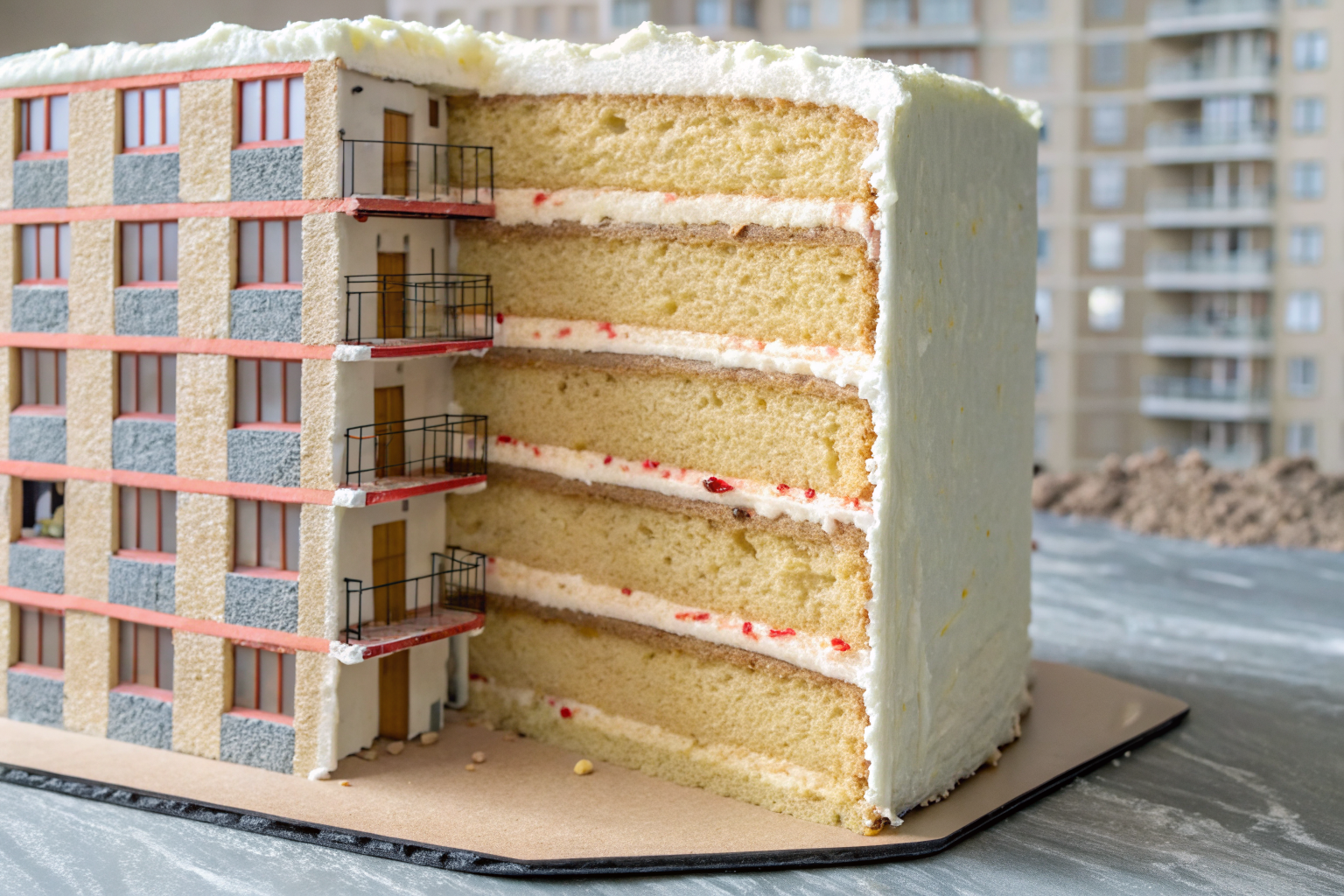
The most important thing to know about your HOA master policy is which type it is, because the type determines how much your HO-6 must carry. Most Arizona condo owners have never checked this. The two forms are bare-walls and studs-in, and they leave very different gaps.
A bare-walls master policy covers only the raw structure of the building: the concrete, framing, exterior walls, and common systems like the roof and shared plumbing lines. Everything from the drywall inward belongs to the unit owner. Flooring, electrical fixtures, kitchen cabinetry, bathroom tile, built-in appliances, all of it falls outside the master policy’s scope. Your HO-6 must cover all of it.
A studs-in master policy (also called an all-in or single-entity policy) covers original fixtures and finishes inside each unit as they were installed by the developer. If the building was built with tile floors, the master policy covers tile floors. The HO-6 gap narrows under this form, but it doesn’t disappear. The master policy still excludes betterments above the original spec and all personal property.
Per ARS 33-1201, the HOA is required to make its insurance documents available to members on request. Most HOA management companies can provide the master policy declarations page within a few days. Pull it before you set your HO-6 limits.
A bare-walls master policy in a typical Phoenix-area condo means the unit owner’s HO-6 must cover flooring, drywall, kitchen and bath fixtures, and built-in appliances, costs that can reach $80,000 to $120,000 in a mid-range unit before personal property is counted.
| Coverage Feature | Bare-Walls Master Policy | Studs-In Master Policy |
|---|---|---|
| Exterior structure and roof | Covered by HOA | Covered by HOA |
| Common areas and shared systems | Covered by HOA | Covered by HOA |
| Drywall and interior wall surfaces | Unit owner’s HO-6 | Covered by HOA (original spec) |
| Flooring and subfloor | Unit owner’s HO-6 | Covered by HOA (original spec) |
| Kitchen and bath fixtures (original) | Unit owner’s HO-6 | Covered by HOA (original spec) |
| Betterments and improvements | Unit owner’s HO-6 | Unit owner’s HO-6 |
| Personal property | Unit owner’s HO-6 | Unit owner’s HO-6 |
| Personal liability | Unit owner’s HO-6 | Unit owner’s HO-6 |
| Typical HO-6 dwelling coverage needed | $80,000–$120,000+ | $25,000–$60,000+ (betterments only) |
| Unit owner’s exposure risk | High | Moderate |
The table above shows the structural difference clearly. Under a bare-walls master policy, the unit owner is essentially insuring a stripped shell. Under studs-in, the owner covers upgrades and personal property, still a meaningful exposure, but a narrower one.
Before your next renewal, request the master policy declarations page from your HOA management company. It will state the policy form type. Then compare that against your current HO-6 limit. If you’ve never done this, there’s a reasonable chance your dwelling coverage is too low.
Betterments and Improvements: The Coverage Most Arizona Condo Owners Forget to Add
Betterments and improvements coverage protects unit upgrades that exceed the original builder-grade finishes excluded by the HOA master policy. This means that any change you made to the unit above what the developer installed, custom tile, hardwood floors, quartz countertops, a remodeled bathroom, built-in shelving, sits outside both the bare-walls and studs-in master policy without this specific provision.
Even under a studs-in master policy, the HOA’s insurer restores only what was there originally. If the developer put in vinyl plank and you replaced it with travertine, the master policy replaces vinyl plank. The travertine delta is your loss.
Walk through a scenario that plays out in Arizona condo buildings regularly: A Scottsdale condo owner installs $25,000 in custom tile flooring and a renovated kitchen over a five-year period. A water loss from the unit above destroys both. The HOA master policy kicks in and reinstates the unit shell to builder-grade specification. It pays nothing for the tile or the kitchen. Without a betterments provision on the HO-6, the owner absorbs that $25,000 loss entirely.
A kitchen remodel in a Phoenix-area condo averages $18,000 to $35,000 according to contractor cost data, an amount the HOA master policy will not restore unless the unit was built that way.
Betterments coverage needs to be reviewed on an annual basis, not set once and forgotten. Renovation values compound. A policy set five years ago based on a $15,000 flooring project likely undercovers what that same floor would cost to replace today. Arizona’s labor and materials costs have risen materially since 2021, and the replacement cost value of finishes has followed.
When you update your HO-6 at renewal, run a rough tally of every upgrade made above original builder spec. That number is your minimum betterments coverage floor. Also worth noting: condo special assessment insurance is a separate but related coverage question that often surfaces in the same conversation when owners start examining their full exposure.
What Is Loss Assessment Coverage, and How Much Do You Actually Need in Arizona?

Loss assessment coverage pays the unit owner’s share of HOA repair costs when a covered loss exceeds the master policy’s limits or falls below the master policy’s deductible. This means when the HOA board divides a shortfall among unit owners as a pro-rata bill, this coverage on your HO-6 pays your portion up to your elected limit.
Per ARS 33-1201, Arizona HOAs can levy special assessments for repair costs. This is not hypothetical. Roof replacements, pool structure failures, elevator overhauls, and parking structure repairs generate assessments regularly in Arizona condo communities. The question is whether your HO-6 is set up to absorb your share.
The sequence runs as follows:
- A covered event damages common property, a monsoon destroys a section of shared roof decking across a 20-unit Phoenix complex.
- The HOA master policy pays up to its per-occurrence limit. If the repair cost exceeds that limit, or if the damage falls below the master policy’s deductible, the master policy pays nothing or only a portion.
- The HOA board calculates the remaining repair cost and divides it among unit owners on a pro-rata basis, typically by unit count or square footage as specified in the HOA’s governing documents.
- Each unit owner receives an assessment bill for their share, sometimes with a 30-to-60-day payment deadline.
- Loss assessment coverage on the HO-6 pays the unit owner’s share up to the policy limit elected at the time of purchase.
The standard loss assessment limit on a filed Arizona HO-6 form is $1,000. A single roof replacement on a 20-unit complex can generate a per-unit assessment of $8,000 to $15,000, a gap of $7,000 to $14,000 the unit owner absorbs without adequate coverage.
The right way to set this limit: request the HOA master policy’s per-occurrence deductible from your HOA management company. That number is the floor your loss assessment coverage should meet or exceed. If the HOA master policy carries a $10,000 deductible, your HO-6 loss assessment limit should be at least $10,000. A $5,000 to $10,000 election is a more defensible starting point than the $1,000 default in most Arizona policies. Consult a licensed Arizona insurance agent to review your HOA’s specific deductible structure before setting this number.
How Much HO-6 Coverage Do You Actually Need? The Four Numbers to Set

An Arizona HO-6 policy has four coverage numbers that unit owners need to set with intention. The HO-6 dwelling coverage limit must reflect the cost to rebuild the unit interior from bare walls or studs, depending on the master policy type your HOA carries. The other three numbers follow from there.
Set each of these based on your specific unit and HOA documents:
Dwelling coverage (Coverage A on the HO-6): Under a bare-walls HOA master policy, this number covers the full unit interior from the drywall inward, flooring, fixtures, cabinetry, plumbing, electrical, and built-in appliances. Use a per-square-foot rebuild estimate for Arizona condo interiors, which runs roughly $100 to $150 per square foot for mid-range finishes as of 2025. Under a studs-in master policy, set Coverage A to cover your betterments and improvements above original builder spec. Either way, pull the master policy declarations page first, setting this number without it is guesswork.
Personal property (Coverage C): Base this on an actual inventory of your belongings, not a round number. Arizona personal property claims are frequently underpaid because owners estimate low on furniture, electronics, clothing, and kitchen goods. For high-value items, jewelry, cameras, instruments, art, consider scheduled personal property coverage, since standard HO-6 limits apply sub-limits to specific categories.
Loss assessment coverage: Match this to at least the HOA master policy’s per-occurrence deductible, as covered in the previous section. The default $1,000 on most Arizona HO-6 policies is inadequate for any condo community with a meaningful shared structure. A $5,000 to $10,000 floor is more defensible; higher is warranted if the HOA carries a large deductible.
Personal liability (Coverage E): The standard $100,000 limit is the floor, not the target. For any owner who entertains guests, rents the unit occasionally, or has a higher net worth to protect, $300,000 is a better starting point. If you rent short-term, flag this to your agent, liability coverage under a personal HO-6 may not extend to rental activity without a specific endorsement.
Per NAIC data, personal property coverage is among the most frequently underestimated lines in condo policies. Arizona’s replacement cost environment has seen material increases in labor and materials costs since 2021, which means any HO-6 set before that period and not reviewed since is likely running short on at least one of these four numbers. Annual review is not optional, it’s the only way to keep pace with what rebuilding your unit actually costs today.
Frequently Asked Questions
Is condo insurance required in Arizona?
Arizona law does not require unit owners to carry an HO-6 policy. Most mortgage lenders, though, require it as a condition of a condo loan, and without it, you personally absorb every interior loss the HOA master policy doesn’t cover, including rebuild costs, personal property loss, liability claims, and HOA loss assessments. Consult a licensed Arizona insurance agent who can review your specific HOA documents before deciding whether to go without.
Does AZ condo insurance cover water damage from the unit above me?
Whether your HO-6 covers water damage from a neighboring unit depends on how the loss is characterized and what your policy’s water damage language says. If the source is sudden and accidental, a burst pipe in the unit above, your HO-6 covers the resulting interior damage to your unit after your deductible. If the HOA master policy’s liability section covers the originating unit, a subrogation claim against that owner’s policy may also come into play. Arizona carriers file different language on this point, so review your water damage provisions with a licensed agent before a loss occurs.
What does HO-6 insurance not cover in Arizona?
A standard Arizona HO-6 policy does not cover flood damage, which requires a separate National Flood Insurance Program (NFIP) or private flood policy. It also excludes earthquake damage, normal wear and tear, and losses from gradual deterioration. The common elements of the building, roof, hallways, shared systems, fall under the HOA master policy’s scope per ARS 33-1201, not the HO-6. Arizona condo owners who list on Airbnb or VRBO should tell their agent before the first booking, since short-term rental activity can void personal liability coverage under a standard HO-6 without a specific endorsement added.