
How much liability coverage Arizona law requires and how much you need are two very different numbers. The state minimum passes the DMV test and fails the financial reality test the moment a serious crash happens. This article walks through the math, the asset-based sizing method, and the triggers that tell you when the base policy stops being enough.
Key Takeaways:
- Arizona’s 25/50/15 minimum limits leave a driver with a $300,000 home exposed to a six-figure judgment gap after a single serious injury claim.
- 100/300/100 is the industry starting floor for any Arizona driver who owns assets, a personal umbrella at $1M stacks on top for roughly $150–$250 per year in most AZ markets.
- Young drivers added to a household policy don’t just raise the premium, they can reset the liability adequacy of the entire policy if the underlying limits weren’t sized correctly first.
Why Arizona’s 25/50/15 Minimum Is a Legal Floor, Not a Safety Net

Arizona’s 25/50/15 minimum limits are the coverage amounts required under ARS 28-4009 to legally register and operate a vehicle in this state. This means $25,000 in bodily injury coverage per injured person, $50,000 per crash regardless of how many people are hurt, and $15,000 for property damage you cause. Those numbers satisfy the DMV. They do not satisfy a hospital billing department.
A single trauma hospitalization in the Phoenix metro regularly exceeds $100,000. A T-bone collision at Baseline and Gilbert that sends one driver to the ICU can generate a $180,000 bill. The minimum bodily injury limit pays $25,000 of that. The driver who caused the crash owes the remainder, and a court judgment can reach savings accounts, investment accounts, and home equity above the protected threshold.
This is where the full coverage misconception does real damage. Most drivers in Arizona believe that “full coverage” means maximum protection. It doesn’t. Full coverage is informal shorthand for a policy that adds collision and comprehensive coverage to the state-mandated liability minimum. It says nothing about how high those liability limits are set. A driver can carry full coverage with 25/50/15 liability limits and still face a six-figure personal judgment after a crash.
The gap between legal and adequate is exactly the distance between what the minimums pay and what a serious injury actually costs. On a $180,000 hospital bill, that gap is $155,000, and the injured party’s attorney will find it.
For a broader look at how claims actually pay out once a crash happens, the arizona car insurance claim payout process covers the sequence from first notice through settlement, and the arizona insurance guide maps how liability fits against the rest of your policy structure.
The Asset-Based Sizing Method: How to Find Your Actual Number

Asset-based sizing is the method of setting your bodily injury and property damage limits based on what a judgment creditor could reach if you lost a lawsuit. This means your liability limit should cover your net worth at risk, not just satisfy the minimum requirement.
Here is the four-step process:
Add up your attachable assets. Include home equity above the ARS 33-1126 protected threshold, savings accounts, brokerage and investment accounts, and any non-retirement assets. ARS 33-1126 protects up to $150,000 in Arizona homestead equity from most judgment creditors, everything above that line, plus savings and non-retirement investments, is fair game in a lawsuit. A homeowner with $300,000 in equity has $150,000 of it exposed.
Set your bodily injury per-occurrence limit at or above your total attachable assets. If your exposed assets total $200,000, your per-occurrence limit should be at least $200,000. The 100/300/100 starting point, which provides $300,000 per occurrence, covers most AZ homeowners with moderate equity and savings.
Set property damage at $100,000 minimum. Arizona’s $15,000 floor was written when cars cost less. The median new vehicle transaction price in the U.S. exceeded $48,000 in recent model years, and Arizona’s $15,000 property damage minimum covers less than one-third of a median replacement vehicle. If you total a newer car owned by the other driver, $15,000 leaves a wide gap.
Identify the umbrella trigger. If your total attachable assets exceed what a single 100/300/100 policy can cover in a worst-case scenario, the base auto policy can’t carry the load. That’s the point where a personal umbrella policy becomes the right next step, not a luxury add-on.
The 100/300/100 heuristic is the standard starting point under Arizona Revised Statutes liability framework analysis, it’s what most insurance professionals recommend as the floor for any driver who owns a home, holds savings, or earns a wage that could be garnished after a judgment.
25/50/15 vs. 50/100/50 vs. 100/300/100: What Each Tier Buys You

100/300/100 liability limits provide three times the per-person bodily injury protection of Arizona’s legal minimum, and the premium difference between the two tiers is far smaller than most drivers expect.
Here’s what each tier covers and who it fits:
| Coverage Tier | Per-Person Bodily Injury | Per-Occurrence Bodily Injury | Property Damage | Est. Annual Premium vs. Minimum | Best Fit |
|---|---|---|---|---|---|
| 25/50/15 (AZ minimum) | $25,000 | $50,000 | $15,000 | Baseline | Drivers with minimal assets, no dependents, no owned property |
| 50/100/50 (step-up) | $50,000 | $100,000 | $50,000 | Roughly $80–$150 more per year (general rate pattern) | Drivers building assets, renting, or carrying a vehicle loan |
| 100/300/100 (recommended floor) | $100,000 | $300,000 | $100,000 | Roughly $150–$300 more per year vs. minimum (general rate pattern) | Homeowners, drivers with savings, anyone with attachable assets above $50,000 |
The rate increase from 25/50/15 to 100/300/100 is not proportional to the coverage increase. You’re buying four times the per-person protection for a fraction of four times the premium. That’s because the insurer’s statistical loss exposure at the higher tier doesn’t scale linearly with the limit, serious claims that exceed $100,000 per person are far less frequent than claims under $25,000.
Property damage at $15,000 is the line item that surprises most drivers. A rear-end collision that totals a two-year-old pickup truck can generate a $45,000 to $55,000 property damage claim. The minimum covers $15,000. The driver owes the rest. Moving to $100,000 in property damage eliminates that gap for a few dollars per month in additional premium.
When a carrier raises your deductible or adjusts your underlying limits at renewal without clear notice, the liability tier you selected at policy inception is the one you’re carrying until you change it. Reviewing these numbers annually is the same discipline described in the context of how your carrier raised deductible at renewal without you noticing.
When Does a Personal Umbrella Policy Become the Right Move in Arizona?

A personal umbrella policy is a separate liability policy that stacks on top of auto and home liability limits to cover judgments that exceed the underlying policy’s maximum. This means if your 100/300/100 auto policy pays out its full $300,000 per-occurrence limit and the injured party wins a $700,000 judgment, the umbrella covers the remaining $400,000 up to its own limit.
The umbrella trigger has two components. The first is financial: when your total attachable assets exceed what 100/300/100 can cover in a worst-case scenario. The second is lifestyle exposure: a pool in the backyard, a dog with a history of biting, frequent hosting, or a teen driver on the policy all increase the probability of a large liability claim independent of your assets.
Most AZ carriers require 100/300/100 on the underlying auto policy as a condition of writing a personal umbrella. Drivers on minimum limits cannot add an umbrella without first stepping up the base policy. This means the sizing steps in the previous section aren’t just about choosing a tier, they’re also the prerequisite for umbrella eligibility.
Cost for a $1M personal umbrella runs roughly $150–$250 per year in most Arizona markets based on general rate patterns. That’s comparable to a single restaurant dinner per month. The objection most drivers raise is: “I don’t own enough to be worth suing.” The answer is that Arizona courts can attach future wages through garnishment after a judgment. The umbrella doesn’t just protect what you have today, it protects what you’ll earn over the next decade.
For AZ drivers who’ve worked through the UM/UIM stacking questions for households with multiple vehicles, the umbrella conversation follows the same logic: the base limits set a ceiling, and the umbrella extends it at a cost that rarely justifies leaving it off.
How Adding a Young Driver Changes the Liability Math on Your Entire Policy
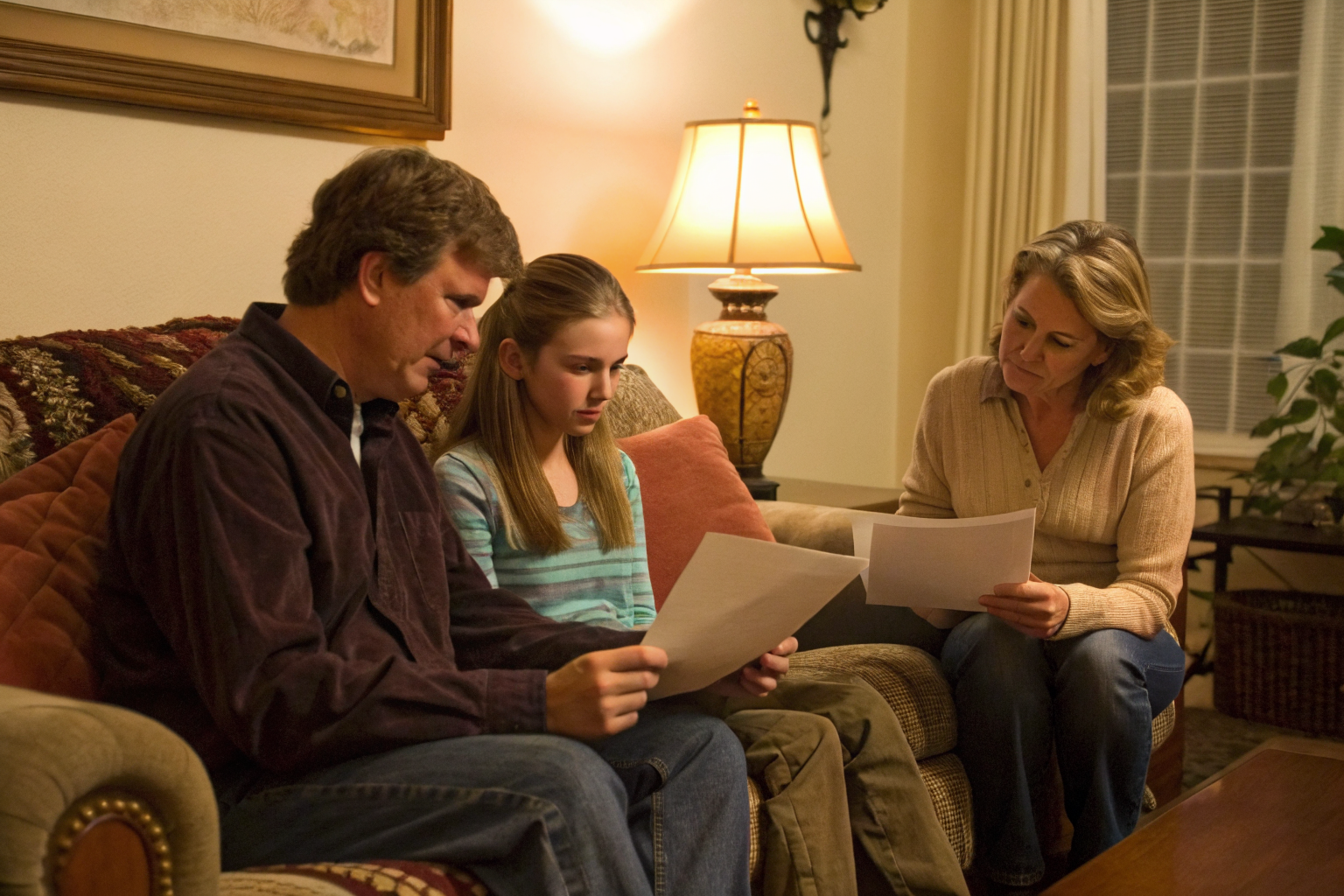
Adding a young driver to a household policy increases the household’s liability exposure in ways that go beyond the premium increase on the declarations page. The liability limits that were adequate for two experienced drivers may no longer be adequate the day a 17-year-old gets a license.
Four specific impacts to understand before the endorsement is signed:
Crash rate rises the moment they’re on the policy. Drivers aged 16–19 are nearly three times more likely to be involved in a fatal crash per mile driven than drivers aged 20 and older, according to NHTSA data. That statistical reality means the household’s liability exposure increases the day the young driver is added, not when a crash happens.
Severity goes up, not just frequency. A young driver’s at-fault crash is more likely to involve speed or distraction, which correlates with more serious injuries and larger bodily injury claims. A moderate limit that was adequate for a low-probability crash becomes inadequate when the probability and severity both increase.
UM/UIM coverage needs to scale with the rest of the policy. Under ARS 20-259.01, Arizona carriers are required to offer uninsured and underinsured motorist coverage. If the household limits aren’t raised when the young driver is added, the family is also under-covered for scenarios where the young driver is the one hit by an uninsured motorist. The liability sizing decision and the UM/UIM sizing decision are connected, raising one without the other leaves a gap on both sides of a crash. For households evaluating how UM/UIM interacts across multiple vehicles, the mechanics of um uim stacking arizona are worth reviewing separately.
Failing to list the driver voids the claim regardless of limits. Failing to list a licensed household member on the policy is a material misrepresentation that can result in a denied claim regardless of how high the limits are set. The question of whether your limits are adequate is secondary to whether the driver is disclosed in the first place. The same disclosure principle applies across other coverage lines, including the solar panel storm damage claim arizona scenario and the slow leak vs burst pipe coverage situation, where what the carrier doesn’t know about the property or the household ends up costing the claim.
The practical action when adding a young driver: review the liability tier at the same time as the endorsement, not six months later when the renewal arrives. If the policy was at 25/50/15 or 50/100/50, this is the moment to step up. The additional premium from the young driver is unavoidable. The additional premium from higher liability limits is modest by comparison and may be the more important number. For those also revisiting MedPay coverage when making these changes, medpay arizona car insurance covers what that add-on does and when it applies alongside the liability structure.
Frequently Asked Questions
Is 100/300/100 overkill for an Arizona driver who doesn’t own a home?
Not for most drivers. Renters carry attachable assets too, savings accounts, brokerage accounts, and future wages can all be reached through an Arizona judgment. The asset-based sizing method accounts for everything outside of retirement accounts protected under ARS 33-1126, not just home equity. A renter with $60,000 in savings and a steady income has more exposure than the 25/50/15 minimum can cover.
How much does it cost to step up from 25/50/15 to 100/300/100 in Arizona?
The premium gap is smaller than most drivers expect. Based on general rate patterns in the Arizona market, stepping from minimum limits to 100/300/100 costs less per year than a restaurant dinner once a month. The exact figure depends on your driving record, ZIP code, and vehicle. The coverage increase, though, is fourfold on per-person bodily injury and more than sixfold on property damage.
Does a personal umbrella policy cover me if I cause an accident in Arizona?
Yes. A personal umbrella covers you as the at-fault driver once the underlying auto liability limits are exhausted. If your 100/300/100 auto policy pays its $300,000 per-occurrence maximum and the injured party’s claim goes higher, the umbrella picks up the remainder up to its limit, commonly $1M. Most Arizona carriers require you to carry 100/300 on the underlying auto policy before they’ll write an umbrella.