What does homeowners insurance cover in Arizona? Most homeowners find out when they’re standing in a wet living room at 2 AM, and that’s the worst possible time to learn the difference between a covered peril and an excluded one. As of 2025, the standard HO-3 form filed with the Arizona Department of Insurance and Financial Institutions contains explicit exclusions that catch thousands of AZ homeowners off guard every year.
Key Takeaways:
- A standard Arizona HO-3 policy covers the structure of your home on an open-peril basis, meaning everything is covered unless excluded, but your personal belongings are covered on a named-peril basis, so only the events listed in the policy pay out.
- Flood, earth movement, and gradual water damage are excluded from every standard HO-3 form filed in Arizona, the DIFI-filed HOAIC HO-3 form (March 2025) lists these exclusions explicitly, and Arizona ranks third nationally in non-weather water damage costs according to the Insurance Information Institute.
- Your Arizona HO-3 policy is built on four coverage buckets, A (structure), B (other structures), C (personal property), D (loss of use), and the limit on Coverage A is the number that drives your weather deductible, your replacement cost exposure, and every other dollar amount in the policy.
The Four Coverage Buckets: What an Arizona HO-3 Policy Is Actually Built On
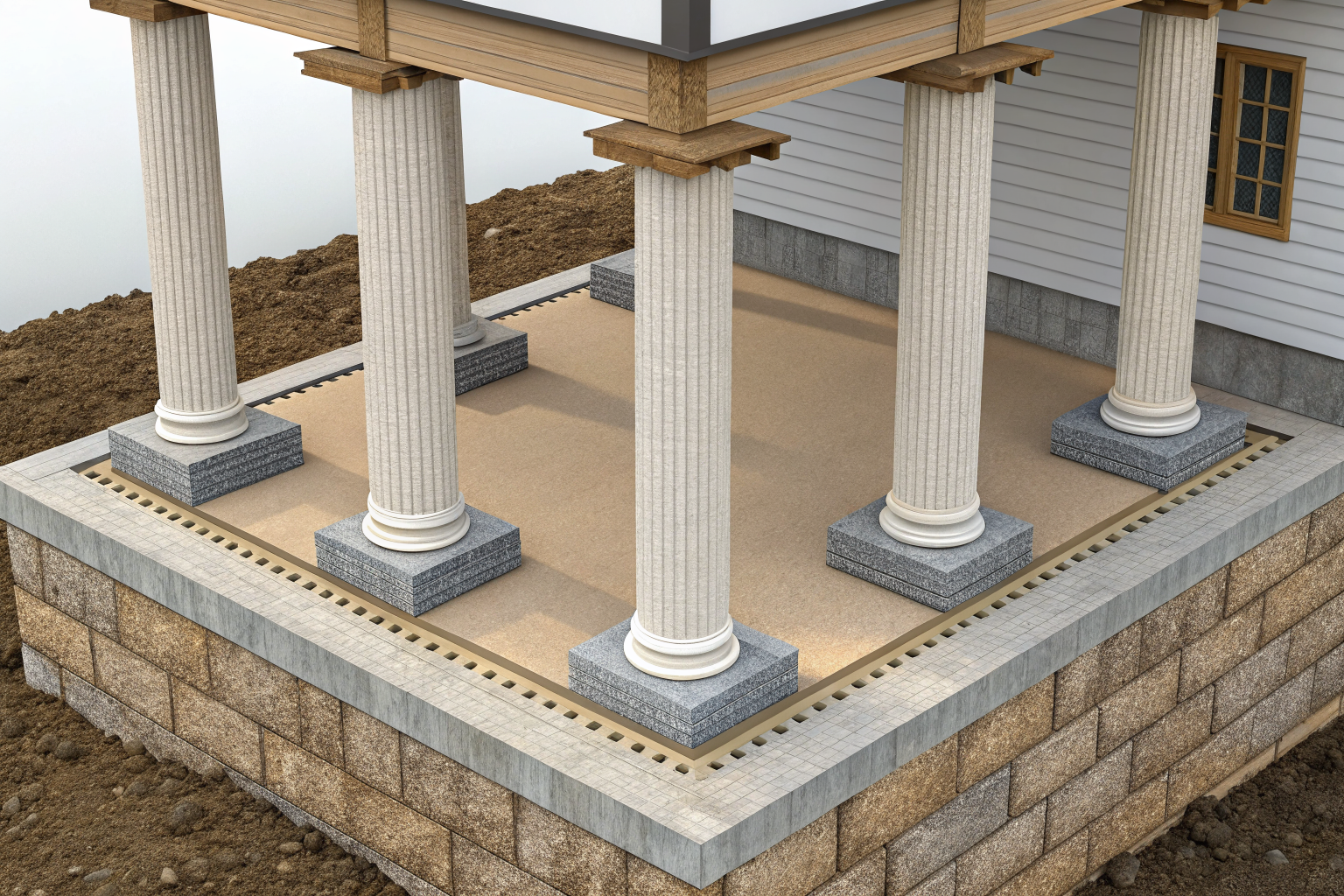
The Arizona HO-3 policy divides coverage into four named buckets, each with its own limit, trigger rule, and payout basis. Understanding this structure is the foundation of every coverage conversation, and it’s what separates a policy review that actually helps from one that just confirms you have a piece of paper.
The DIFI-filed HOAIC HO-3 form (March 2025) is the reference form for how most standard Arizona homeowners policies are structured. Carriers can deviate, but the four-bucket framework is consistent across filed forms.
| Coverage Bucket | What It Covers | How the Limit Is Set | Payout Basis |
|---|---|---|---|
| Coverage A, Dwelling | The physical structure of your home, attached garage, and built-in systems | Set by the carrier at underwriting based on estimated rebuild cost, NOT market value | Replacement cost value (RCV) on most filed forms |
| Coverage B, Other Structures | Detached structures: fences, sheds, guest houses, detached garages | Typically 10% of Coverage A by default; can be adjusted at underwriting | Replacement cost value (RCV) on most filed forms |
| Coverage C, Personal Property | Furniture, clothing, electronics, appliances, and other belongings | Typically 50-70% of Coverage A by default; carriers adjust at underwriting | Actual cash value (ACV) unless you pay to upgrade to RCV |
| Coverage D, Loss of Use | Additional living expenses if your home is uninhabitable after a covered loss | Typically 20-30% of Coverage A | Actual reasonable expenses incurred |
Coverage A is the anchor number for your entire policy. The limit you see there is what the carrier believes it would cost to rebuild your home from the ground up, not what a buyer would pay for it tomorrow. These are two different numbers, and in Arizona’s current construction cost environment, the gap between them is often larger than homeowners expect.
Coverage B is set at 10% of Coverage A on most standard forms. If Coverage A is $500,000, your detached structures are covered up to $50,000. That may or may not be enough depending on what’s in your backyard.
Coverage C defaults to named-peril coverage at 50-70% of Coverage A, often on an actual cash value (depreciated value) basis. That means if your five-year-old laptop gets stolen, the payout is what a five-year-old laptop is worth today, not what a new one costs. Upgrading to replacement cost value on personal property is an endorsement worth asking about.
Coverage D kicks in when a covered loss makes your home uninhabitable. It pays for hotel stays, restaurant meals above your normal food budget, and similar costs. It does not pay indefinitely, most filed forms set both a dollar cap and a time limit.
Speak to a licensed agent before assuming your limits match your rebuild cost. The difference between Coverage A and what it would actually cost to rebuild is one of the most common underinsurance gaps in Arizona right now, per the arizona insurance guide pillar that anchors this cluster.
Open-Peril vs. Named-Peril: Why Your House and Your Couch Play by Different Rules

Open-peril coverage is coverage that pays for any cause of loss not listed as an explicit exclusion in the policy. This means the burden falls on the carrier to point to a written exclusion in the policy language, if they can’t identify one, the loss is covered. This structure applies to Coverage A (the dwelling) under a standard HO-3 form.
Named-peril coverage is coverage that pays only when the cause of loss is on a specific list written into the policy. This means the burden falls on the homeowner to prove the loss was caused by one of the listed events, fire, theft, windstorm, vandalism, and a handful of others. This structure applies to Coverage C (personal property) under the same HO-3 form.
This distinction is the most misunderstood structural feature of a standard HO-3. Homeowners assume that because their house is covered broadly, their belongings are too. They’re not. If your personal property is damaged by a peril not on the named list, Coverage C does not pay. Period.
The sudden-and-accidental standard bridges both sides of this structure and limits coverage in ways that catch people off guard. Even under open-peril Coverage A, the loss must be sudden and accidental. Gradual damage, a slow leak behind a wall that drips for six months, decades of deferred maintenance that finally causes a collapse, is excluded regardless of the open-peril structure. The DIFI-filed HOAIC HO-3 form (March 2025) includes the sudden-and-accidental standard as an explicit condition on water damage coverage, with gradual seepage and leakage listed as exclusions even where open-peril language would otherwise apply.
For Arizona homeowners, the monsoon season makes this distinction concrete. Water that enters your home during a single monsoon event, a wind-driven rainstorm blows a door open, water pours in, damage happens in hours, may meet the sudden-and-accidental threshold. A slow seep that works its way under your door frame over two consecutive monsoon seasons, gradually rotting the subfloor, does not. The timing and character of the event matter as much as the peril itself.
ARS 20-1652 governs cancellation and non-renewal grounds in Arizona but does not alter the underlying peril structure of a filed form. The carrier’s ability to deny a claim on sudden-and-accidental grounds is built into the policy contract, not into statute. DIFI reviews filed form language, but the exclusion exists in the form because the industry filed it and DIFI approved it.
If a water damage claim gets denied, the denial letter will almost always cite the gradual damage exclusion or the flood exclusion, not the open-peril structure. That’s the next section.
What a Standard Arizona Homeowners Policy Does NOT Cover

The exclusions section of your policy jacket is the most important part of the document most homeowners never read. Standard Arizona HO-3 exclusions remove coverage for specific categories of loss regardless of cause, and several of them are more consequential in Arizona than in most other states.
Arizona ranks third nationally in non-weather water damage costs, according to the Insurance Information Institute. The most common denial trigger is the gradual-damage exclusion, not the flood exclusion. That matters because most homeowners prepare for flooding and ignore the slow leak behind the wall.
Verify your specific exclusions with your declarations page and your agent. Generic exclusion lists describe the standard form; your policy may have endorsements that modify what applies.
Standard exclusions in the DIFI-filed HOAIC HO-3 form (March 2025):
Flood. Any surface water entry, rising water, storm surge, sheet flow across your yard, water that enters through the ground, is excluded from a standard HO-3. The National Flood Insurance Program (NFIP) is the separate product that covers flood. Arizona has no FAIR Plan, so if you can’t get standard coverage and need flood protection, your routes are the NFIP or the surplus lines market through DIFI.
Earth movement. Subsidence, settling, soil expansion, and earthquake are all excluded. In Arizona, caliche and expansive soils are a real structural risk, clay-rich soil swells when wet and contracts when dry, causing foundation movement and cracking that looks like a covered peril but falls squarely under this exclusion.
Gradual water damage and seepage. This is the exclusion behind most denied water claims in Arizona. Slow leaks, seepage through foundation walls, long-term moisture infiltration behind tile, all excluded. The Insurance Information Institute confirms AZ ranks third nationally in non-weather water damage costs, and this exclusion is the mechanism that turns those damage events into out-of-pocket costs.
Wear, tear, and deterioration. The carrier’s position is that maintenance is the homeowner’s responsibility. If a roof fails because it was never maintained, the resulting interior damage is not a covered loss. This hits especially hard with tile roofs, where the underlayment degrades over 20-25 years while the tile itself looks fine.
Sewer or drain backup. A standard HO-3 excludes sewer and drain backup. An endorsement is available on most filed forms and is worth adding, backup events can cause significant damage fast, and the base policy won’t touch it.
Neglect. If you knew about a problem and chose not to address it, the chain of loss breaks. A carrier can deny a claim if your own inaction contributed to the loss, and in Arizona, where deferred maintenance on roofs and HVAC systems is common, this exclusion comes up regularly.
Intentional loss. No policy pays for damage you cause on purpose. This applies to the named insured and household residents.
Ordinance or law gap. When a covered loss requires you to rebuild, the city or county may require you to bring the entire structure up to current building code, not just repair the damaged portion. The standard HO-3 does not cover the cost difference between repairing to pre-loss condition and rebuilding to current code. Maricopa County has adopted updated building codes, and for older homes, the mandatory upgrade costs can dwarf the original loss. An ordinance or law endorsement is the fix; most homeowners don’t have it.
If a water damage claim was denied and you think the exclusion was misapplied, a licensed agent can review the denial letter and the policy language. The article on water damage claim denied arizona covers the dispute process in detail.
Arizona-Specific Coverage Gaps That Don’t Show Up on a Generic Policy Checklist

Generic homeowners insurance content describes the national standard. Arizona’s climate and regulatory environment creates gaps that a standard HO-3 form written for national markets does not address by default. Four of them matter enough to name directly.
The percentage weather deductible. Most Arizona homeowners assume their deductible is a flat dollar amount. It may not be. Carriers routinely file a 1-5% of Coverage A deductible for wind and hail claims, separate from the flat deductible that applies to other losses. Per the approved stat hook: your weather deductible can be anywhere from 1% to 5% of your home’s main coverage. On a $500,000 home at 5%, that’s $25,000 out of pocket, and your carrier can raise that number at renewal without making sure you notice. That number is buried in your endorsements schedule, not on the front page of your declarations. If you’ve never confirmed whether your deductible is flat or percentage-based, you don’t know what you’d actually pay after a monsoon wind event.
The hidden water damage endorsement. The base HO-3 covers sudden water damage but does not cover the cost to tear out and replace building materials to access the leak source. If a pipe bursts inside a wall, the policy may pay for the water damage the pipe caused, but not for opening the wall to get to the pipe. The hidden water damage endorsement (sometimes called a service line or water backup add-on depending on the carrier’s filed form) covers that tear-out and replacement cost. Most Arizona homeowners don’t know to ask for it. It’s one of the more useful endorsements on the market given how AZ ranks on non-weather water damage costs.
Caliche and expansive soils. The earth movement exclusion described in the prior section hits harder in Arizona than in most states because of soil conditions. Caliche is a calcium carbonate layer common in AZ desert soils; it resists water drainage and contributes to surface pooling after monsoons. Expansive clay soils swell and contract seasonally, causing foundation movement, wall cracking, and door frame shifts. A homeowner who sees cracks in their walls after a wet monsoon season may assume it’s a covered weather loss. Per the DIFI-filed HOAIC HO-3 form (March 2025), earth movement is an explicit exclusion, and soil-driven structural damage is not a covered peril regardless of what triggered the movement.
Loss assessment coverage and the HOA master policy gap. If you own a condo or a home in a planned community, your HOA carries a master policy on common areas and the building exterior. But when that master policy pays a claim, the HOA may assess each unit owner for a share of the deductible or an uncovered loss. Loss assessment coverage on your HO-6 or homeowners policy covers your share of that bill. Per ARS 33-1201 (Arizona Condominium Act) and ARS 33-1801 (Arizona Planned Communities Act), HOAs have the authority to levy these assessments, and in communities with aging infrastructure or high-deductible master policies, the assessments can be significant. This coverage is available as an endorsement; confirm with your declarations page whether you have it.
None of these gaps are exotic edge cases. They are routine exposure points for Arizona homeowners that a generic national policy checklist will not flag.
How Do I Know What My Home Insurance Actually Covers?

Arizona homeowners can identify their coverage by reading three specific documents in a specific order. This process takes about 20 minutes and answers most of the questions people bring to an agent after a claim is filed, when it’s too late to change anything.
A licensed agent can walk through your specific declarations page. This process is a starting point, not a substitute for a policy review.
Pull the declarations page. This is the one- or two-page summary at the front of your policy. It lists your Coverage A, B, C, and D limits, your deductible (including whether it is a flat dollar or a percentage of Coverage A), your policy period, and what endorsements are attached. If your deductible reads “2% wind/hail” instead of “$2,500,” that’s the percentage deductible structure, and you need to do the math against your Coverage A limit.
Find the endorsements schedule. Every add-on coverage, hidden water damage, sewer backup, scheduled personal property, ordinance or law, loss assessment, shows up on the endorsements schedule. If the endorsement is not listed on this page, you do not have the coverage. This is the page most homeowners skip. It’s also the page that answers the question “do I have that add-on?”
Read the exclusions section in the policy jacket. This is the full list of what the policy does not cover. It is longer than the coverage section. Read it before a loss, not after. The exclusions section is where you find the gradual damage language, the earth movement exclusion, the flood exclusion, and the ordinance or law gap described in earlier sections.
Check Coverage C’s named perils list. Personal property coverage only pays for events on this list. Confirm whether your Coverage C payout basis is actual cash value (depreciated value) or replacement cost (new-for-old). If it’s ACV and you haven’t upgraded, a five-year-old couch pays out at what a five-year-old couch is worth, not what a new one costs.
Contact DIFI Consumer Services if anything is unclear. The Arizona Department of Insurance and Financial Institutions (difi.az.gov) handles homeowner policy complaints and questions. If a carrier’s exclusion language seems inconsistent with the filed form, DIFI Consumer Services can explain what the filed form actually requires. Their contact information is on the DIFI website.
The time to find a gap is before a loss, not after. An annual policy review with your agent, checking Coverage A against current rebuild costs, confirming endorsements, verifying the deductible structure, is the practical application of this process. It is also the disclosure moment that keeps claims from getting denied because the carrier didn’t know something changed.
Frequently Asked Questions
Does homeowners insurance cover water damage in Arizona?
It depends on how the water entered and how fast. A sudden pipe burst is covered under a standard Arizona HO-3 because it meets the sudden-and-accidental standard, one event, immediate damage, no extended timeline. Gradual seepage, slow leaks behind walls, and any water that enters as surface flooding are excluded. The DIFI-filed HOAIC HO-3 form (March 2025) lists gradual water damage and flood as explicit exclusions. Arizona ranks third nationally in non-weather water damage costs according to the Insurance Information Institute, which means this distinction matters more here than in most states. If your claim was denied on these grounds, consult a licensed agent or DIFI Consumer Services to confirm whether the exclusion was applied correctly.
What does homeowners insurance not cover that surprises most Arizona homeowners?
Three exclusions catch AZ homeowners off guard more than any others. Gradual water damage is excluded even under open-peril Coverage A, so a slow leak that runs for months behind a wall is not covered regardless of what caused it. Earth movement covers caliche and expansive soils causing structural cracking that looks like a weather event but falls under a blanket exclusion. The ordinance or law gap means that if Maricopa County requires a code upgrade when you rebuild after a covered loss, the standard policy does not pay the cost difference unless you added that endorsement. None of these are optional exclusions a carrier chose to apply, they appear in the standard DIFI-filed HO-3 form. A licensed agent can review your declarations page to confirm which endorsements you carry.
How do I find out if my Arizona homeowners policy covers my personal belongings?
Start with Coverage C on your declarations page, the dollar limit is there, along with whether the payout basis is actual cash value (depreciated value) or replacement cost (new-for-old). Then find the named perils list in your policy jacket, because Coverage C only pays for events on that specific list, unlike the open-peril structure that protects the house itself. If you can’t locate these documents or the language is unclear, DIFI Consumer Services at difi.az.gov can explain what your carrier’s filed form requires. For advice specific to your situation, consult a licensed Arizona insurance agent.