
Do I need to tell insurance about solar panels? Yes, and if you haven’t, there’s a real chance a $40,000–$60,000 system is sitting on your roof right now with zero coverage and a claim denial waiting to happen. This is one of the most common disclosure gaps in Arizona homeowners insurance, and the Arizona insurance guide covers it as a pillar issue for good reason.
Key Takeaways:
- Failing to disclose solar panels to your carrier is a material misrepresentation under most AZ HO-3 policy forms, it can get a claim denied even if the claim has nothing to do with the panels.
- A typical AZ home solar install runs $40,000–$60,000; most standard HO-3 dwelling limits were set before the system was added, meaning that value is uninsured unless you update the policy.
- A solar manufacturer’s warranty covers equipment defects, it does not cover storm damage, theft, fire, or the liability exposure of a panel falling on a neighbor, which only an updated homeowners or dedicated solar endorsement covers.
The Short Answer: Yes, You Have to Tell Your Insurance Company About Solar Panels in Arizona

Solar disclosure obligation is the requirement to notify your homeowners insurance carrier of any material change to your property, and installing solar panels qualifies as exactly that. This means the moment panels go on your roof, your carrier’s risk calculation for your home changes, and the policy they wrote no longer reflects the property they’re insuring.
Under standard AZ HO-3 policy language, policyholders carry a duty to report changes that materially increase the risk of loss. Per the HOAIC Arizona HO-3 policy form filed with the Arizona Department of Insurance and Financial Institutions (DIFI) in March 2025, that duty is explicit: policyholders must notify the carrier of any change in the condition or use of the insured property that raises the risk of loss. Solar panels, attached to the roof structure, adding significant value, and introducing new electrical and physical hazard considerations, meet that threshold under every standard interpretation.
Material misrepresentation is what happens when a carrier concludes you withheld something important. This means the carrier can deny a claim, not because the panels caused it, but because the policy was issued based on incomplete information about the property. AZ DIFI-filed forms give carriers explicit authority to invoke this provision.
This is not a legal lecture. It’s a practical one. Telling your carrier about the panels before or immediately after installation takes one phone call. Discovering your claim was denied because you didn’t take that call costs far more.
Policy language varies by carrier. Confirm the specifics of your disclosure obligation and coverage options with a licensed insurance agent who can review your actual policy form.
What Happens If You Don’t Disclose Solar Panels, The Denial Risk
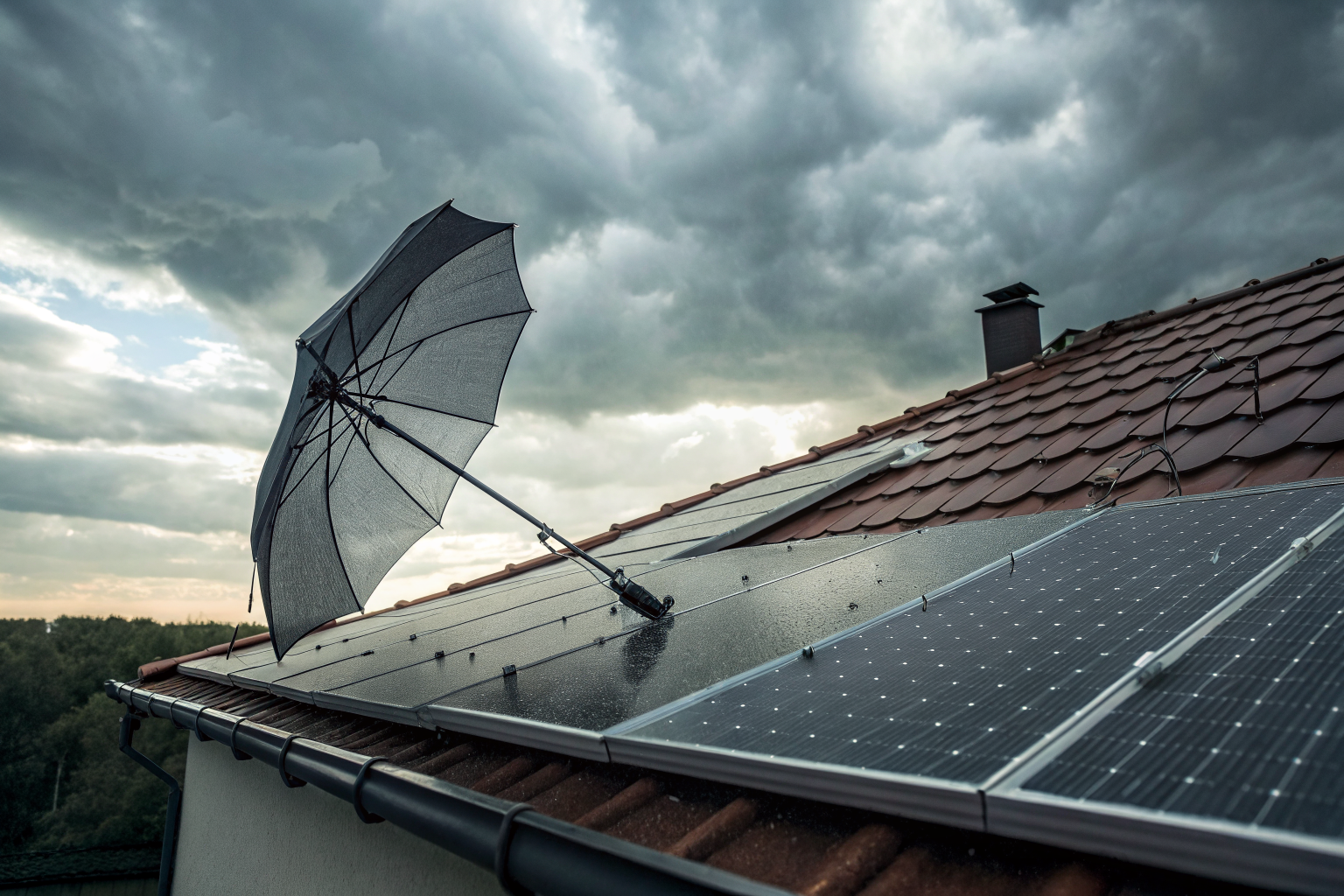
Here is the scenario that plays out more often than most AZ homeowners expect. A homeowner installs a solar system, never contacts their carrier, and carries on paying premiums for two or three years. Then a monsoon rolls through. Wind damages the roof. The homeowner files a claim.
The adjuster shows up, inspects the property, and sees a solar array on the roof that isn’t anywhere in the policy file. The carrier flags the undisclosed addition, pulls up the concealment-or-fraud provision in the HO-3 form, and denies the claim. The denial isn’t because the panels caused the wind damage. The panels had nothing to do with the wind damage. The denial is because the carrier’s risk assessment was written for a property that no longer exists as described. The undisclosed panels changed the rebuild cost, the roof load, the electrical risk profile, and the liability exposure, all factors the carrier prices into the policy.
Standard AZ-filed HO-3 forms include a concealment-or-fraud provision that voids coverage for any insured who intentionally conceals or misrepresents a material fact. Courts have treated undisclosed structural additions as material facts in coverage disputes, consistently and across jurisdictions.
As Paul Gebhard puts it: “What your insurance company doesn’t know can cost you the claim.”
If a homeowner believes a denial was wrongful, AZ DIFI Consumer Services is the escalation path, the DIFI complaint process exists for exactly these disputes. But prevention is far easier than fighting a denial after the fact. The solar panels covered in the broader discussion of solar panels and homeowners insurance in Arizona represent a category of additions carriers take seriously at claims time, even if they don’t ask about them at renewal.
Speak to a licensed agent to review your specific policy language before assuming you’re covered.
The $40,000–$60,000 Gap: Why Your Existing Dwelling Limit Probably Doesn’t Cover Solar

Solar panel value creates a rebuild gap when the dwelling limit isn’t updated after installation. That gap is not small. A typical AZ home solar install runs $40,000 to $60,000, according to The Gebhard Agency’s documentation of current AZ market pricing, and most insurance policies haven’t been updated to reflect it.
When a carrier sets your dwelling limit, that number reflects the cost to rebuild the home as it existed at underwriting. A solar system added later is invisible to the carrier unless the homeowner discloses it and requests a limit adjustment. If the home is destroyed by fire, the dwelling coverage pays out based on the structure the carrier knew about. The solar system, unscheduled in the policy, either falls under a sub-limit that most standard HO-3 forms cap well below the actual system value, or gets excluded outright.
Replacement cost coverage only pays what was scheduled. If the system isn’t scheduled, the replacement cost provision doesn’t help you. You’re insured for a home that no longer matches what’s on the roof.
This is the same mechanic that drives the broader replacement cost crisis in AZ homeowners insurance, the policy limit reflects a moment in time, and any major improvement added after that moment creates a gap between what you paid for and what a rebuild would actually cost. The solar gap is one of the most predictable versions of this problem, because the improvement value is large, documented, and easy to verify.
After any major home improvement, a licensed agent should review the dwelling limit to confirm it reflects the current rebuild cost. With solar, that review should happen before installation is complete.
Leased vs. Owned Panels: Why Ownership Changes Your Insurance Obligation

Leased solar panels remain the solar company’s property and responsibility under most lease agreements. That sounds like it removes your insurance burden. It doesn’t.
Even with leased panels, the homeowner must disclose to their carrier. The panels are physically attached to the insured structure, they alter the roof’s risk profile, and they affect the carrier’s liability exposure. The solar company’s equipment insurance covers their asset, the panels themselves as the company’s personal property. That policy does not cover the homeowner’s liability if a panel detaches during a monsoon and injures a neighbor, and it does not cover secondary damage to the home’s structure. If a leased panel causes a fire and the homeowner never told their carrier about the lease, the same AZ HO-3 material misrepresentation issue applies.
Most solar lease agreements require the homeowner to maintain homeowners insurance and list the solar company as an additional interested party. That contractual requirement itself triggers disclosure, independent of what the HO-3 form requires.
Here’s how owned and leased panels compare across the key dimensions:
| Feature | Owned Panels | Leased Panels |
|---|---|---|
| Who insures the equipment | Homeowner (via HO-3 or endorsement) | Solar company (their equipment policy) |
| Must you disclose to your carrier? | Yes, required under AZ HO-3 form | Yes, panels affect roof risk regardless of ownership |
| Panel damage claim handling | File with your homeowners carrier | File with solar company; secondary damage may route to your carrier |
| Liability if a panel falls and damages a neighbor | Your homeowners liability coverage (if disclosed) | Solar company’s liability + your carrier if undisclosed |
| Dwelling limit adjustment needed? | Yes, system value adds to rebuild cost | Partial, structure impact still needs review |
Lease agreements vary. Review yours for the specific insurance requirements, then confirm with a licensed agent what your carrier needs to know and how the coverage should be structured.
Does a Solar Warranty Cover the Same Thing as Insurance? No, Here’s the Difference

A solar manufacturer’s warranty is a product guarantee that covers defects in materials or workmanship over a specified period. This means the warranty is a contract between the homeowner and the manufacturer about what happens if the product fails to perform as designed. Standard solar panel performance warranties run 25 years for output degradation, and none of the major manufacturers’ warranty terms cover physical damage from weather events, according to the published terms of the leading panel manufacturers.
Insurance is different. An HO-3 policy covers sudden, accidental losses from external causes, hail, monsoon wind, fire, theft, a panel that detaches and injures someone. In Arizona, where monsoon season runs June through September with documented hail events across the Phoenix metro, the distinction between warranty and insurance is where the financial exposure lives.
“The warranty covers it” is on the list of things homeowners say before finding out the hard way. The warranty covers the panel failing to produce the rated output after 20 years. It does not cover a July hailstorm cracking the glass on six panels. It does not cover theft. It does not cover the liability scenario where a panel loosened by wind falls onto a neighbor’s property.
For that coverage, the solar system needs to be on the homeowners policy, either under Coverage A or via a specific equipment endorsement, and the Arizona solar disclosure requirement must be satisfied first. The warranty and the insurance policy do different jobs. You need both, and they are not interchangeable.
Review both the warranty terms and the policy endorsement language with a licensed agent before assuming either one covers a specific loss scenario.
How to Actually Add Solar Panels to Your Homeowners Policy in Arizona

The homeowner disclosure process requires contacting the carrier before or immediately after installation with system documentation. Here’s what that looks like in practice:
Contact your carrier or agent before installation is complete. Don’t wait for the first monsoon season. The disclosure obligation begins when the physical change to the property begins, not when something goes wrong.
Get the installer’s documentation. You need the system size in kilowatts, total installed cost, equipment specs (panel make and model, inverter type), and the installation date. Your carrier will ask for this, and having it ready speeds up the policy update.
Ask your carrier two specific questions. First: does the solar system get added to Coverage A (dwelling coverage), or does it require a separate equipment endorsement? Second: what sub-limit applies to attached solar equipment under the current policy form? Some AZ carriers add solar under Coverage A with no sub-limit; others cap attached equipment at $10,000–$25,000 unless a specific endorsement is added. That difference only matters when you file a claim.
Get written confirmation. Request a policy endorsement or written acknowledgment that the system is reflected in your updated coverage. A verbal confirmation from a customer service rep is not a policy change. Get the document.
Recalculate your dwelling limit. If the solar install adds $50,000 to the rebuild cost, Coverage A should increase by at least that amount. An agent with access to 200+ carriers can compare how different carriers treat solar additions and whether the premium impact is reasonable for the coverage gained.
If your carrier won’t update coverage or quotes a number that doesn’t make sense, shop the situation. Not every carrier handles solar the same way. Some price it cleanly under the dwelling endorsement. Others treat it as a separate line item with its own premium structure. The right answer depends on your system’s value, your current policy form, and the carrier’s filed guidelines.
Policy terms vary. Confirm the specifics with a licensed agent before and after installation.
Frequently Asked Questions
Do I need to tell my insurance about solar panels if they were already on the house when I bought it?
Yes. When you purchase a home with existing panels, the disclosure obligation transfers to you at the moment you bind your new homeowners policy. Your carrier needs to know the panels are there, who owns them (you or a third-party lessor under an existing lease), and their approximate value so the dwelling limit reflects the full rebuild cost. A policy written without that information carries the same material misrepresentation risk as one where the homeowner installed panels without notifying the carrier, the undisclosed addition is the problem, not how it got there.
Should you insure solar panels separately or as part of homeowners insurance?
For most AZ homeowners, adding solar panels to the existing HO-3 policy is the right starting point, either under Coverage A or via a specific equipment endorsement. A standalone solar policy makes more sense in two situations: your carrier applies a sub-limit well below the system’s replacement cost, or the premium increase on the existing policy is disproportionate to what a separate product would cost. Speak to a licensed agent and compare both options against your system’s documented installed value before deciding. The goal is to have the full $40,000–$60,000 replacement cost covered, not just a portion of it.
Can my insurance company cancel my policy if I added solar panels without telling them?
Under ARS 20-1652, AZ carriers can non-renew a homeowners policy for material changes in risk that weren’t disclosed. If an inspection or a claim triggers the discovery that panels were added without notification, the carrier has grounds to non-renew at the next renewal cycle. Depending on how the policy’s concealment clause is written, they may also deny any pending claims tied to the non-disclosure period. Disclosing before or immediately after installation removes both exposures. If you’re already in this situation, that’s worth discussing with a licensed agent before the next renewal notice arrives, the same way you’d handle any other gap flagged by a review of your AZ homeowners insurance coverage.