E-bike insurance Arizona riders need isn’t straightforward: you spent $3,000 on an e-bike, your homeowners policy caps personal property payouts at depreciated value, your auto carrier says it’s not a motor vehicle, and Arizona law puts your Class 3 in a category that leaves you personally liable the moment something goes wrong. Nobody told you any of that at the bike shop.
Key Takeaways:
- Arizona classifies e-bikes into three classes under ARS Title 28, Class 1, 2, and 3, and that classification determines which coverage paths are even available to you, not just which is cheapest.
- Standard homeowners personal property coverage applies an ACV (depreciated value) payout to bikes, meaning a 2-year-old $3,500 e-bike may net you under $1,800 after depreciation, and liability for injuring someone while riding is excluded entirely.
- No standard motorcycle policy in Arizona covers a Class 1 or Class 2 e-bike by default, the motor wattage and top-speed thresholds that define ‘motor vehicle’ under ARS 28-101 are the exact lines that most carrier underwriting guidelines use to exclude e-bikes from motorcycle forms.
How Arizona Law Classifies E-Bikes, and Why It Decides Your Coverage Before You Pick Up the Phone
An Arizona e-bike classification is a legal designation under ARS Title 28 that determines how carriers underwrite coverage for your bike. This means your coverage options are shaped by statute before any carrier ever reviews your application.
Arizona Revised Statutes draw three distinct classes:
- Class 1 is a bicycle with fully operable pedals and a motor that provides assistance only when the rider is pedaling, ceasing to assist at 20 mph. No throttle.
- Class 2 adds a throttle that can propel the bike without pedaling, also capped at 20 mph.
- Class 3 is pedal-assist like Class 1, but the motor assists up to 28 mph, and that extra 8 mph matters for liability purposes even though all three classes share the same legal status.
Under ARS 28-101, an e-bike is defined as a bicycle with fully operable pedals and an electric motor of less than 750 watts. That statutory threshold is exactly what separates an e-bike from a motor vehicle for registration and insurance purposes in Arizona. Per ADOT guidance, e-bikes do not require registration, a license plate, or a driver’s license, because they are not motor vehicles under the statute.
Carrier underwriting guidelines build directly on this ARS framework. Most AZ-filed motorcycle policy forms require a VIN-registered motor vehicle as the insured object. Since e-bikes fall outside the motor vehicle definition, motorcycle insurance forms do not apply to them, not because of a coverage gap in the traditional sense, but because the statutory category the bike occupies places it outside the motorcycle form’s scope entirely.
Class 3 creates the sharpest risk. At 28 mph on a shared-use path in Tempe or Scottsdale, the exposure from a pedestrian injury claim is material. All three classes carry that legal separation from motor vehicle status, but Class 3 riders operate at speeds where the consequences of that separation are most acute.
Readers should consult a licensed Arizona insurance agent for advice specific to their situation and e-bike setup, since carrier treatment of each class varies by policy form and underwriting guidelines filed with ADOT and the Arizona Department of Insurance and Financial Institutions.
The Three Coverage Paths, and What Each One Does for an Arizona E-Bike Owner

Homeowners personal property coverage, motorcycle policy applicability, and standalone e-bike insurance each cover different combinations of property damage and liability for Arizona e-bike owners. None of the three is a clean fit out of the box, and the differences matter before you ride.
Most AZ-filed HO-3 personal property sub-limits for bicycles run $1,500 to $2,500 without a scheduled endorsement. On a Class 3 e-bike retailing for $3,000 to $6,000, that gap is real money before depreciation enters the calculation.
| Coverage Path | What It Covers | Key Exclusions | Liability Included? | AZ Availability | Annual Cost Ballpark |
|---|---|---|---|---|---|
| Homeowners personal property (no endorsement) | Theft and physical damage to the bike up to the policy’s bicycle sub-limit ($1,500–$2,500 typical), at ACV (depreciated value) | Riding-related damage in many forms; Class 2/3 motorized vehicle ambiguity; no coverage above sub-limit | No, motorized vehicle exclusion applies to Class 2 and Class 3; Class 1 ambiguous | Widely available but sub-limit often inadequate | Included in base HO-3 premium |
| Homeowners scheduled item endorsement | Agreed value (not ACV) for theft or damage; removes the sub-limit; often includes mysterious disappearance | Riding-related liability for third-party injury; carrier may decline to schedule Class 2/3 | No, property fix only; liability exclusion remains | Available at most AZ homeowners carriers; Class 2/3 approval varies | $30–$60/year added to HO-3 premium |
| Motorcycle policy | Designed for VIN-registered motor vehicles with state-required liability minimums | E-bikes entirely, no VIN, no motor vehicle registration, no underwriting eligibility | Yes, but not applicable to e-bikes | Not available for e-bikes under ARS 28-101 classification | N/A for e-bikes |
| Standalone e-bike policy | Agreed value for the bike plus third-party liability; some include medical payments and uninsured rider coverage | Commercial/delivery use on personal policies; varies by carrier | Yes, this is the primary advantage | Available through a small number of specialty carriers; not all AZ agents carry access | $100–$200/year depending on bike value and class |
The liability gap is the most dangerous part of this picture. A serious injury claim while riding a Class 3 e-bike on a shared path in Scottsdale has no coverage home on a standard HO-3 without a specific endorsement, and even then, most AZ-filed HO-3 forms apply the motorized vehicle exclusion the moment motor-assisted propulsion is involved in the incident. Per most AZ-filed HO-3 policy forms, specific language varies by carrier, so confirming your policy’s exact exclusion wording with your agent is the starting point, not the finish line.
For a fuller picture of how motorcycle-specific coverage works in Arizona, including how carriers structure liability limits for two-wheeled vehicles that do qualify as motor vehicles, the motorcycle insurance arizona article covers the mechanics in detail.
Does Arizona Require Insurance for an E-Bike? What ARS 28-964 and the Motor Vehicle Definition Say

Arizona does not require e-bike riders to carry insurance, register their bike, or obtain a license. Per Arizona Revised Statutes, e-bikes fall outside the motor vehicle definition under ARS 28-101, which means the financial responsibility requirements that apply to cars and motorcycles do not apply to e-bikes.
ARS 28-964 is the statute that governs Arizona’s motorcycle helmet law, requiring helmets for riders under 18 on motorcycles and mopeds. It is relevant here because it confirms the legal separation between e-bikes and motorcycles in Arizona statute. The helmet requirement under ARS 28-964 does not extend to e-bike riders, e-bikes operate under separate path and road rules established by AZ municipal codes, not under the motorcycle regulatory framework. The arizona motorcycle helmet law article covers the age-cutoff mechanics of ARS 28-964 for motorcycle riders in full.
That statutory separation is a legal fact, not a coverage plan. Arizona’s year-round riding season means e-bike exposure is 12 months, not seasonal. A crash on a Phoenix shared-use path in February carries the same liability as one in August. Without a coverage requirement, most riders are uninsured for both property loss and third-party injury claims.
The gap is sharpest for Class 3 riders. Class 3 e-bikes are permitted on Arizona roads with traffic under 45 mph per AZ statute, and riders operating at 28 mph in mixed vehicle and pedestrian environments face the highest injury-claim exposure of the three classes, with no mandatory insurance backstop under current AZ law. A pedestrian injury claim at that speed can escalate into a six-figure demand. The legal requirement (none) and the practical exposure (significant) are two different conversations, and conflating them is where most riders get caught.
For riders across the Phoenix metro, the agents and coverage options available vary by location. The arizona insurance agency locations resource covers service areas across the East Valley and greater metro if you’re looking for local access to carriers that write standalone e-bike policies.
What Does a Scheduled Item Endorsement Fix, and What Does It Still Leave Exposed?

A scheduled item endorsement closes the property coverage gap on your homeowners policy but does not resolve the liability exclusion on a standard AZ HO-3. That distinction matters before you decide the endorsement is enough.
Here is how the scheduled endorsement process works:
Document your e-bike at purchase price. Keep the original receipt. Some carriers require an independent appraisal for bikes valued over $3,000; a receipt from the dealer is the baseline requirement at most AZ homeowners carriers.
Ask your homeowners carrier whether they will schedule an e-bike as personal property. Not every carrier will, and Class 2 and Class 3 throttle-assist bikes face more underwriting pushback because of the motorized vehicle exclusion question. Get a clear answer in writing before assuming the coverage applies.
If approved, a scheduled endorsement pays agreed value (not ACV) for theft or physical damage, removes the sub-limit, and typically includes mysterious disappearance coverage. That means a $4,500 Class 3 bike pays out at $4,500 if stolen, not at $2,100 after two years of depreciation.
Confirm whether the endorsement carries a separate deductible. Many scheduled item endorsements have a lower deductible than your base homeowners policy, sometimes $0 for theft, but the deductible structure varies by carrier and policy form.
Ask your agent whether riding-related liability is covered under the endorsement. The answer from most AZ-filed HO-3 forms is no. The motorized vehicle exclusion applies the moment motor-assisted propulsion is involved in the incident causing injury to a third party. The endorsement covers the bike as an object; it does not convert your HO-3 into a liability policy for activities involving that object.
A scheduled personal property endorsement for an e-bike typically adds $30 to $60 per year to a homeowners premium in Arizona, based on carrier rate filings for high-value personal property. That premium buys zero liability coverage for third-party injury while riding. The property problem is solved; the liability problem remains fully open. A standalone e-bike policy is the only current path that addresses both in a single contract.
If you’re working through a full review of your homeowners policy to find gaps like this one, the annual policy review arizona article walks through the audit process section by section.
Which Coverage Path Is Right for Your E-Bike Class in Arizona?
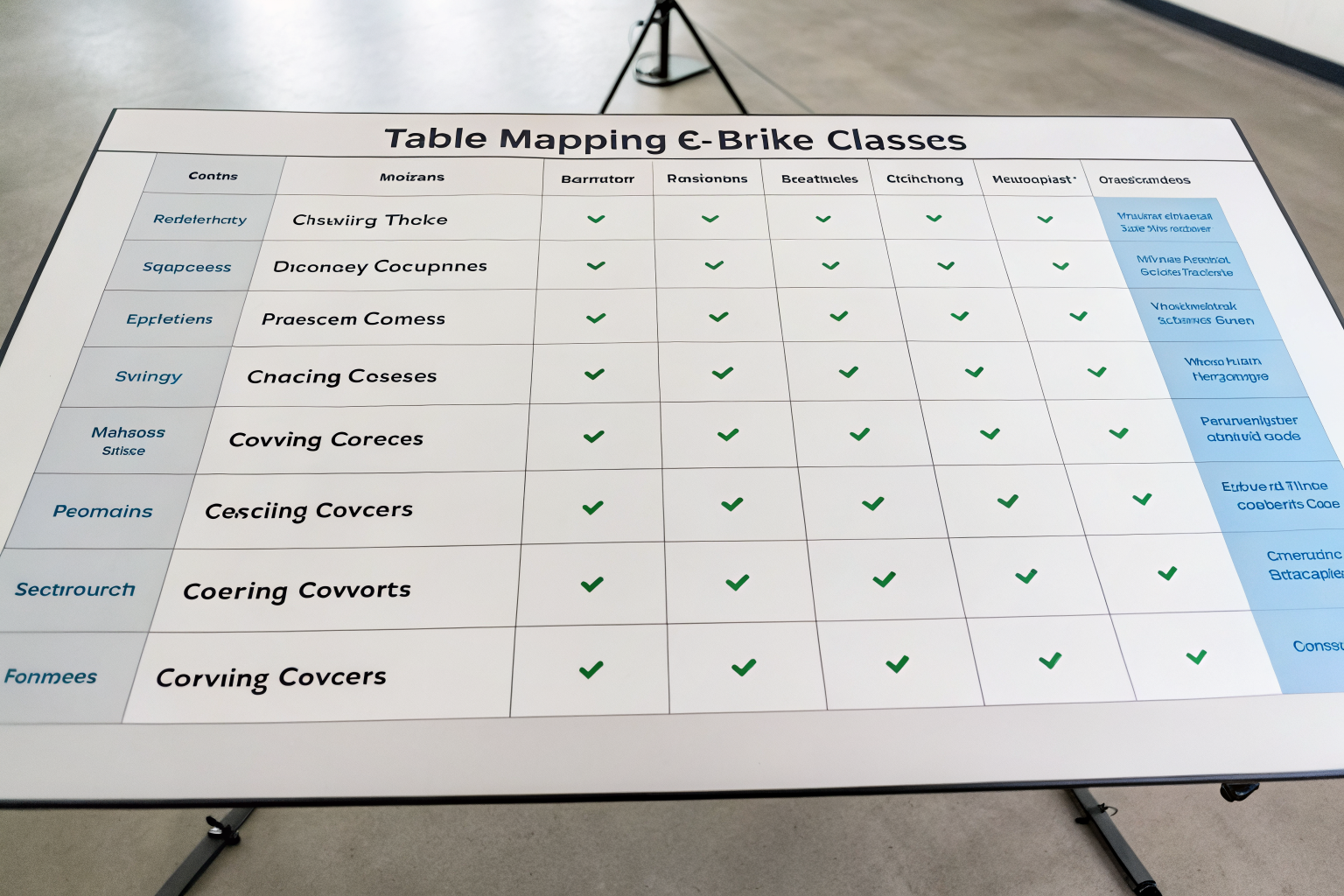
E-bike class and rider use pattern determine the correct coverage path for Arizona owners seeking both property and liability protection. The table below maps each class to a coverage recommendation, with honest notes on what each path does and does not cover.
Class 3 e-bikes are permitted on Arizona roads with traffic under 45 mph per AZ statute. Operating at 28 mph in mixed vehicle and pedestrian environments is the highest liability scenario of the three classes, and it has no mandatory insurance backstop under current AZ law.
| E-Bike Class | Recommended Coverage Path | Why Motorcycle Policy Doesn’t Apply | Is Scheduled HO-3 Endorsement Sufficient? | Standalone E-Bike Policy Warranted? | Liability Exposure Level |
|---|---|---|---|---|---|
| Class 1 (pedal-assist, max 20 mph, no throttle) | Scheduled endorsement on HO-3 as minimum; standalone policy if bike value exceeds $2,500 | No VIN registration; falls outside ARS 28-101 motor vehicle definition; motorcycle underwriting forms require registered motor vehicle | Yes for property, if carrier approves. No for liability. | Recommended if you ride on shared paths or near pedestrian traffic | Moderate, lower speed, no throttle, but liability gap still exists |
| Class 2 (throttle-assisted, max 20 mph) | Standalone e-bike policy is the cleaner answer | Same ARS 28-101 exclusion; throttle adds carrier ambiguity on motorized vehicle exclusion in HO-3 forms | No, carrier ambiguity on the motorized vehicle exclusion is higher for throttle-assist bikes; property coverage is not guaranteed | Yes, reduces underwriting ambiguity and closes the liability gap | Moderate-to-high, throttle capability triggers exclusion scrutiny on standard homeowners forms |
| Class 3 (pedal-assist, max 28 mph) | Standalone e-bike policy with explicit liability coverage | Same ARS 28-101 exclusion; 28 mph operation does not change statutory classification but increases liability severity | No, liability exclusion on standard HO-3 forms is the dominant risk at this speed and use pattern | Yes, the only path that addresses full property and liability risk in a single contract | High, shared-path and road use at 28 mph; pedestrian and vehicle interaction; no insurance mandate |
| High-value e-bike, any class, over $3,000 | Standalone e-bike policy regardless of class | N/A, class does not affect motorcycle policy ineligibility | No, sub-limit and ACV payout create a coverage gap even with a scheduled endorsement on some carriers | Yes, agreed-value payout and liability coverage justify the $100–$200/year premium | Varies by class, but property exposure alone warrants standalone coverage |
Riders who use e-bikes for business delivery or commercial purposes face an additional exclusion on personal lines policies. A personal HO-3 endorsement and a personal standalone e-bike policy both exclude commercial use. You should consult a licensed Arizona insurance agent about commercial inland marine coverage or delivery endorsements if your e-bike is part of how you earn income.
If you’re not sure which class your bike is or whether your current policy covers it, that is a 10-minute conversation worth having before your next ride. For riders in the Scottsdale area, the insurance agency scottsdale az page covers local access to carriers and the types of coverage questions Paul handles for East Valley residents and snowbirds who ride year-round.
For those who want a full picture of two-wheeled coverage in Arizona beyond the e-bike category, a motorcycle insurance checklist arizona covers the broader set of decisions motorcycle riders face, from UM/UIM to agreed value on classic bikes.
Frequently Asked Questions
Do I need motorcycle insurance for an e-bike in Arizona?
Arizona law does not require insurance or registration for e-bikes because they fall outside the motor vehicle definition under ARS 28-101. A motorcycle policy won’t cover your e-bike either, since motorcycle underwriting forms require a VIN-registered motor vehicle, which an e-bike is not. The practical problem is that the absence of a legal requirement leaves most riders with no liability coverage if they injure someone while riding. A standalone e-bike policy, or a direct conversation with a licensed Arizona agent about your current homeowners policy, is the fix.
Is my e-bike covered by homeowners insurance in Arizona?
Your e-bike may be covered as personal property under your homeowners policy, but only up to the policy’s bicycle sub-limit, typically $1,500 to $2,500, at depreciated value, not replacement cost. That means a two-year-old $3,500 bike could net you under $1,800 on a claim. Liability for injuring someone while riding is almost certainly excluded by the motorized vehicle clause in standard AZ-filed HO-3 forms. A scheduled endorsement can close the property gap but does not address the liability exposure.
What is the difference between Class 1, Class 2, and Class 3 e-bikes for insurance purposes in Arizona?
Arizona classifies e-bikes by speed and throttle type under ARS Title 28: Class 1 is pedal-assist only up to 20 mph, Class 2 adds a throttle up to 20 mph, and Class 3 is pedal-assist up to 28 mph. For insurance purposes, the class affects how carriers interpret the motorized vehicle exclusion on homeowners policies, Class 2 and Class 3 bikes face more underwriting scrutiny because of the throttle and speed factors. It also affects your liability exposure, since Class 3 bikes operate at speeds that create higher injury risk on shared paths and roads. Consult a licensed Arizona insurance agent to confirm how your specific carrier treats each class before assuming your current policy covers you.