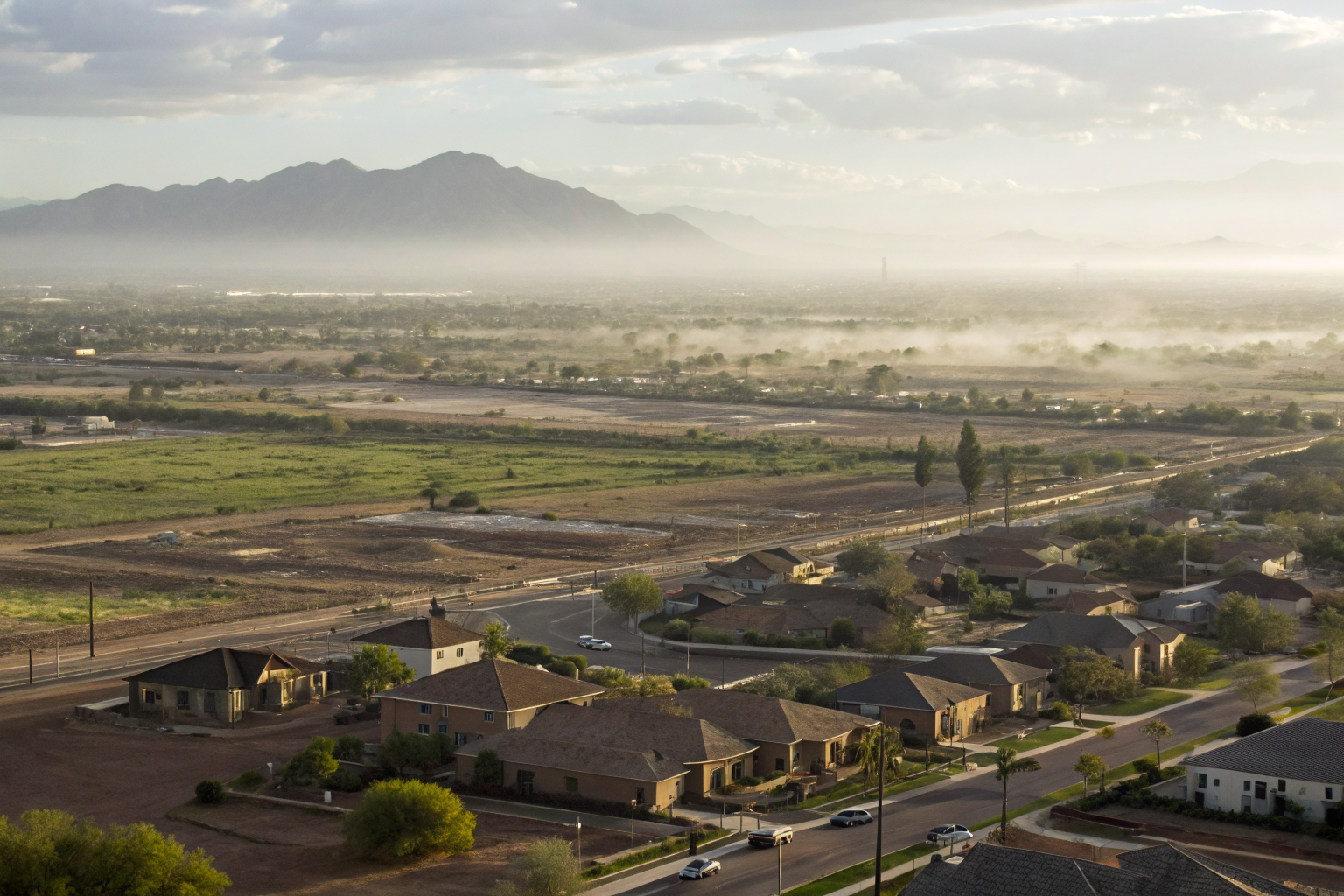
Finding the right insurance agency Queen Creek AZ buyers can trust matters more here than in most Phoenix suburbs. As of 2025, Queen Creek is one of the fastest-growing towns in the entire Phoenix metro, and its combination of brand-new construction, large lots, and rural-fringe characteristics creates insurance exposures most new buyers here have never encountered before.
Key Takeaways:
- Queen Creek’s rural-fringe profile means many properties include acreage, horse privileges, or detached structures that a standard HO-3 policy does not automatically cover, each outbuilding requires a separate coverage evaluation.
- New-construction buyers in Queen Creek routinely underinsure at close because the builder’s required coverage amount reflects the purchase price, not the replacement cost, a gap that can exceed tens of thousands of dollars on a $500,000+ home.
- Queen Creek sits in Maricopa County’s east fringe, where AZ monsoon season wind and hail deductibles of 1–5% of your main coverage amount are standard, meaning a $600,000 home could carry a $30,000 weather deductible the buyer never noticed.
Why Queen Creek’s Growth Creates Insurance Exposures Most Phoenix Suburbs Don’t Have

Queen Creek’s rural-fringe profile is the core issue. Rural-fringe is a planning term that means a municipality sits at the edge of developed metro land, bordering agricultural or unincorporated parcels with large-lot zoning and minimal shared-infrastructure density. This means underwriting questions arise here that simply do not come up in Gilbert or Chandler.
According to U.S. Census Bureau population estimates, Queen Creek was among the fastest-growing municipalities in Arizona, its population roughly doubled between 2010 and 2020. That growth did not arrive with the typical suburban density of inner East Valley suburbs. It came with horse-privilege zoning, detached RV garages, irrigated acreage, and agricultural adjacency that standard admitted carriers in the Phoenix metropolitan area are not always set up to underwrite on a standard HO-3 form.
This article covers the homeowners and property insurance considerations specific to Queen Creek’s new-construction and rural-fringe character. General Arizona policy mechanics, deductible structure, replacement cost, non-renewal rules, are covered in the broader Arizona insurance guide. The focus here is what is different about Queen Creek specifically.
Speak with a licensed Arizona insurance agent for advice specific to your address and property type before binding any policy on a Queen Creek address. The same zip code can produce different underwriting outcomes depending on lot size, zoning classification, and distance from emergency services. Understanding home insurance cost in Mesa and the broader East Valley gives you a useful pricing baseline, but Queen Creek’s rural-fringe characteristics often place it in a separate risk tier.
What New-Construction Buyers in Queen Creek Get Wrong About Their Policy at Closing
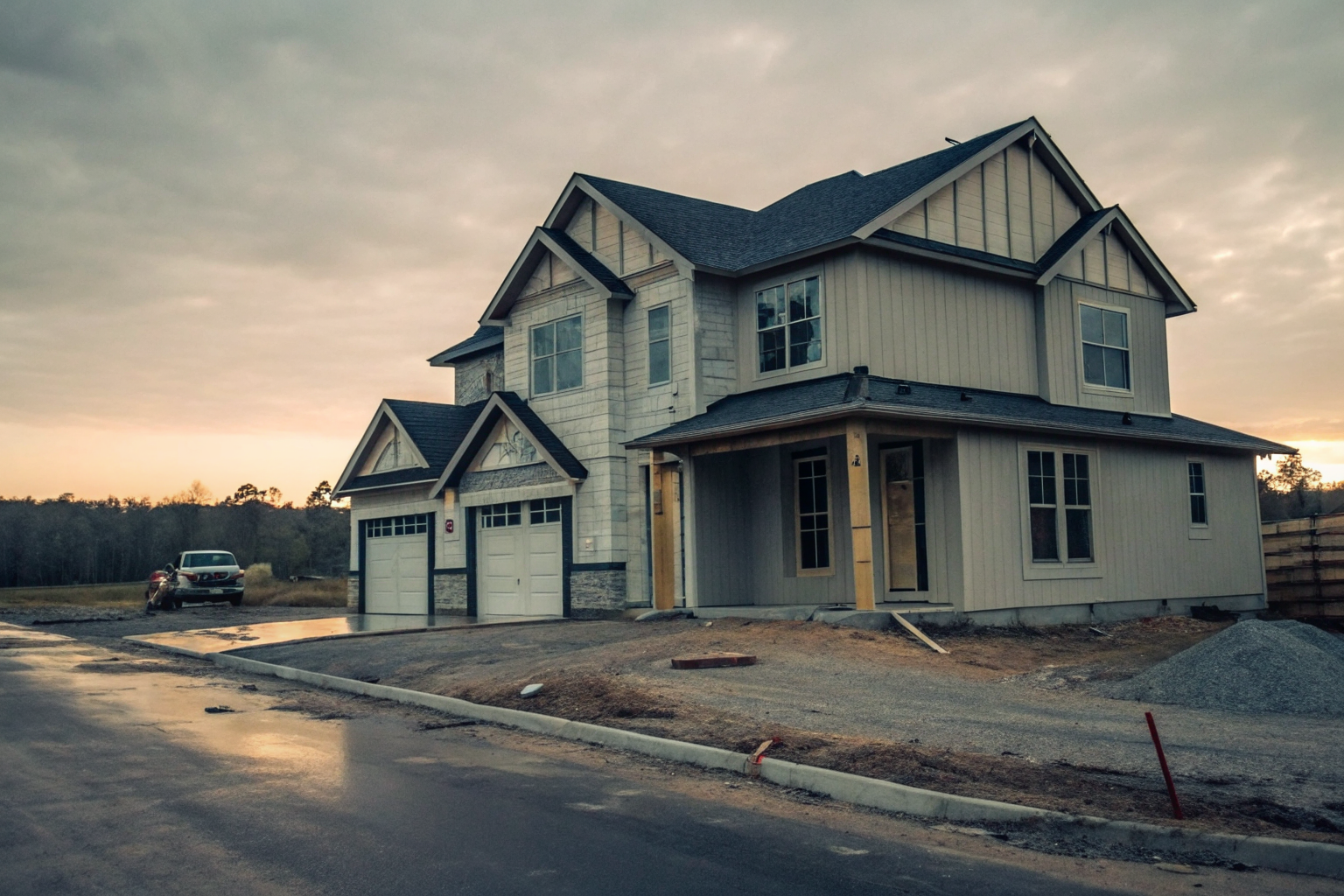
New-construction buyers in Queen Creek routinely underinsure at close because lender-required coverage amounts reflect the purchase price, not what it would cost to rebuild the home from the ground up. Per Insurance Information Institute guidance, a home’s market value and its replacement cost can differ by a wide margin, and in fast-growth Arizona markets, construction labor costs have risen sharply since 2020, making that gap wider on every new build.
A common misconception is that a brand-new home is automatically covered correctly because it was just appraised. The appraisal reflects market conditions. Rebuild cost reflects current Phoenix metropolitan area labor rates and materials costs, which have no obligation to match what a buyer paid.
Here are the four mistakes that come up most often at close:
Confusing the lender’s minimum with adequate coverage. Mortgage lenders require enough insurance to protect the loan balance, not enough to rebuild the home. Those two numbers are rarely the same on a $500,000+ Queen Creek new build, and no one at the closing table is required to point that out.
Assuming the builder’s warranty replaces the need for full coverage. Builder warranties typically cover workmanship defects, not fire, storm, theft, or liability. A homeowner who relies on the warranty as a substitute for proper dwelling coverage has a meaningful gap from day one.
Failing to update coverage after construction upgrades. Queen Creek buyers frequently add upgrades, extended patios, upgraded flooring, casitas, between contract and certificate of occupancy. If the policy was quoted on the base-spec price and never updated, those upgrades are underinsured at close.
Skipping the replacement-cost estimator because the home is new. New construction does not mean the rebuild cost matches the sale price. Carrier replacement-cost estimators account for your specific build spec, square footage, and current AZ labor rates. Skipping that step on a new home is where the coverage gap starts.
Consider speaking to a licensed agent before your close date to verify your dwelling coverage reflects rebuild cost, not market value.
Outbuildings, Acreage, and Horse Privileges: What a Standard HO-3 Policy Does and Doesn’t Cover

The other-structures provision is Coverage B on a standard HO-3 policy. Per standard ISO HO-3 form language, Coverage B defaults to 10% of your dwelling coverage (Coverage A). This means a $600,000 home carries $60,000 for all detached structures combined, every barn, RV garage, casita, shed, and fence on the property, added together.
Queen Creek has a large share of Maricopa County footprint properties with horse privileges, detached garages, RV garages, barns, casitas, and irrigated acreage. A single large RV garage in this East Valley suburb cluster can cost $80,000 to $120,000 to rebuild. A horse barn with stalls pushes well past that. The $60,000 Coverage B default is not a coverage, it is a starting point that most Queen Creek rural-fringe properties outgrow immediately.
Standard ISO HO-3 exclusion language also removes livestock and horses from coverage entirely. The structure of a barn may be covered under Coverage B up to the applicable limit, but the animals inside it are not. Queen Creek homeowners with working animals or horses need a separate farm/ranch endorsement or a standalone livestock policy.
| Structure Type | Common in Queen Creek | Covered Under HO-3 Coverage B | Separate Endorsement or Policy Needed |
|---|---|---|---|
| Detached garage | Very common | Yes, up to Coverage B limit | Only if value exceeds the 10% default |
| RV garage / shop | Common on large lots | Yes, up to Coverage B limit | Often yes, rebuild cost frequently exceeds limit |
| Horse barn / stall | Horse-privilege parcels | Structure only, up to limit | Farm/ranch rider for animals; limit increase for structure |
| Casita / guest house | New-construction builds | Yes, up to Coverage B limit | Often yes, casitas frequently exceed the default cap |
| Irrigated acreage / fencing | Agricultural-adjacent lots | Fencing partially; acreage excluded | Separate farm/ranch or agricultural policy |
| Storage shed | Most properties | Yes, up to Coverage B limit | Rarely, unless value is high |
Verify your specific coverage with a licensed agent before assuming the default other-structures limit is sufficient for your Queen Creek property. If you have added solar panels to a detached structure or the main home, confirm those are disclosed separately, a solar panel insurance claim in Arizona that gets denied often traces back to a disclosure gap, not the storm itself.
How AZ Monsoon Season Hits Queen Creek’s New-Build Neighborhoods Differently

Queen Creek sits on the eastern edge of Maricopa County, where monsoon storm tracks regularly push harder than in denser inner-ring Phoenix metropolitan area suburbs. New-construction neighborhoods with minimal mature landscaping have no wind buffering. Open lots and wide streets that characterize new builds in the East Valley suburb cluster mean wind-driven debris travels farther and hits structures without obstruction.
The mechanism that catches new buyers off guard is the percentage deductible. Most AZ homeowners policies carry a wind/hail or named-storm deductible expressed as a percentage of Coverage A, not a flat dollar amount. Per standard DIFI-filed AZ HO-3 forms, that range runs from 1% to 5%. A buyer who closed on a $600,000 Queen Creek new build and assumed their deductible was $1,500 may be facing $6,000 to $30,000 out of pocket on a wind claim.
Per the approved stat hook from Brand Brain §8: “Your weather deductible can be anywhere from 1% to 5% of your home’s main coverage. On a $500,000 home at 5%, that’s $25,000 out of pocket, and your carrier can raise that number at renewal without making sure you notice.”
New buyers rarely review the deductible schedule at closing. The premium gets attention. The deductible structure does not. AZ monsoon season is not a theoretical risk on the east fringe of Maricopa County, it is a seasonal event that produces wind, hail, and water intrusion claims on new-construction roofs every year. Knowing your deductible amount before a storm is not optional. Hardwood floor water damage from a monsoon intrusion event is a separate claims question, but the deductible you pay first applies regardless of what the water damages inside.
What to Look For in a Queen Creek Insurance Agent, and How The Gebhard Agency Serves the East Fringe From Mesa

Queen Creek homeowners benefit from an agent with access to multiple carriers who understands rural-fringe underwriting, not just standard suburban HO-3 placement. A single-carrier agent may not have the market access to place a property with horse privileges, a $150,000 RV garage, and a 1.5-acre irrigated lot on a standard admitted form.
Here are four steps to evaluate any agent before you bind coverage on a Queen Creek address:
Confirm the agent has access to multiple carriers. Ask directly whether they write through one carrier or can shop your property across several. Rural-fringe and large-lot Queen Creek properties sometimes draw surcharges or declines from standard admitted carriers, and you want options.
Ask whether the agent has written policies for properties with horse privileges, RV garages, or acreage. These require familiarity with other-structures endorsements, farm/ranch riders, and how carriers in the Maricopa County footprint treat agricultural adjacency at underwriting.
Verify the agent will run a replacement-cost estimator on your specific build spec. Accepting the lender’s minimum without running a replacement-cost estimate is the single most common underinsurance error in Queen Creek’s new-construction market. Your agent should produce a number tied to your address and square footage, not a ballpark.
Confirm the agent reviews your weather deductible structure at bind, not just the premium. If your agent never mentions the deductible percentage before you sign, ask. It is the number that matters most when AZ monsoon season produces a claim.
The Gebhard Agency serves Queen Creek and the broader East Valley from the Mesa office at 4850 E Baseline Rd, Suite 103, Mesa, AZ 85206, with access to 200+ carriers and familiarity with Maricopa County’s east-fringe underwriting profile. That carrier access matters for Queen Creek addresses that need surplus lines or non-standard admitted placement. For car coverage questions on the same property, recommended car insurance coverage in Arizona follows separate adequacy guidelines worth reviewing with the same agent. Phone: (480) 800-4595, Mon–Fri 9:00 AM–5:00 PM MST. Paul Gebhard, AZ Producer License #6724577, licensed since 1997.
Frequently Asked Questions
Does homeowners insurance in Queen Creek cover my horse barn or livestock?
A standard HO-3 policy covers detached structures under Coverage B at 10% of your dwelling limit by default, but per ISO HO-3 exclusion language, livestock and horses are excluded from standard homeowners policies. Queen Creek homeowners with horse privileges or working animals should ask their agent about farm/ranch endorsements or a separate livestock policy. Speak with a licensed Arizona insurance agent to verify what your specific policy form covers before assuming the barn or the animals inside it are included.
Do I need separate insurance for my new construction home before the certificate of occupancy is issued?
Builder’s risk coverage typically covers the structure during active construction, but the transition from builder’s risk to a standard homeowners policy requires a bind date tied to actual occupancy, not the closing date alone. In Queen Creek’s fast-moving new-construction market, buyers have been caught in coverage gaps when the certificate of occupancy date shifted and neither the builder’s policy nor the homeowners policy was active. Per Insurance Information Institute guidance, confirm your homeowners policy effective date aligns with your actual move-in and certificate of occupancy date, not just the contract close.
Is Queen Creek considered a rural area for insurance purposes?
Queen Creek’s underwriting classification varies by carrier and by specific address, eastern parcels on large agricultural-adjacent lots may be rated differently than a standard suburban subdivision closer to the town center. Some admitted carriers apply rural surcharges or decline placement on properties with acreage, horse privileges, or extended emergency response times. An agent with access to 200+ carriers, including surplus lines markets, is better positioned to find coverage for rural-fringe properties than one writing through a single carrier.