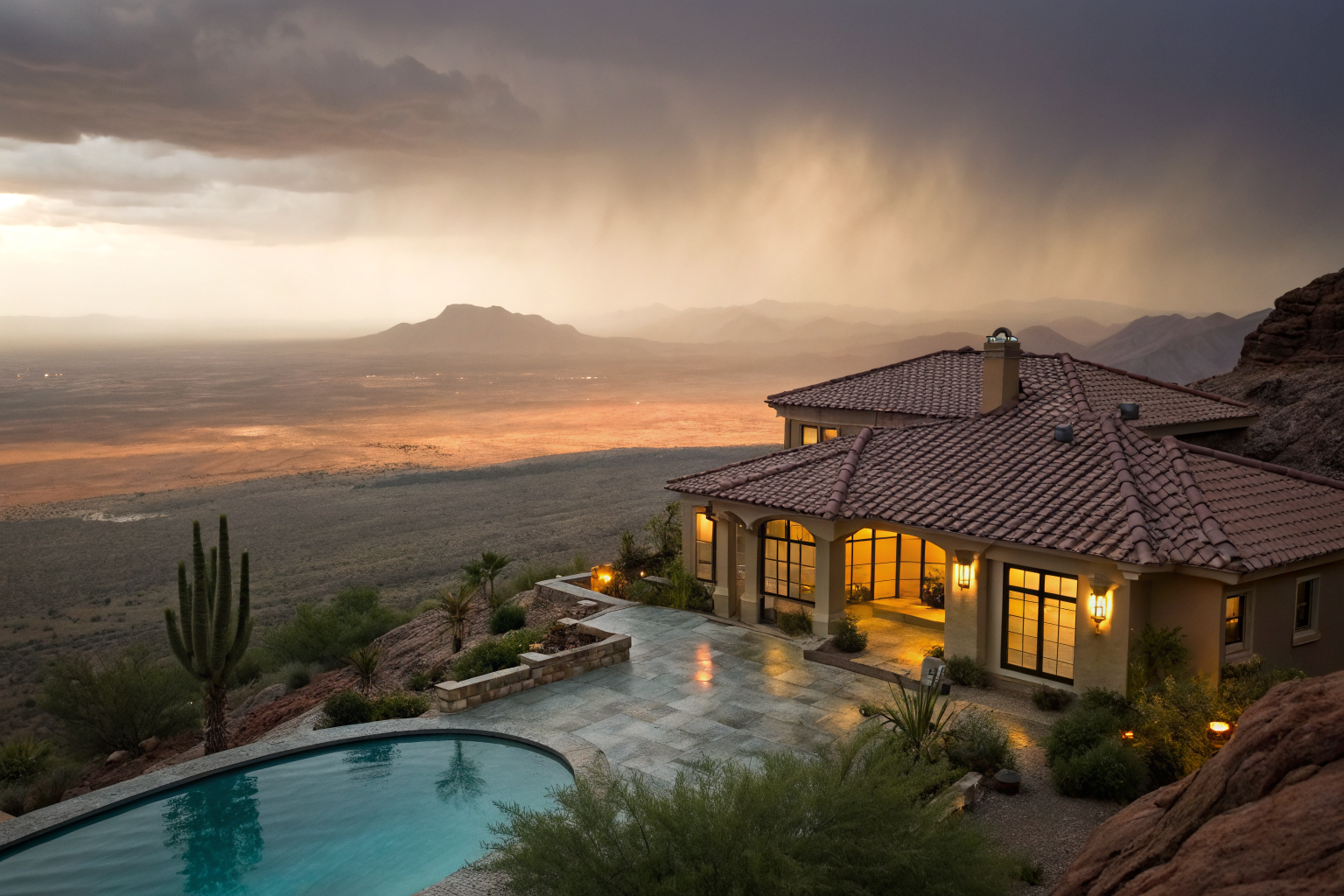
Every insurance agency Chandler AZ homeowners work with should account for three risks that generic AZ policies routinely miss: tile roofs carriers underwrite on age rather than appearance, pools that expose owners to liability most HO-3 forms barely price for, and a tech-sector income profile where an underinsured claim carries real financial weight. As of 2025, each of these factors affects what Chandler homeowners pay and what they actually collect at claim time.
Key Takeaways:
- Chandler’s pool ownership rate is among the highest in Maricopa County, and standard HO-3 personal liability limits of $100,000 cover less than one serious pool injury lawsuit costs to defend.
- Tile roofs in Chandler lose underlayment integrity after 20-25 years regardless of surface appearance, and carriers apply a 25-50% age surcharge to homes where underlayment hasn’t been documented as replaced.
- AZ ranks third nationally in non-weather water damage costs (Insurance Information Institute), Chandler’s desert-landscape irrigation systems are a direct contributor to the hidden water claims most homeowners never anticipate.
What Makes Chandler’s Insurance Profile Different From the Rest of the Phoenix Metro?
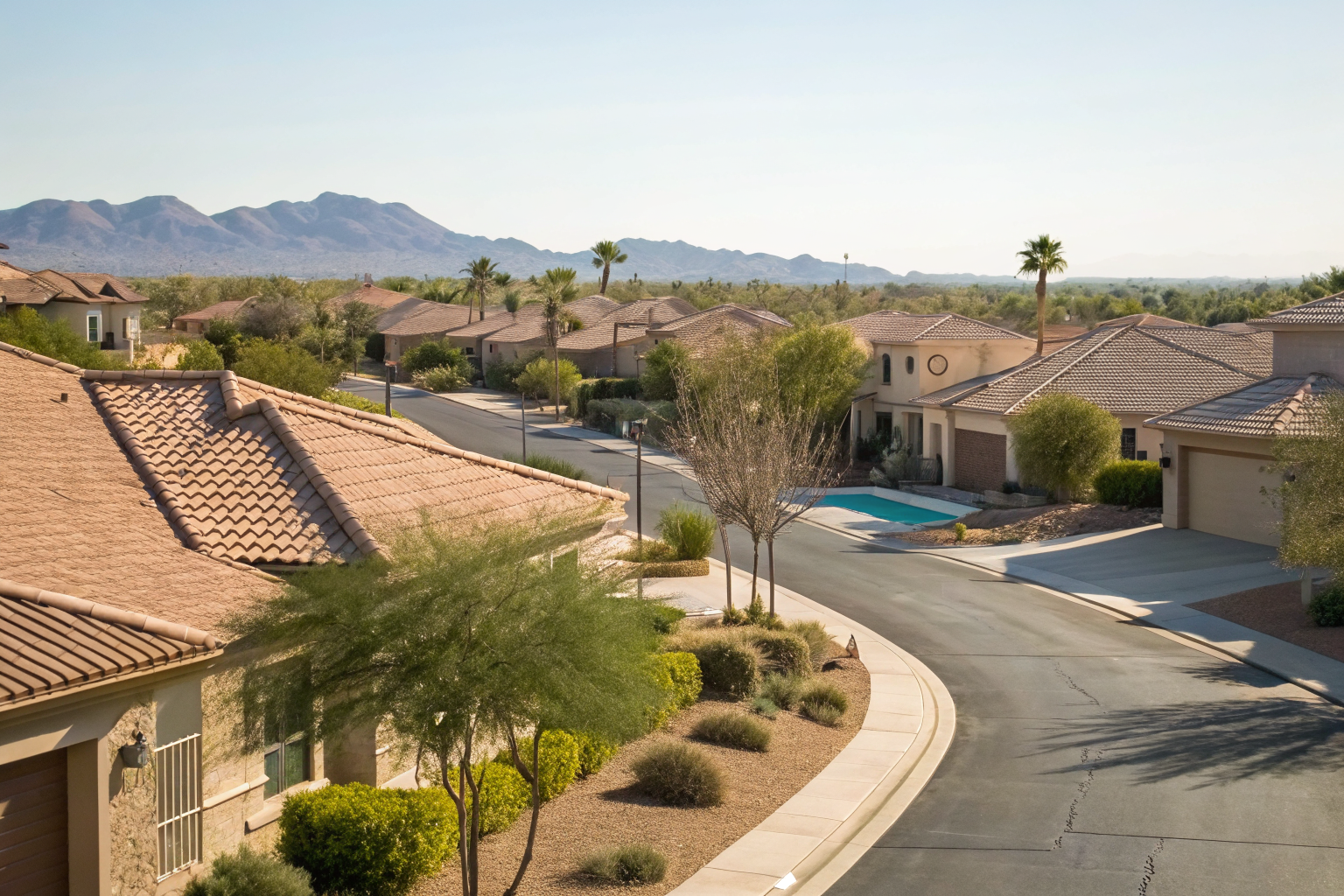
Chandler’s insurance risk profile is shaped by tile-roof density, pool-liability prevalence, and desert-irrigation water exposure. This means that a generic Arizona homeowners policy built around average state assumptions underprices three specific risks that appear in Chandler subdivisions at above-average rates.
Start with the demographic. U.S. Census Bureau American Community Survey data shows Chandler’s median household income sits well above the Arizona state median. Dual-income households in the tech corridor carry more personal property, drive newer vehicles, and own homes where replacement cost runs higher than the Phoenix metropolitan area average. Those factors all flow into the underwriting conversation in ways a standard East Valley suburb cluster policy doesn’t automatically address.
Tile-roof density is the second differentiator. Chandler’s planned subdivisions were built primarily during the same construction cycle, which means a large share of tile roofs across the city are approaching or past the 20-25 year underlayment threshold simultaneously. Carriers don’t price on how good the tiles look from the street, they price on underlayment documentation.
Pool prevalence is the third. Maricopa County footprint data shows Chandler among the county’s higher pool-ownership communities. A pool changes personal liability exposure in ways most buyers discover after a claim, not before.
This article is educational, not a policy recommendation. For advice specific to your home, consult a licensed AZ insurance agent. Consumers can verify any agent’s license status through the AZ Department of Insurance and Financial Institutions (DIFI) producer lookup at difi.az.gov.
Chandler’s Tile-Roof and Pool-Liability Profile: What Your HO-3 Policy Is Actually Pricing
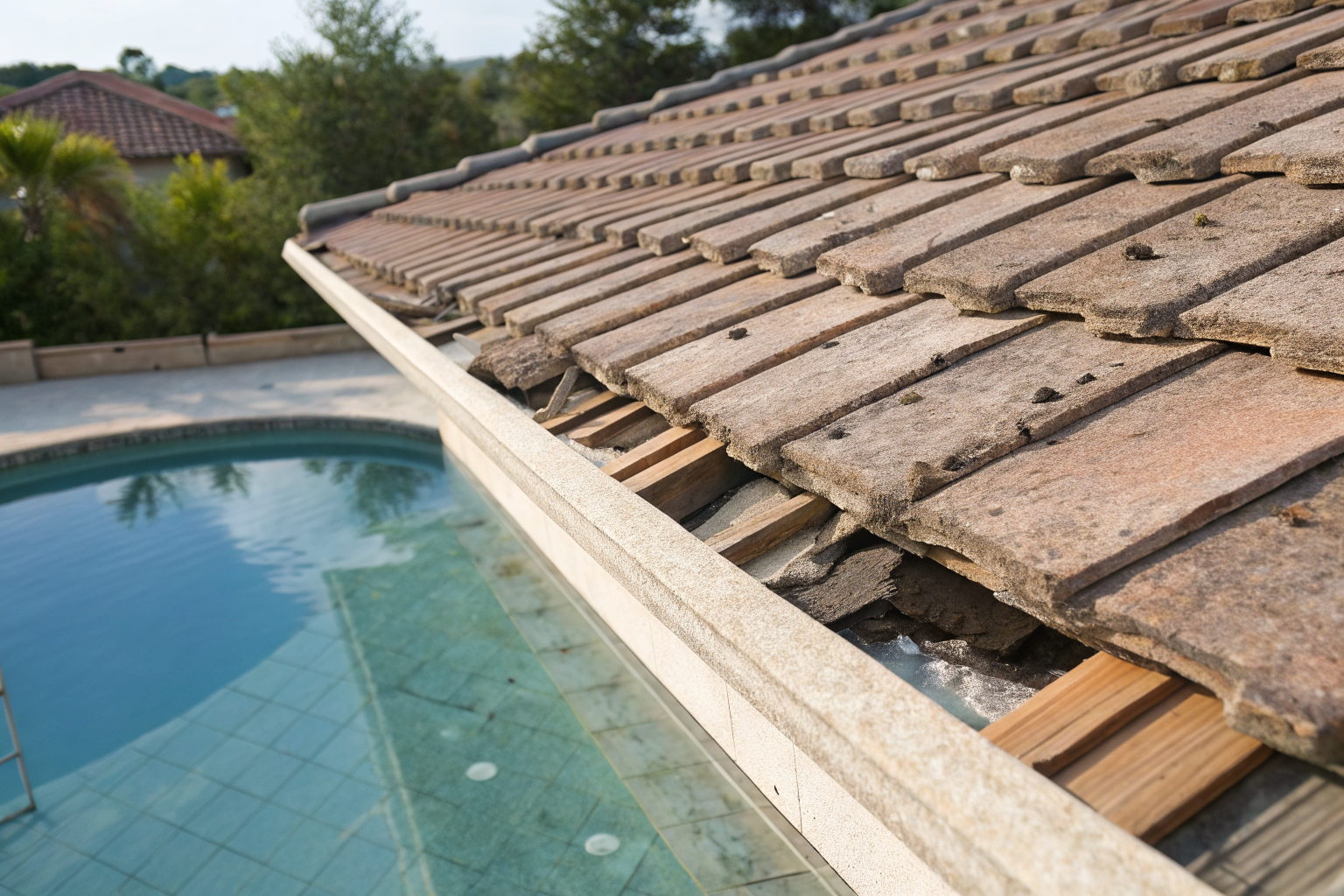
Chandler homeowners insurance prices for tile-roof underlayment age and pool personal liability exposure in ways that rarely appear on the declarations page summary. Here is what each factor actually means at underwriting and at claim time.
Tile roof, surface vs. underlayment. A common assumption is that tile roofs last indefinitely because the tiles themselves show no visible wear. The reality is that the underlayment beneath the tile degrades on its own schedule, typically 20-25 years, regardless of how the surface looks from the driveway. Carriers treat underlayment age as a separate underwriting variable. Homes without documented underlayment replacement face a 25-50% age surcharge. On a $400,000 Chandler home, that surcharge is a material annual cost, not a footnote. During AZ monsoon season, underlayment condition becomes claims-critical: wind-driven water that penetrates a compromised underlayment is evaluated differently than storm damage to a documented, maintained roof.
Pool liability, the $100,000 default problem. Standard HO-3 personal liability coverage defaults to $100,000. Pool-injury lawsuits in Arizona routinely exceed that figure in defense costs alone, before any judgment. Maricopa County health codes require pool fencing and safety barriers, and a failure to meet those standards can affect how a carrier evaluates a claim. Umbrella policies, which typically start at $1 million in additional liability coverage, are worth reviewing for any Chandler household with a pool. Per DIFI guidance, consumers should verify specific policy terms with a licensed agent rather than relying on general descriptions.
| Risk Factor | Chandler Exposure | AZ Monsoon Season Impact | Carrier Pricing Trigger |
|---|---|---|---|
| Tile roof underlayment age | High: subdivisions built on similar construction timelines | Wind-driven water penetration accelerates claim frequency | 25-50% surcharge for roofs over 20 years without documentation |
| Pool personal liability | Among highest pool-ownership rates in Maricopa County | Monsoon debris and pool equipment stress increase injury risk | Default $100K HO-3 limit often insufficient for defense costs |
| Tile-roof density across East Valley | Shared underwriting trigger across Chandler zip codes | Hail events affect multiple homes in same underwriting cycle | Carriers adjust appetite for entire subdivisions after storm events |
Readers should confirm their specific policy’s filed form language with a licensed agent. Agent licensing in Arizona is verified through DIFI at difi.az.gov.
Desert Landscaping, Irrigation Lines, and the Hidden Water Risk Chandler Homeowners Keep Discovering Late
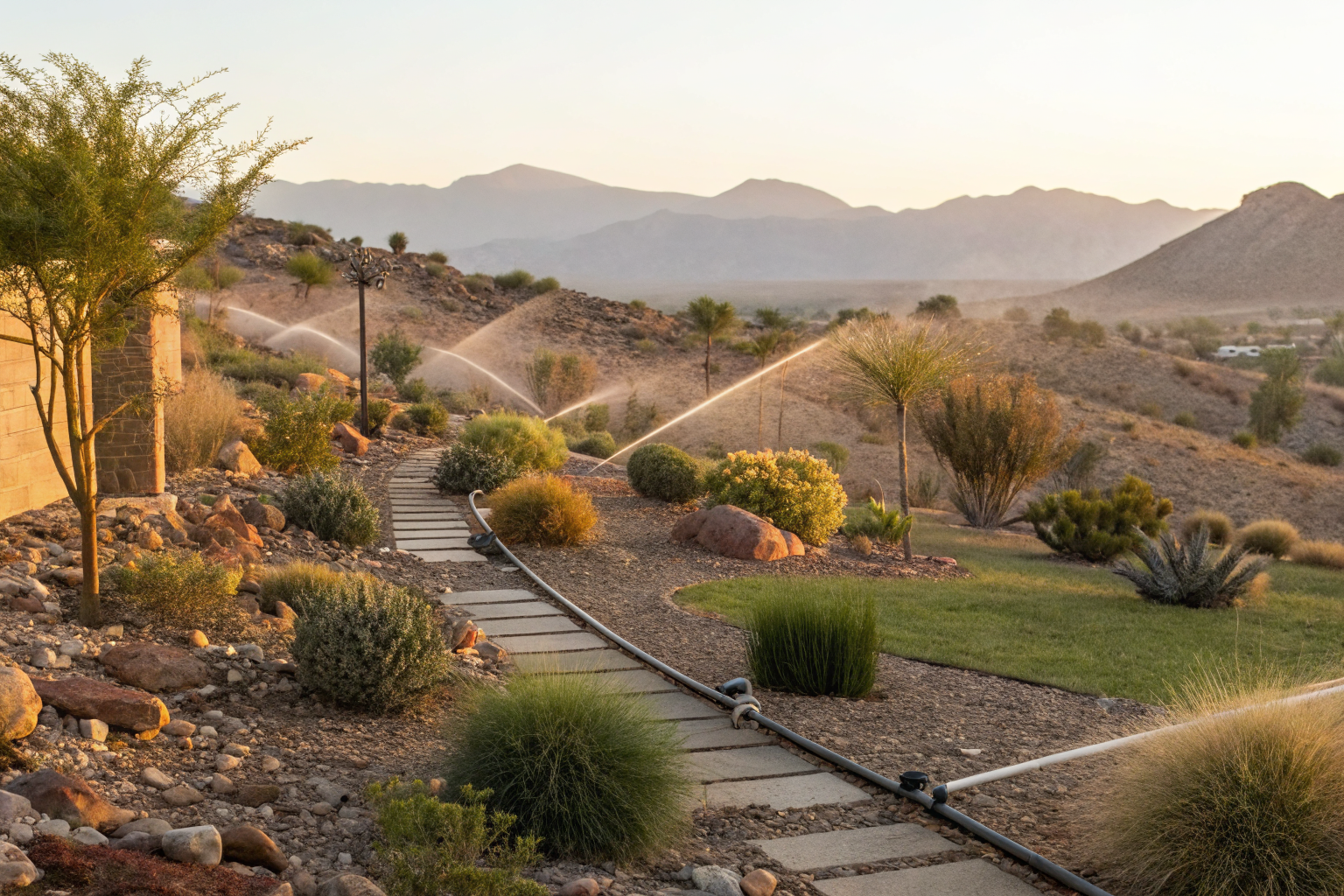
Chandler desert-landscape irrigation systems create hidden water damage exposure that most standard HO-3 policies exclude under the gradual damage clause. AZ ranks third nationally in non-weather water damage costs, according to the Insurance Information Institute, and desert irrigation infrastructure is a contributing factor carriers account for in East Valley underwriting.
The gradual damage exclusion is the policy mechanic at work here. It is the clause in a standard HO-3 form that excludes damage caused by a slow, ongoing leak rather than a sudden event. This means a drip line that seeps at the foundation for 60 days before detection is typically not covered under the base policy. The hidden-damage endorsement is the add-on that changes that outcome. It is not standard on most filed forms, it requires a specific ask.
Four hidden water risk sources that Chandler homeowners in irrigated subdivisions should know:
- Drip and irrigation line slow leaks at the foundation. Pressure fluctuations in drip systems cause micro-fractures at fittings over time. Water migrates toward the slab before any surface sign appears, and by the time a homeowner notices, the damage is weeks or months old, placing it squarely in gradual-damage territory under a standard HO-3.
- Monsoon storm drain backflow into garage slabs. Chandler’s street drainage infrastructure was not uniformly designed for the rainfall intensity AZ monsoon season now delivers. During high-intensity events, water backs up through garage slab seams in low-gradient lots. This is often misread as flooding but is typically a surface-water intrusion claim with its own coverage analysis.
- Pool equipment plumbing failures. Return lines and filter connections in pool mechanical systems run underground and are subject to the same slow-leak dynamic as irrigation lines. Most homeowners don’t discover a pool plumbing failure until the water bill spikes or a crack appears in deck concrete.
- HVAC condensate line failures during peak AZ cooling seasons. Arizona’s high-use cooling season runs longer than virtually any other U.S. market. Condensate lines that handle continuous load from May through October are failure candidates, and when they back up into attic or wall cavities, the resulting moisture damage is typically gradual by the time it’s visible.
The hidden-damage endorsement addresses the gradual-damage gap for items like the first and fourth scenarios above, but coverage scope varies by filed form. Ask your agent specifically whether the endorsement covers irrigation-related and HVAC condensate losses, and check how the carrier defines “sudden” vs. “gradual” in the form language. Homeowners dealing with a non-renewal after a water claim should also understand their options in Arizona’s surplus lines market.
Auto Insurance in Chandler: What Price-Comparison Sites Don’t Show You About the East Valley Commute Profile
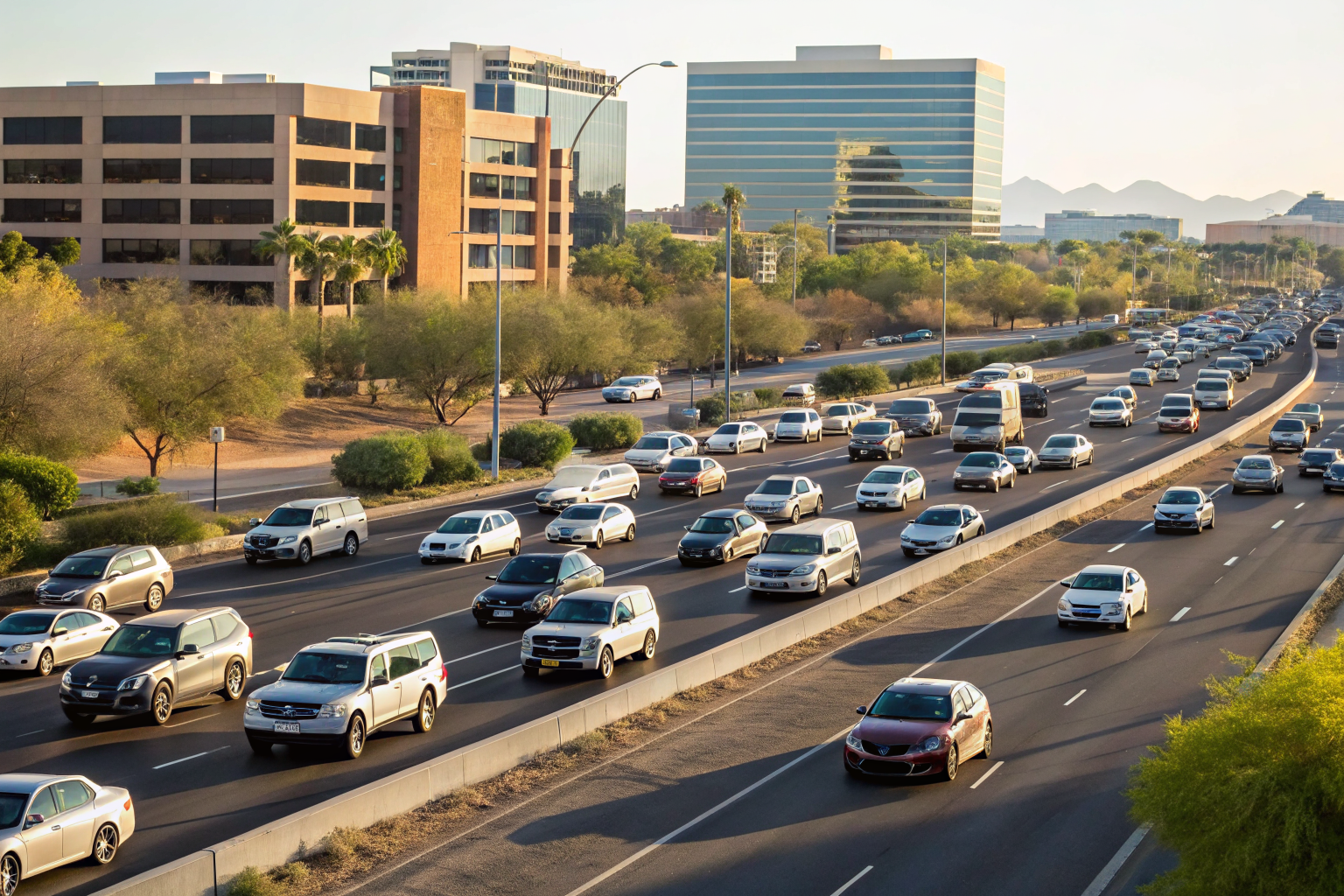
Chandler auto insurance pricing reflects East Valley commute density and tech-corridor vehicle values above the state average. A price-comparison result that looks competitive on a 25/50/15 minimum policy may be underpriced for what Chandler households are actually driving and where they’re driving it.
Arizona minimum liability limits under ARS 28-4009 are 25/50/15, $25,000 per person, $50,000 per accident, $15,000 in property damage. Those figures are a statutory floor, not a recommendation. In Chandler, where tech-sector households carry newer vehicles with higher repair costs, the gap between a minimum-limits payout and actual repair or replacement cost matters. A household running two late-model vehicles with outstanding financing needs gap coverage and limits that reflect current vehicle values, not 1997 statutory minimums.
The Price Road corridor, Loop 202, and Arizona Avenue carry some of the highest commuter traffic volume in the Phoenix metropolitan area. At-fault frequency in dense commute corridors affects carrier loss ratios for specific zip codes, which means Chandler-area premiums reflect that exposure whether or not any individual driver has ever filed a claim.
Multi-car households in the family and tech demographic also face a bundling question worth reviewing. Combining home and auto with the same carrier network can affect both the homeowners and auto rate, but the right answer depends on each carrier’s filed rates for Chandler’s specific zip codes, not a generic bundle discount.
The undisclosed teen driver pattern is a claim-denial risk specific to East Valley family households. When a licensed teen driver in a Chandler household isn’t listed on the policy, carriers in Arizona can deny a claim involving that driver on material misrepresentation grounds. Per ARS 20-259.01, UM/UIM coverage obligations apply to listed insureds, an unlisted driver’s claim sits outside that protection. For a full explanation of how Arizona’s UM/UIM structure works, the Arizona insurance guide covers those mechanics in detail.
How Does The Gebhard Agency Serve Chandler From the Mesa Office?
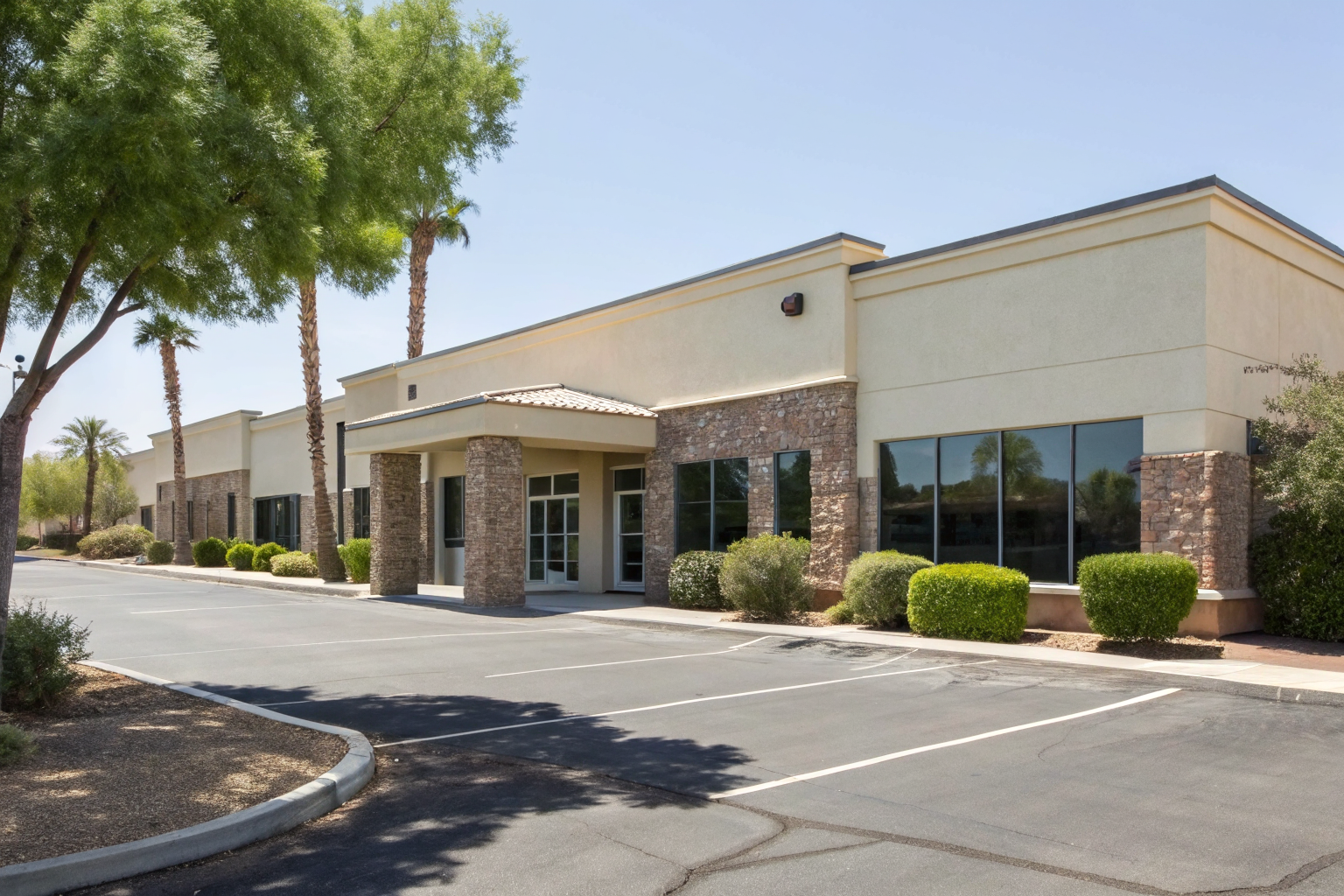
The Gebhard Agency serves Chandler homeowners from its Mesa office at 4850 E Baseline Rd with access to 200+ carriers, no single-carrier push, no requirement to come in person.
The office at 4850 E Baseline Rd, Suite 103, Mesa, AZ 85206 is roughly 10 minutes from central Chandler. Hours are Mon-Fri 9:00 AM to 5:00 PM MST, and the chat widget on the agency blog is available outside those hours for initial questions.
Here is how a Chandler resident typically engages:
- Contact via chat widget or phone (480) 800-4595. No in-person appointment required. The initial conversation covers your current policy type, roof age, pool status, and any recent changes to the home or vehicles.
- Coverage review against Chandler’s specific risk factors. The agent checks your current policy for tile-roof underlayment documentation, pool liability limit, hidden-water endorsement status, and whether your home’s insured value reflects current East Valley replacement costs. For comparison, home insurance cost in Mesa, AZ and surrounding East Valley zip codes has shifted as construction costs have moved, a review catches gaps before a claim surfaces them.
- Gap identification specific to your situation. If your roof is past the 20-year mark without documented underlayment replacement, if your personal liability limit is at the $100,000 default with a pool, or if your irrigation system exposure isn’t endorsed, those items get named and explained.
- Carrier match across 200+ options. The agency’s network lets the agent compare filed policy forms and pricing across carriers rather than presenting one option. For Chandler homeowners who have received a non-renewal notice, that breadth is the difference between finding replacement coverage and going bare.
Paul Gebhard holds AZ DIFI producer license #6724577, active since 1997. Consumers can verify any Arizona agent’s license through the DIFI producer lookup at difi.az.gov. This article is educational, consult a licensed agent for advice specific to your policy and property.
Frequently Asked Questions
Does pool insurance cost extra in Chandler, AZ?
A pool doesn’t require a separate policy, but it changes your liability exposure under your existing homeowners coverage. Most standard HO-3 policies default to $100,000 in personal liability coverage, and that figure can be consumed by defense costs alone in a serious pool injury claim before any judgment is reached. Chandler homeowners with pools should review whether their current liability limit and any umbrella layer are sized for that exposure, a licensed agent can check the specific filed form language for your policy.
Is an insurance agent with access to multiple carriers better than going directly to one carrier in Chandler?
An agent with access to multiple carriers compares filed policy forms and pricing across options rather than presenting one product. In Chandler’s market, where tile-roof age, pool liability, and irrigation water exposure all affect which carriers are willing to write a policy and at what terms, that breadth matters more than it does in a lower-complexity zip code. You can verify any AZ agent’s license status through the DIFI producer lookup at difi.az.gov.
Does homeowners insurance in Chandler cover monsoon wind damage to my tile roof?
Wind damage from monsoon storms is a covered peril under a standard HO-3 policy, but the claim outcome depends on your tile roof’s underlayment condition, not just the surface tiles. Carriers can deny or reduce a claim if underlayment failure is attributed to age or wear rather than the storm event itself, which is why documenting underlayment condition and replacement history before monsoon season is a practical step. Homeowners dealing with coverage questions around roof claims may also want to review options available through Arizona’s surplus lines market if their primary carrier has changed appetite for older roofs.