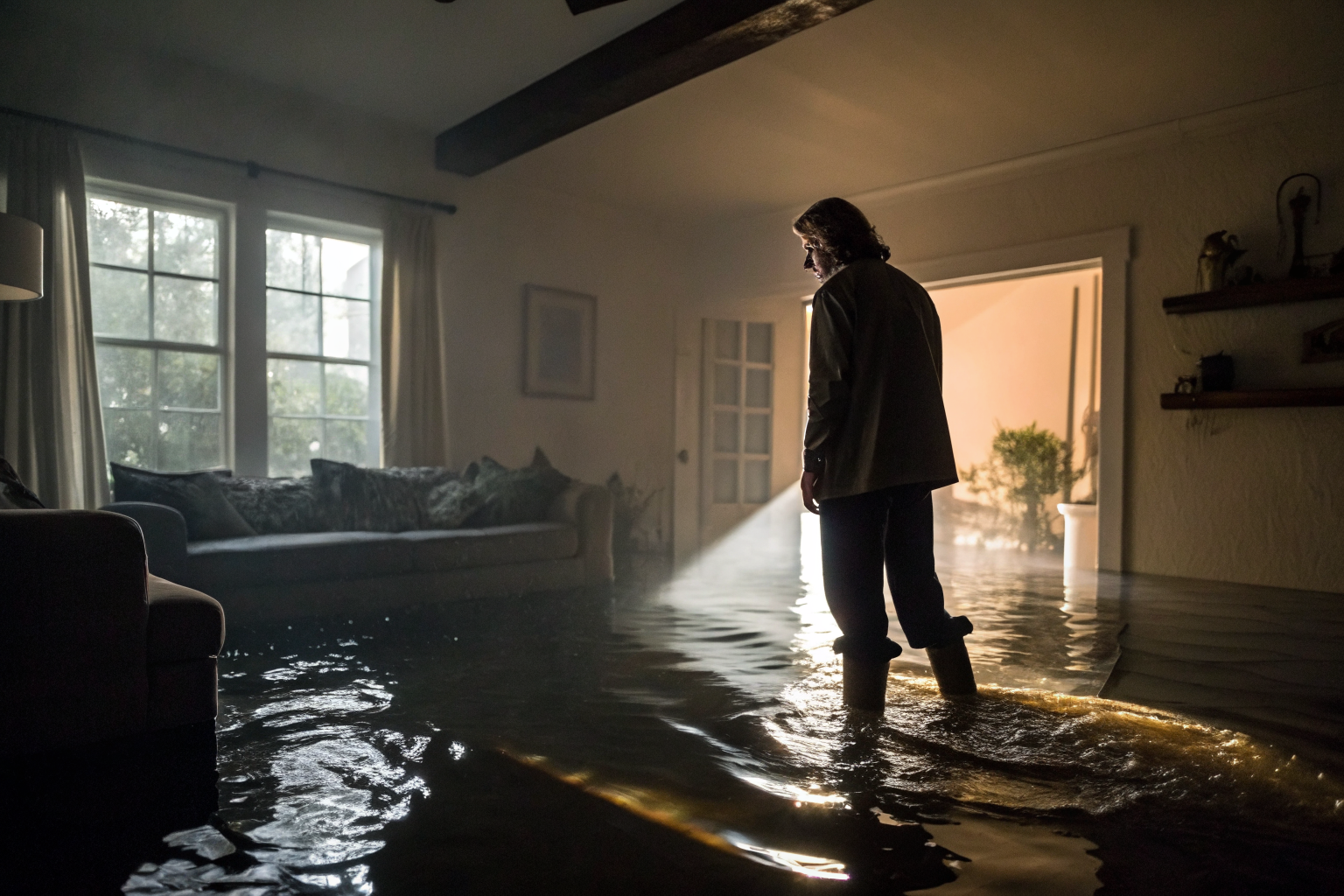
Hidden water damage endorsement Arizona homeowners rarely hear about sits between a covered claim and a $20,000 out-of-pocket bill. Arizona ranks third nationally in non-weather water damage costs, and most of those claims get denied not because of fraud, but because of a single word buried in the HO-3 exclusion section: “gradual.”
Key Takeaways:
- The standard AZ HO-3 policy covers sudden water damage but excludes gradual leaks, and most hidden pipe failures fall into the gradual category by default, giving carriers a clean denial path.
- The hidden water damage endorsement (HWDE) closes that gap for an estimated $50–$150 per year on most Arizona policies, but fewer than half of AZ homeowners have ever been offered it.
- AZ ranks third nationally in non-weather water damage costs (Insurance Information Institute), making the HWDE one of the highest-value, lowest-cost add-ons available to Phoenix-metro homeowners.
This article is the entry point for the water damage and hidden-damage endorsements cluster within the broader arizona insurance guide, covering what your base policy says, where the denial happens, what the endorsement changes, and how to protect a claim from the moment water appears. The cluster articles go deeper on specific scenarios: slow leak vs. burst pipe coverage, hardwood floor water damage insurance, water heater damage on homeowners insurance, and the physical warning signs covered in hidden water damage signs home. Each of those topics traces back to the same foundational problem explained here.
What the Standard AZ HO-3 Policy Actually Says About Water Damage

The HO-3 homeowners policy is the standard form used by admitted-market carriers across Arizona. It covers your home’s structure, personal property, and liability under a named-perils or open-perils framework depending on the section. On water damage, the controlling language is not about the source of the water, it is about the nature of the loss event.
“Sudden and accidental” is the threshold. This means the policy covers water damage that happened at a discrete, identifiable moment, a pipe that burst during a pressure spike, a water heater that ruptured on a Tuesday afternoon, a washing machine hose that failed without warning. What it excludes is any water damage that developed over time through seepage, leakage, or continuous dripping, regardless of whether the homeowner knew about it.
That exclusion is not buried in fine print. Most AZ HO-3 forms state it plainly. The problem is that homeowners read “sudden and accidental” and assume it describes how they discovered the damage, they found it suddenly, so it must qualify. Carrier adjusters read the same phrase to describe how the damage occurred. Those are two different standards, and the gap between them is where most denials live.
AZ homeowners encounter three broad categories of water entry:
- Monsoon-related surface water, rain that enters through a roof gap, window seal failure, or door threshold during an AZ monsoon season event. This is generally covered under wind and rain perils, though the monsoon deductible structure creates its own surprises covered in separate cluster articles.
- Sudden plumbing failure, a burst pipe, ruptured water heater tank, or appliance hose that fails at a specific moment. This meets the “sudden and accidental” standard and is covered under the base HO-3.
- Slow seepage or pinhole leak behind walls, a copper pipe developing a pinhole leak, a shower pan liner failing gradually, a dishwasher drain hose seeping at the connection over months. This is category three, and it is where most denials happen.
The AZ monsoon season creates a psychological trap here. Most Phoenix-metro homeowners mentally file “water damage” under “storm damage”, meaning covered. When wet drywall appears in August, the first assumption is that a monsoon drove water in somewhere. That assumption feels reasonable. It also gets a lot of claims denied when an adjuster finds mold growth and staining patterns that predate the last storm by six weeks.
AZ ranks third nationally in non-weather water damage costs (Insurance Information Institute). That ranking directly contradicts the monsoon-only mental model most AZ homeowners carry into a FNOL claim filing. The water causing the most damage in Arizona is not coming from the sky. It is coming from behind walls, under slabs, and out of aging appliances, slowly, invisibly, and excluded under the base HO-3 form.
Why So Many Arizona Water-Damage Claims Get Denied: The Gradual Loss Trap

Gradual water damage triggers the HO-3 exclusion and produces a carrier denial through a sequence that plays out the same way on most AZ claims. Understanding the sequence is the first step toward either avoiding the scenario entirely or documenting your way through it.
The typical path looks like this: a homeowner notices soft drywall at the base of a bathroom cabinet, or a section of hardwood floor water damage that seems to have appeared overnight. They call the carrier, file a First Notice of Loss (FNOL), and wait for the adjuster. The adjuster inspects. The adjuster does not see a burst pipe or a discrete failure point. Instead, the adjuster sees staining rings on the subfloor that indicate repeated wetting and drying cycles. The adjuster sees microbial growth on the back panel of the cabinet, which requires weeks of sustained moisture to establish. The adjuster notes the pipe fitting shows corrosion consistent with a slow leak rather than a rupture. The carrier cites the gradual-loss exclusion and denies the claim.
The carrier’s burden of proof is low in this scenario. Physical evidence of duration, staining patterns, mold, mineral deposits, corroded fittings, is observable, documentable, and defensible. The homeowner’s counter-argument, “I didn’t know,” runs into the “known or should have known” standard that carriers cite alongside the gradual-loss exclusion. That standard holds that if a reasonable homeowner performing routine maintenance and inspection would have detected the leak, failure to detect it constitutes neglect, and neglect is a separately listed exclusion on most HO-3 forms.
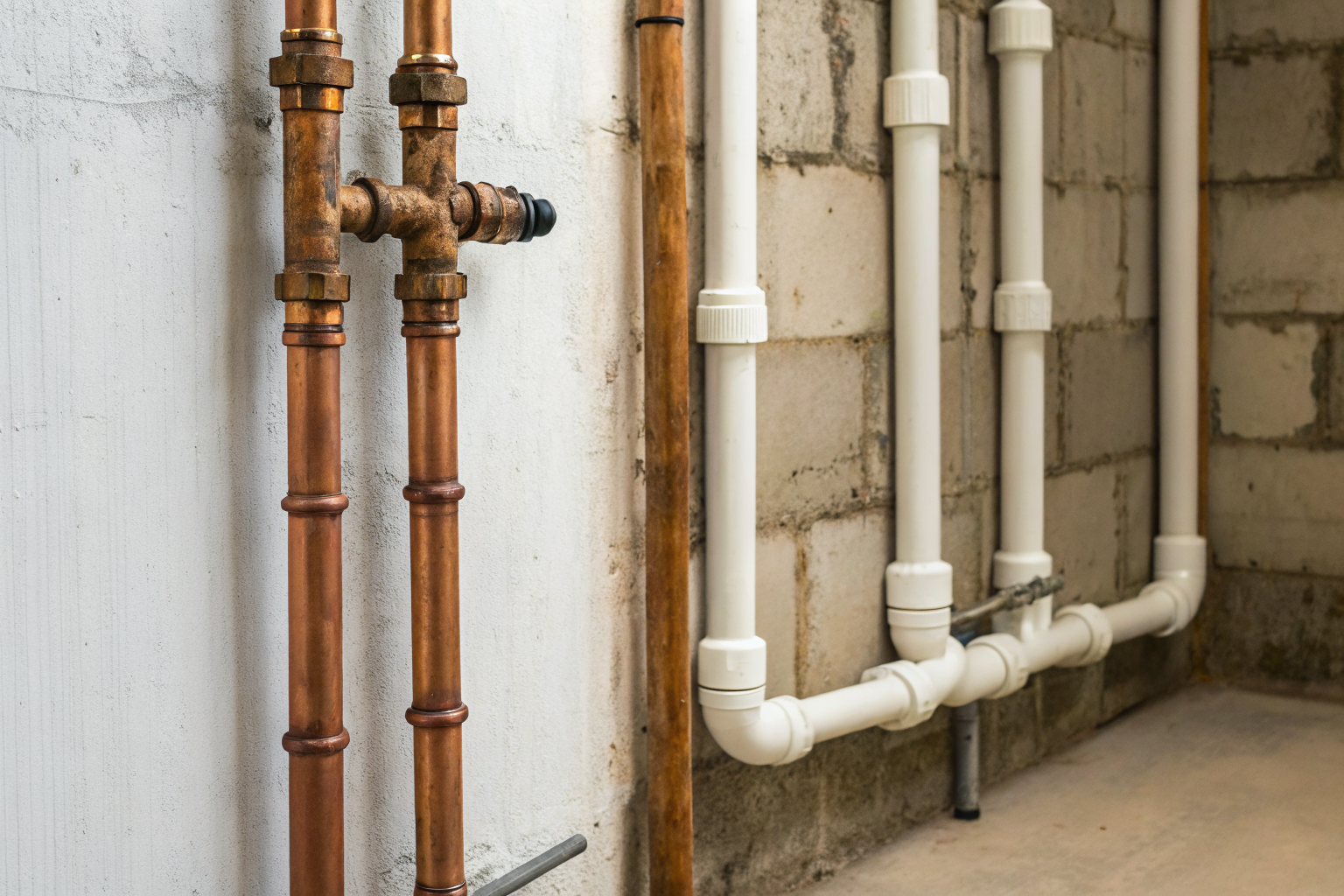
Arizona’s construction and climate profile makes this worse than in most states. Slab foundations are standard on most Phoenix-metro homes built before 2000, which means plumbing runs under concrete where no visual inspection is possible. Copper plumbing, common in homes built through the 1980s and 1990s, develops pinhole leaks as it ages, and pinhole leaks seep for months before causing visible surface damage. The extreme heat cycles in the East Valley accelerate material degradation in pipe fittings, appliance connections, and shower pan liners. A fitting that might last 25 years in a temperate climate fails in 15 here.
Snowbird-vacancy situations add another layer. A homeowner who leaves a Scottsdale property empty from May through September and returns to find water damage in October faces a compounded problem: the gradual-loss exclusion applies to the damage itself, and the vacancy clause on the base policy may have already modified coverage for the period the home sat empty. The water heater damage question and the slow leak vs burst pipe question both connect here, because the vacancy period removes the homeowner’s ability to demonstrate timely discovery.
The thing most guides miss on this topic: carriers do not need to prove the homeowner knew about the leak. They only need to show that a reasonable homeowner should have known. That standard is easier to meet than most people realize, and it is applied retroactively from the moment the adjuster sees the physical evidence. By the time FNOL is filed, the adjuster is already building a timeline from the damage itself, and that timeline rarely favors the homeowner on a hidden leak.
The hidden water damage endorsement exists precisely because the base HO-3 leaves this gap open by design, not by accident.
What Is the Hidden Water Damage Endorsement, and What Does It Actually Cover?

The hidden water damage endorsement is an add-on that modifies the HO-3’s gradual-loss exclusion for water damage originating from a concealed pipe, appliance connection, or plumbing system that a reasonable homeowner could not have detected before damage occurred. This means that a slow leak behind a wall, under a slab, or inside a ceiling cavity, damage that would be denied under the base policy because it fails the “sudden and accidental” test, becomes a covered loss when the HWDE is on the policy.
Think of it as a “reasonable discovery” standard replacing the “sudden” standard for concealed plumbing losses. The question shifts from “did this happen all at once?” to “could the homeowner reasonably have found this before it caused damage?” For pipe failures behind finished walls, under concrete slabs, or inside appliance cavities, the answer is almost always no, which is why the endorsement exists.
A concrete scenario: a slab leak develops under the kitchen floor of a 1994 Mesa home with copper plumbing. Water seeps slowly upward through the concrete, saturates the subfloor, and begins buckling the tile from below. The homeowner notices cracked grout lines over a few weeks, eventually pulls up a tile, and finds wet concrete underneath. Remediation estimate: $18,000 for slab access, pipe repair, subfloor drying, and tile replacement. Under the base HO-3, the carrier denies this as gradual damage, there was no sudden pipe rupture, the damage developed over time, and staining indicates extended moisture exposure. Under the HO-3 with HWDE added, the same loss is covered because the leak originated in a concealed location and no reasonable inspection would have revealed it before tile cracking appeared.
The endorsement has two important limitations. First, most AZ admitted-market carriers apply a sublimit to HWDE payouts, typically $10,000–$25,000, separate from Coverage A (the main dwelling coverage). That sublimit matters on a large remediation job. A $180,000 gut-renovation triggered by extensive slab leak damage does not get paid at full Coverage A limits just because the HWDE is on the policy, the endorsement covers up to its cap, and the gap above that cap remains the homeowner’s exposure.
Second, the endorsement does not convert flood or surface-water losses into covered claims. Monsoon water that enters through a threshold, window well, or foundation crack is still a surface-water or flood issue, and no standard endorsement on an admitted-market AZ homeowners policy covers that. The FNOL filing for a monsoon event follows a different analysis entirely.
The endorsement also does not cover leaks the homeowner knew about and ignored. A tenant who reported a dripping pipe under the sink six months before a mold claim, or a homeowner who noted a water stain on an inspection report and never had it investigated, those are neglect situations the HWDE does not reach. The “reasonable discovery” standard cuts both ways.
Availability varies by carrier. Not every AZ admitted-market insurer offers the HWDE, and some restrict it to homes with plumbing updated within a certain number of years. Homes with older copper plumbing, exactly the homes with the highest slab-leak exposure, sometimes face underwriting restrictions on the very endorsement they need most.
Which Scenarios Are Covered, Which Are Excluded, and Where the Line Falls
The coverage matrix below shows how eight common AZ water-damage scenarios play out under a standard HO-3 without the endorsement, and how that outcome changes when the HWDE is added. The scenario column reflects real loss types in the Phoenix metro, where slab foundations and aging copper plumbing create a specific risk profile that differs from most of the country.
Slab foundations dominate AZ residential construction. Most Phoenix-metro homes built before 2000 have copper plumbing on a slab, and copper develops pinhole leaks as it ages, making slab leaks one of the top water-damage claim types in the East Valley. That context explains why rows 4 and 7 appear in this matrix: they are not edge cases here, they are routine claims.
| Scenario | Base HO-3 (No HWDE) | With HWDE Added | Why It Matters |
|---|---|---|---|
| Monsoon rain enters through a roof gap during a storm | Covered under wind/rain perils (subject to monsoon deductible) | No change, HWDE does not affect storm perils | Surface water and storm entry stay on the base policy regardless |
| Washing machine supply hose bursts suddenly | Covered, sudden and accidental failure | No change needed, already covered | This is the clean “sudden” scenario the base HO-3 was written for |
| Pinhole copper pipe leak behind drywall, discovered after 4 weeks | Denied, gradual loss, staining indicates duration | Covered under HWDE, concealed pipe, not reasonably detectable | Most common HWDE claim type in East Valley homes with older copper plumbing |
| Slab leak under foundation, slow seep through concrete | Denied, gradual damage, no sudden event | Covered under HWDE sublimit ($10K–$25K cap applies) | High-frequency AZ scenario; sublimit gap matters on large remediations |
| Water heater sudden tank rupture | Covered, sudden and accidental failure | No change needed, already covered | Water heater damage on homeowners insurance follows the same sudden/gradual split |
| Water heater gradual failure, corrosion seeps from tank base over months | Denied, gradual deterioration, neglect argument available | Covered under HWDE if corrosion was internal and not visibly detectable | Carrier will look for visible rust staining on the floor as evidence of prior notice |
| Shower pan liner failure, slow leak into subfloor over 6–8 weeks | Denied, gradual damage, mold growth indicates duration | Covered under HWDE, concealed liner, no external visible sign until subfloor damage | AZ tile showers with original liners from the 1990s–2000s are high-exposure |
| HVAC condensate line overflow, slow drip into ceiling cavity | Denied, ongoing condition, maintenance-related argument | Covered under HWDE if line blockage was concealed and not previously noted | Carriers will check if the air handler has a secondary drain pan; absence may limit coverage |
The table makes clear that the base HO-3 handles sudden, visible, event-based failures well. It handles concealed, slow-developing losses badly. The HWDE is a targeted fix for that specific gap, not a broad expansion of water coverage.
AZ monsoon season creates a category error that belongs in this section. Homeowners who file a water-damage claim after a monsoon storm sometimes discover mid-claim that the damage predates the storm. The adjuster attributes the bulk of the loss to gradual leakage and only a fraction to the storm event. Even with a HWDE on the policy, surface water and storm-driven water entry follow different claim paths than concealed plumbing losses, and the adjuster’s allocation between those two categories can significantly affect the final payout.
How to Avoid a Denial Before You File: What to Do the Moment You Find Water

Pre-FNOL documentation reduces the carrier’s ability to classify a loss as gradual or negligent. The steps below apply the moment water damage is discovered, before any remediation, before calling the carrier, and before anything gets cleaned up or torn out.
The “known or should have known” standard is the carrier’s primary tool in gradual-loss denials. A same-day written first-discovery statement is the homeowner’s primary counter, establishing the discovery date before the adjuster’s inspection can reframe the timeline.
Stop the water source and photograph the shutoff action with a timestamp. Turn off the supply valve to the affected fixture or the main shutoff, then photograph your hand on the valve with the time and date visible on your phone screen. This establishes that you acted immediately upon discovery.
Photograph all visible damage before any drying or demolition begins. Capture the source area, the affected surfaces, and the specific failure point, the pipe joint, the appliance connection, the liner crack, the fitting. Wide-angle photos establish scope; close-up photos establish cause. Both matter.
Do not start remediation before the adjuster inspects, unless you must act to prevent further damage. If you need to run fans or extract standing water to prevent mold escalation, document every emergency mitigation action with photos and keep all receipts. “Necessary to prevent further damage” is a recognized exception on most HO-3 forms, but you need documentation to support it.
Write a first-discovery statement the same day. One paragraph. Describe exactly when you first noticed the issue, what you saw, what you touched, and what about the damage appeared new rather than old. Date it, sign it, and save a copy outside the house (email it to yourself). This document establishes your discovery timeline independently of the adjuster’s physical inspection.
Pull appliance warranties, service records, and prior inspection reports. Any record showing the system was functioning correctly before the loss event counters the carrier’s argument that the problem was ongoing and observable. A plumber’s inspection from 18 months ago showing no visible corrosion is evidence that the pinhole leak was not detectable at that point.
When filing FNOL, use the phrase “sudden and accidental” and be specific about the discovery date and circumstances. Do not say “I found water damage in my kitchen.” Say “On [date], I discovered water damage originating from what appears to be a concealed pipe failure. The damage was sudden and accidental from my perspective and was not present or detectable prior to [date].” Precise language sets the frame before the adjuster’s inspection.
One honest caveat: these steps protect a legitimate claim. They do not change the policy’s coverage terms. If the HWDE is not on the policy and the leak was a genuine slow-developing concealed loss, steps one through six may still not overcome the gradual-loss exclusion. The slow leak vs burst pipe distinction matters at the policy level before it matters at the documentation level. Documentation is a shield, the endorsement is the coverage.
Does the Hidden Water Damage Endorsement Cost Enough to Skip, or Is It Worth It in Arizona?

The HWDE annual cost is lower than the average AZ hidden water damage remediation expense by a factor that makes the comparison straightforward. The question is not whether the endorsement is worth the cost in the abstract, the question is whether your specific home’s construction profile puts you in the high-exposure category.
Typical HWDE premium runs $50–$150 per year on most admitted-market AZ policies. Some carriers bundle it with water backup coverage (sewer and drain overflow) in a combined endorsement priced at $80–$200 per year. Compare that to the cost exposure: a mid-severity slab leak with drywall and flooring damage in the Phoenix metro commonly runs $8,000–$25,000 in remediation. A more extensive slab leak involving multiple pipe sections, significant tile removal, and subfloor replacement can exceed $40,000.
| Profile Factor | Without HWDE | With HWDE | Endorsement Cost |
|---|---|---|---|
| Home with copper plumbing on a slab, built pre-2000 | Slab leak = denied, full remediation out of pocket | Slab leak covered up to $10K–$25K sublimit | $50–$150/year |
| Home with updated PEX plumbing, built post-2010 | Lower slab-leak risk; base HO-3 handles most sudden events | HWDE still covers concealed appliance and shower liner failures | $50–$150/year |
| Snowbird / vacant home, 4+ months empty per year | Gradual leak discovered after vacancy = denied; vacancy clause may apply | HWDE coverage requires the leak to be concealed, not vacancy-extended | Varies; some carriers restrict HWDE on vacant properties |
| Home with appliances over 10 years old | Dishwasher, water heater, HVAC gradual failures = denied | Covered under HWDE if failure was internal and not visibly detectable | $50–$150/year; some carriers bundle with service line coverage |
Carrier-to-carrier variability is significant. Not every AZ admitted-market insurer offers the HWDE. Some offer it only on homes with plumbing updated within the last 20 years. Surplus lines carriers, the market that handles non-renewal placements for harder-to-insure AZ homes, rarely include the endorsement or price it separately at higher rates. The endorsement also goes by different names depending on the carrier: “hidden water damage coverage,” “seepage and leakage endorsement,” or a bundled “water backup and hidden damage package.” If your current policy does not include one of these, that is a shopping trigger.
If your home has copper plumbing, a slab foundation, or appliances over 10 years old, a conversation about this endorsement before the next monsoon season costs nothing. The cost-to-exposure math makes the HWDE one of the clearest value endorsements on an AZ homeowners policy. Whether your current carrier offers it, and on what terms, is worth confirming now, not after the tile starts cracking.
Frequently Asked Questions
Does homeowners insurance cover a slab leak in Arizona?
A slab leak is not covered under a standard AZ HO-3 policy unless the pipe failure was sudden and accidental. Copper pinhole leaks under a slab develop slowly over weeks or months, and carriers classify that pattern as gradual damage and deny the claim. The hidden water damage endorsement is designed for this specific scenario, it covers the loss when the leak originated in a concealed location and the homeowner had no reasonable way to detect it before damage appeared at the surface.
What is hidden water damage coverage on a homeowners policy?
Hidden water damage coverage is an endorsement that modifies the standard HO-3 gradual-loss exclusion for concealed pipe, appliance, and plumbing failures that a reasonable homeowner would not have detected before damage occurred. It covers losses like a slow pipe leak behind a wall, a shower pan liner failure into the subfloor, or a seeping appliance connection that causes damage over weeks. Most AZ carriers that offer it apply a sublimit of $10,000 to $25,000, not the full dwelling coverage amount, so large remediations may still leave a gap.
Is gradual water damage ever covered by homeowners insurance in Arizona?
Not under a standard HO-3 policy. Gradual water damage is excluded by language in the base form, and carriers use staining patterns, mold growth, and material deterioration as physical evidence that a loss was ongoing rather than sudden. The only path to coverage for gradual or hidden water damage is a hidden water damage endorsement on the policy, and even that endorsement requires the damage to have been concealed from a reasonable homeowner, damage from leaks that were known, visible, or reported and ignored is not covered regardless of what endorsements are in place.