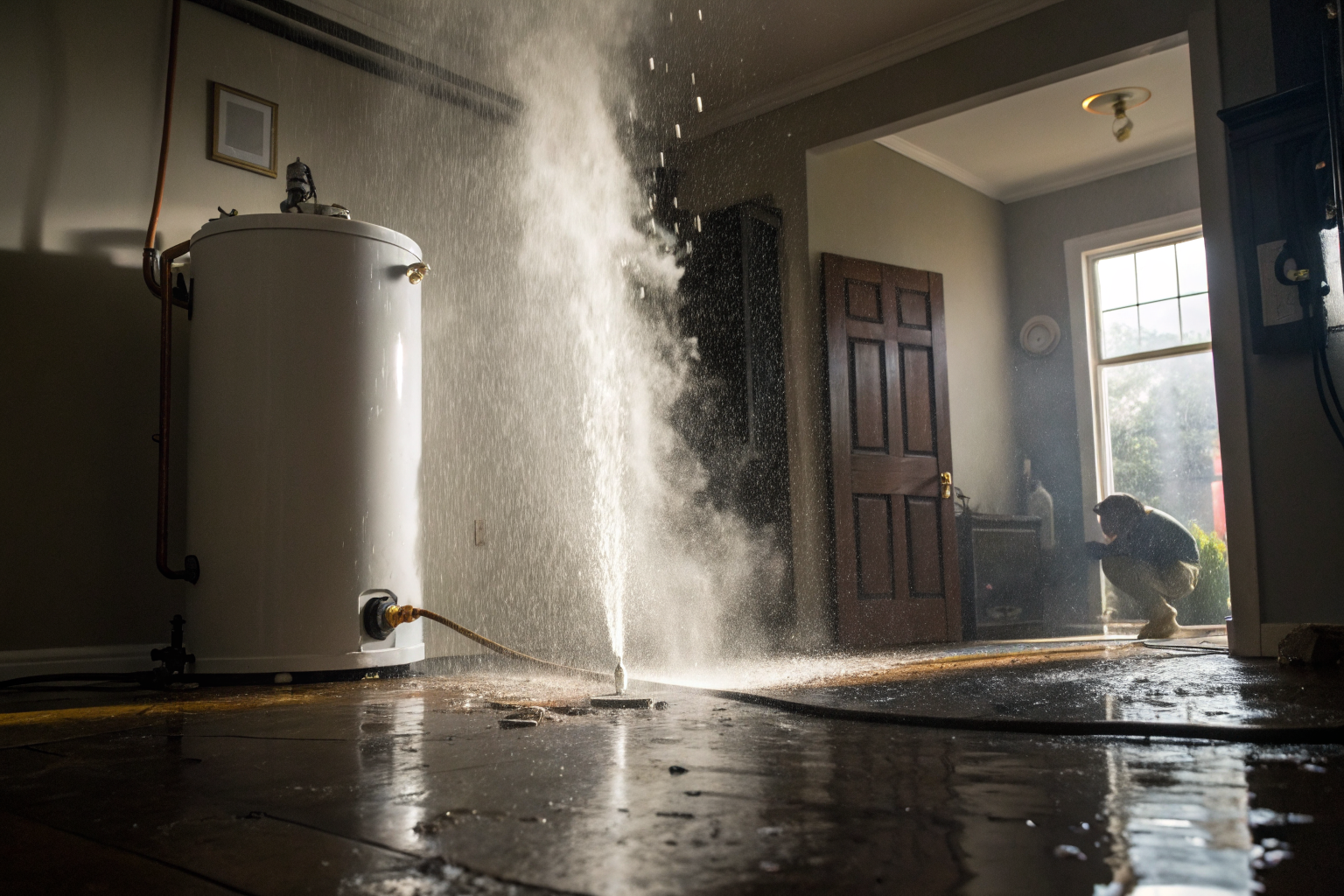
Water heater damage homeowners insurance coverage turns on a single question your carrier will ask before an adjuster ever sets foot in your utility room: was that leak sudden, or was it slow? Your water heater failed overnight, soaked the floor, wicked into the drywall, and now you are staring at a claim your carrier may have already decided to deny.
Key Takeaways:
- A sudden burst water heater is a covered peril under the standard AZ HO-3 policy, but the water heater itself is almost never replaced; only the resulting water damage to your home’s structure is covered.
- Gradual leaks, a slow drip, a corroded fitting, rust seepage over weeks or months, are excluded under the standard HO-3 long-term seepage exclusion, and AZ carriers use the presence of staining, rust, or mold to argue the leak was not sudden.
- The hidden water damage endorsement is the only standard add-on that covers gradual seepage losses in Arizona; without it, a slow water heater leak that damages flooring, subfloor, and drywall is a total out-of-pocket event.
Does Homeowners Insurance Actually Cover Water Heater Damage, and What Is the Real Distinction?
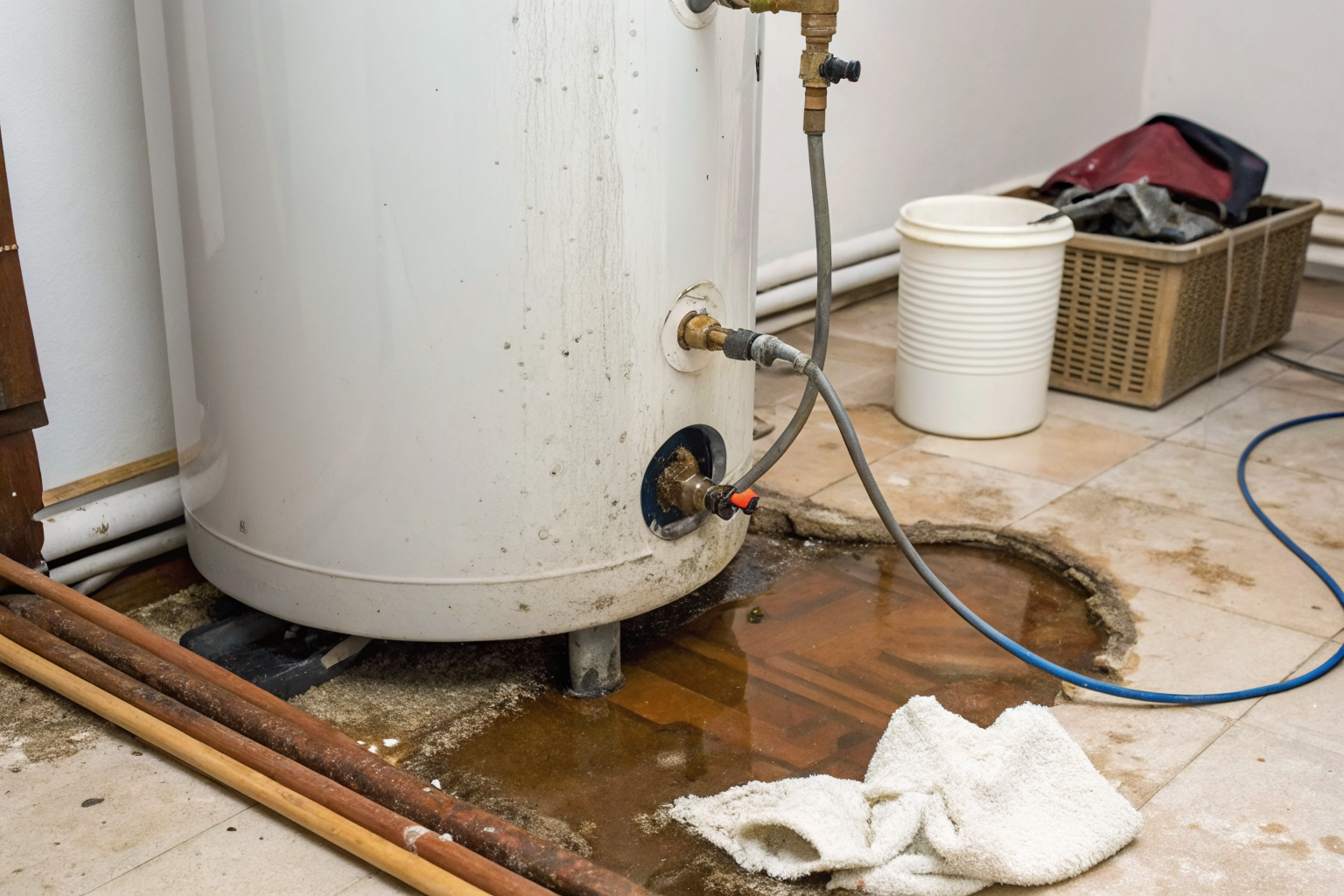
The HO-3 homeowners insurance policy is an open-peril form that covers your home’s structure against all losses except those it names as excluded. This means water damage from a water heater failure can be covered, but the coverage is conditional on how the failure happened, and it stops at the appliance itself.
A sudden and accidental water heater discharge is a covered loss under Coverage A (dwelling) of the standard HO-3. The water heater unit, the appliance, is a separate matter. Mechanical breakdown is not a covered peril under any standard homeowners policy. Coverage A protects the structure of your home. Coverage C (personal property) covers your belongings, but it does not reimburse you for an appliance that failed because of age or wear. The failed heater is your cost to replace. The damaged floor, wall, and cabinetry behind it may be covered.
That distinction, damage versus replacement, is where most AZ homeowners get surprised. They expect the policy to make them whole on everything in the room. The standard HO-3 makes them whole on the structure and contents the water ruined; it does not cover the machine that caused the water.
The HOAIC Arizona HO-3 policy form, filed with the Arizona Department of Insurance and Financial Institutions (AZ DIFI) in March 2025, is the reference standard for AZ-filed forms. Per ISO HO-3 open-peril language, which appears in virtually every AZ-filed HO-3 form per DIFI-reviewed policy language, the policy excludes loss caused by continuous or repeated seepage or leakage. That exclusion is the clause carriers reach for first on any water heater claim.
Coverage determinations depend on the specific policy form in force on your property. Review your declarations page with a licensed insurance agent before assuming any particular outcome. The Arizona insurance guide for homeowners covers the broader framework of how AZ policy forms are structured if you want more context on how these exclusions fit into the full policy.
Sudden Burst vs. Slow Leak: The Distinction That Decides Your Claim
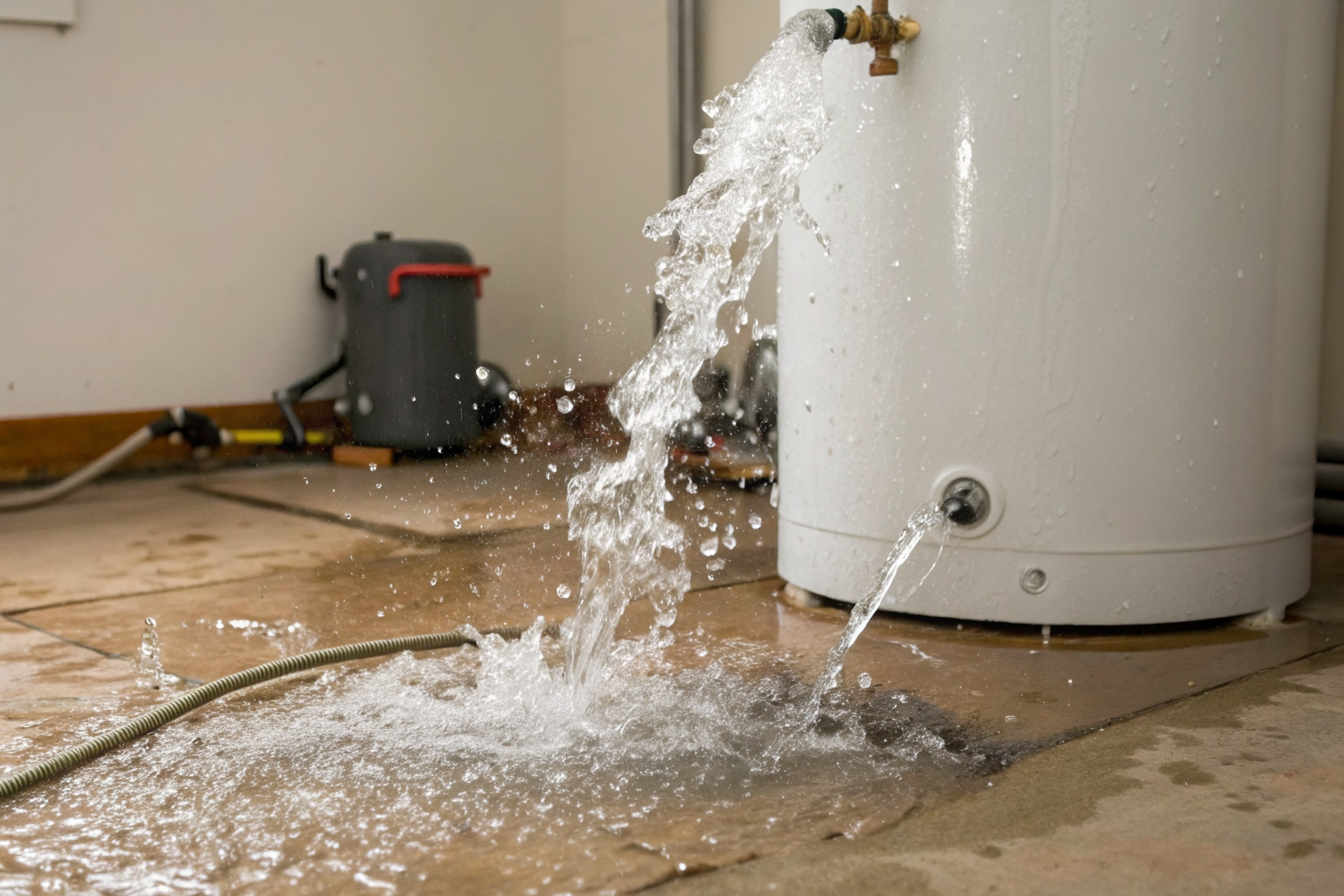
The HO-3 open-peril dwelling provision covers sudden water heater discharge, a tank rupture that puts 40 to 80 gallons on your floor in minutes. It does not cover the drip that has been running for three months behind the access panel.
Adjusters are trained to find the evidence of duration. Rust staining on the concrete slab, mold growth on the subfloor framing, brown discoloration on the drywall behind the unit, each of those is physical evidence that the leak was not sudden. That evidence shifts the claim from covered to excluded. AZ carriers apply this standard across the Phoenix metro, and the hidden water damage endorsement is the only mechanism that moves a gradual seepage loss back into covered territory.
The table below shows how the coverage decision works across the five most common water heater loss types.
| Loss Type | Coverage Under Standard AZ HO-3 | What Changes With the Hidden Water Damage Endorsement |
|---|---|---|
| Tank rupture or burst (sudden, large-volume discharge) | Covered, resulting structural damage to floors, walls, cabinetry | No change needed; already covered under standard form |
| Slow drip from a corroded supply fitting over weeks | Excluded, ISO continuous seepage clause applies | Covered if damage was hidden and not the result of neglect |
| Pinhole rust leak under the tank seeping into subfloor | Excluded, duration evidence (rust, mold) disqualifies the claim | Covered if damage was concealed and homeowner could not reasonably have discovered it |
| Pressure-relief valve discharge (sudden, code-triggered) | Covered, treated as sudden and accidental discharge | No change needed; already covered |
| Supply-line connection failure (sudden break at the fitting) | Covered, sudden and accidental, same treatment as tank burst | No change needed; already covered |
The ISO HO-3 exclusion for “continuous or repeated seepage or leakage of water over a period of weeks, months, or years” appears verbatim in DIFI-reviewed Arizona policy forms and is the primary clause carriers cite in gradual-leak denials. If an adjuster finds rust staining or mold on your first inspection, the claim is already moving toward that exclusion.
One common misconception: many homeowners assume that because the water heater was functioning until it failed, the loss must be sudden. The carrier’s position is that a corroded fitting was deteriorating for months before the visible discharge. The evidence in the room, not the homeowner’s experience of the event, drives the determination.
The water heater appliance itself remains excluded in every scenario in the table above. Only the structural damage the water caused is in scope.
What Does a Burst Water Heater Insurance Claim Actually Cover, and What Does It Not?
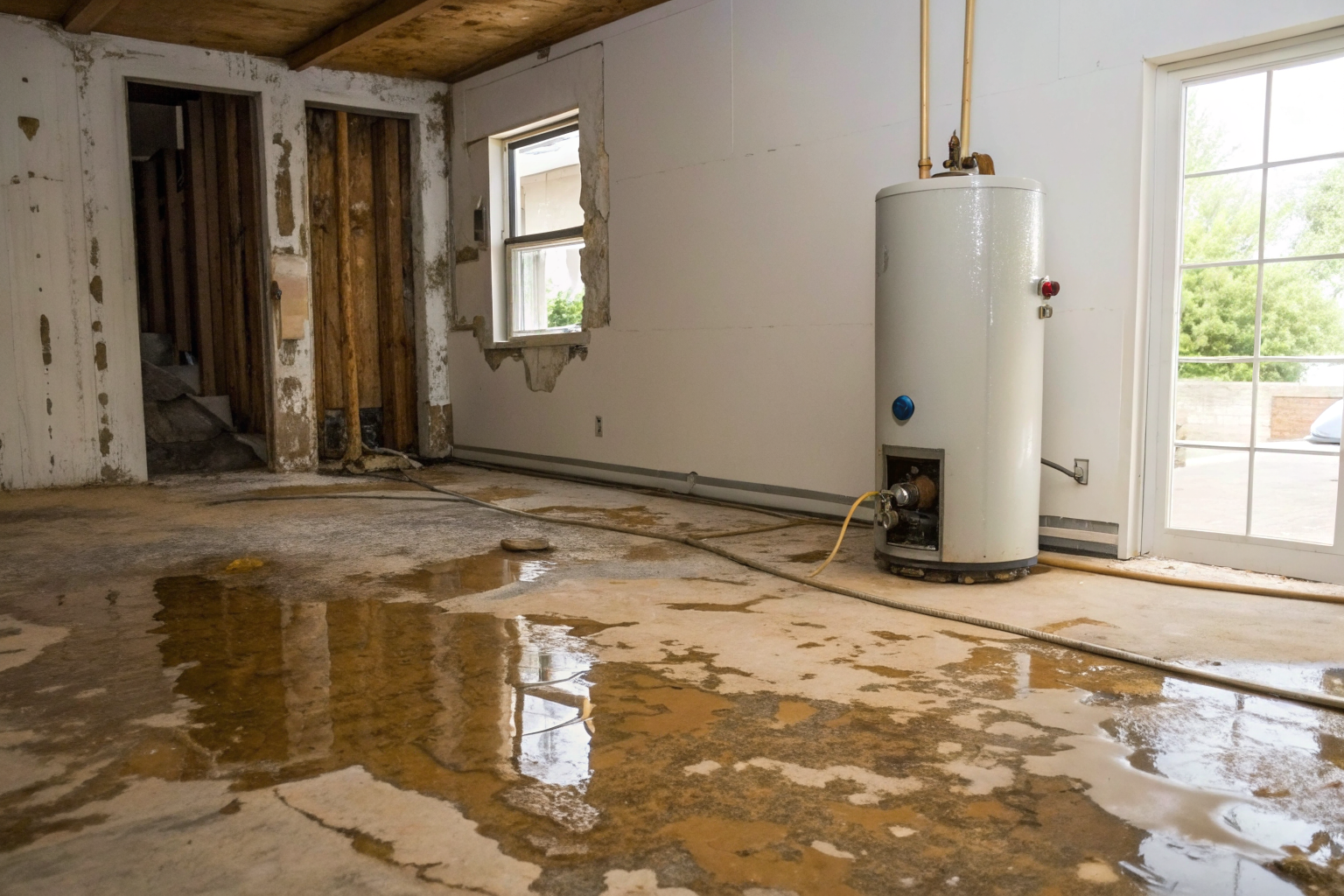
Arizona ranks third nationally in non-weather water damage costs, according to the Insurance Information Institute. That ranking explains why AZ carriers scrutinize water heater claims at a level that surprises homeowners coming from other states. Knowing what is and is not covered before you file protects the claim.
For a sudden, accidental burst under a standard AZ HO-3, here is what the policy covers and what it does not:
Covered under a sudden water heater loss:
- Water extraction and professional drying, water mitigation services, including licensed remediation contractor costs, fall under Coverage A when the discharge is sudden and accidental. Your carrier will expect a licensed contractor, not a handyman with a shop vac.
- Damaged flooring, subfloor, and drywall replacement, structural repairs to your home fall under Coverage A. This includes hardwood floor water damage and subfloor replacement if the water saturated down to the framing.
- Personal property soaked in the discharge, Coverage C applies to belongings damaged by the water, subject to actual cash value or replacement cost value depending on your policy election.
- Additional living expenses, if the home is uninhabitable during repairs, Coverage D pays for temporary housing, up to the policy limit and for a defined period.
Not covered, regardless of how the loss occurred:
- The water heater unit itself, mechanical breakdown is not a covered peril. Replacing the appliance is an out-of-pocket cost or a matter for a home warranty, not your homeowners policy.
- Pre-existing deterioration the carrier argues caused the failure, if the carrier’s inspector finds that the tank was visibly corroded or the anode rod had not been serviced, that finding can reduce or void the payout on related damage.
- Mold remediation if mold is treated as a separate exclusion in your policy, many AZ HO-3 forms carry a mold sublimit or exclude mold entirely; check your declarations page.
FNOL claim filing is the process of submitting your first notice of loss to the carrier. Timing matters in a water claim. Most AZ HO-3 forms require prompt notification and require the homeowner to mitigate further damage immediately. Failure to stop the water source and begin drying within a reasonable timeframe gives the carrier grounds to dispute the full payout.
Review your specific declarations page or speak with your agent before assuming any of these line items apply to your policy. Policy forms vary, and AZ DIFI-filed forms are not identical across carriers.
What Is the Hidden Water Damage Endorsement, and Does a Water Heater Leak Qualify?
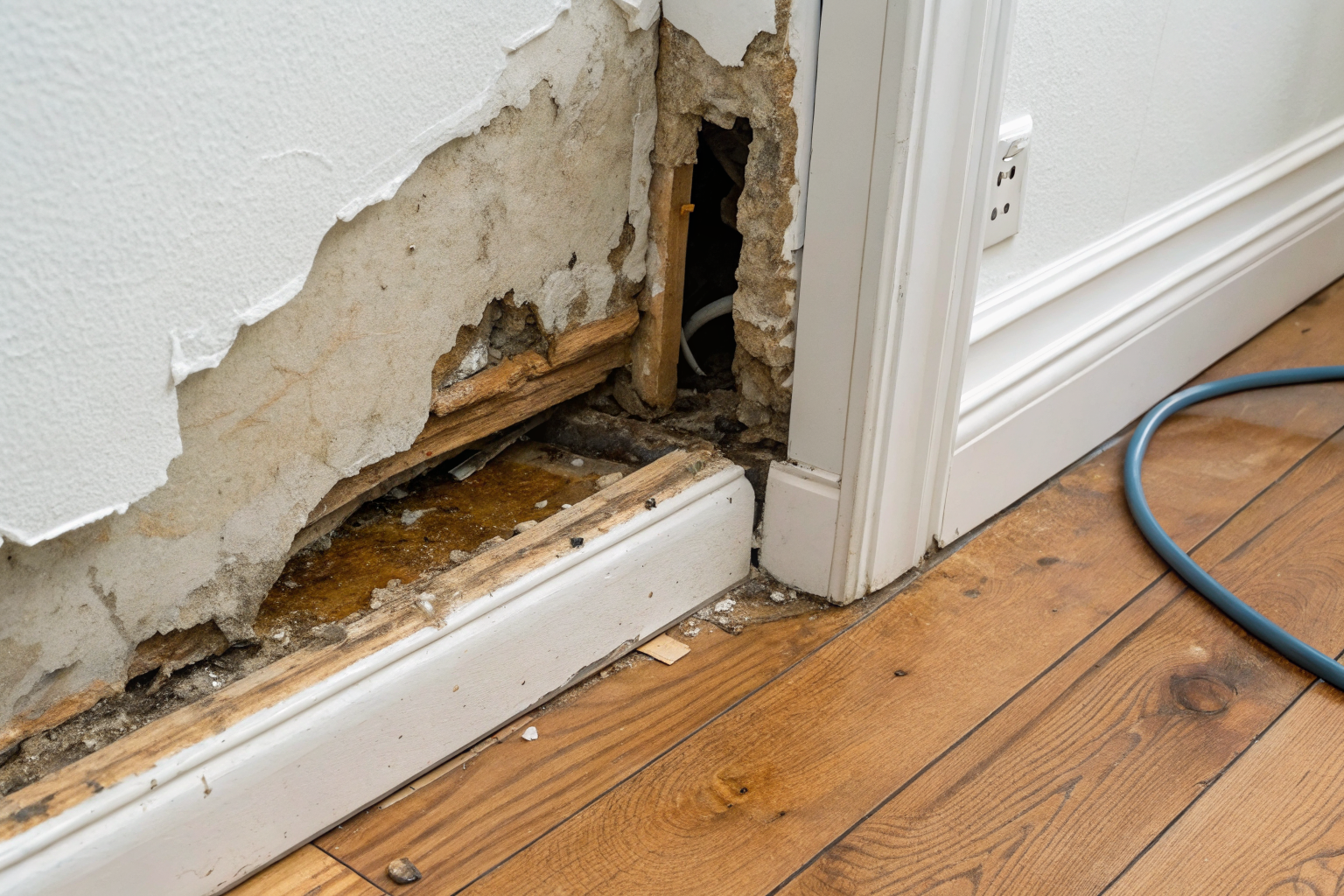
The hidden water damage endorsement is an add-on to the standard HO-3 that closes the gradual-seepage gap. This means losses from slow leaks that were hidden inside walls, under floors, or behind appliances, losses a homeowner could not have found through routine inspection, move from excluded to covered when this endorsement is in force.
Applied to the water heater scenario: a slow drip from a corroded supply fitting behind the unit, seeping into the subfloor for months, is the exact loss this endorsement was built for. Without it, that claim is excluded. With it, the carrier evaluates whether the damage was hidden, whether the homeowner exercised reasonable care, and whether the loss resulted from neglect. If the homeowner passes those tests, the structural damage is covered.
Most AZ-available forms attach two conditions. First, the damage must not have been visible from a normal inspection, a leak running down the exterior of the tank for weeks does not qualify. Second, the homeowner must not have ignored evidence of the problem. A water stain on the ceiling below the utility closet that the homeowner noticed and did nothing about is not a hidden loss.
Arizona monsoon season creates a separate discovery problem that adjusters know to probe. Homeowners who find water damage after a monsoon often attribute it to wind-driven rain intrusion. Adjusters investigate both the origin and the duration. An aging water heater supply line that had been weeping for months can look, from the outside, like monsoon damage. The endorsement matters in both scenarios, but the carrier will still investigate the source.
The hidden water damage endorsement is not included in the base HOAIC AZ HO-3 policy form filed with AZ DIFI in March 2025. It must be added as a named endorsement, which is why most AZ homeowners discover the gap at claim time rather than at renewal. If you want to understand the full mechanics of how the endorsement works across all water loss types, the hidden water damage endorsement coverage guide in this cluster covers the complete picture, this section focuses on the water heater application.
If you are a snowbird or you keep a second property in Scottsdale, the concealed-damage risk is higher because no one is in the home to notice a slow drip. An insurance agency in the Scottsdale area can review whether your vacant or seasonal home policy includes this endorsement or needs it added.
How to File a Water Heater Damage Claim in Arizona, and What Not to Do First

Proper FNOL claim filing protects your right to full water mitigation coverage. The steps below apply to a sudden water heater loss in Arizona under a standard HO-3 policy.
- Stop the water source. Shut off the cold-water supply valve feeding the heater. Most AZ HO-3 forms include a mitigation condition, failure to stop the water promptly gives the carrier grounds to reduce the payout for damage that occurred after you discovered the loss.
- Document before touching anything. Photograph the water heater unit, the discharge point, the standing water, and every surface the water reached. Walk the room perimeter on video. Capture the rust, the staining, the water line on the drywall, all of it. This documentation is your evidence that the loss was sudden.
- Call your carrier’s FNOL line. First notice of loss must be filed within the timeframe your policy specifies, typically described as “prompt” notification or within a defined number of days. Late reporting gives the carrier grounds to dispute coverage on the grounds that delayed notification prevented them from investigating.
- Do not start demolition or drywall removal before an adjuster or approved contractor documents the damage. Premature remediation destroys the physical evidence that supports the “sudden and accidental” finding. Wait for written authorization before any tearout begins.
- Hire a licensed water mitigation contractor. AZ carriers require licensed remediation work for moisture claims to qualify for reimbursement. A general contractor or handyman drying the space is not sufficient. The Arizona Registrar of Contractors (AZ ROC) licenses remediation contractors in this state.
- Request a written scope of loss from the adjuster. Compare the adjuster’s scope to your contractor’s estimate line by line before signing off. Gaps between the two are negotiating points, not final answers.
Arizona DIFI Consumer Services handles homeowner claim disputes and can be reached at insurance.az.gov, filing a complaint is free and does not require an attorney. If your claim is denied or partially paid, request a written denial that cites the specific policy exclusion. Per AZ DIFI guidance, you have the right to that documentation. Consider consulting a licensed public adjuster or contacting AZ DIFI Consumer Services if the denial appears to conflict with your policy language.
If you need help reviewing your current policy’s water coverage before a claim happens, The Gebhard Agency serves homeowners across the Phoenix metro and statewide Arizona, including coverage reviews for all property types.
Frequently Asked Questions
Does homeowners insurance pay to replace the water heater itself?
No. The standard AZ HO-3 policy covers water damage to your home’s structure caused by a water heater failure, floors, drywall, cabinetry, but the failed appliance is not a covered loss. Mechanical breakdown is not a named peril, and Coverage C (personal property) excludes appliances that fail due to age or wear. Replacing the unit is an out-of-pocket cost or a home warranty matter.
What if my water heater has been slowly dripping for months, is that covered?
Under a standard AZ HO-3 policy, a slow drip over months is excluded. The ISO HO-3 form excludes loss from continuous or repeated seepage or leakage over weeks, months, or years, and AZ adjusters use physical evidence, rust staining, mold, subfloor discoloration, to establish that the leak was not sudden. The hidden water damage endorsement is the only standard add-on that covers this type of gradual seepage loss; without it, the resulting structural damage is excluded.
Does a burst water heater count as sudden and accidental under an AZ homeowners policy?
Yes. A tank rupture or sudden discharge is treated as a sudden and accidental loss under the standard AZ HO-3, which means the resulting water damage to your home’s structure is covered. The word “resulting” is doing the work here, the carrier covers the damage the water caused, not the heater itself. Per the HOAIC AZ HO-3 form filed with AZ DIFI in March 2025, the open-peril Coverage A provision applies when the discharge is abrupt and not the result of long-term deterioration.