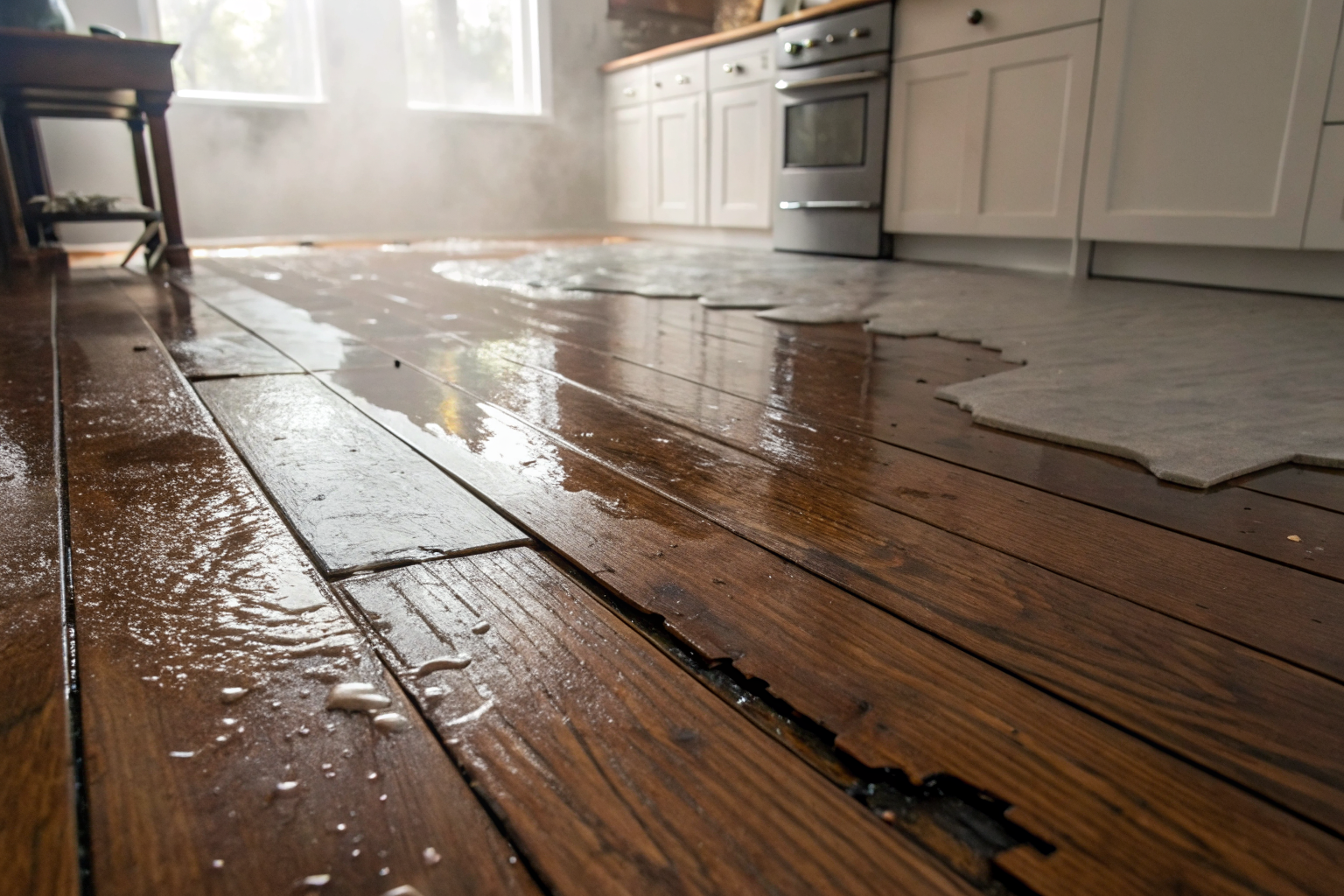
Hardwood floor water damage insurance outcomes depend on a single question your adjuster will ask first: was the water sudden, or has it been seeping for weeks? Your floors buckled after a pipe burst, and whether your homeowners policy pays full replacement cost, pays a depreciated amount, or denies the claim entirely turns on how that answer lands.
Key Takeaways:
- A sudden, accidental water event, burst pipe, appliance failure, HVAC overflow, triggers HO-3 coverage for hardwood floor damage; a slow leak discovered after weeks of seeping is classified as a “gradual loss” and denied under most standard AZ policies without the hidden water damage endorsement.
- ACV settlement on flooring can leave you 30–50% short of replacement cost due to depreciation on material and finish age, knowing whether your policy pays ACV or RCV on structural components before you file changes how you scope the claim.
- Arizona monsoon season creates a specific scenario, water entering under doors or through window seals during a wind-driven rain event, that falls into a policy gray zone between weather coverage and flood exclusion, and most homeowners only discover which side of that line they’re on after the floors warp.
Does Homeowners Insurance Cover Hardwood Floor Water Damage, and What Is the First Question Your Adjuster Asks?
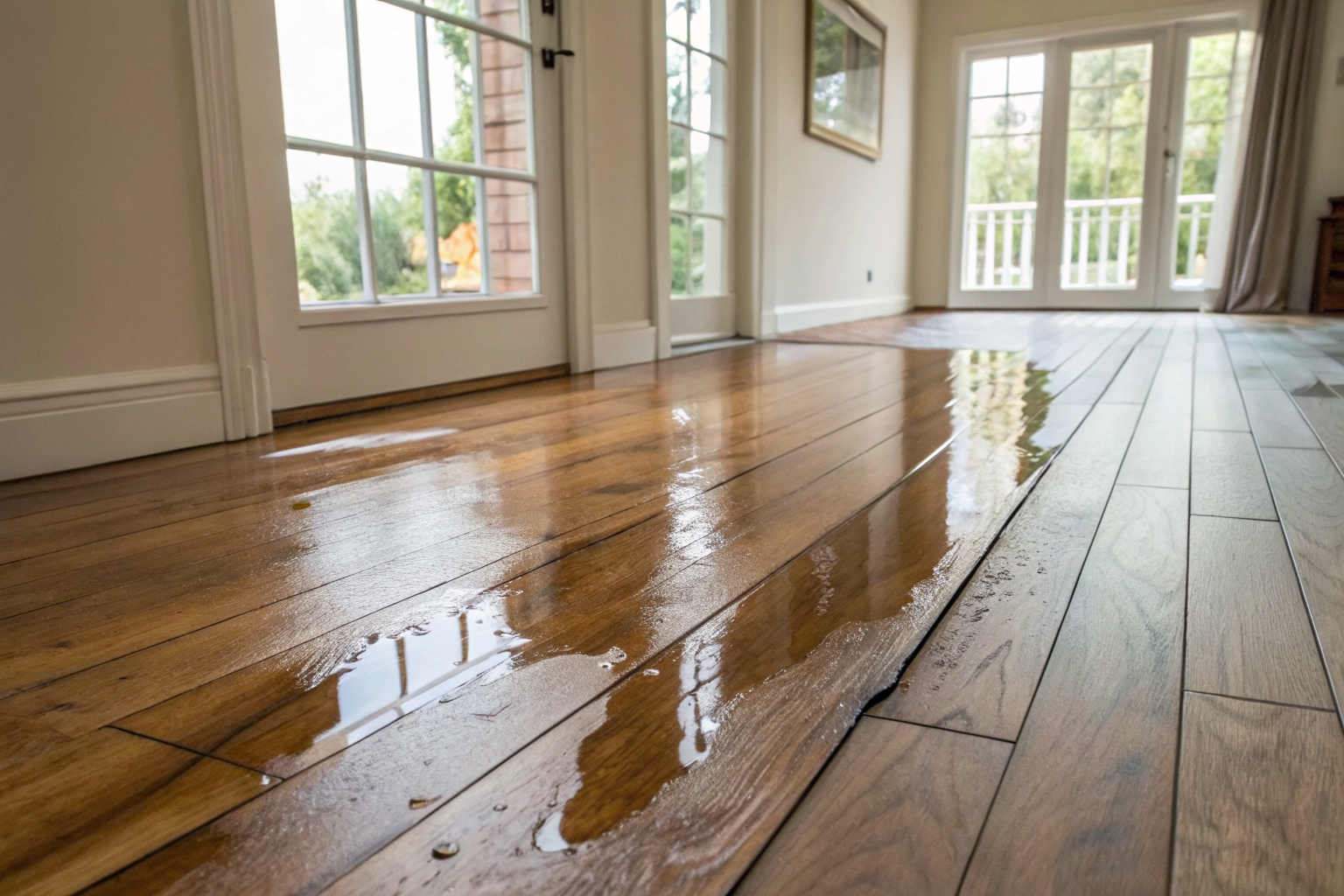
The HO-3 policy is the standard homeowners insurance form used by most AZ carriers. It covers sudden and accidental water damage to your home’s structure, including hardwood floors, but it does not cover damage caused by slow seepage, leakage, or water that has been intruding over a period of time. That distinction is not a gray area for the carrier. It is the first classification the adjuster makes on any water claim.
“Sudden vs. gradual loss” is the framework adjusters use to approve or deny a hardwood floor water damage claim. A sudden loss means the event happened at a specific moment, a supply line failed, an appliance hose broke, water discharged immediately. A gradual loss means water moved slowly over days, weeks, or months. The homeowner may not have noticed. The policy does not care.
Per the HOAIC Arizona HO-3 policy form filed with DIFI in March 2025, continuous or repeated seepage or leakage of water that occurs over a period of time is a named exclusion, regardless of whether the homeowner noticed it. That language is standard across most filed HO-3 forms in the Arizona market.
When you file your FNOL claim, the first notice of loss you give the carrier, the adjuster’s opening questions will center on when you discovered the water, what caused it, and whether there were prior signs. Your answers set the classification. Changing your account later is not possible without documentation.
For a full picture of how water claims work across scenarios beyond flooring, the Arizona insurance guide on this site covers the broader coverage framework. For the endorsement that changes the gradual loss outcome, see the section on the hidden water damage endorsement Arizona homeowners can add to a standard HO-3.
This article explains general policy mechanics under standard AZ HO-3 forms. Consult a licensed insurance agent for advice specific to your policy and situation.
Sudden Burst vs. Slow Leak: Which Hardwood Floor Scenarios Get Paid and Which Get Denied
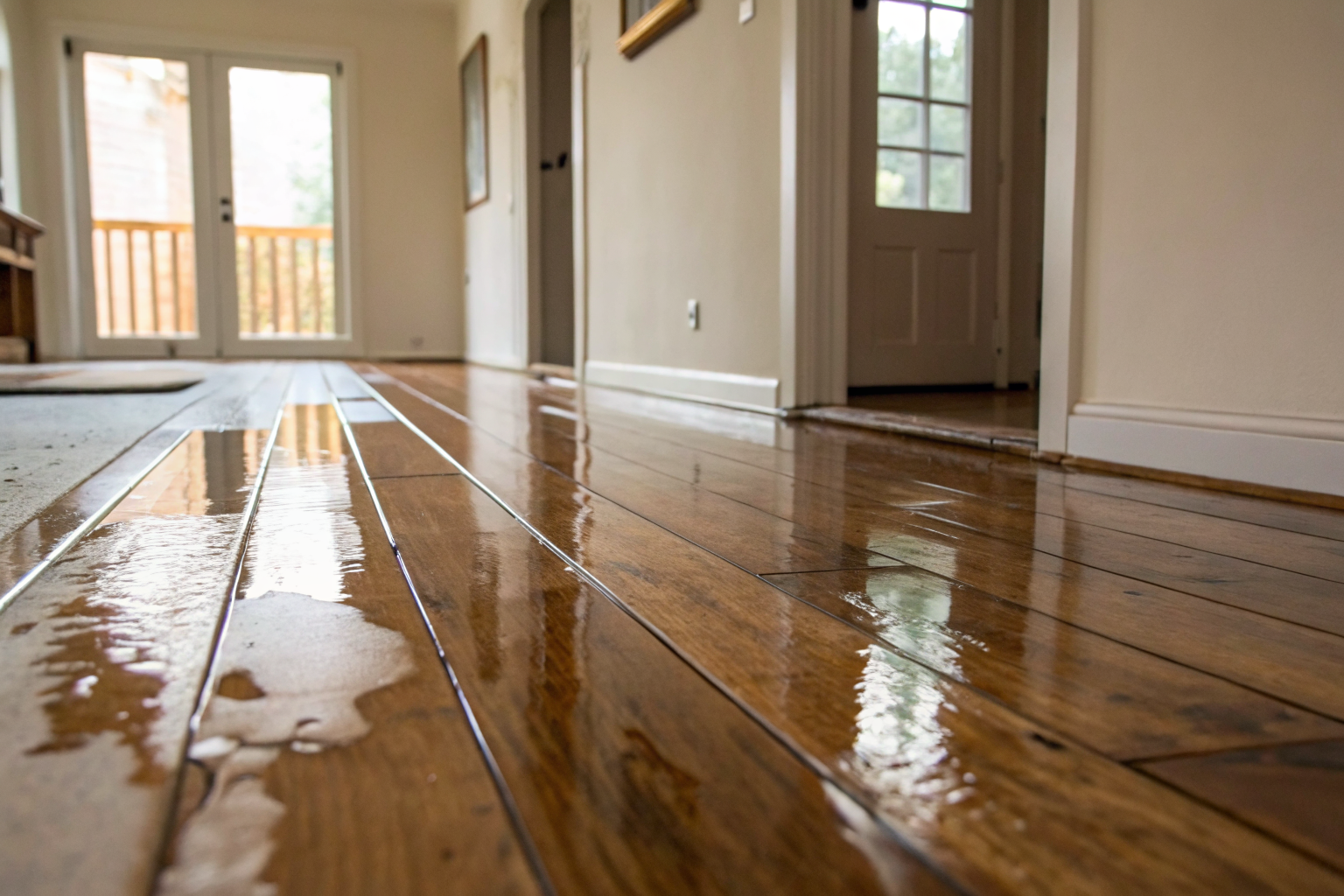
Arizona ranks third nationally in non-weather water damage costs, according to the Insurance Information Institute. That statistic reflects the fact that the gradual loss scenario is the most common denial pattern in AZ homeowners water claims, not burst pipes, but slow-moving damage that built up quietly.
The scenario table below covers the six events homeowners ask about most. For each one: what caused the water, whether the standard HO-3 covers it, and whether the hidden water damage endorsement changes the outcome.
| Water Source Scenario | Sudden or Gradual | Standard HO-3 Covers It? | Hidden Water Damage Endorsement Changes Outcome? |
|---|---|---|---|
| Burst supply line under kitchen sink | Sudden | Yes, covered | Not needed; already covered |
| Dishwasher hose failure | Sudden | Yes, covered | Not needed; already covered |
| HVAC condensate pan overflow | Sudden | Yes, if overflow was accidental and abrupt | Not needed if classified sudden |
| Slow toilet wax ring leak discovered after months | Gradual | No, excluded under seepage provision | Yes, endorsement may cover if not visible or detectable |
| AZ monsoon wind-driven rain entering under exterior door | Gray zone (see below) | Depends on how water entered | Endorsement does not convert flood exclusion to covered loss |
| Upstairs bathroom slow drip seeping into subfloor | Gradual | No, excluded | Yes, endorsement may extend coverage if leak was hidden |
The monsoon scenario deserves its own explanation. When wind-driven rain pushes water under an exterior door during a monsoon event, carriers treat the entry point as the controlling classification. If the water came through a damaged or wind-compromised seal, a covered weather peril, the HO-3 generally covers the resulting floor damage. If the water pooled on the ground and moved under the door as surface water, the carrier classifies it as surface flooding, which is excluded and requires separate flood insurance.
Most homeowners only find out which side of that line they’re on after the floors warp. Document the entry point before anything is cleaned up. DIFI Consumer Services handles disputes where classification is contested.
If you’ve already dealt with a water heater failure, the mechanics for water heater damage and homeowners insurance follow the same sudden-vs-gradual framework. The flooring coverage question on a slow leak scenario is covered in detail in articles on slow leak vs. burst pipe coverage.
ACV vs. RCV on Flooring: What the Depreciation Decision Actually Costs You

ACV, actual cash value, or depreciated value, is what the carrier pays when your policy settles structural components at their current market worth, not what it costs to replace them new. RCV, replacement cost value, or new-for-old, pays what it costs to replace the damaged material at current prices. The difference on a hardwood floor claim is not small.
Consider 800 square feet of three-quarter-inch solid oak installed 12 years ago. At current Phoenix metro material and labor rates, full replacement runs roughly $14–$18 per square foot installed, or $11,200–$14,400 total. Under ACV settlement, carriers apply a depreciation schedule based on floor age, finish condition, and expected useful life. On 12-year-old hardwood, that depreciation typically runs 30–50%, per reported claim settlement patterns. The homeowner’s actual check: $5,600–$10,000, against a replacement bill of $14,400.
Per NAIC guidance, homeowners should review their declarations page to confirm whether their policy settles structural components at ACV or RCV before filing a claim.
| Settlement Basis | What Carrier Pays | Out-of-Pocket Gap on 800 sq ft Example | Notes |
|---|---|---|---|
| RCV (new-for-old) | Full replacement at current Phoenix metro rates | $0 after deductible | Must complete repairs to receive full RCV payment |
| ACV (depreciated value) | Depreciated value based on age and finish condition | $4,400–$8,800 short | 30–50% depreciation on 12-year-old hardwood |
| ACV with recoverable depreciation | ACV paid first; depreciation released after repairs completed | $0 after repairs + deductible | Policy must specifically include recoverable depreciation provision |
Subfloor damage is a separate cost line that adjusters often omit from initial estimates. A sustained leak, even from a covered sudden event, can saturate the subfloor in 24–48 hours. Ask your adjuster for a subfloor assessment as a named line item, not an afterthought.
The matching issue matters here too. If one section of hardwood is damaged and the rest cannot be matched, some AZ carriers will cover only the damaged section. Arizona has no flooring-specific matching statute, but standard HO-3 language requires the carrier to restore the home to pre-loss condition, that language is your basis to push back. Verify the settlement basis on your specific policy with a licensed agent before you file.
For Scottsdale homeowners dealing with higher-end material replacement costs, a licensed agent familiar with the East Valley market, such as one focused on insurance for Scottsdale homes, can help confirm whether your declarations page reflects RCV on structural components.
What Does the Mitigation Timeline Actually Mean for Your Hardwood Floor Claim?

Carriers use the mitigation timeline as a secondary denial tool. Even on a covered sudden loss, if you waited two weeks to call, the carrier will argue that secondary damage, mold, subfloor rot, joist saturation, was caused by the delay, not the original event. The FNOL date and the remediation company’s moisture readings become the evidence.
Per standard filed HO-3 policy conditions, the insured has a duty to protect property from further damage after a loss. Failure to do so gives the carrier grounds to exclude secondary damage from the settlement. Follow these steps in order:
- Stop the water source if you can do so safely, shut off the supply valve, unplug the appliance, or close the main water shutoff. Every minute of continued flow extends the damage radius.
- Document with photos and video before touching anything. Capture floor buckling, standing water, affected square footage, and the water source itself. This documentation becomes your evidence if classification is disputed.
- File your FNOL within 24–48 hours. Most AZ carriers require prompt notice as a policy condition. Waiting longer shifts the burden to you to explain why secondary damage predates the call.
- Begin mitigation within 24–48 hours of discovery. Extraction, fans, and dehumidifiers running before mold sets in is the standard the carrier expects. Hire a licensed water mitigation contractor if the volume warrants it, their moisture logs support your claim.
- Do not sand, refinish, or replace any flooring before the adjuster inspects. Altering the evidence gives the carrier grounds to dispute scope and cost.
- Get a licensed contractor scope that includes subfloor assessment as a named line item, not just surface material. Ask for moisture readings at the subfloor level in writing.
If you added the hidden water damage endorsement to your policy, the same mitigation obligations apply, the endorsement extends coverage to hidden gradual losses, but it does not waive the duty to act once water is discovered. DIFI Consumer Services handles disputes where carriers use mitigation delay as the denial basis.
Subfloor Damage, Matching, and the Scope Your Adjuster’s First Estimate Will Likely Miss
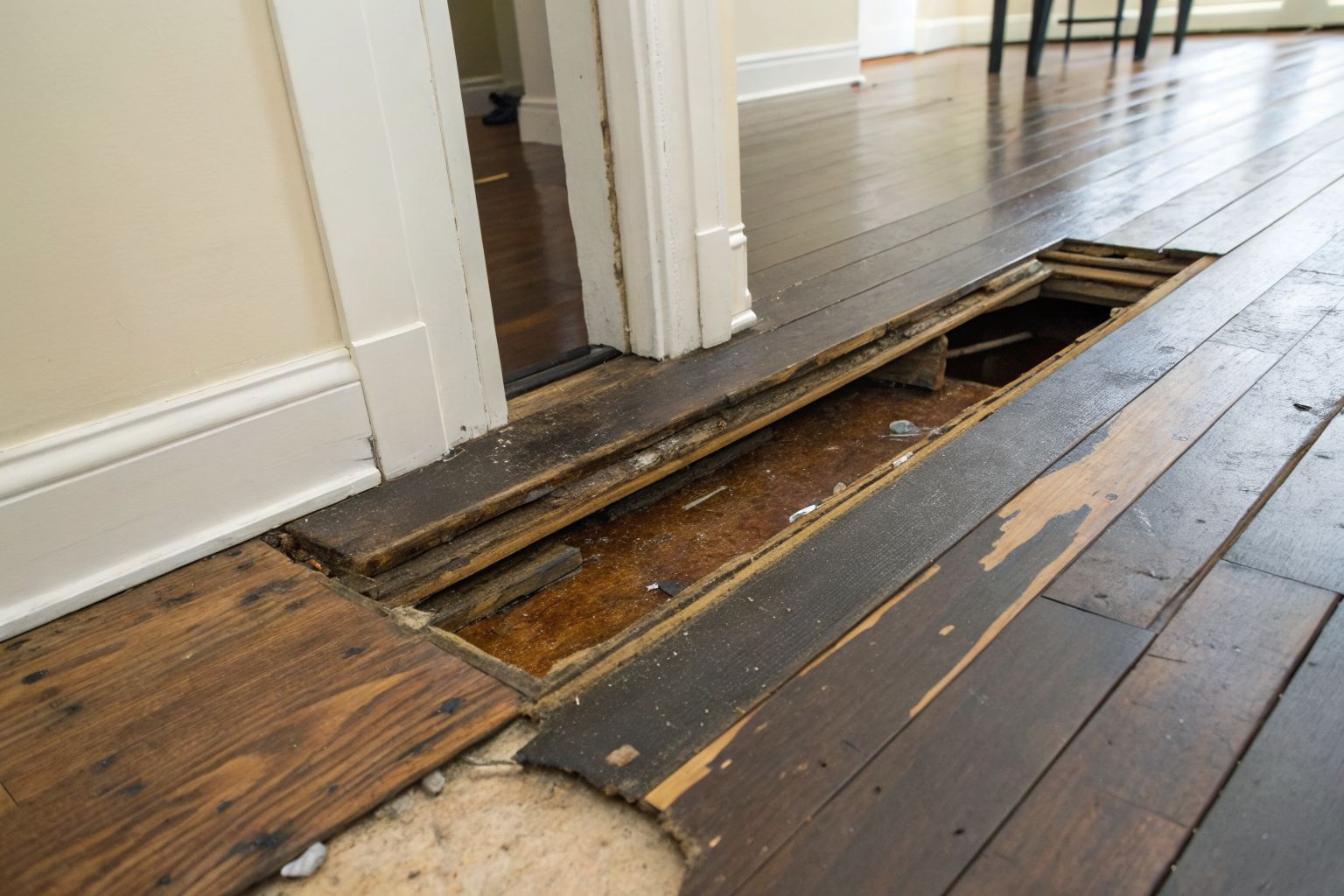
The adjuster’s first estimate on a hardwood floor water claim scopes what is visible. The items that drive total repair cost higher are frequently not visible, and they require documentation to get included. Here are the four scope items most often missing from an initial estimate:
- Subfloor moisture assessment. The adjuster scopes the surface hardwood but rarely pulls boards to check the OSB or plywood underneath. On any claim where water sat for more than a few hours, the subfloor may have absorbed moisture that won’t show on visual inspection. Subfloor replacement adds $3–$8 per square foot to total repair cost beyond surface hardwood replacement, based on contractor report patterns. Request moisture readings at the subfloor level as a named deliverable before the adjuster closes the scope.
- Joist inspection. On slab foundations, common in Arizona construction, joist saturation is rarely a factor. On raised-floor or two-story homes, joists below a saturated subfloor are a separate cost line. Ask your contractor to assess joist condition in writing if the home is not slab-on-grade.
- Matching cost for discontinued species or stain. If the damaged section is a species or color that has been discontinued, the carrier’s initial estimate may cover only the affected area. Arizona has no flooring-specific matching statute, but the standard HO-3 requires the carrier to restore the home to pre-loss condition. An independent contractor scope documenting that a partial replacement leaves a visible mismatch is the most effective evidence to request matching coverage for the full continuous run.
- Transition strips, thresholds, and trim. These materials are frequently omitted from first scopes. They are not expensive per unit, but they add up across a full room, and their absence from the initial estimate signals that the scope was not complete. List them by room in your own documentation and verify they appear on the adjuster’s revised scope.
For any of these items, a public adjuster or licensed contractor’s independent scope is the practical remedy when the initial estimate is short. If your home is in a community with an HOA master policy, confirm whether the subfloor or structural components fall under the HOA’s coverage or your own HO-6, the HO-3/HO-6 boundary matters here in the same way it does in the broader HOA master policy and HO-6 gap question.
For motorcycle owners who also own Arizona homes, the same annual review that catches flooring depreciation gaps also catches motorcycle insurance gaps, a single review covers both.
Consider consulting a licensed public adjuster if the initial settlement offer appears to omit subfloor assessment, matching costs, or transition materials.
Frequently Asked Questions
Does homeowners insurance cover warped hardwood floors from a slow leak?
A slow or gradual leak is a named exclusion under the standard AZ HO-3 policy, which means warped hardwood floors caused by a supply line seeping over weeks will be denied on a standard policy. The hidden water damage endorsement changes this for specific scenarios, it extends coverage to damage from a slow, continuous leak from a plumbing or heating system that was not visible or detectable, depending on the endorsement language your carrier filed with DIFI. Confirm whether your current policy includes this endorsement with a licensed agent before you discover water.
Will insurance pay to replace all my hardwood floors or just the damaged section?
Most AZ carriers will scope and pay only the damaged section unless you can show that a partial replacement leaves the floor in a non-matching condition that refinishing alone cannot fix. Arizona has no flooring-specific matching statute, but the standard HO-3 requires the carrier to restore the home to pre-loss condition, that language is the basis to push back if the partial replacement leaves a visible mismatch. An independent contractor scope that documents the matching problem is the most effective supporting evidence when disputing a partial-scope settlement.
Does homeowners insurance cover hardwood floor water damage from monsoon rain in Arizona?
The answer depends on how the water entered the home. Wind-driven rain that came through a covered opening, a broken window, a wind-damaged door seal, is treated as a weather peril and covered under the HO-3. Water that pooled on the ground and moved under an exterior door is treated as surface flooding and excluded, requiring separate flood insurance to be covered. The distinction matters during Arizona monsoon season, and carriers will inspect the entry point to classify the loss, document where and how water entered before anything is cleaned up.